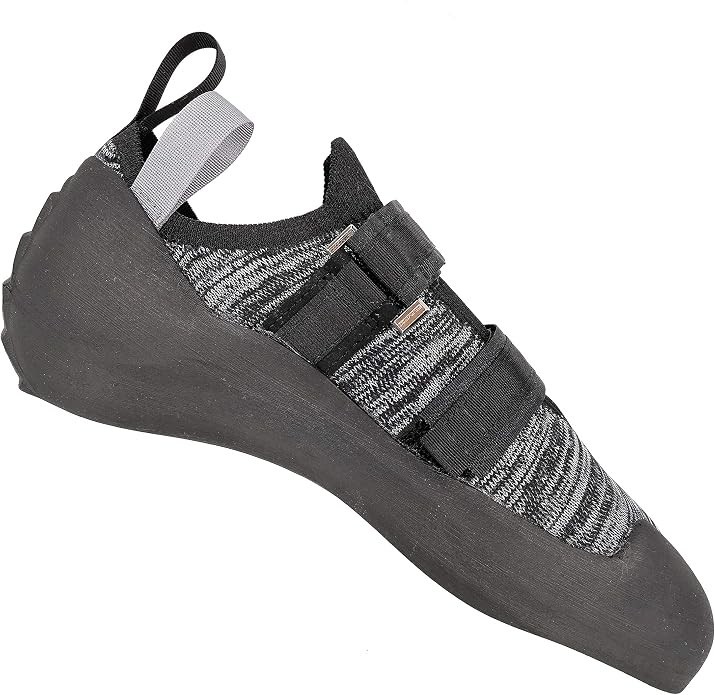

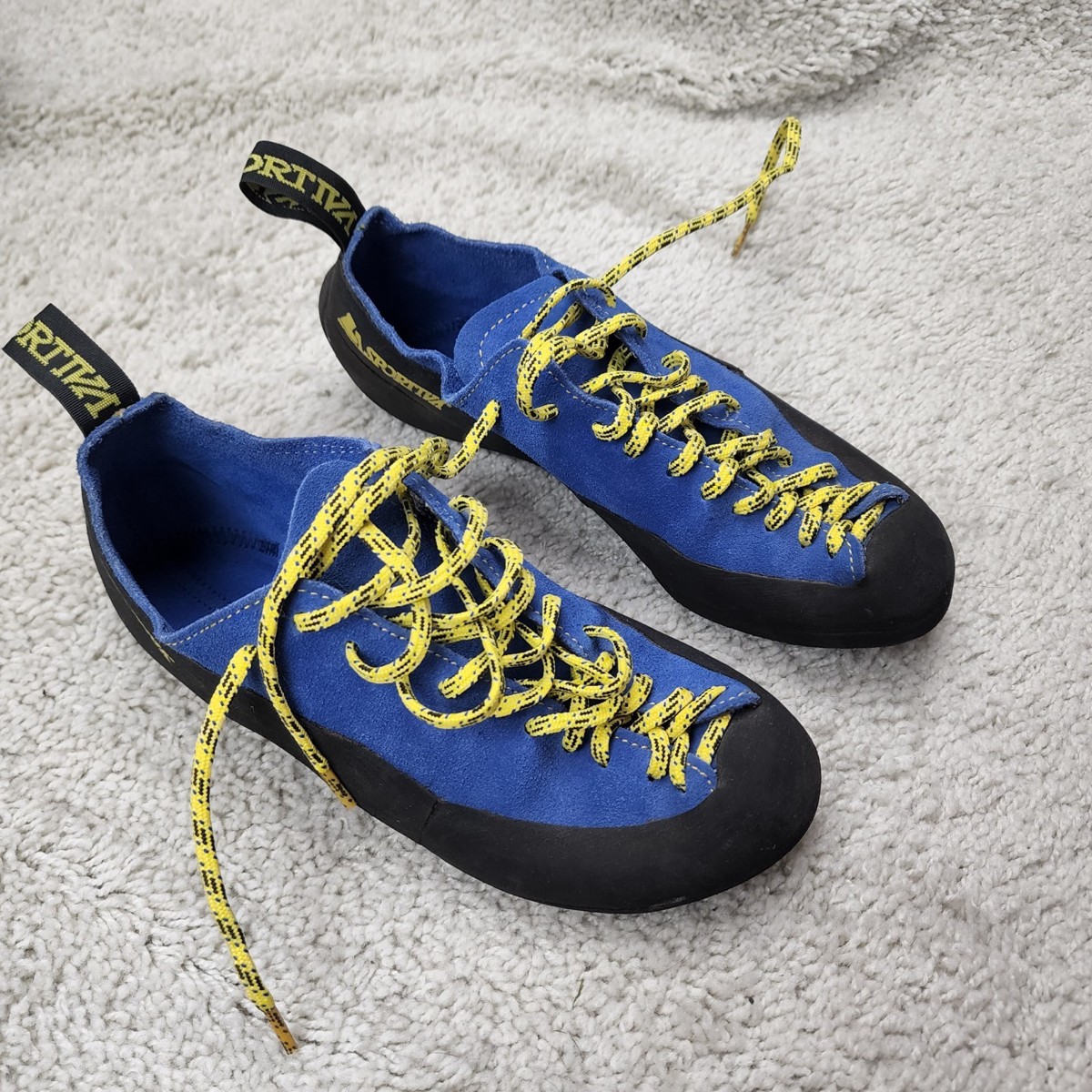
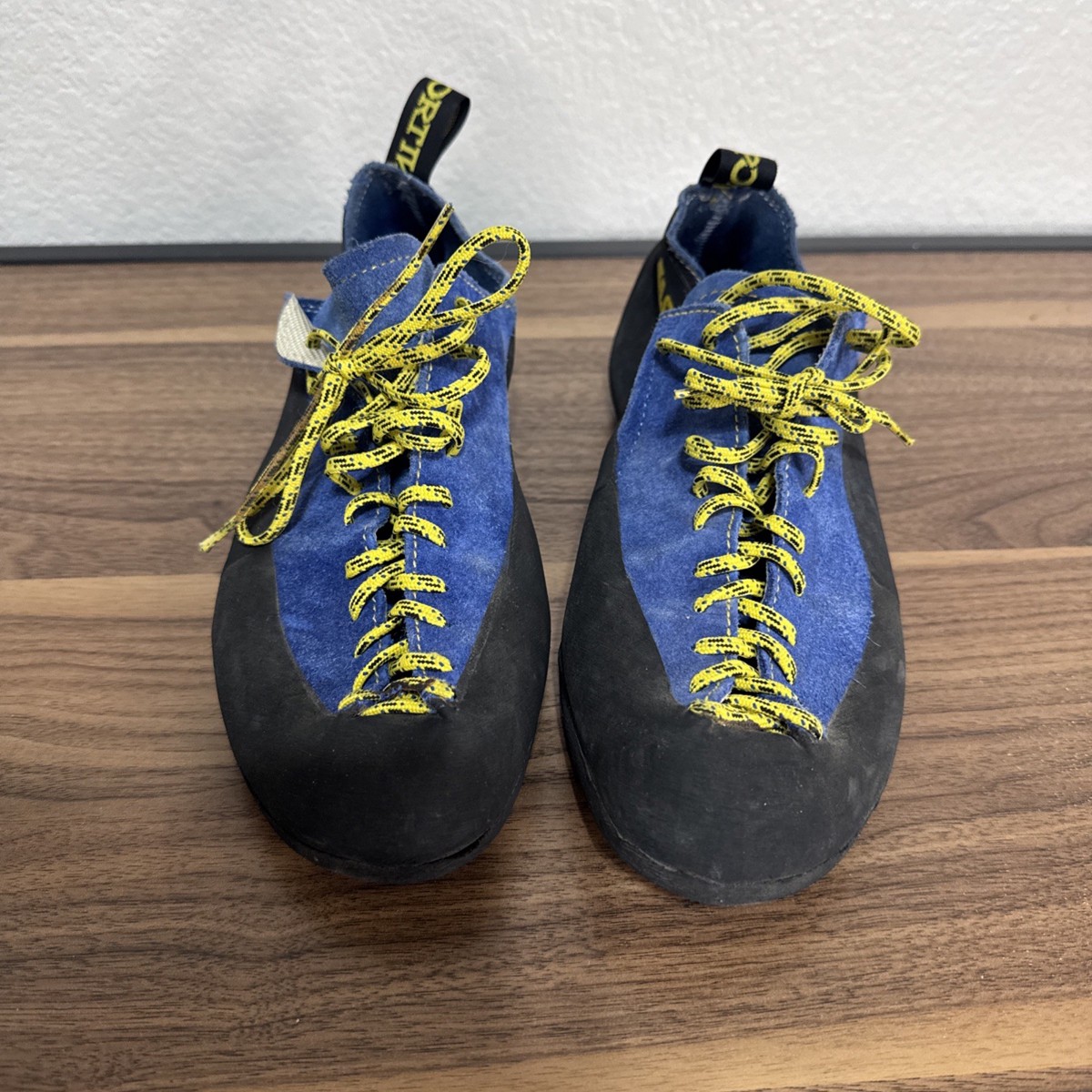
Photos from current listings. Actual item, color, and included accessories may vary.
Rock Climbing Shoe Buying Guide
Rock climbing shoes are specialized footwear that trade everyday comfort for edging precision and friction, defined by last shape, rubber compound, and closure system. The core trade-off is stiffness versus sensitivity: flatter, stiffer shoes suit all-day trad and beginner mileage, while downturned, soft shoes excel at steep bouldering and gym overhangs. Buy for your primary terrain and foot volume, and skip any shoe that forces toe knuckling or heel lift regardless of brand tier.


At a glance
- Category
- Climbing & Bouldering Shoes
- Data updated
- Nov 16, 2026
Current offers
Highlights
- Last shape dictates performance: flat lasts suit vertical trad and cracks; moderate downturn handles all-around gym; aggressive downturn excels on overhangs.
- Rubber hardness separates use cases: softer 3-4mm compounds maximize smearing friction; harder 4-5mm compounds resist wear and hold edges on small footholds.
- Closure systems change fit mechanics: lace offers micro-adjustability; hook-and-loop straps speed transitions; slippers prioritize sensitivity for steep bouldering.
- Upper materials affect stretch: unlined leather stretches up to a half size; synthetic and lined leather hold their out-of-box fit longer.
Best use cases
- Best for beginner-to-intermediate gym and vertical rock: pick a flat or moderately downturned lace-up with 4mm rubber—skip aggressive downturns that punish developing foot strength.
- Best for steep bouldering and overhangs: choose a soft, highly downturned hook-and-loop shoe for sensitivity and toe-hook control—skip stiff board-lasted trad shoes that deaden feel.
- Best for all-day multi-pitch trad: select a flat, stiff, lace-up with a full-length midsole and roomy toe box—skip downsized performance slippers that become unbearable on long routes.
Buying tips
- Fit snug without pain: toes should touch the front with slight curl for performance, or lie flat for comfort—downsize no more than one EU size from street shoes.
- Match rubber to terrain: soft 3-4mm compounds for gym smearing and volumes; harder 4-5mm compounds for outdoor granite and long trad durability.
- Choose closure by climb style: laces for precise fit and cracks; hook-and-loop for bouldering speed; slippers for maximum sensitivity on steep walls.
- Replace resoleable shoes before rubber wears through the rand—a worn rand turns a resole into a full rebuild and reduces shoe lifespan.
Specs
| Last Shape | Flat / Moderate / Aggressive downturn |
|---|---|
| Rubber Thickness | 3-5 mm (soft to hard compound) |
| Closure Type | Lace / Hook-and-loop / Slipper |
| Upper Material | Leather / Synthetic / Knit |
Related searches
What to check before buying
- Measure both feet at day's end and size to the larger foot; climbing shoes should fit tight but not restrict circulation or cause sharp pain.
- Confirm heel volume: a slipping heel causes blisters and poor hooking—choose a lower-volume heel or different last if your heel lifts.
- Check toe box shape against your foot profile: Egyptian, Greek, and Roman toe lengths fit different lasts; try before committing to a downsized performance fit.
- Verify gym or crag conditions: high-friction gym walls reward softer rubber; rough outdoor rock and cracks demand harder compounds and thicker rands.
FAQ
Data sources: eBay / Amazon listings and product attribute feeds Data updated Nov 16, 2026.
Some links on this page are affiliate links. If you buy after clicking one, we may earn a commission at no extra cost to you. This does not change which products appear here or their order. Affiliate disclosure.