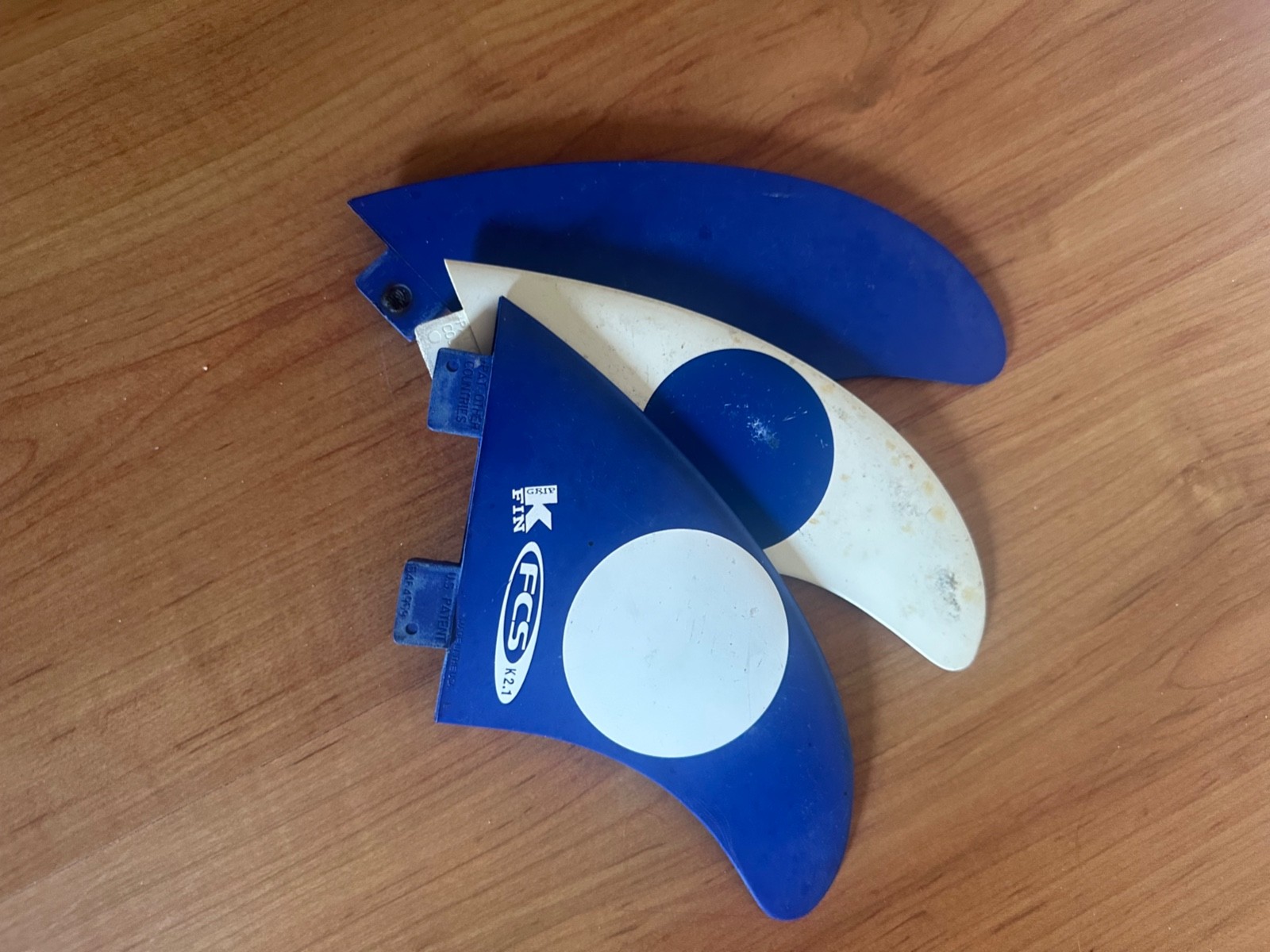

Photos from current listings. Actual item, color, and included accessories may vary.
Fcs Surf Fin Buying Guide
FCS surf fins are removable thruster, quad, or twin setups that use dual grub screws to lock into molded fin boxes, letting you tune drive, pivot, and hold without altering the board. The core trade-off is fin material and template: honeycomb or carbon builds give precise flex and snap-back for performance surfing, while molded composite or fiberglass-reinforced nylon resist dings and cost less. The decision rule is simple—match fin material and template to wave power and board rocker; avoid generic no-name FCS-compatible fins that use soft plastic and vague templates, because they flex unpredictably and strip screw threads.


At a glance
- Category
- Surf Fins, Leashes & Wax
- Data updated
- Nov 16, 2026
Current offers
Highlights
- FCS II vs FCS Original: FCS II uses a tool-less click-in tab with no grub screws, while FCS Original requires two grub screws per fin and a fin key.
- Fin material tiers: honeycomb core (light, stiff, fast feedback), carbon/hexcore (stiffest, best for powerful waves), fiberglass-reinforced nylon (durable, forgiving, heavier).
- Thruster (3-fin) sets drive off the bottom and hold in steep faces; quad (4-fin) sets run faster and looser but need more rail-to-rail input.
- Base fit is standard: FCS Original tabs are 6.5 mm thick with 18 mm tab spacing; anything outside this will wobble or not seat.
Best use cases
- Pick a thruster honeycomb set for punchy beach breaks and waist-to-head-high waves where you want pivot and release—skip quad sets if you mainly surf soft, gutless waves.
- Choose fiberglass-reinforced nylon fins for rocky reef breaks and beginner-to-intermediate durability—skip carbon hexcore if you are still learning and prone to grounding.
- Use a quad set on a groveler or fish for down-the-line speed in weak surf—skip thruster templates on wide-tailed boards if you want quick planing without drag.
Buying tips
- Match fin height to rider weight: 100–140 lb use small (approx. 4.3–4.5 in), 140–180 lb medium (4.5–4.7 in), 180–220 lb large (4.7–4.9 in).
- Check your board's fin system first: FCS Original boxes need grub-screw fins; FCS II boxes accept both FCS II and FCS Original (with screws) but not Futures.
- For FCS Original, confirm two grub screws per fin box and use a stainless fin key; stripped threads come from overtightening—snug plus quarter turn is enough.
- Template matters more than brand color: a swept-back rake (more than 30° from base) suits down-the-line drive; a more upright template (under 25°) suits tight pocket pivots.
Specs
| Fin System | FCS Original (screws) vs FCS II (tool-less) |
|---|---|
| Fin Material | Honeycomb / Carbon / Fiberglass Nylon |
| Fin Setup | Thruster 3 / Quad 4 / Twin 2 |
| Fin Size | Small 4.3–4.5 in / Med 4.5–4.7 / Lg 4.7–4.9 |
Related searches
What to check before buying
- Measure your board's fin boxes: FCS Original uses two slots per box; FCS II uses a single keyed slot with a tab—do not force an FCS Original fin into an FCS II box without screws.
- Weigh yourself and check board volume: a 180 lb surfer on a 28 L shortboard should run large thruster fins, not medium, to avoid spinning out.
- Confirm wave type and floor: reef or shallow sand requires nylon or composite fins; carbon hexcore can crack on impact.
- Verify you have a fin key and spare grub screws for FCS Original; FCS II needs no tools but the click tab must snap flush.
FAQ
Data sources: eBay / Amazon listings and product attribute feeds Data updated Nov 16, 2026.
Some links on this page are affiliate links. If you buy after clicking one, we may earn a commission at no extra cost to you. This does not change which products appear here or their order. Affiliate disclosure.