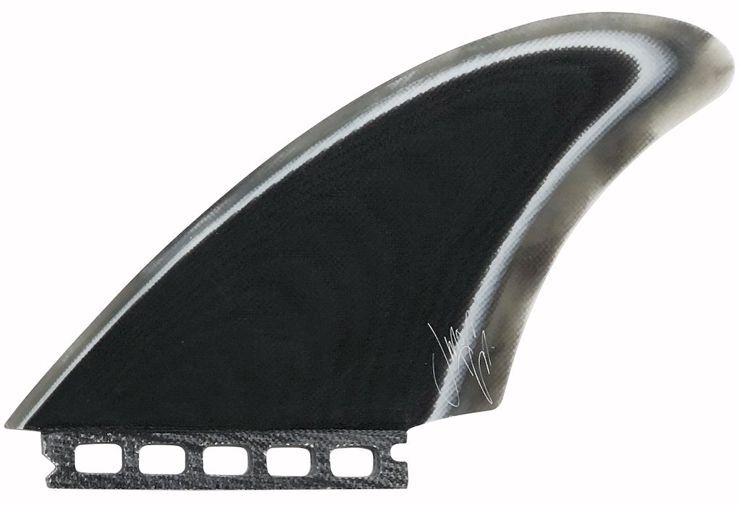

Photos from current listings. Actual item, color, and included accessories may vary.
Future Twin Fin Buying Guide
Future Twin Fin refers to twin-fin sets built for Futures Fin System boxes, typically keel or upright templates in fiberglass or honeycomb. The primary trade-off is template area versus pivot: large keels suit down-the-line speed and retro fish, while smaller upright twins loosen a modern shortboard. The decision rule is simple: match fin base to Futures boxes, then choose template area by board shape and wave type—skip any set that is not explicitly Futures-compatible.


At a glance
- Category
- Surf Fins, Leashes & Wax
- Data updated
- Nov 16, 2026
Current offers
Highlights
- Futures system uses a 3/4-inch deep rectangular base with a single set screw per box; twin sets must have two compatible bases, not FCS tabs.
- Keel templates run roughly 5.5–7.0 inches deep with 20+ square inches of area, delivering drive and hold for fish and mid-lengths.
- Upright twin templates sit near 5.0–5.5 inches deep with reduced area, giving quicker rail-to-rail pivot on performance shortboards.
- Fiberglass (FG) construction flexes predictably and damps chatter; honeycomb cores are lighter and stiffer, better for snappy small-wave twins.
Best use cases
- Best fit: retro fish or twin-fin mid-length in waist-to-head-high point break—pick a large-area keel twin in fiberglass for down-the-line drive.
- Best fit: modern twin shortboard in small-to-mid beach break—pick a smaller upright twin in honeycomb for quick pivot and release.
- Wrong fit: any board with FCS II or glass-on fins—Futures-base twins will not seat; choose the correct system or have glass-ons installed.
- Wrong fit: heavy gun or step-up in double-overhead surf—twin templates lack the hold of a thruster or quad; skip twins for big-wave control.
Buying tips
- Confirm base type: Futures twin sets have two rectangular bases with set-screw slots; FCS twin sets use twin tabs and will not fit Futures boxes.
- Match area to board: keels above roughly 20 square inches for fish and mid-lengths; upright twins under that for shortboards needing pivot.
- Check depth against fin box: Futures boxes accept bases up to about 3/4 inch deep; deeper or longer bases will not seat flush.
- Pick construction by wave: fiberglass for power and damped flex; honeycomb for lighter weight and snappier small-wave response.
Specs
| Fin System | Futures dual-tab rectangular base |
|---|---|
| Template Type | Keel vs upright twin |
| Construction | Fiberglass vs honeycomb core |
| Fin Area Tier | Large keel vs small upright |
Related searches
What to check before buying
- Board fin system: verify two Futures boxes with set screws, spaced per the board's twin layout, before buying any twin set.
- Board tail width: wider tails (fish, swallow) pair with larger keels; narrow tails pair with smaller upright twins for rail-to-rail speed.
- Rider weight and wave power: heavier riders or punchy surf need more fin area; lighter riders in weak surf benefit from reduced area.
- Companion parts: confirm set screws are included or on hand; Futures boxes require one screw per box and a compatible fin key.
FAQ
Data sources: eBay / Amazon listings and product attribute feeds Data updated Nov 16, 2026.
Some links on this page are affiliate links. If you buy after clicking one, we may earn a commission at no extra cost to you. This does not change which products appear here or their order. Affiliate disclosure.