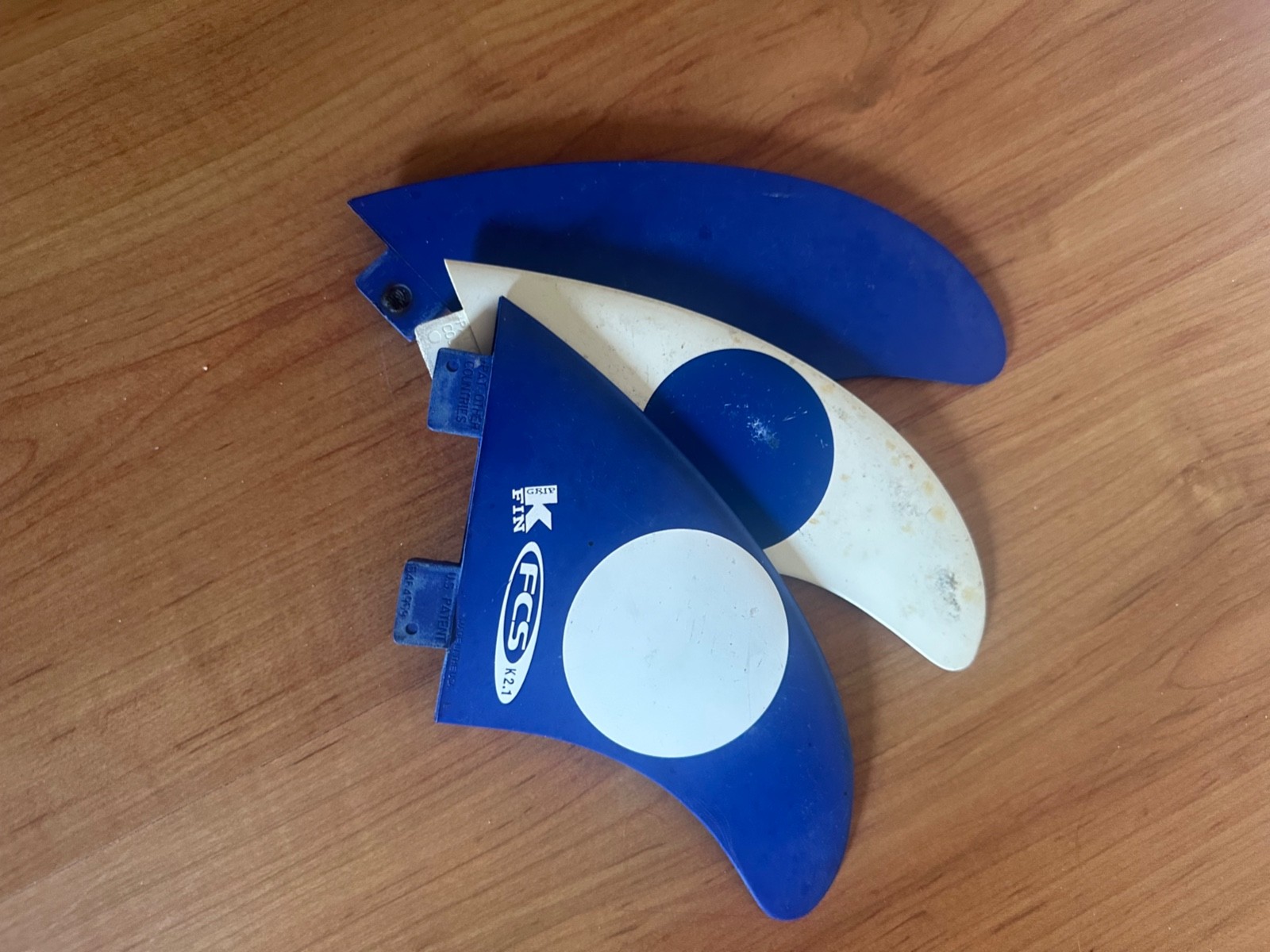

Photos from current listings. Actual item, color, and included accessories may vary.
Surf Fin Buying Guide
Surf fins are the removable or glassed-on hydrofoil blades that control a board's drive, pivot, and hold, and the primary trade-off is fin-box system compatibility versus fin construction and template shape. The decisive rule: match the fin system (FCS, FCS II, Futures, or glass-on) and fin construction (fiberglass, honeycomb, or molded composite) to your board and wave type before considering template aesthetics.


At a glance
- Category
- Surf Fins, Leashes & Wax
- Data updated
- Nov 16, 2026
Current offers
Highlights
- FCS uses two grub screws per fin in a shallow 2-tab plug; FCS II is tool-less snap-in but backward-compatible only with FCS II-compatible boards or dual-tab adapters.
- Futures uses a single long base tab secured by one screw at the rear of the box, distributing load along a longer base for stiff, drive-oriented templates.
- Fiberglass fins flex progressively and return energy; honeycomb cores are lighter and stiffer; molded composite fins are durable but have a dead, less responsive flex pattern.
- Twin-keel and twin-fin templates (roughly 4.5–6.5 inches deep) sit far back and upright for down-the-line speed, while thruster sets use a smaller center trailer for pivot.
Best use cases
- Pick a thruster set (three fins) for punchy beach breaks and vertical surfing; skip twin-keel sets unless you ride a retro fish or mid-length and want drawn-out rail turns.
- Choose FCS II or Futures if you swap fins often or travel; skip glass-on fins unless you want permanent, screw-free performance and never plan to change template.
- Use fiberglass fins in good-quality waves where flex response matters; choose molded composite or honeycomb for rocky reef breaks and beginner boards where durability outweighs feel.
- Match fin depth to board length: shortboards under 6'2" take medium (roughly 4.5–4.7 inch depth) templates, while longboards and mid-lengths need 7–9 inch single fins or side-bite sets.
Buying tips
- Confirm your board's fin system first: FCS dual-tab plugs accept only FCS fins, FCS II boxes accept FCS II and (with adapters) FCS, and Futures boxes accept only Futures-base fins.
- Fin area scales with rider weight: lightweight surfers under roughly 140 lb suit small templates, 140–180 lb suit medium, and over 180 lb suit large or XL templates for equivalent drive.
- For twin-keel setups, keep total fin area high and trailing edges near the tail; too-small keels on a fish cause spin-out and lost down-the-line speed.
- Inspect base-tab thickness and screw-hole alignment on arrival; a fin that rocks in the box or strips a grub screw will crack the plug under load and cannot be repaired cheaply.
Specs
| Fin System | FCS dual-tab / FCS II / Futures |
|---|---|
| Construction | Fiberglass / Honeycomb / Molded composite |
| Template Depth | Small ~4.3 in to Longboard ~9 in |
| Setup Type | Thruster / Twin / Keel / Single / Quad |
Related searches
What to check before buying
- Measure your board's fin boxes: count tabs (two for FCS, one long for Futures) and confirm box depth before ordering any fin set.
- Check rider weight and board length against the fin manufacturer's size chart (small/medium/large) rather than buying by color or team-rider branding.
- For travel, confirm the fin set includes a compatible fin key or screw set; FCS II tool-less fins still need grub screws if used in FCS dual-tab plugs.
- Verify your board's tail width and bottom contour: wide tails and flat bottoms pair with twin/keel templates, while narrow tails and single-to-double concaves favor thruster sets.
FAQ
Data sources: eBay / Amazon listings and product attribute feeds Data updated Nov 16, 2026.
Some links on this page are affiliate links. If you buy after clicking one, we may earn a commission at no extra cost to you. This does not change which products appear here or their order. Affiliate disclosure.