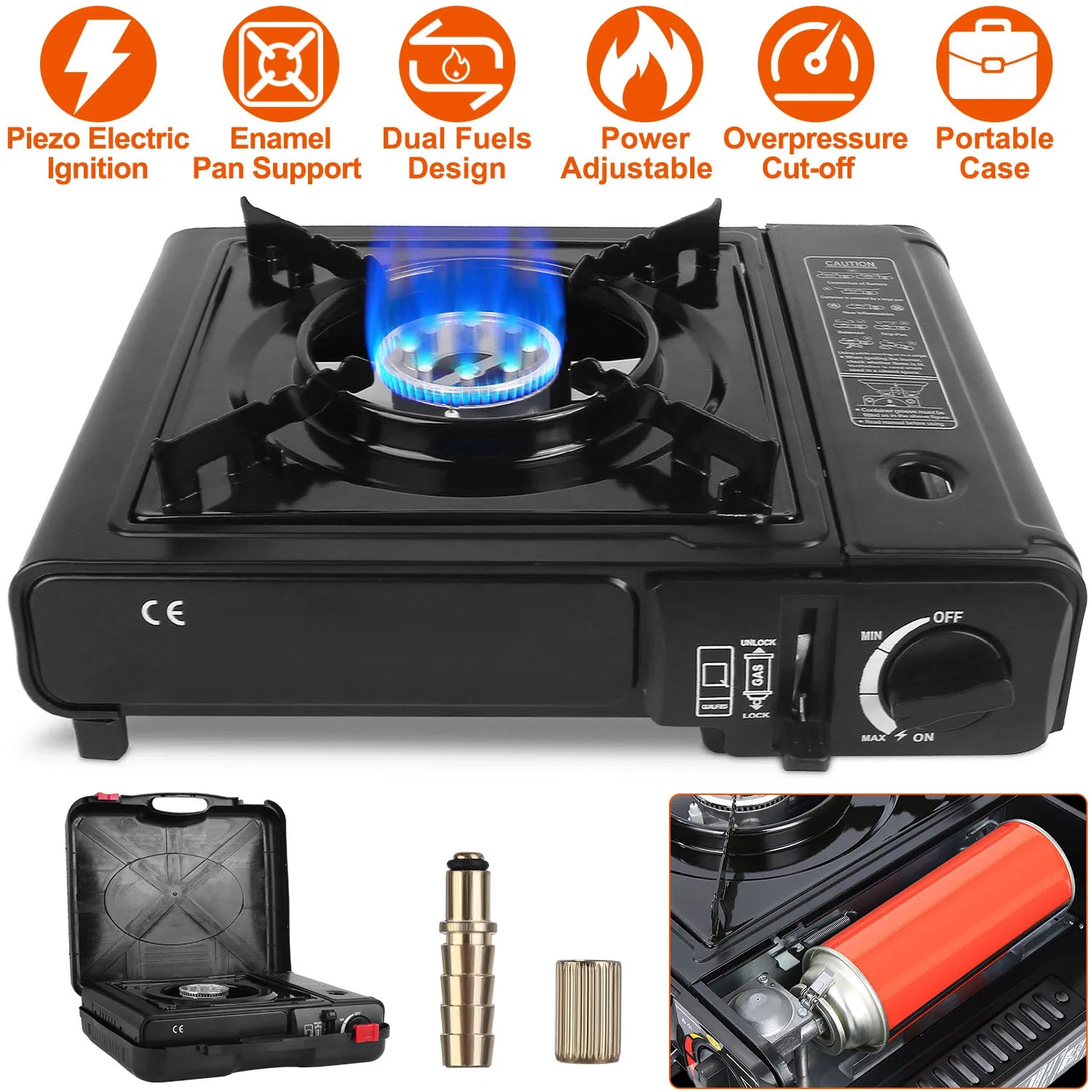

Photos from current listings. Actual item, color, and included accessories may vary.
Portable Electric Stove Buying Guide
A portable electric stove is a plug-in countertop or camp cooking appliance that trades fuel canisters for grid or battery power, with the core decision hinging on wattage-to-circuit compatibility and heating-element architecture (coil, induction, or halogen). Buyers must first match stove wattage to available outlet amperage, then choose element type by cookware material and heat-control precision; only induction and quality coil units with thermostatic control deliver durable, repeatable cooking.


At a glance
- Category
- Camp Kitchen & Stoves
- Data updated
- Nov 16, 2026
Current offers
Highlights
- Induction models transfer 85-90% of energy to the pan versus 60-70% for coil and 45-55% for butane, cutting cook times and ventilation needs.
- A 1800W stove draws 15A at 120V and requires a dedicated 20A kitchen circuit; 3000W+ dual-burner units need 240V or two separate 120V circuits.
- Cast-iron coil elements and sealed glass-ceramic induction tops resist warping and spills; thin exposed-nickel coil units degrade faster under repeated high-heat cycles.
- Piezo ignition and thermocouple flame-out protection apply to gas-hybrid dual-fuel burners; pure electric stoves instead rely on thermal fuses and auto-shutoff thermostats.
Best use cases
- Best fit: induction single-burner (1500-1800W) for apartment kitchens, dorm rooms, and RV counters with standard 15A outlets and magnetic stainless or cast-iron cookware.
- Best fit: dual coil or dual induction (two 120V plugs or one 240V) for family camp kitchens, garage canning, and backup cooking when you need two simultaneous pots.
- Wrong fit: 3000W+ dual-fuel butane/electric hybrid for indoor use — butane canisters require 18-inch clearance and produce CO; choose pure electric for enclosed spaces.
- Skip: unsealed coil stoves with plastic housings for daily high-heat wok cooking or pressure canning; step up to cast-iron coil or induction with thermal cutoff.
Buying tips
- Calculate circuit load: watts ÷ volts = amps. A 1800W stove on a 15A/120V circuit uses 15A — the entire circuit — so pair it with nothing else on that breaker.
- Match element to cookware: induction needs ferromagnetic bases (test with a magnet); coil and halogen work with any flat-bottom pot but waste heat into the room.
- Prefer stepless or thermostatic heat control over 5-step switches for simmering; coil stoves with infinite switches hold low heat far better than binary on/off models.
- For dual-burner portability, choose two independent 120V plugs (total 15A each) rather than one 240V plug unless your campsite or kitchen has a 240V receptacle.
Specs
| Heating Element | Induction / Coil / Halogen |
|---|---|
| Wattage Tier | 1200-1800W (120V) / 3000W+ (240V) |
| Burner Count | Single / Dual independent |
| Cookware Compat. | Magnetic base (induction) / Any flat-bottom |
Related searches
What to check before buying
- Measure your outlet: confirm a dedicated 15A or 20A 120V circuit within cord reach (typically 3-4 ft); 240V models need a NEMA 6-15/6-20 receptacle.
- Check counter and storage dimensions: allow 4-6 inches clearance above and behind the unit; folding or low-profile models fit under cabinets and in RV drawers.
- Verify cookware base diameter matches burner rings (usually 5-8 inches); oversized pots on small burners waste heat and can trip thermal cutoffs.
- Confirm ventilation: electric coil and halogen stoves emit radiant heat and require overhead exhaust or open windows; induction runs cooler but still needs airflow.
FAQ
Data sources: eBay / Amazon listings and product attribute feeds Data updated Nov 16, 2026.
Some links on this page are affiliate links. If you buy after clicking one, we may earn a commission at no extra cost to you. This does not change which products appear here or their order. Affiliate disclosure.