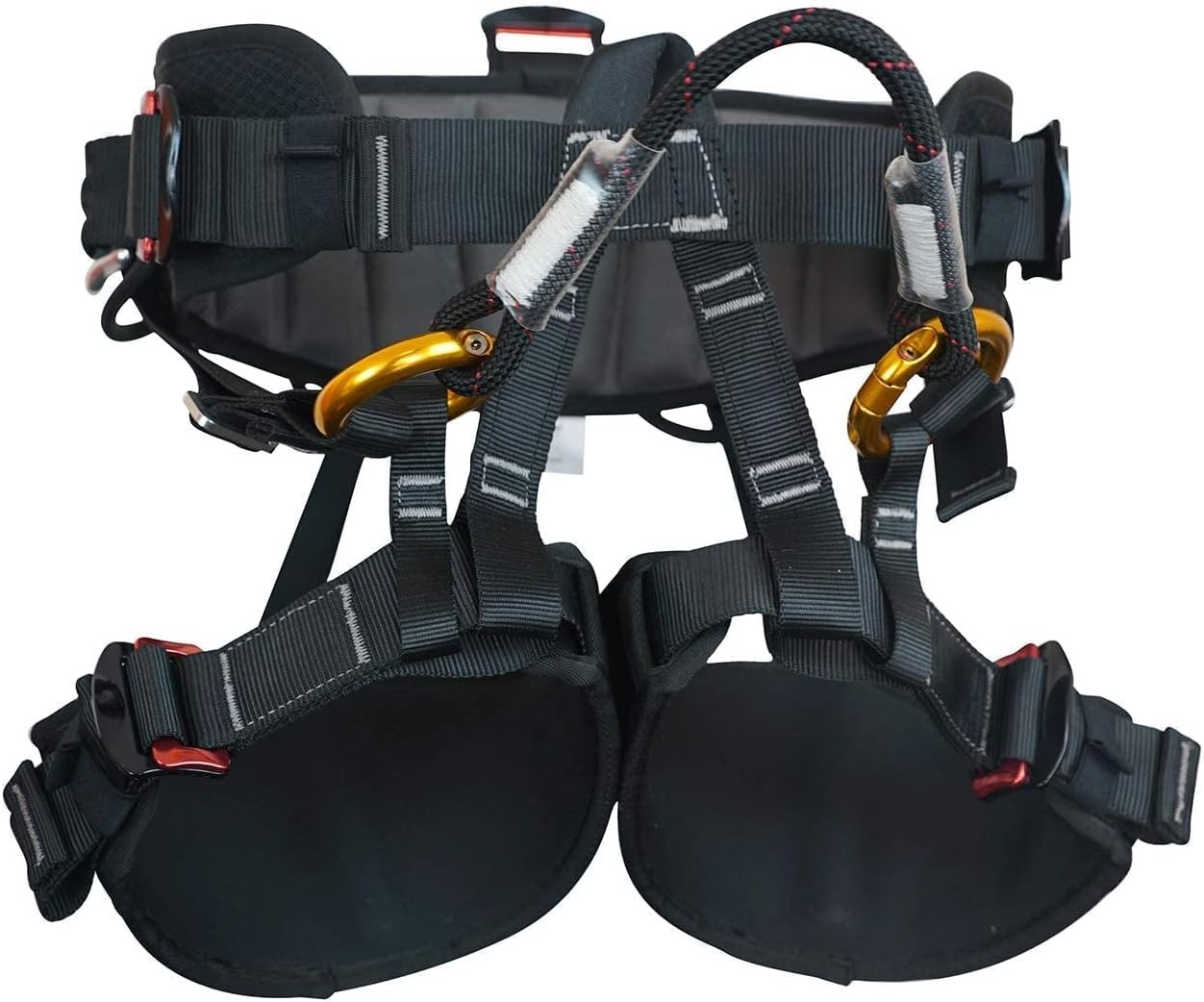

Photos from current listings. Actual item, color, and included accessories may vary.
Arborist Tree Climbing Rope Buying Guide
Arborist tree climbing rope is a life-safety line built for ascending, rigging, and working in trees, where the core trade-off is between static low-stretch control and dynamic energy absorption. Durable options use double-braided polyester or nylon with 11+ strands and a certified breaking strength above 5,000 lbs, while compromises are single-braid utility cords and tow ropes mislabeled for climbing. The decision rule: buy only rope explicitly rated for climbing or arborist work with a stated EN 1891 or ANSI Z133 pedigree; treat any unrated 3,700-lb double-braid as rigging-only.


At a glance
- Category
- Climbing Harnesses, Ropes & Quickdraws
- Data updated
- Nov 16, 2026
Current offers
Highlights
- Double-braided polyester (11-strand core) delivers near-zero stretch for rigging but is not a fall-arrest line; EN 1891 Type A low-stretch rope covers both climbing and light rigging.
- Breaking strength tiers: 3,700-5,000 lbs suits rigging and pull lines; 5,400-6,000+ lbs with a sewn or spliced eye is the working-climb threshold.
- Diameter drives grip and hardware fit: 11 mm for doubled-rope climbing systems, 12-13 mm for single-rope work lines that must run through mechanical prusiks.
- Polyester resists UV and abrasion better than nylon; nylon absorbs fall energy but loses strength wet, so static polyester dominates day-to-day arborist work.
Best use cases
- Best fit: stationary-rope ascending with a mechanical or friction hitch (VT, distel) on 11-12 mm EN 1891 low-stretch rope; skip 1/2 in utility double-braid for any life-loaded climb.
- Best fit: rigging limbs and lowering loads with a 1/2 in, 11-strand polyester double-braid rated 3,700+ lbs through a porta-wrap; do not use it as a personal climb line.
- Best fit: SRS (single-rope stationary) work at height needs a 12-13 mm line with a spliced eye and a rated harness bridge; skip half-body rescue harnesses for daily tree work.
- Wrong fit: towing, swing, or pulling cord sold in green 120 ft coils without an EN 1891 or ANSI Z133 label — reserve it for ground rigging, never for ascent.
Buying tips
- Match diameter to system: 11 mm for doubled-rope (DdRT) climbing, 12-13 mm for single-rope (SRS) with mechanical ascenders; 1/2 in (12.7 mm) double-braid is rigging, not climb line.
- Demand a stated standard: EN 1891 Type A (low-stretch, ≤5% elongation at 150 kg) or ANSI Z133-compliant arborist rope; unrated 'heavy duty' labels are a disqualifier for climbing.
- Check construction: 11+ strand double-braid with a braided core resists cover slippage and abrasion; 3-strand twist rope is for rigging only and snags on bark.
- Buy length by tree height plus 15-20 ft tail for knots and tie-offs; 120 ft suits most residential canopy work, 150-200 ft for tall conifers.
Specs
| Rope Construction | Double-braid 11+ strand vs 3-strand |
|---|---|
| Climb Rating | EN 1891 Type A / ANSI Z133 |
| Working Diameter | 11 mm DdRT / 12-13 mm SRS |
| Breaking Strength | 5,400-6,000+ lbs climb; 3,700 rig |
Related searches
What to check before buying
- Measure your tallest tie-in point and add 20 ft tail; confirm the rope length reaches ground with slack for a friction hitch.
- Verify your harness has a rated bridge and attachment points for the climbing system — a half-body rescue harness is not a tree-work saddle.
- Confirm hardware compatibility: 11 mm rope fits most mechanical prusiks and ascenders; 13 mm may not seat in tight cam devices.
- Check storage and UV exposure: polyester double-braid tolerates sun, but inspect cover for glazing and retire rope after abrasion or chemical contact.
FAQ
Data sources: eBay / Amazon listings and product attribute feeds Data updated Nov 16, 2026.
Some links on this page are affiliate links. If you buy after clicking one, we may earn a commission at no extra cost to you. This does not change which products appear here or their order. Affiliate disclosure.