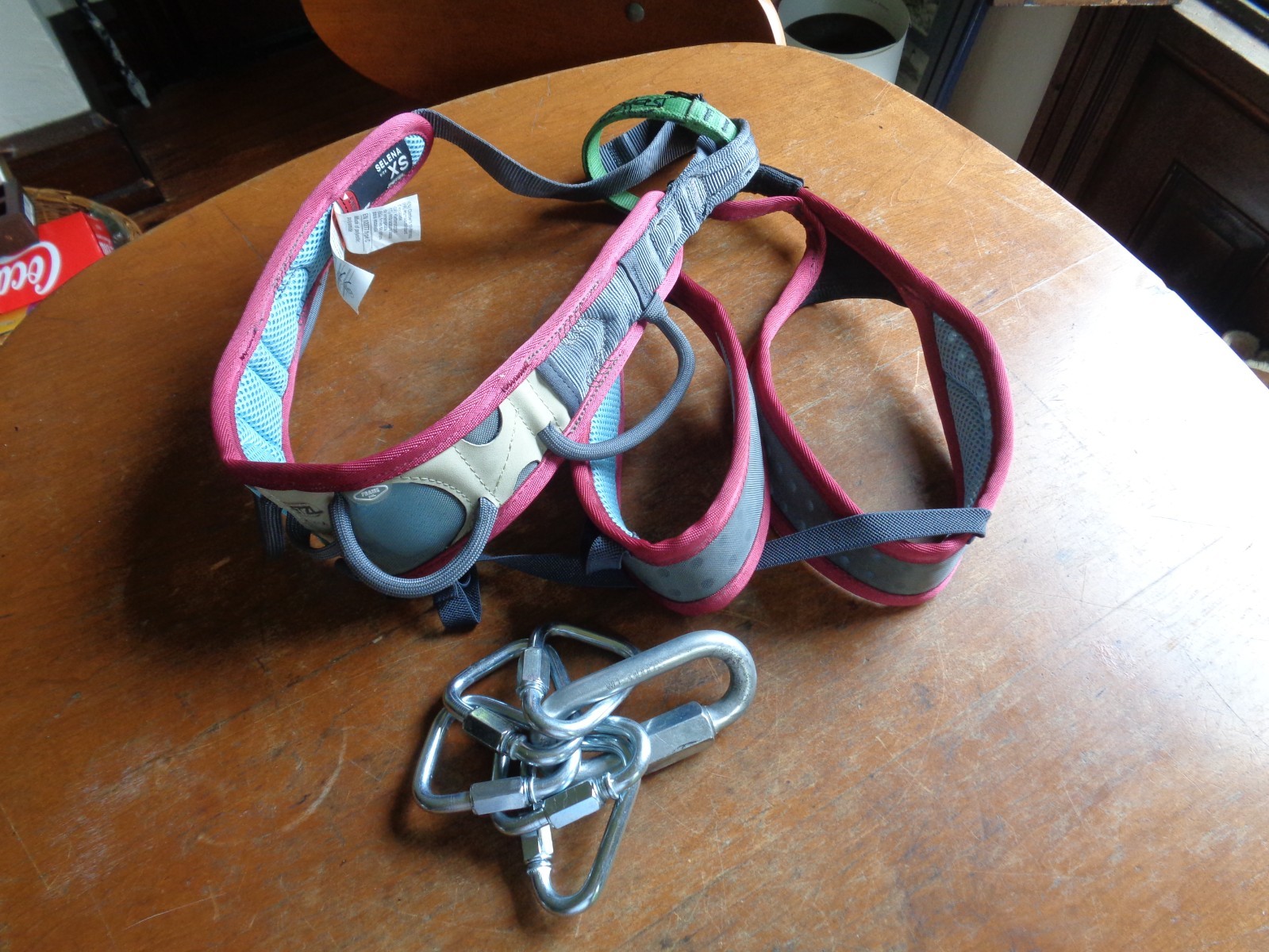

Photos from current listings. Actual item, color, and included accessories may vary.
Petzl Climbing Harness Buying Guide
Petzl climbing harnesses are load-bearing safety systems built for specific disciplines (sport, trad, alpine, gym), and the primary trade-off is weight and ventilation versus durability and gear-carrying capacity. The decision rule: match the harness to your discipline and use the correct Petzl size chart, because a comfortable harness that is the wrong size or lacks the required protection is not a durable or safe choice.


At a glance
- Category
- Climbing Harnesses, Ropes & Quickdraws
- Data updated
- Nov 16, 2026
Current offers
Highlights
- Petzl harness families differ by architecture: Sitta/Selk (ultralight sport/gym), Adjama/Corax (durable all-around), Luna/Selena (women's fit), Hirundos (premium sport), Calidris (trad gear loops).
- Harness durability is determined by webbing construction, reinforced tie-in points, and leg-loop padding; Petzl uses FRAME technology on performance harnesses for load distribution.
- Certification is mandatory and specific: EN 12277 (Type C for seat harnesses) and UIAA 105, with every harness carrying a CE mark and individual serial number for traceability.
- Gear loop capacity and shape vary by model—four vs five loops, rigid vs flexible—which directly affects trad and alpine racking efficiency; sport harnesses favor fewer, streamlined loops.
Best use cases
- Gym and sport climbing: choose a light, ventilated harness with two gear loops and adjustable leg loops (e.g., Sitta or Hirundos) and skip heavy trad harnesses with padded gel inserts.
- Trad and alpine multi-pitch: pick a harness with four or more rigid gear loops, ice-clipper slots, and durable abrasion-resistant leg loops (e.g., Calidris or Adjama), not ultralight sport models.
- Women or smaller climbers: select the women's-specific Petzl line (Selena, Luna) with a shorter rise and contoured waist belt rather than sizing down a unisex harness, which misaligns the belay loop.
Buying tips
- Size by waist and thigh circumference using the Petzl size chart, not by clothing size; XS–XL ranges differ between men's and women's models, and a slack waist belt above the hip bones signals a wrong size.
- Check the certification label: EN 12277 Type C and UIAA 105 are the baseline for climbing harnesses; a harness missing either is not a legitimate climbing harness.
- Match gear loops to discipline: two loops for sport/gym, four or more with rigid structure and ice-clipper slots for trad and alpine; more loops add weight and bulk.
- Replace any harness with visible webbing abrasion, a damaged belay loop, or after a major fall with shock-loading, and observe the manufacturer's recommended retirement age.
Specs
| Harness Type | Seat harness (EN 12277 Type C) |
|---|---|
| Certification | CE / EN 12277 / UIAA 105 |
| Leg Loop Style | Adjustable vs fixed elastic |
| Gear Loops | 2-5 loops; rigid vs flexible |
Related searches
What to check before buying
- Measure waist circumference at the iliac crest and thigh circumference at the widest point, then compare to the Petzl size chart for the specific model, since sizing varies by family.
- Confirm the harness has the required certification (EN 12277 Type C, UIAA 105) and a legible serial number for inspection and traceability.
- Verify compatibility with your climbing style: gear loop count for trad vs sport, adjustable vs fixed leg loops for layering, and ice-clipper slots for winter use.
- Inspect stitching, tie-in points, and belay loop condition before first use, and confirm the harness matches your intended discipline rather than compromising on a mismatched tier.
FAQ
Data sources: eBay / Amazon listings and product attribute feeds Data updated Nov 16, 2026.
Some links on this page are affiliate links. If you buy after clicking one, we may earn a commission at no extra cost to you. This does not change which products appear here or their order. Affiliate disclosure.