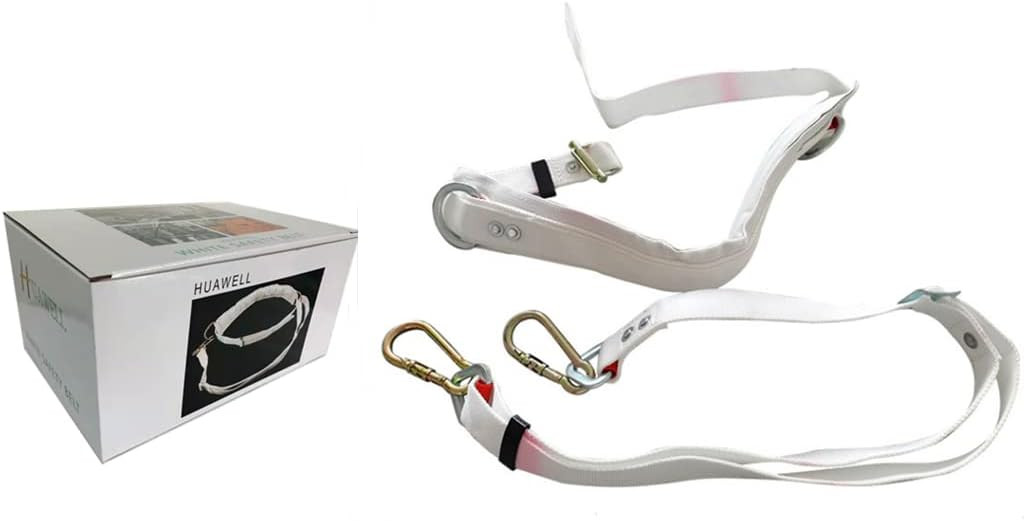

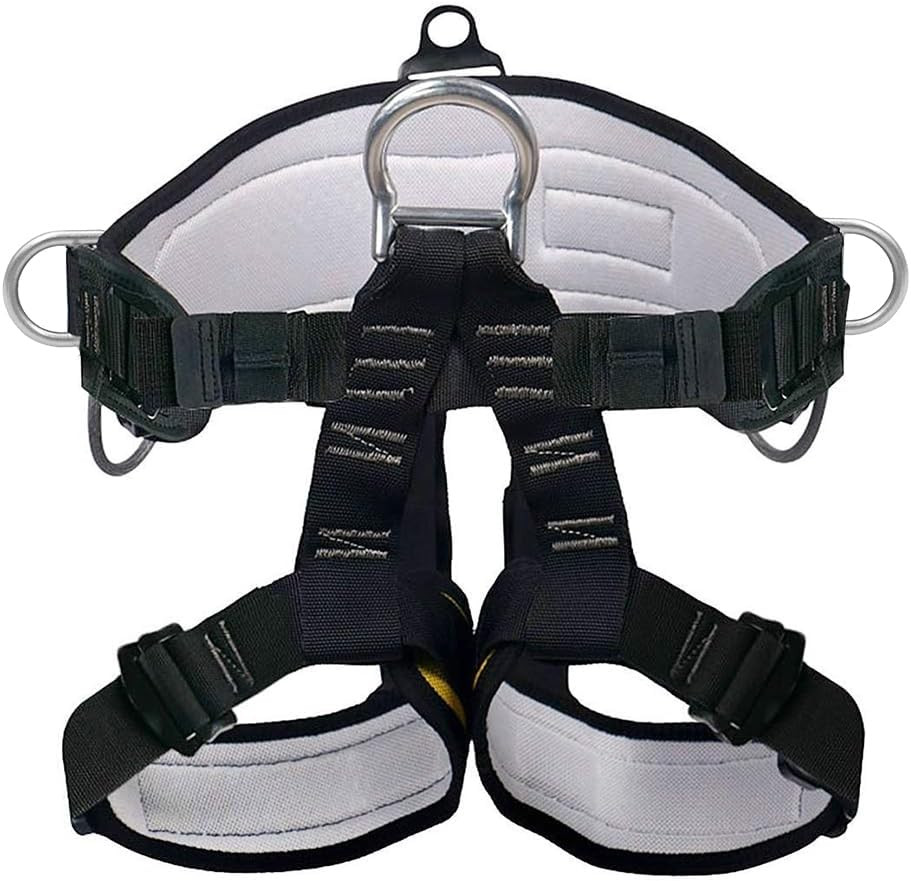
Photos from current listings. Actual item, color, and included accessories may vary.
Safety Harness Buying Guide
A safety harness is a load-bearing body-holding system that distributes fall-arrest forces across the pelvis, thighs, and chest through webbing, buckles, and attachment points. The core trade-off is certified structural integrity (EN 361/ANSI Z359 full-body fall arrest vs. lightweight positioning or sports half-harness designs) against bulk, weight, and cost. Choose a full-body harness with dorsal D-ring and qualified buckle hardware for any fall hazard; a waist-only or half-harness is only for positioning, tree-climbing work-seat support, or via ferrata—never for free-fall arrest.


At a glance
- Category
- Climbing Harnesses, Ropes & Quickdraws
- Data updated
- Nov 16, 2026
Current offers
Highlights
- Full-body fall-arrest harnesses must meet ANSI Z359.11 or EN 361 and include a dorsal D-ring rated to 5,000 lbf (22 kN) minimum.
- Webbing grade drives durability: 44-45 mm wide polyester/nylon webbing with 5,000+ lbf tensile strength; 'thickened' or padded waist belts add comfort, not certification.
- Buckle architecture separates tiers: forged steel D-rings and aluminum quick-connect buckles vs. stamped steel and plastic friction buckles that deform under shock loads.
- Work-positioning and tree-climbing harnesses use side D-rings and a floating waist belt for lanyard/flip-line support, but lack the shoulder straps and dorsal attachment required for fall arrest.
Best use cases
- Tree climbing with a flip line and work positioning: pick a half-body or saddle harness with side D-rings, wide padded waist, and leg loops—skip a chest-strap full-body unless fall arrest is required.
- Roofing, fall arrest, or any free-fall hazard: choose a certified full-body harness with dorsal and sternal D-rings plus shock-absorbing lanyard; a waist-only belt is a fatal wrong-fit.
- Tower or confined-space rescue: select a full-body harness with rescue D-rings and shoulder lift points; a recreational climbing harness lacks the attachment geometry for vertical extraction.
Buying tips
- Match harness class to hazard: fall arrest requires full-body with dorsal D-ring per Z359.11/EN 361; positioning/tree work accepts half-body with side D-rings per EN 358.
- Size by waist and thigh circumference, not clothing size: most harnesses fit waists of roughly 70-130 cm with adjustable leg loops; confirm weight rating (commonly 100-140 kg).
- Inspect webbing date and hardware grade before use: polyester webbing degrades from UV and abrasion; forged D-rings and steel adjusters outlast stamped or plastic buckles.
- Replace after any fall event or 5 years of service (whichever first); UV-faded, frayed, or cut webbing is retirement criteria regardless of visual hardware condition.
Specs
| Harness Class | Full-body fall arrest vs half/saddle |
|---|---|
| Certification | ANSI Z359.11 / EN 361 / EN 358 |
| D-ring Rating | 5,000 lbf (22 kN) minimum |
| Webbing Width | 44-45 mm polyester/nylon |
Related searches
What to check before buying
- Measure waist at navel and thighs at fullest point; harness sizing is circumference-based, and leg loops must clear bulky work clothing.
- Confirm anchor height and clearance: fall-arrest systems need enough free space below the worker for lanyard deployment plus 1 m safety clearance.
- Check attachment compatibility: lanyards, flip lines, and connectors must match D-ring size and gate opening (typically 17-22 mm) and be same-standard rated.
- Verify environment: UV exposure, chemical contact, and abrasive edges shorten webbing life; store dry and inspect before every use.
FAQ
Data sources: eBay / Amazon listings and product attribute feeds Data updated Nov 16, 2026.
Some links on this page are affiliate links. If you buy after clicking one, we may earn a commission at no extra cost to you. This does not change which products appear here or their order. Affiliate disclosure.