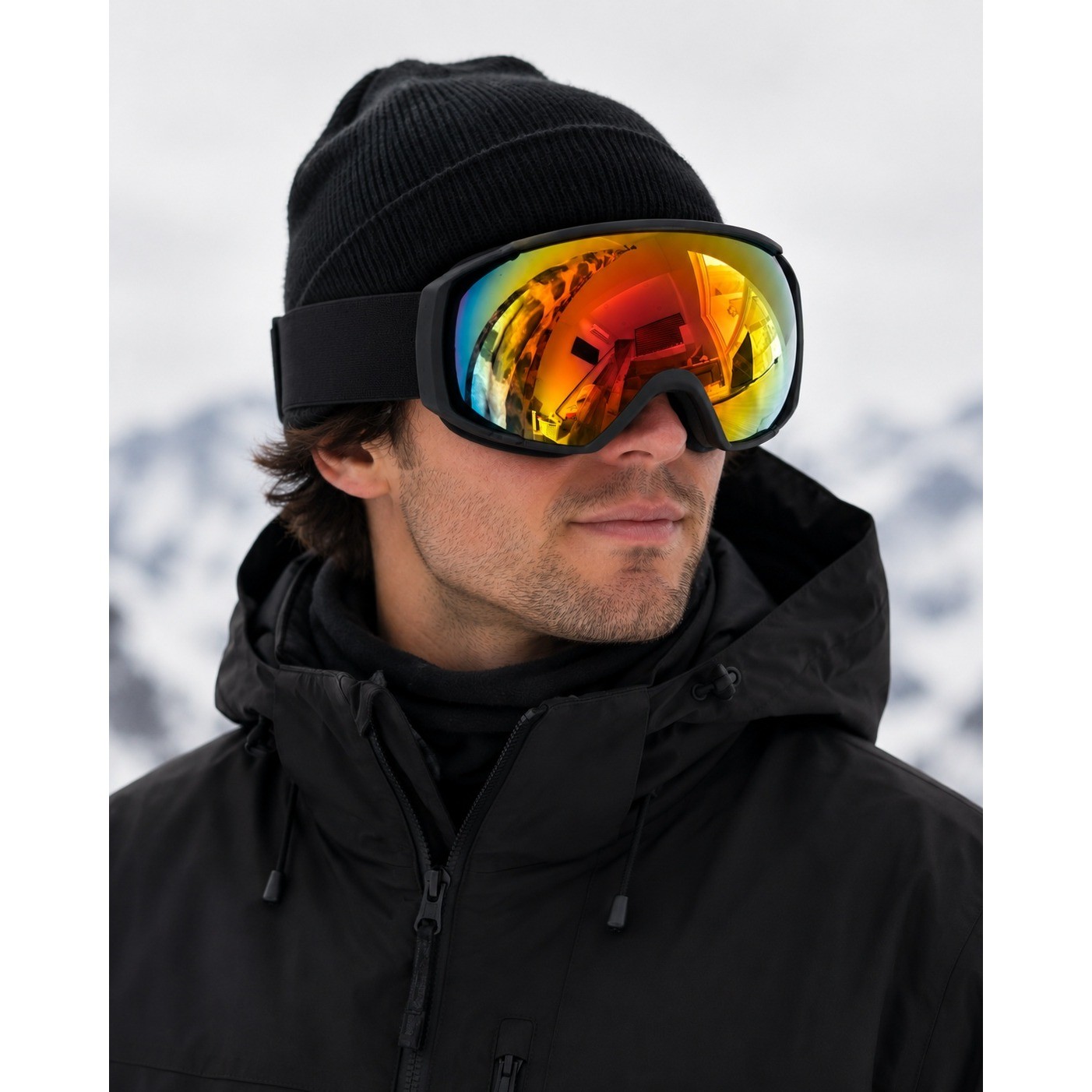

Photos from current listings. Actual item, color, and included accessories may vary.
Outdoormaster Ski Goggle Buying Guide
OutdoorMaster ski goggles are value-tier cylindrical and toric lens goggles built for recreational skiing and snowboarding, where the core trade-off is lens interchangeability and anti-fog coating quality versus optical clarity and field of view at higher tiers. The decisive rule: buy OutdoorMaster for occasional resort days and backup/spare use, but step up to brand-name spherical or toric magnetic-swap goggles if you ski frequently in flat light, wear prescription glasses, or demand distortion-free optics.


At a glance
- Category
- Snow Helmets, Goggles & Apparel
- Data updated
- Nov 16, 2026
Current offers
Highlights
- Lens geometry splits the line: entry models use flat cylindrical lenses (cheaper, more distortion at edges), while pro/toric models approximate spherical curvature for wider peripheral vision.
- Anti-fog depends on dual-layer lens construction plus an inner hydrophilic coating; single-layer lenses fog quickly when sealed against a helmet or balaclava.
- Magnetic quick-swap lens systems dominate current OutdoorMaster designs, letting riders change VLT tints for sun, flat light, and night without tools.
- OTG (over-the-glasses) fit is model-specific: deep frame cutouts and a wider nose bridge are required to clear prescription frames without pressure points.
Best use cases
- Best fit: recreational resort skiers doing a handful of days per season who want a spare lens for changing light — pick a magnetic-swap model with a dual-layer lens.
- Best fit: glasses wearers needing an affordable OTG goggle — choose explicitly labeled OTG frames with a broad nose notch and test helmet compatibility.
- Wrong fit: daily riders and racers chasing optical clarity and minimal distortion — spend up for spherical/toric brand-name optics instead.
- Skip: single-layer lens versions at any price; they fog under exertion and lack the thermal barrier that makes dual-lens goggles work.
Buying tips
- Match lens VLT to conditions: roughly 10–20% VLT for bright sun, 20–40% for mixed/cloudy, and 40%+ or clear for night and storm days.
- Choose dual-layer lenses with an anti-fog inner coating; single-layer lenses fog from temperature gradient and breath moisture.
- For OTG use, confirm frame depth clears glasses at the temples and nose; shallow frames press frames into cheeks and cause fogging.
- Verify helmet-goggle gap: a goggle wider than the helmet brim leaves an exposed forehead strip and channels cold air; match widths within about 1 cm.
Specs
| Lens Geometry | Cylindrical vs Toric/Spherical |
|---|---|
| Lens Construction | Dual-layer anti-fog vs single-layer |
| Lens Swap | Magnetic quick-swap vs fixed frame |
| OTG Fit | OTG cutout vs standard frame |
Related searches
What to check before buying
- Measure helmet width at the brow and goggle frame width; a gap over ~1 cm creates a cold-air channel and exposed skin.
- Check whether your helmet has a goggle strap channel or rear clip; smooth-shell helmets need a silicone-backed strap to prevent slipping.
- Confirm your prescription glasses temple width fits inside the frame cutout before relying on OTG compatibility.
- Match lens tint to your most common light conditions; one lens cannot cover bright sun and flat light well.
FAQ
Data sources: eBay / Amazon listings and product attribute feeds Data updated Nov 16, 2026.
Some links on this page are affiliate links. If you buy after clicking one, we may earn a commission at no extra cost to you. This does not change which products appear here or their order. Affiliate disclosure.