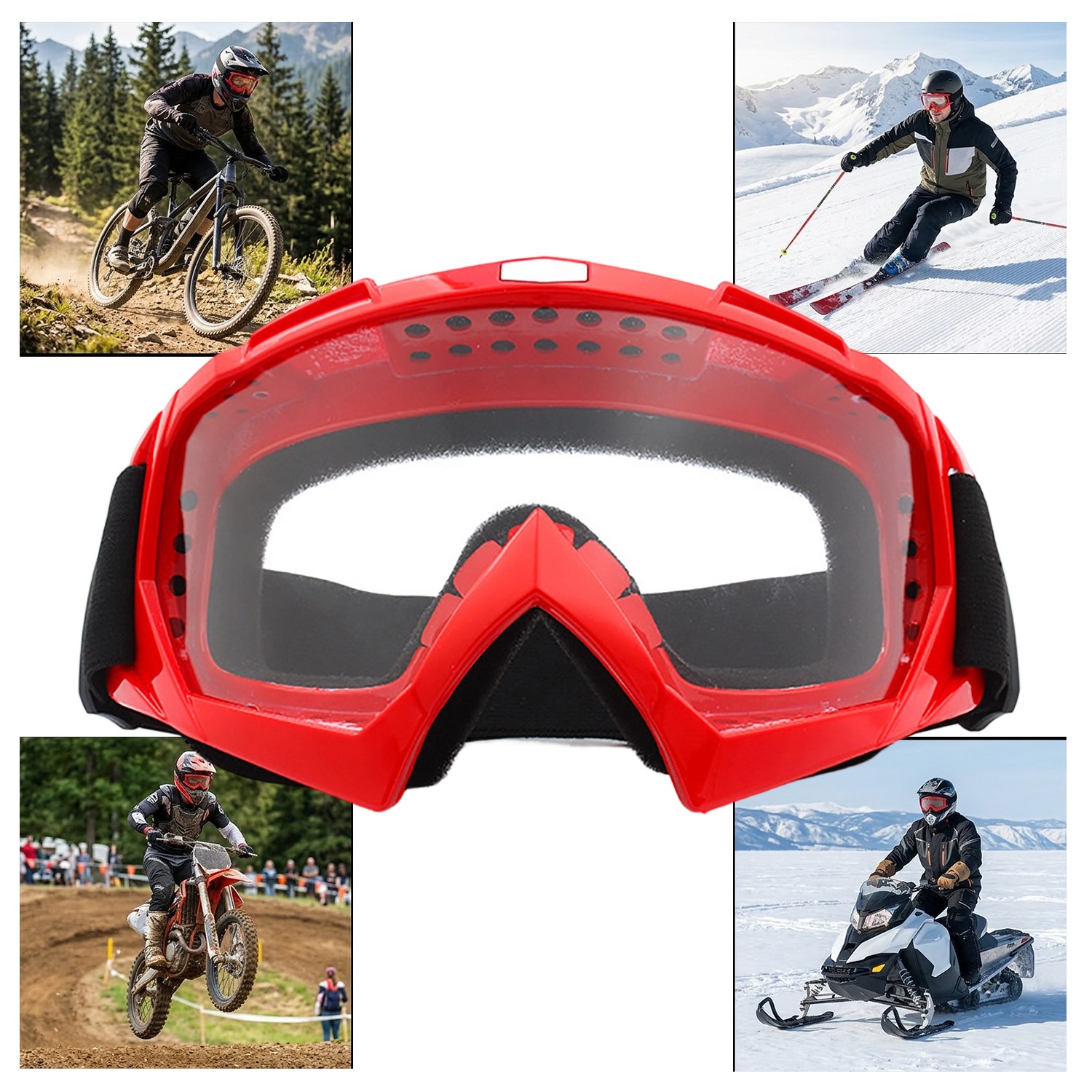

Photos from current listings. Actual item, color, and included accessories may vary.
Skiing Goggle Buying Guide
Skiing goggles are sealed, vented eyewear that must match your helmet's fit, your lens tint to the light conditions, and your prescription needs. The core trade-off is lens interchangeability and ventilation versus price; buying a fixed-tint, single-layer foam goggle is a compromise that fogs and forces a second purchase, while dual-pane or magnetic-swap models with helmet-compatible frames last seasons.


At a glance
- Category
- Snow Helmets, Goggles & Apparel
- Data updated
- Nov 17, 2026
Current offers
Highlights
- Dual-pane lenses with an anti-fog coating between the panes are the minimum for skiing; single-pane lenses fog and scratch permanently.
- OTG (over-the-glasses) frames need at least 15 mm of internal depth and a cut-out in the foam; standard goggles pinch temple arms.
- Magnetic quick-swap lens systems let you change VLT ratings (e.g., 10-20% for sun, 50-80% for storms) without removing the frame.
- Helmet compatibility requires a 3-row silicone-backed strap at least 40 mm wide and a frame that fits the helmet's brow gap without a gap.
Best use cases
- Pick an OTG goggle with a 15 mm+ internal depth and a flat nose bridge if you wear prescription glasses; skip low-profile spherical frames that press on temples.
- Choose a magnetic-swap goggle with two lenses (cat. 3 sun + cat. 1 storm) if you ski variable light or travel; skip single fixed-tint lenses unless you only ski bluebird days.
- Buy a low-volume, small-frame goggle for kids or narrow faces; skip oversized 'frameless' models that gap at the nose and let snow in.
- For lift-served resort skiing, prioritize a cylindrical or spherical dual-pane with 3-layer face foam; skip single-layer foam and non-helmet straps.
Buying tips
- Measure your helmet's brow-to-cheek gap: goggles should sit flush with no skin gap; a 10 mm gap means the frame is too small or strap too narrow.
- Match VLT to conditions: 10-20% VLT for bright sun, 40-60% for mixed cloud, 70-90% for night/storm; buy a second lens rather than a compromise tint.
- Check strap width and silicone: a 40 mm+ strap with silicone strips grips a helmet shell; 25 mm straps slip and need a goggle clip.
- For OTG, verify internal depth 15 mm+ and a foam cut-out at the temples; otherwise your glasses arms bend and fog behind the lens.
Specs
| Lens Construction | Dual-pane anti-fog vs single-pane |
|---|---|
| OTG Clearance | 15 mm+ internal depth / temple cut-out |
| Lens Swap | Magnetic quick-swap vs fixed frame |
| Strap Width | 40 mm+ silicone-backed vs 25 mm plain |
Related searches
What to check before buying
- Measure your helmet width at the temples and compare to the goggle frame's outer width; a mismatch causes pressure points or gaps.
- Confirm your helmet has a rear goggle strap clip or a smooth shell; straps without silicone need a clip to stay put.
- Check your prescription glasses' temple width; OTG frames need 5 mm clearance on each side to avoid pinching.
- Match lens VLT to your most common light: a single 20% VLT lens is too dark for storm days and too light for full sun.
FAQ
Data sources: eBay / Amazon listings and product attribute feeds Data updated Nov 17, 2026.
Some links on this page are affiliate links. If you buy after clicking one, we may earn a commission at no extra cost to you. This does not change which products appear here or their order. Affiliate disclosure.