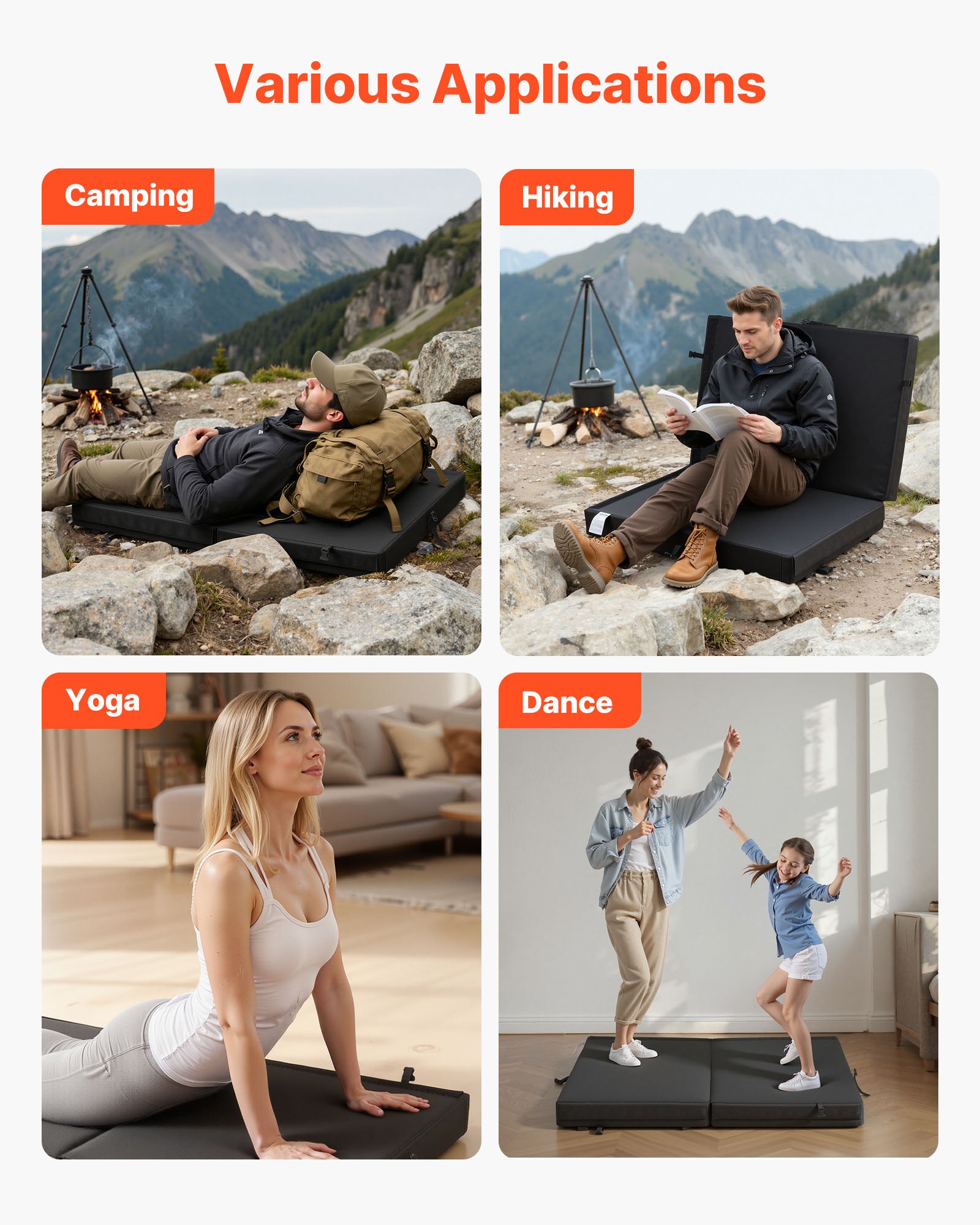

Photos from current listings. Actual item, color, and included accessories may vary.
Bouldering Crash Pad Buying Guide
A bouldering crash pad is a portable foam landing system that absorbs falls from low-height climbing without ropes. The core trade-off is foam quality versus packability: denser, thicker foam protects better but is heavier and bulkier. Choose a pad with a closed-cell polyethylene (PE) base layer and open-cell polyurethane (PU) top layer for durability; skip single-layer foam pads that bottom out after a few seasons.


At a glance
- Category
- Climbing Helmets & Protection
- Data updated
- Nov 17, 2026
Current offers
Highlights
- Bi-fold pads hinge in the middle for carrying; tri-fold pads fold twice for a smaller packed size but have more seams that can wear.
- Closed-cell PE foam (typically 1–2 inches) resists compression and provides the structural base; open-cell PU foam (2–3 inches) cushions impact but degrades faster.
- Cordura or 900D polyester shells with bartack stitching at stress points outlast thin nylon covers prone to abrasion holes.
- A flap or taco-style pad eliminates the hinge gap where falls can slip between folded sections.
Best use cases
- Best for frequent outdoor bouldering: choose a bi-fold or tri-fold pad with at least 4 inches total foam thickness and a 900D+ shell.
- Best for gym-to-outdoor crossover: pick a pad with backpack straps and a waist belt so you can hike to problems; skip strapless mats.
- Wrong fit for highball problems above 15 feet: a standard crash pad is insufficient; you need multiple pads or a portaledge-style system.
- Skip thin single-layer foam mats under 3 inches thick for outdoor use; they are only adequate for indoor gym warm-ups.
Buying tips
- Match pad surface area to your fall zone: a 35x24-inch pad suits sit-starts and low traverses; a 48x36-inch pad covers larger landing zones.
- Check folded dimensions against your vehicle trunk and backpack capacity; folded thickness over 10 inches becomes awkward to carry.
- Choose a pad with a hinge flap or continuous foam fold to eliminate the dead zone between folded halves.
- Look for a shell made of at least 600D polyester or Cordura with reinforced corners; lighter fabrics wear through on granite and sandstone.
Specs
| Fold Style | Bi-fold / Tri-fold / Taco |
|---|---|
| Foam Layers | Closed-cell PE + open-cell PU |
| Total Thickness | 3–5 in (4+ in outdoor) |
| Shell Material | 600D–900D polyester/Cordura |
Related searches
What to check before buying
- Measure your approach hike distance and terrain: pads over 10 lbs with backpack straps suit 1–2 mile approaches; heavier pads need a haul system.
- Confirm the folded size fits your vehicle trunk or roof rack before buying; tri-fold pads pack smaller than bi-fold pads of equal surface area.
- Check the landing zone at your local crag: rocky or sloped ground requires a thicker pad (5+ inches) or a pad with a grippy bottom surface.
- Verify the pad includes a carrying system (straps, handle, or waist belt) if you plan to hike; bare pads are difficult to transport.
FAQ
Data sources: eBay / Amazon listings and product attribute feeds Data updated Nov 17, 2026.
Some links on this page are affiliate links. If you buy after clicking one, we may earn a commission at no extra cost to you. This does not change which products appear here or their order. Affiliate disclosure.