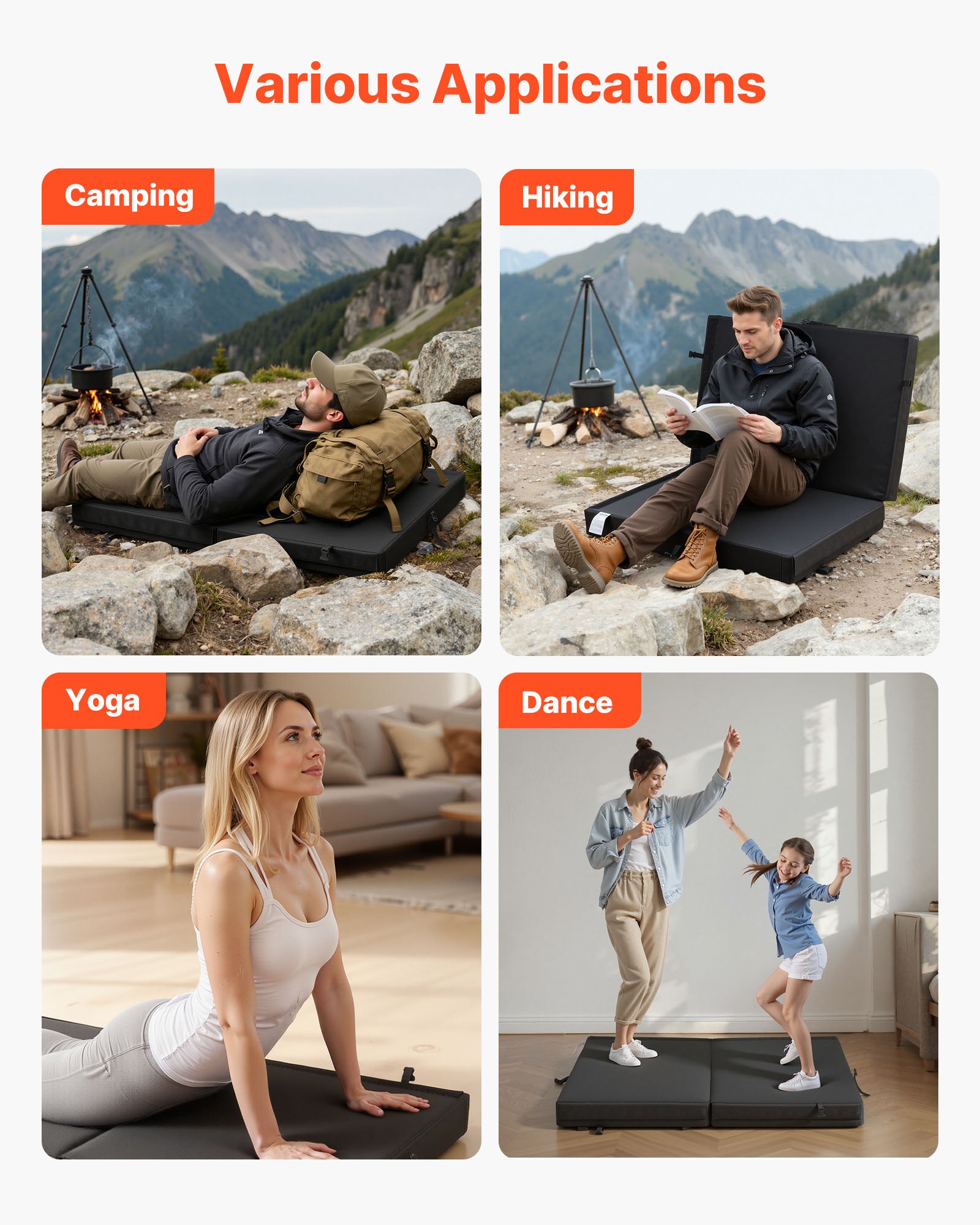

Photos from current listings. Actual item, color, and included accessories may vary.
Climbing Crash Pad Buying Guide
A climbing crash pad is a portable landing system for bouldering, built around a foam sandwich that absorbs impact and a shell that resists abrasion. The primary trade-off is between foam thickness/quality for impact absorption and packability/weight for the approach; cheap pads cut foam density, hinge integrity, and strap durability. The decision rule: buy a pad with closed-cell polyethylene (PE) base foam plus open-cell polyurethane (PU) top foam, a 900D+ abrasion-resistant shell, and a full-perimeter hinge — anything less is a compromise for real outdoor falls.


At a glance
- Category
- Climbing Helmets & Protection
- Data updated
- Nov 17, 2026
Current offers
Highlights
- Foam construction: closed-cell PE bottom layer (40–60 kg/m³) for structure and open-cell PU top layer (25–35 kg/m³) for impact absorption; all-PU pads bottom out on repeated falls.
- Shell fabric: 900D–1680D nylon or polyester with PU coating; lower-denier shells abrade through on granite and sandstone within a season of regular use.
- Hinge design: full-length fabric hinge with 1–2 cm foam gap prevents the pad from folding on impact; cheap stitched-only hinges tear or create a hard pressure point.
- Closure and carry: dual adjustable shoulder straps, a waist belt, and a top grab handle are the minimum for realistic approach carry; single-strap pads bounce and fatigue shoulders.
Best use cases
- Best fit: outdoor bouldering on short approaches — pick a bi-fold or taco pad with 4–5 in (10–13 cm) total foam thickness and 900D+ shell; skip thin 2–3 in pads and single-layer foam designs.
- Best fit: gym-to-outdoor crossover — choose a bi-fold with a flat landing zone (no deep hinge groove) and a shell that wipes clean; avoid taco pads if you mostly boulder indoors where flat landings matter.
- Wrong fit: highball or multi-pad problems — a single pad is insufficient; you need two or three overlapping pads plus a spotter; do not buy a single lightweight pad expecting highball coverage.
- Wrong fit: long alpine approaches — heavy 5 in pads with 1680D shells exceed 15 lb; for long carry, a 3–4 in lightweight pad is the right compromise, not a full-thickness model.
Buying tips
- For falls above 8–10 ft, use at least 4 in (10 cm) of total foam; 2–3 in pads are only adequate for low traverses and sit-starts.
- Match pad footprint to your problem: a 40–48 in wide pad covers a single landing zone; 52–60 in wide pads reduce the need for a second pad but add weight and bulk.
- Check the shell denier and coating: 900D+ with PU coating resists abrasion and moisture; 600D or uncoated nylon wears quickly on rough rock and soaks up water.
- Prefer a full-perimeter hinge with a foam gap over stitched-only hinges; the gap prevents the pad from folding at the hinge and keeps the landing surface flat.
Specs
| Foam Layer | Closed-cell PE base + open-cell PU top |
|---|---|
| Total Thickness | 4–5 in (10–13 cm) for outdoor |
| Shell Denier | 900D–1680D PU-coated nylon |
| Hinge Type | Full-perimeter bi-fold or taco hinge |
Related searches
What to check before buying
- Measure your vehicle trunk or hatch opening: folded pad dimensions (e.g., 35.6 x 24 x 8.3 in) must fit; oversized bi-folds often do not fit compact cars.
- Check the landing zone at your local crag: sharp rocks or talus require a thicker pad (5 in) and a tougher shell; smooth gym floors tolerate a thinner pad.
- Confirm the pad has a closure system (buckle or strap) that stays shut during carry; open pads spill foam and catch on branches.
- Verify the pad includes shoulder straps and a waist belt for the approach; pads sold without straps require a separate carry system or a long awkward walk.
FAQ
Data sources: eBay / Amazon listings and product attribute feeds Data updated Nov 17, 2026.
Some links on this page are affiliate links. If you buy after clicking one, we may earn a commission at no extra cost to you. This does not change which products appear here or their order. Affiliate disclosure.