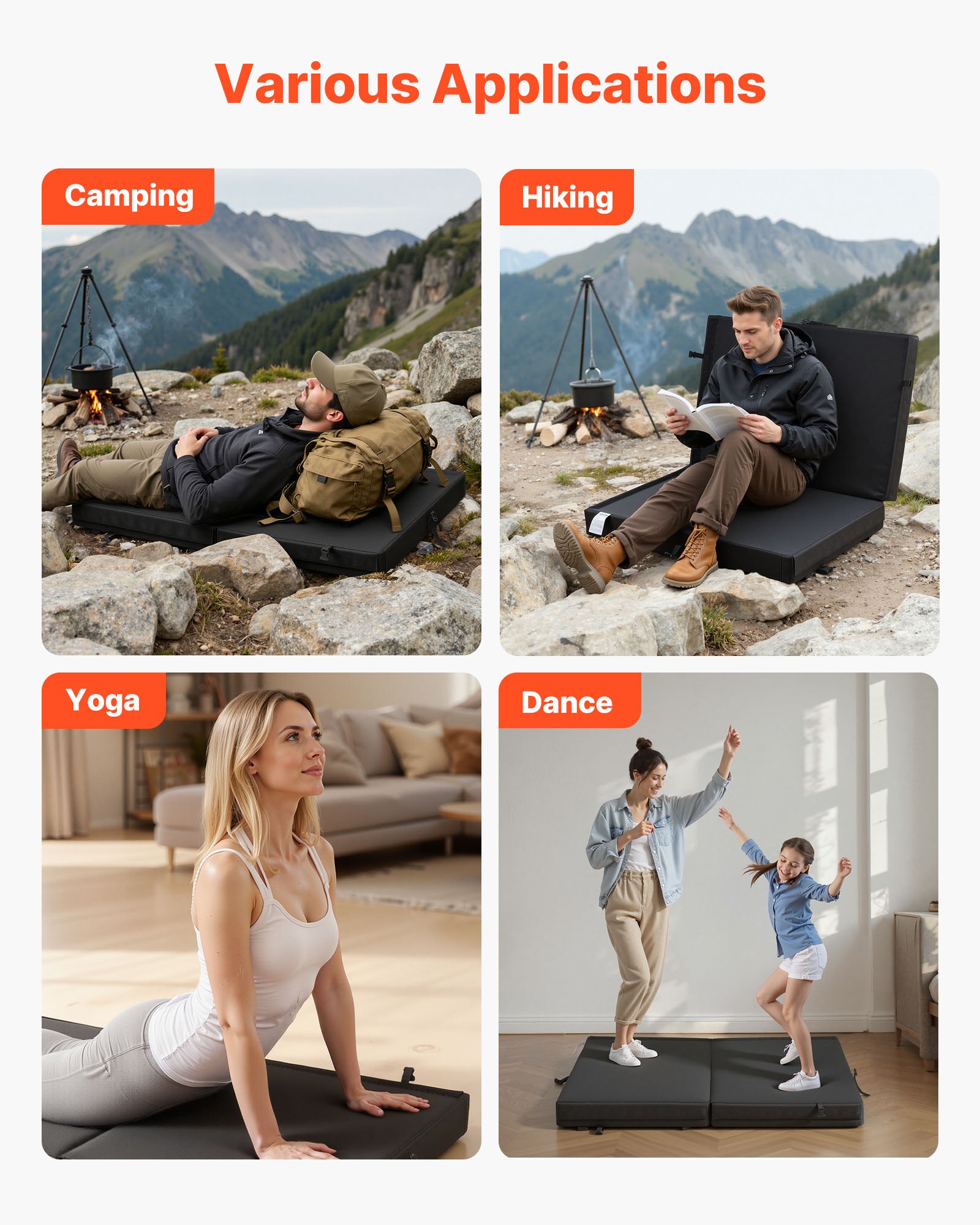

Photos from current listings. Actual item, color, and included accessories may vary.
Rock Climbing Crash Pad Buying Guide
A rock climbing crash pad is a portable, foldable landing surface that absorbs bouldering falls, and its performance hinges on foam layering (closed-cell PE base plus open-cell PU top) and hinge/flap construction that prevents ground impact. The decisive rule: buy a pad with a dual-density foam stack, a full-coverage hinge flap, and a rated thickness of at least 4 inches open; single-foam pads and thin 'beginner' mats bottom out and are compromises.


At a glance
- Category
- Climbing Helmets & Protection
- Data updated
- Nov 17, 2026
Current offers
Highlights
- Dual-density foam stack (closed-cell polyethylene base + open-cell polyurethane top) is the industry standard; single-foam pads compress permanently and transmit impact.
- Open thickness of 4-5 inches is the practical minimum for bouldering; folded carry thickness of 7-9 inches indicates adequate foam volume.
- A full-length hinge flap (a fabric skirt covering the fold) is critical—pads without it expose the hinge seam to dirt and allow ground strikes at the center.
- Carry systems range from simple handle straps to padded backpack harnesses with waist belts; a waist belt and sternum strap are needed for approach hikes over 10 minutes.
Best use cases
- Best fit: buy a bi-fold pad with dual-density foam and a hinge flap if you boulder outdoors on rock or gym floors and need one pad for sit-starts and low traverses.
- Best fit: choose a pad with a padded backpack harness and waist belt if your approach walk exceeds 10 minutes or you carry the pad folded on your back.
- Wrong fit: skip thin single-foam 'crash pads' under 4 inches open for outdoor bouldering—they are only suitable as gym warm-up mats or for top-out coverage over another pad.
- Wrong fit: avoid oversized tri-fold pads for solo bouldering if you lack a second person; the extra coverage is outweighed by bulk and weight on the approach.
Buying tips
- Match pad open area to your fall zone: a 35x24-inch folded pad typically opens to roughly 48x36 inches; ensure the open landing zone covers your projected fall diameter plus 12 inches.
- Check foam density specs: closed-cell PE base should be 2-3 lb/ft³ and open-cell PU top 1.5-2.5 lb/ft³; lower densities crush and higher densities feel stiff and transmit impact.
- Prefer a hinge flap that wraps the fold seam completely; a pad without a flap lets grit into the hinge and creates a hard spot at the center.
- For indoor gym use, a thinner 3-inch pad is acceptable; for outdoor rock, never go below 4 inches open thickness and always pair with a spotter.
Specs
| Foam Stack | Dual-density PE base + PU top |
|---|---|
| Open Thickness | 4-5 in minimum for outdoor |
| Fold Style | Bi-fold vs tri-fold |
| Carry System | Handle vs backpack harness |
Related searches
What to check before buying
- Measure your folded storage space and vehicle trunk: folded dimensions of roughly 36x24x8 inches fit most sedans; confirm the folded size fits before buying.
- Check the carry system against your approach distance: padded shoulder straps and a waist belt are required for hikes; a simple handle is only for short carries.
- Confirm the pad opens flat with a full hinge flap and no gap at the fold; a gap exposes the ground and defeats the pad's purpose.
- Verify the foam stack is dual-density (PE base + PU top) and at least 4 inches open; single-foam pads are not suitable for outdoor bouldering.
FAQ
Data sources: eBay / Amazon listings and product attribute feeds Data updated Nov 17, 2026.
Some links on this page are affiliate links. If you buy after clicking one, we may earn a commission at no extra cost to you. This does not change which products appear here or their order. Affiliate disclosure.