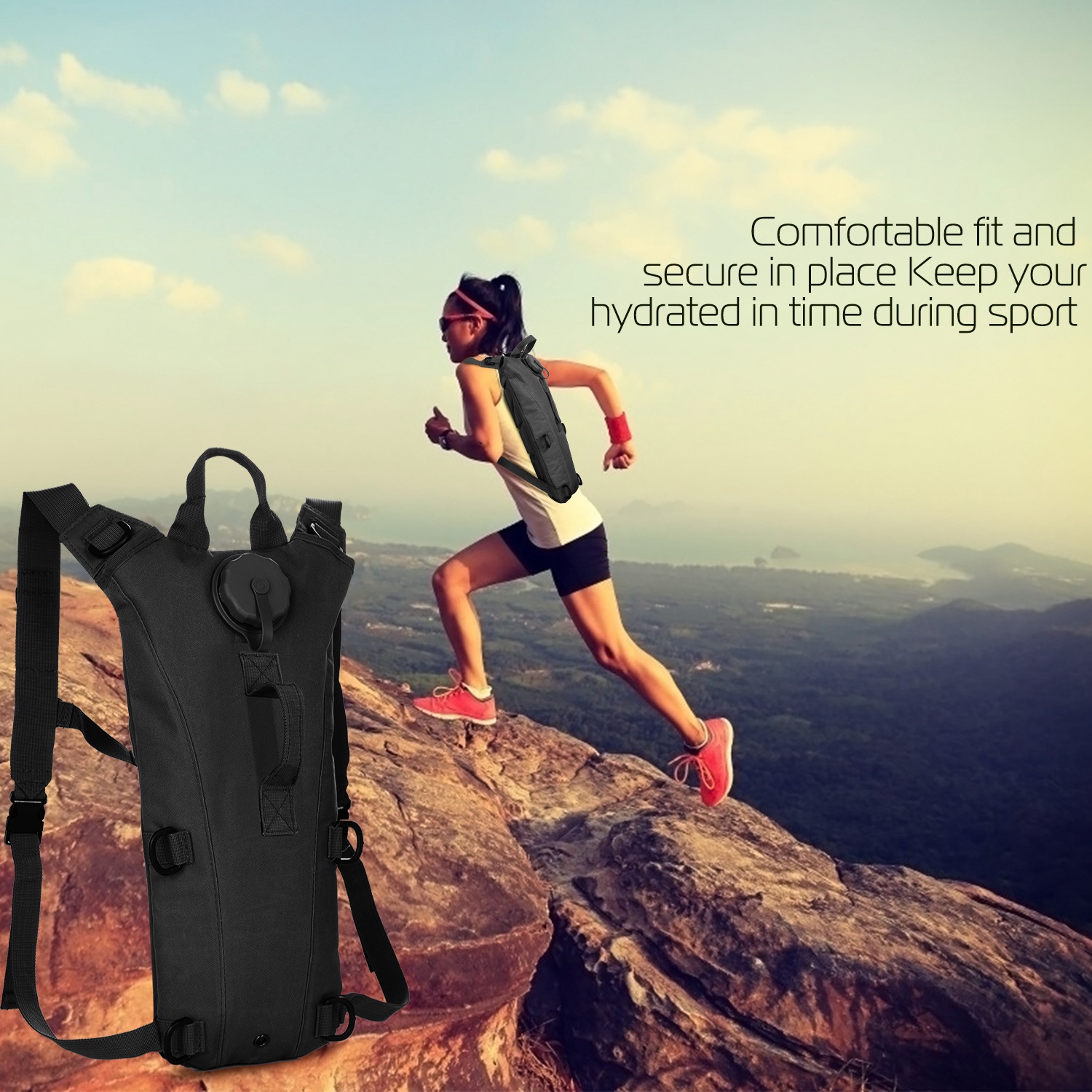

Photos from current listings. Actual item, color, and included accessories may vary.
Hiking Backpack With Hydration Bladder Buying Guide
A hiking backpack with hydration bladder integrates a hands-free water reservoir into a load-bearing pack, trading external bottle convenience for on-the-move drinking and balanced weight. The critical trade-off is bladder durability and hose routing versus pack ventilation and capacity; durable options use TPU or PEVA bladders with wide-mouth openings and insulated hoses, while compromises use thin PVC, narrow fill ports, and unsealed seams. The decision rule: match bladder material and volume (2–3L) to your activity duration, and require a dedicated hydration sleeve with hose port for true hands-free use.


At a glance
- Category
- Hiking Backpacks & Hydration Packs
- Data updated
- Nov 17, 2026
Current offers
Highlights
- Bladder material determines taste and durability: TPU is flexible, taste-neutral, and abrasion-resistant; PEVA is economical but stiffer; PVC can impart plastic taste and is heavier.
- Wide-mouth (large opening) bladders enable easy filling, cleaning, and ice addition; narrow openings complicate drying and refilling from streams without a wide-mouth adapter.
- Hydration sleeve and hose port are non-negotiable: without an internal sleeve and exit port, the bladder shifts, and the hose must route externally, risking snags.
- Insulated hose and bite valve with shutoff prevent freezing in cold weather and leaking during transport; uninsulated hoses sweat and warm quickly.
Best use cases
- Best fit: day hikes 2–5 hours with 2L bladder and 15–25L pack; skip 3L bladders if you rarely drink more than 1.5L per outing.
- Best fit: trail running or fastpacking with 1–1.5L bladder and minimalist vest-style pack; wrong fit: heavy 3L bladder in a running vest causes bounce and chafing.
- Best fit: multi-day backpacking with 3L bladder plus bottle backup; wrong fit: relying solely on a bladder for 3+ days without a filter or backup bottle.
Buying tips
- Sizing math: 1L of water weighs 1kg (2.2 lb); a full 3L bladder adds 3kg (6.6 lb) — ensure your pack's hip belt transfers this load and the sleeve is centered.
- Choose TPU bladders with a wide-mouth (e.g., 3.5-inch) opening and a quick-release hose; avoid PVC bladders with narrow screw caps for long-term durability.
- Hose length: 90–110cm suits most adults; longer hoses risk kinks, shorter hoses restrict head movement — match to torso length and pack size.
- Insulated hoses add bulk but prevent freezing below 0°C (32°F); for winter hiking, pair with a bite valve cover and blowback to clear water from the hose.
Specs
| Bladder Material | TPU / PEVA / PVC |
|---|---|
| Bladder Volume | 1.5L / 2L / 3L |
| Pack Capacity | 10-30L daypacks / 30-50L+ |
| Hose Type | Insulated vs uninsulated |
Related searches
What to check before buying
- Measure your torso length (C7 to iliac crest) and match to pack size; bladder sleeve should sit against the back panel without pressing on the spine.
- Verify the pack has a dedicated hydration sleeve (not just a main compartment) and a hose port on both sides for left- or right-hand routing.
- Check bladder opening diameter against your water filter or filling adapter; most gravity filters require a wide-mouth (3.5-inch) opening.
- Confirm climate compatibility: insulated hose for sub-zero use; for hot weather, choose a pack with a ventilated back panel to prevent sweat buildup against the bladder.
FAQ
Data sources: eBay / Amazon listings and product attribute feeds Data updated Nov 17, 2026.
Some links on this page are affiliate links. If you buy after clicking one, we may earn a commission at no extra cost to you. This does not change which products appear here or their order. Affiliate disclosure.