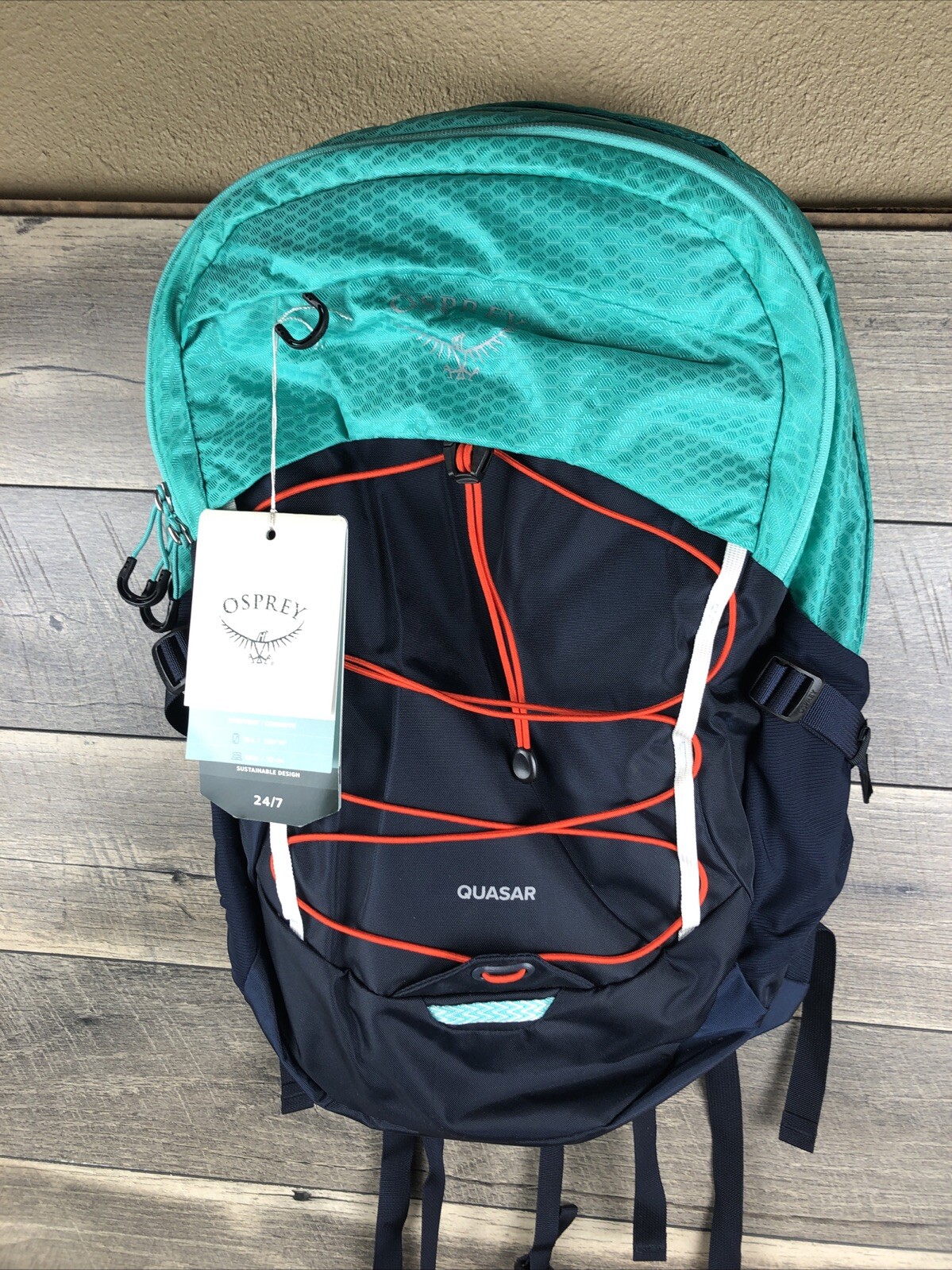

Photos from current listings. Actual item, color, and included accessories may vary.
Osprey Hiking Backpack Buying Guide
Osprey hiking backpacks span ultralight daypacks to expedition haulers, with the core trade-off being frame stiffness and load-transfer versus weight and ventilation. The decisive rule: match the suspension architecture and torso sizing to your typical load, not the liter count alone—packs with a rigid framesheet and adjustable harness carry heavy loads better, while frameless or wire-frame ultralight packs sacrifice comfort for weight savings.


At a glance
- Category
- Hiking Backpacks & Hydration Packs
- Data updated
- Nov 17, 2026
Current offers
Highlights
- AirSpeed vs AirScape suspension: AirSpeed uses a tensioned mesh back panel for maximum ventilation but flexes under heavy loads; AirScape uses a foam-padded, close-fitting back panel for better load transfer and stability on rough terrain.
- Torso length, not height, determines fit: Osprey sizes packs by adjustable torso range (e.g., 16–20 in for S/M, 19–23 in for M/L), and an ill-fitting torso is the most common cause of shoulder or hip pain.
- Frame construction: full internal framesheets with peripheral rods support loads above 30 lb; ultralight models use wire frames or frameless designs that flex and should be limited to sub-20 lb loads.
- Fabric grades: high-tenacity nylon (e.g., 210D/420D) with a DWR finish balances abrasion resistance and weight; ultralight packs use thinner 100D or ripstop fabrics that trade durability for grams.
Best use cases
- Best fit: Day hiking with 10–20 lb loads and high sweat output—choose an AirSpeed ventilated pack (e.g., Stratos, Talon) in your exact torso size. Skip heavy expedition packs that add unnecessary structure.
- Best fit: Multi-day backpacking with 30–45 lb loads—pick a pack with a rigid framesheet, load-lifter straps, and a floating lid (e.g., Atmos, Aether). Skip frameless ultralight packs that will sag and transfer weight to your shoulders.
- Best fit: Fast-and-light overnight trips with sub-25 lb base weight—choose an ultralight model (e.g., Exos, Levity) with a wire frame and minimal padding. Skip ventilated mesh packs if you need to carry more than 30 lb.
- Best fit: Travel or dual-use daypack/laptop carry—select a pack with a padded laptop sleeve and low-profile suspension (e.g., Quasar, Aphelion). Skip technical alpine packs that lack organization and laptop protection.
Buying tips
- Measure your torso length (C7 vertebra to iliac crest) and choose the matching size; Osprey's adjustable harnesses cover roughly 16–23 in, and a correct fit places the hipbelt over the iliac crest, not the waist.
- Match suspension to load: AirSpeed for hot climates and loads under 30 lb; AirScape for heavier loads and technical terrain where stability trumps airflow.
- Check hipbelt and shoulder strap padding thickness and width—wider, denser foam distributes pressure better; ultralight packs use minimal padding that suits only low loads.
- Verify compatibility with hydration reservoirs (most Osprey packs include a dedicated sleeve and hose port) and confirm the pack's volume suits your gear: 20–35 L for day hikes, 40–65 L for multi-day.
Specs
| Suspension Type | AirSpeed mesh vs AirScape foam |
|---|---|
| Torso Fit Range | 16–23 in adjustable harness |
| Frame Architecture | Framesheet vs wire vs frameless |
| Fabric Grade | 100D–420D high-tenacity nylon |
Related searches
What to check before buying
- Measure your torso length and hip circumference before selecting a size; Osprey offers adjustable and fixed harnesses—fixed sizes must match exactly.
- Confirm the pack's volume against your typical load: day hikes 15–30 L, overnight 30–50 L, multi-day 50–70+ L; include space for a bear canister if required in your region.
- Check the suspension type against your climate and load: mesh (AirSpeed) for ventilation, foam (AirScape) for load stability.
- Ensure the pack has a hydration-compatible sleeve and port if you use a reservoir, and verify hipbelt pockets fit your phone or snacks.
FAQ
Data sources: eBay / Amazon listings and product attribute feeds Data updated Nov 17, 2026.
Some links on this page are affiliate links. If you buy after clicking one, we may earn a commission at no extra cost to you. This does not change which products appear here or their order. Affiliate disclosure.