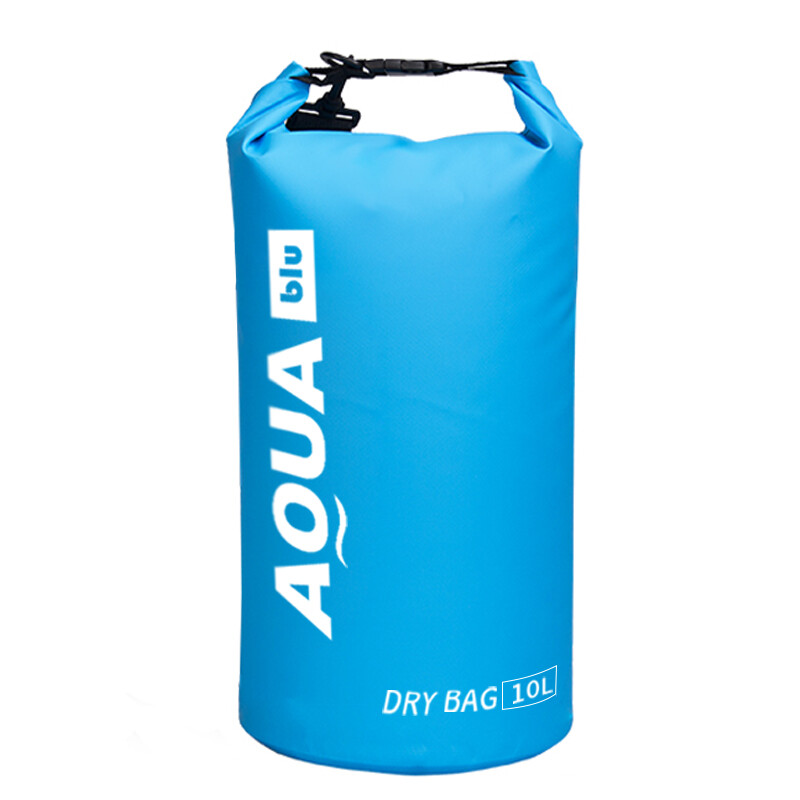

Photos from current listings. Actual item, color, and included accessories may vary.
Dry Bag Buying Guide
A dry bag is a roll-top or zip-sealed waterproof sack that keeps gear dry during kayaking, rafting, paddleboarding, and camping. The core trade-off is between material durability (PVC vs TPU vs coated nylon) and packability, plus closure reliability under immersion. Choose a roll-top with welded seams and a minimum 500D TPU or PVC shell for immersion; skip stitched-seam or thin 210D nylon sacks for anything beyond splash protection.


At a glance
- Category
- Human-Powered Water Sports
- Data updated
- Nov 17, 2026
Current offers
Highlights
- Roll-top closure with at least 3 folds and a buckle is the only closure that stays watertight under submersion; zip and drawstring seals are splash-resistant at best.
- Fully welded (RF or heat) seams are the durability benchmark; stitched and taped seams fail first under repeated folding and pressure.
- Shell fabric grade determines abrasion life: 500D PVC or TPU handles rock and boat contact, while 210D coated nylon is ultralight but punctures easily.
- TPU is lighter, more flexible, and cold-resistant versus PVC; PVC is cheaper and more abrasion-tolerant but heavier and stiffens in cold weather.
Best use cases
- Kayaking and rafting: pick a 20–30L roll-top in 500D PVC or TPU with welded seams and a shoulder strap or daisy chain for deck rigging.
- Paddleboarding and day touring: a 10–15L TPU roll-top with a clear window and backpack straps balances visibility and portability.
- Backpacking and bikepacking: choose 210–400D coated nylon or TPU roll-tops in 5–15L for low weight; skip thick PVC if packed volume matters.
- Wrong fit to avoid: stitched-seam 'dry bags' or drawstring-top sacks for any activity where the bag will be submerged or dragged.
Buying tips
- Size by volume, not dimensions: 10L holds a day's clothing and lunch, 20L holds a sleeping bag and layers, 30L+ holds a full weekend kit or boat camping load.
- Match material to exposure: 500D PVC for abrasion-heavy rafting, 400D TPU for cold-weather flexibility, 210D nylon for ultralight dry protection only.
- Confirm welded construction and a buckle that accepts at least three roll folds; a bag that only rolls twice will leak under pressure.
- Check attachment points: daisy chains, D-rings, or shoulder straps make the bag usable on deck or on a bike; bare sacks roll and shift.
Specs
| Closure Type | Roll-top (3+ folds) vs zip vs drawstring |
|---|---|
| Shell Material | 500D PVC / 400D TPU / 210D coated nylon |
| Seam Construction | Welded (RF/heat) vs stitched-and-taped |
| Volume Range | 5–10L day / 20–30L touring / 30L+ expedition |
Related searches
What to check before buying
- Measure your packed gear volume first—a 20L bag does not fit a 30L load, and an overstuffed roll-top cannot complete its required folds.
- Verify the bag fits your boat's deck rigging or backpack straps via daisy chains or D-rings before committing to a large PVC sack.
- For cold-weather use, choose TPU over PVC; PVC stiffens and can crack when rolled below freezing.
- Confirm the closure buckle is replaceable or field-serviceable, since buckles are the most common failure point on roll-top bags.
FAQ
Data sources: eBay / Amazon listings and product attribute feeds Data updated Nov 17, 2026.
Some links on this page are affiliate links. If you buy after clicking one, we may earn a commission at no extra cost to you. This does not change which products appear here or their order. Affiliate disclosure.