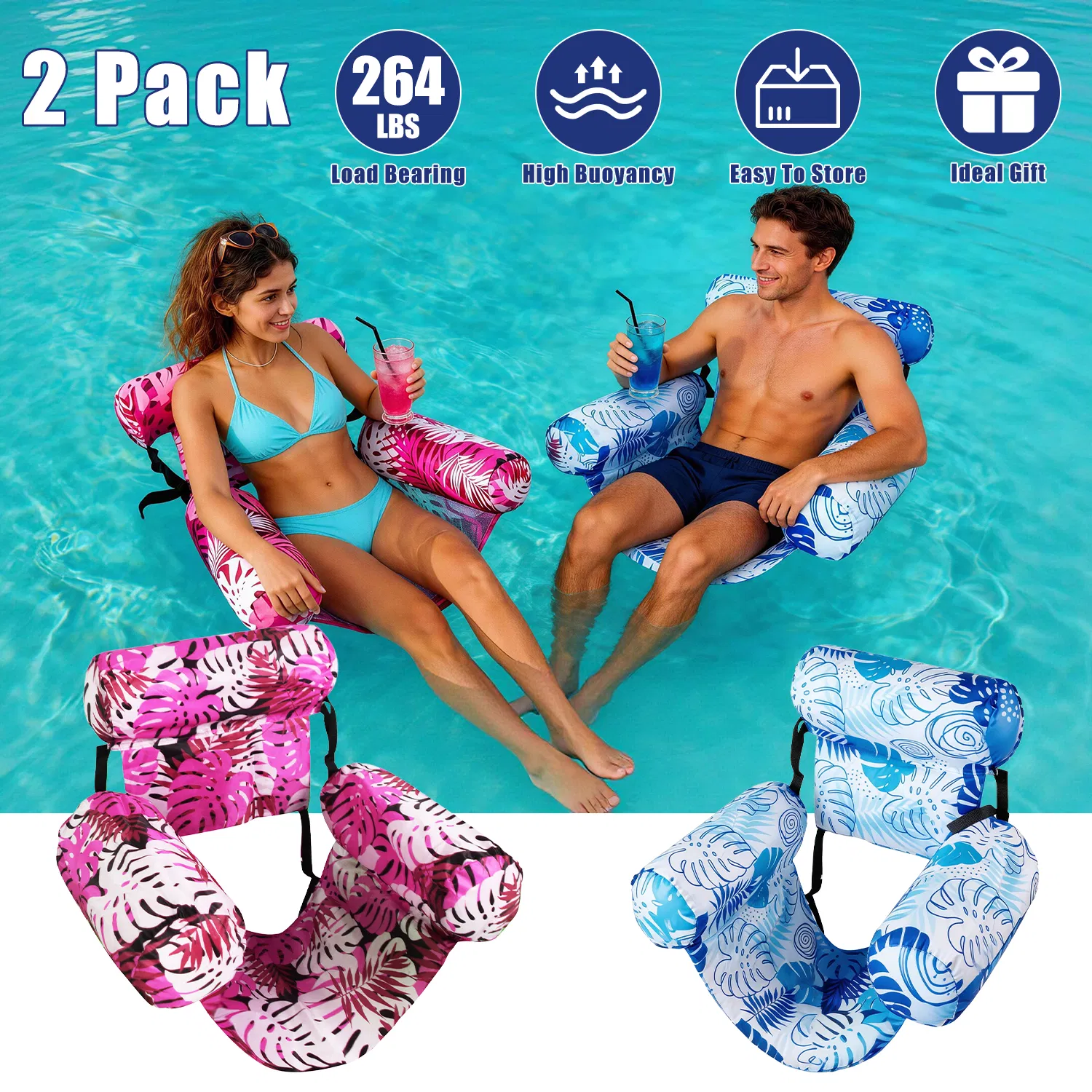

Photos from current listings. Actual item, color, and included accessories may vary.
Floating Chair Buying Guide
Floating chairs are human-powered, inflatable or foam loungers that let you sit or recline in water with your torso above the surface, distinct from tow-behind tubes or pool noodles. The primary trade-off is between thick, welded PVC/TPU air chambers with reinforced seams (durable, stable, repairable) and thin vinyl or single-layer foam (cheap, tippy, prone to seam failure). The clear decision rule: buy a chair rated for adult weight with at least two independent air chambers and a seam-welded construction or high-density closed-cell foam—skip anything with a single air chamber, glued seams, or a weight rating below 250 lb.


At a glance
- Category
- Human-Powered Water Sports
- Data updated
- Nov 17, 2026
Current offers
Highlights
- PVC vs TPU: TPU is lighter, more puncture-resistant, and UV-stable; PVC is cheaper and heavier but stiffens in cold water—welded (RF) seams outlast glued seams by years.
- Air chamber count: 2+ independent chambers prevent total sinking on a puncture; single-chamber chairs are a safety and durability compromise.
- Foam core vs inflatable: closed-cell foam (EVA or polyethylene) never deflates and is puncture-proof but bulky; inflatables pack flat but require pump, valve maintenance, and leak vigilance.
- Weight and size ratings: adult loungers typically rate 250–350 lb and measure 50–60 in long; smaller 'kids' or 'party' floats often cap at 150–200 lb and use thinner 0.2 mm vinyl.
Best use cases
- Lake and calm-water lounging: pick a 2-chamber PVC/TPU recliner with a backrest and cup holder, rated 300 lb—skip pool-party 2-packs with single chambers and no back support.
- Poolside or beach use with limited storage: choose a compact TPU inflatable that folds to backpack size and includes a hand pump—skip rigid foam loungers that need a truck bed.
- All-day floating and rough play: use a closed-cell foam lounger (e.g., foam pool float) that cannot pop—skip thin vinyl party floats that tear at seams under sun and friction.
- Kids or light adult use in shallow water: a smaller 150–200 lb rated float is acceptable only under supervision—skip adult-rated chairs for children who cannot swim.
Buying tips
- Match weight rating to the heaviest user plus 50 lb margin; a 300 lb-rated chair handles a 220 lb adult with gear and wave motion.
- Choose welded seams (RF or heat-welded) over glued seams; look for at least two air chambers with separate valves so one puncture doesn't sink the chair.
- For inflatables, confirm valve type (Boston vs. pinch) and that a pump is included or matched; TPU resists UV and chlorine better than thin PVC.
- For foam, specify closed-cell EVA or polyethylene of at least 1.5 in thickness; open-cell foam waterlogs and loses buoyancy within a season.
Specs
| Construction | Welded PVC/TPU vs closed-cell foam |
|---|---|
| Air Chambers | 2+ independent (vs single chamber) |
| Adult Weight Rating | 250–350 lb (kids: 150–200 lb) |
| Seam Type | RF/heat-welded vs glued |
Related searches
What to check before buying
- Measure your torso length and desired recline: chair length should exceed your seated height by 6–10 in for head and knee support.
- Check water depth and entry: inflatables need 18+ in depth to float clear; foam loungers need a shore or pool step for boarding.
- Confirm storage and transport space: deflated TPU packs to roughly 12×8×6 in; foam loungers are 50–60 in long and do not compress.
- Verify valve compatibility with your pump and that the chair includes a repair patch; saltwater and chlorine environments favor TPU or UV-treated PVC.
FAQ
Data sources: eBay / Amazon listings and product attribute feeds Data updated Nov 17, 2026.
Some links on this page are affiliate links. If you buy after clicking one, we may earn a commission at no extra cost to you. This does not change which products appear here or their order. Affiliate disclosure.