Photos from current listings. Actual item, color, and included accessories may vary.
Kayak Holder Buying Guide
Kayak holders span storage racks (ceiling/wall) that protect hull shape off-season and transport carts that move boats between car and water. The key trade-off is static load rating and hull-contact design versus wheel/terrain capability, and the decision rule is simple: pick a storage holder rated at least 1.5x your boat's wet weight with wide padded contact, or a cart whose tire type and frame gauge match your launch surface and hull length.


At a glance
- Category
- Human-Powered Water Sports
- Data updated
- Nov 17, 2026
Current offers
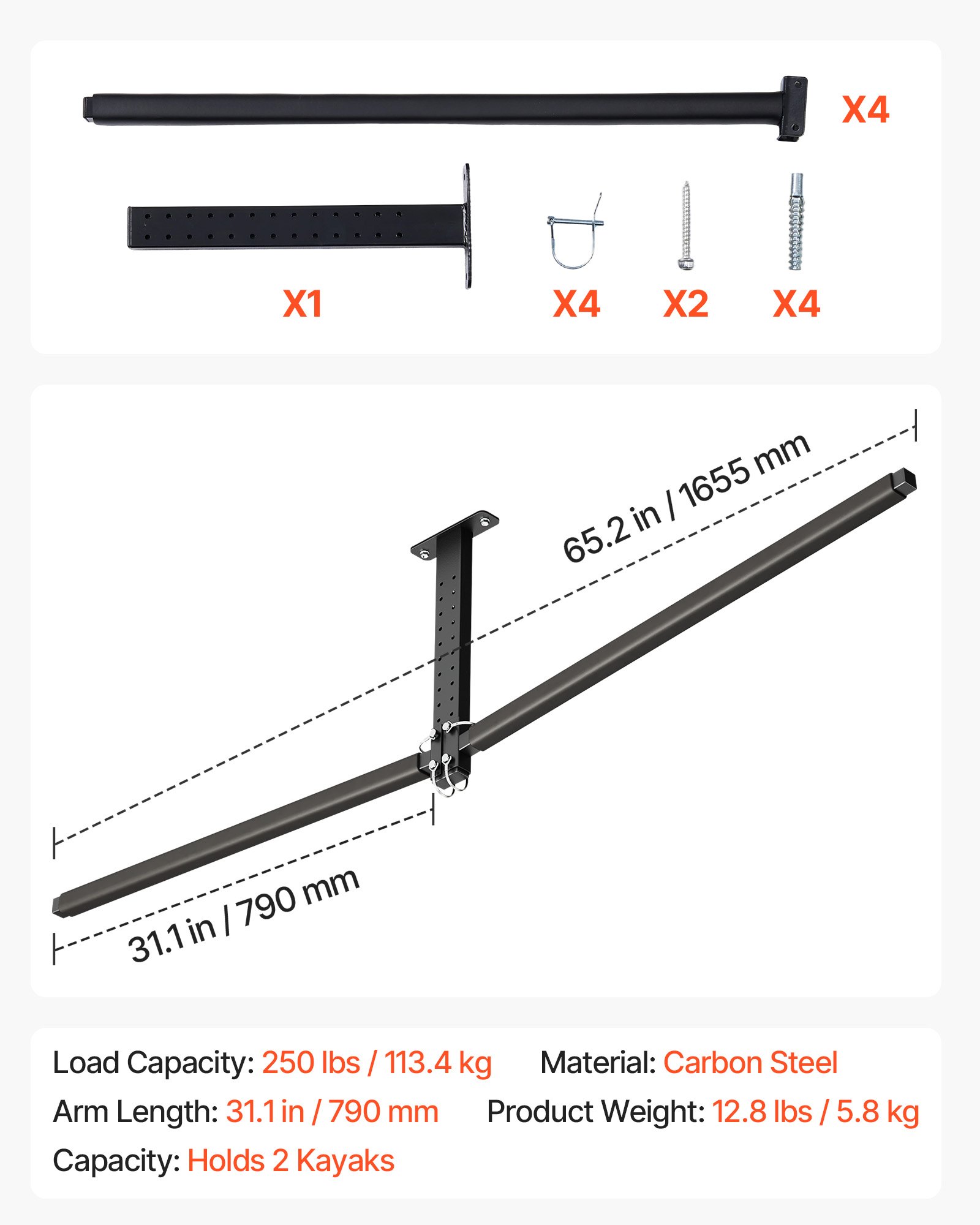 Kayak Storage Rack For 2 Kayaks, Holds Up To 250 Lbs, Heavy Duty Adjustable Ceiling For Garage Mount, Overhead Hanger For Canoe, Ladder, SUP, Surfboard & Paddleboard$54.99
 View on Mallflare
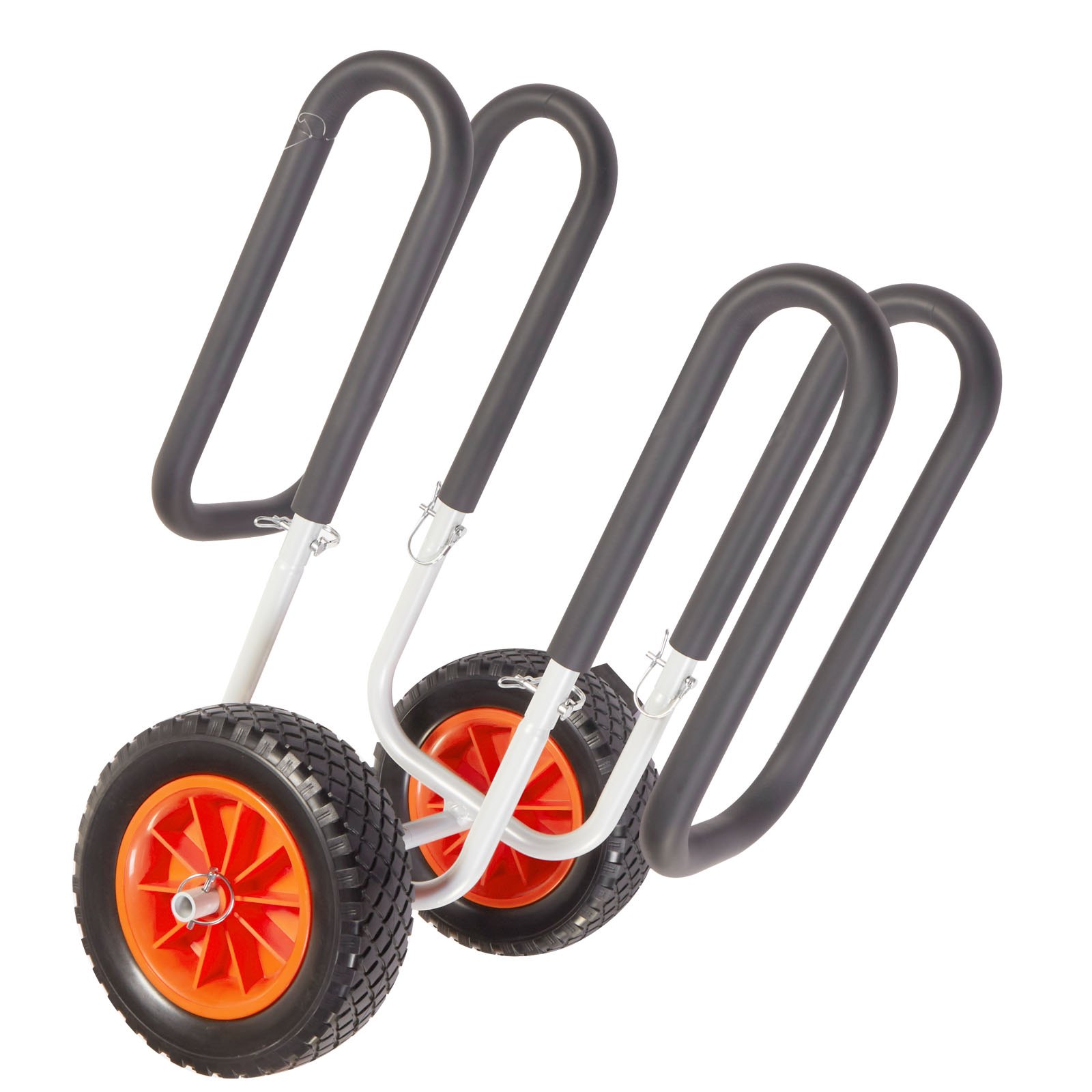 Kayak Cart, 150 Lbs Load Capacity, Stand Up Paddle Board Trolley With 10-inch Solid Rubber Tires & Kickstands, Carrier Ratchet Strap For Paddleboard & Surfboard Transport$86.99View on Mallflare
Highlights
- Ceiling storage racks carry 200–300 lb static loads using steel J-hooks or wide webbing straps; strap systems distribute load across the hull, while narrow hooks concentrate stress and can dent polyethylene over months.
- Transport carts split into solid-rubber wheels (puncture-proof, best on pavement and packed sand) and pneumatic wheels (better on soft sand and gravel but require inflation and can flat).
- Frame construction separates tiers: powder-coated steel handles 150–250 lb loads with minimal flex; aluminum frames save weight but need thicker tube walls to match steel stiffness.
- Hull support width matters more than raw capacity—padded bunks or cradles spanning 12–18 inches prevent oil-canning on wide sit-on-top and tandem kayaks.
Best use cases
- Best fit for garage/boathouse storage: overhead ceiling rack with 250 lb rating and wide straps—choose this for 10–14 ft kayaks stored off-season; skip wall J-hooks if your hull is thin thermoformed ABS.
- Best fit for dock-to-water transport: cart with 10-inch solid rubber tires and 150 lb capacity for paved ramps and packed sand; skip pneumatic tires unless you regularly cross loose sand or gravel.
- Best fit for SUP and surfboard: wide padded cradle rack or cart with kickstand, since narrow kayak J-hooks point-load boards; skip standard kayak saddles for boards over 30 inches wide.
- Wrong fit: using a transport cart as long-term storage—tires flat-spot and straps deform hulls; use a dedicated storage rack and keep the cart for transit only.
Buying tips
- Size the holder to at least 1.5x your kayak's rigged weight (typical sit-on-top: 50–70 lb; touring: 40–55 lb; tandem: 70–90 lb)—a 150 lb cart covers most singles, 250 lb racks cover tandems and canoes.
- Match tire type to launch surface: solid rubber for pavement and packed sand, pneumatic for loose sand and gravel; 10-inch wheels roll over curbs and roots better than 8-inch.
- Check ceiling height and joist spacing before buying an overhead rack—you need roughly boat width plus 12 inches of clearance and mounting hardware that spans two joists.
- Verify strap and cradle width: 2-inch webbing and padded bunks 12–18 inches wide prevent hull deformation; narrow 1-inch straps concentrate stress on polyethylene hulls.
Specs
| Holder Type | Ceiling rack / wall rack / transport cart |
|---|---|
| Load Capacity | 150–250 lb static rating |
| Hull Contact | Padded bunks / 2-in webbing straps |
| Wheel Type | Solid rubber vs pneumatic |
Related searches
What to check before buying
- Measure your kayak: length, width, and rigged weight—confirm the holder's capacity exceeds 1.5x that weight and its cradle spans at least 12 inches of hull.
- For ceiling racks, locate two adjacent joists and confirm clearance height equals boat width plus 12 inches; for wall racks, confirm stud spacing and wall material.
- For carts, measure your launch path: paved ramp, packed sand, or loose gravel determines solid vs pneumatic tires and wheel diameter.
- Confirm hull material and thickness—thin thermoformed ABS needs wide padded contact, while rotomolded polyethylene tolerates J-hooks with padding.
FAQ
Data sources: eBay / Amazon listings and product attribute feeds Data updated Nov 17, 2026.
Some links on this page are affiliate links. If you buy after clicking one, we may earn a commission at no extra cost to you. This does not change which products appear here or their order. Affiliate disclosure.