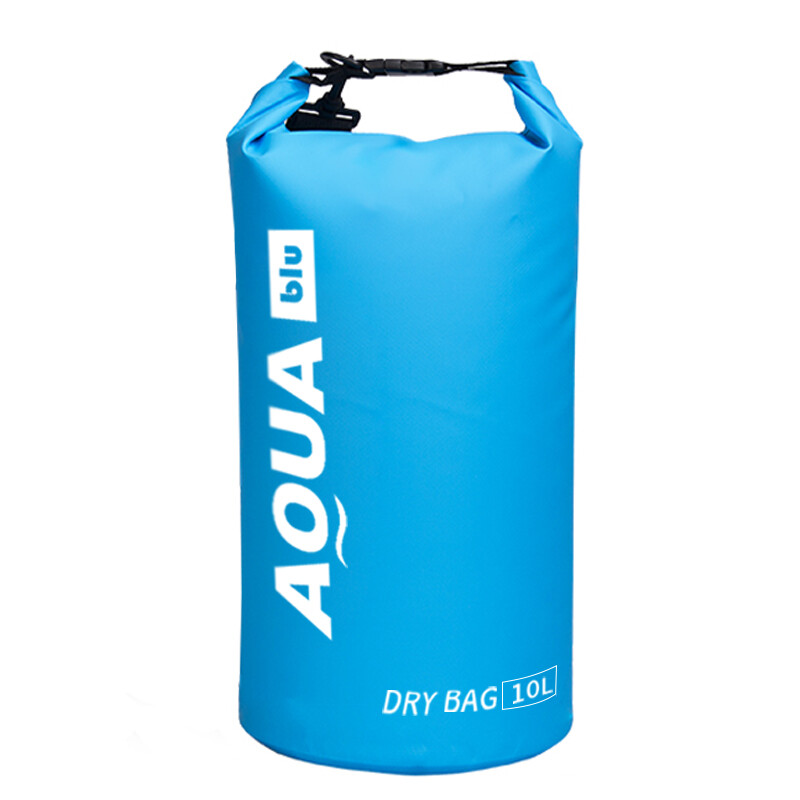

Photos from current listings. Actual item, color, and included accessories may vary.
Waterproof Bag Buying Guide
A waterproof bag for human-powered water sports is a sealed dry sack or roll-top bag that keeps gear dry during kayaking, rafting, canoeing, and SUP. The decisive trade-off is between welded seam construction and taped or stitched seams: welded PVC or TPU seams with a roll-top closure are the durable standard, while stitched seams with a waterproof coating are a compromise that fails under sustained immersion. Choose a roll-top dry bag with welded seams and a minimum 10L capacity for day paddling.


At a glance
- Category
- Human-Powered Water Sports
- Data updated
- Nov 17, 2026
Current offers
Highlights
- Roll-top closure with at least 3 folds creates a watertight seal only when the top edges are aligned and buckled; a single fold leaks.
- Welded (heat-fused) seams outlast stitched-and-taped seams in saltwater and UV exposure; stitched seams wick water under pressure.
- TPU (thermoplastic polyurethane) is lighter and more abrasion-resistant than PVC but costs more; PVC is heavier and stiffer but cheaper.
- Capacity tiers: 10L fits a phone, keys, and light layer; 20L fits a day's clothing and lunch; 30L fits a sleeping bag and camp gear for overnight trips.
Best use cases
- Kayak day trips: choose a 10–20L roll-top dry bag in TPU with welded seams and a shoulder strap; skip stitched-seam sacks that leak at the base.
- Rafting and canoe camping: choose a 30L+ PVC dry bag with welded seams and a backpack harness for rugged portages; skip ultralight TPU sacks that puncture on rocks.
- SUP and packrafting: choose a 10–20L TPU dry bag with a clear window and daisy-chain lash points; skip heavy PVC sacks that add dead weight and don't compress.
Buying tips
- Sizing rule: add 20% headroom to your gear volume because a roll-top bag must be folded at least 3 times to seal; a 20L bag holds about 16L of actual gear.
- Seam check: welded seams are smooth and continuous; stitched seams show needle holes and tape. Choose welded for any immersion beyond splashes.
- Material grade: 210D–500D TPU or 500D PVC is the durable range for paddling; thinner 70D nylon is for splash protection only, not immersion.
- Closure rule: a roll-top with a buckle and stiffened top edge seals reliably; drawstring or zip closures are not waterproof for kayaking.
Specs
| Closure Type | Roll-top (3+ folds) vs drawstring/zip |
|---|---|
| Seam Construction | Welded vs stitched-and-taped |
| Material Grade | TPU 210D–500D / PVC 500D |
| Capacity Tiers | 10L / 20L / 30L+ (day to overnight) |
Related searches
What to check before buying
- Measure your kayak hatch or deck rigging: a 20L roll-top bag is typically 20–22 inches tall when rolled, so confirm it fits under deck bungees or inside the hatch.
- Match bag capacity to trip length: 10L for a half-day, 20L for a full day, 30L+ for overnight camping; do not downsize for bulkier items like sleeping bags.
- Check water contact: for full submersion or capsize, choose a welded-seam PVC or TPU bag rated for immersion; for splash-only, a taped-seam nylon bag suffices.
- Confirm carry system: a backpack harness or shoulder strap is needed for portages over 100 meters; a simple top handle is only for short carries.
FAQ
Data sources: eBay / Amazon listings and product attribute feeds Data updated Nov 17, 2026.
Some links on this page are affiliate links. If you buy after clicking one, we may earn a commission at no extra cost to you. This does not change which products appear here or their order. Affiliate disclosure.