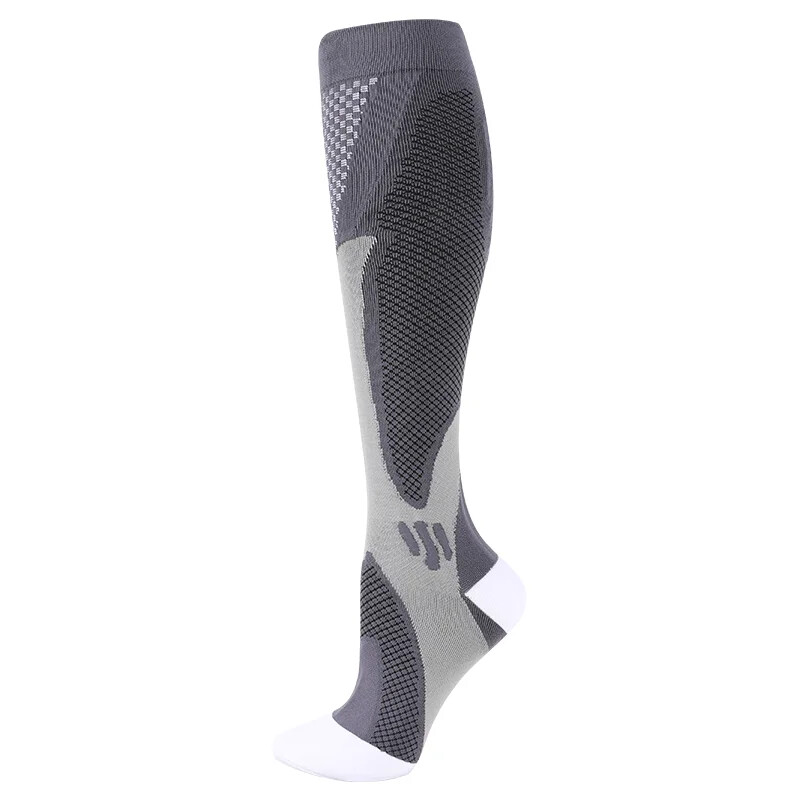

Photos from current listings. Actual item, color, and included accessories may vary.
Compression Sock Buying Guide
Compression socks are graduated-pressure knit garments that improve venous return and reduce swelling during recovery, travel, or endurance sport. The core trade-off is graduated compression accuracy (mmHg profile) versus knit breathability and material longevity. Choose medical-grade 20-30 mmHg graduated knits with defined ankle-to-calf pressure zones for therapeutic use; skip uniform-stretch 'athletic' socks that apply pressure without a gradient.


At a glance
- Category
- Recovery & Massage
- Data updated
- Nov 16, 2026
Current offers
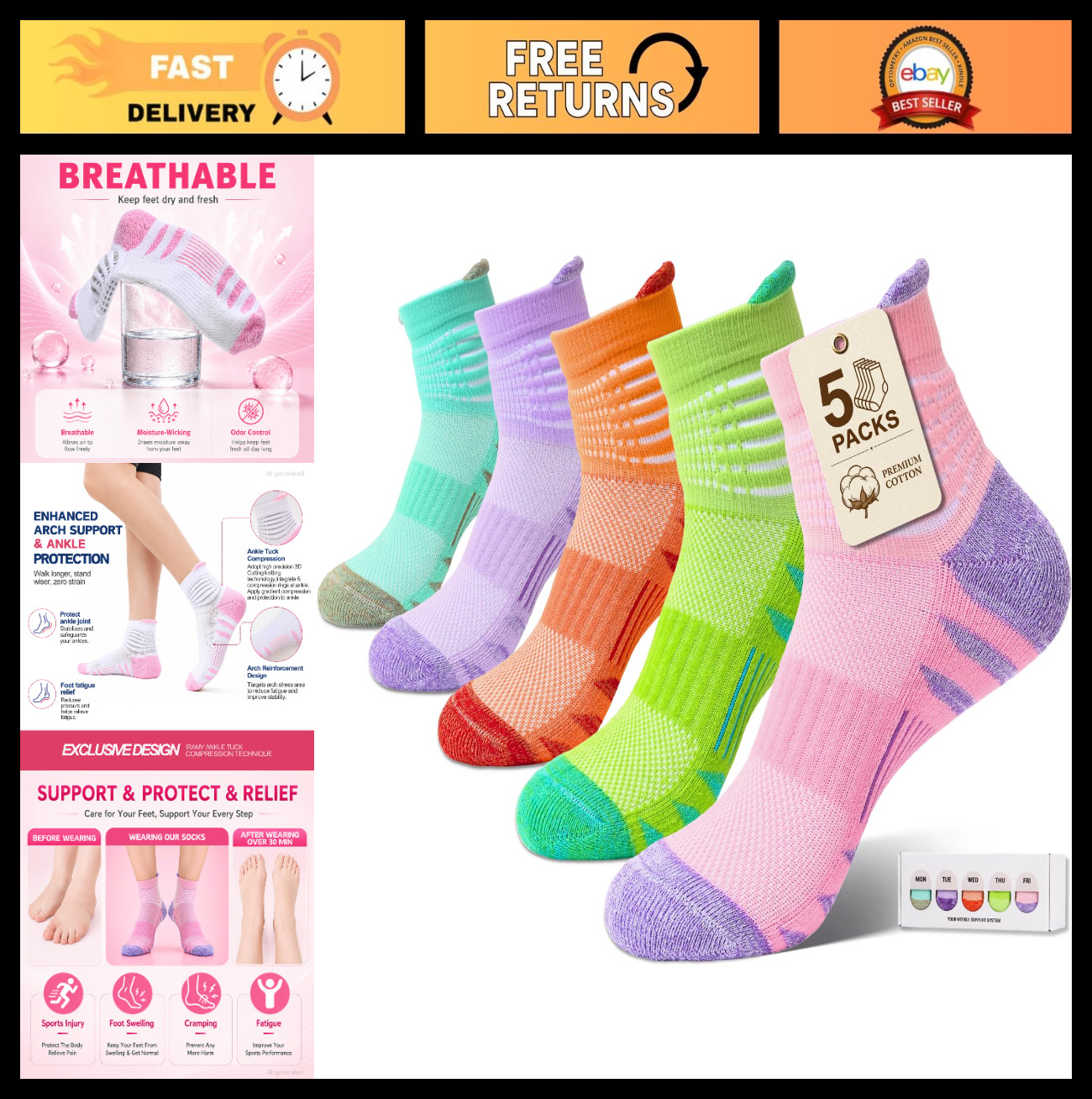
Highlights
- Graduated compression is defined by mmHg at the ankle (100%) tapering to 70-80% at the calf; 15-20 mmHg is mild, 20-30 mmHg therapeutic, 30-40 mmHg medical.
- Plantar fasciitis support comes from arch-spanning compression zones and heel-cup stability, not calf pressure alone; look for an articulated arch band.
- Shin splint relief requires firm calf and tibial compression with a wide, non-rolling cuff; cuff width under 2.5 cm tends to dig and roll.
- Nylon-spandex knits with 15-25% spandex and 200-300 needle circular knit hold pressure better than cotton-dominant blends, which relax after repeated washing.
Best use cases
- Plantar fasciitis: pick 20-30 mmHg knee-high socks with a defined arch band and cushioned heel cup; skip 15-20 mmHg travel socks that lack arch structure.
- Shin splints: choose 20-30 mmHg calf-height socks with a wide 3-4 cm top band and firm tibial compression; skip ankle-only sleeves that leave the calf unsupported.
- Post-surgical or varicose vein management: use 30-40 mmHg medical-grade garments fitted by calf circumference; skip over-the-counter 15-20 mmHg fashion socks.
- Running and endurance recovery: use 15-20 mmHg graduated calf sleeves or knee-highs for post-run swelling control; skip 30-40 mmHg medical stockings during active sport.
Buying tips
- Measure ankle circumference at the narrowest point and calf at its widest; size by the larger category, because undersized cuffs cause tourniquet effect and rolling.
- Match mmHg to need: 15-20 for travel and mild swelling, 20-30 for plantar fasciitis and shin splints, 30-40 only for diagnosed venous insufficiency.
- Choose graduated knits with a marked ankle-to-calf gradient; uniform-stretch socks labeled only 'compression' without mmHg deliver inconsistent pressure.
- Prefer nylon-spandex with 15-25% spandex and flat-lock toe seams; cotton-rich blends above 50% cotton lose elasticity and pressure within months.
Specs
| Compression Class | 15-20 / 20-30 / 30-40 mmHg graduated |
|---|---|
| Height | Knee-high / calf / ankle |
| Fabric Blend | Nylon-spandex (15-25% spandex) |
| Sizing Basis | Ankle + calf circumference (S-XXL) |
Related searches
What to check before buying
- Measure ankle and calf circumference with a flexible tape and match to the brand's size chart; S-XXL ranges vary by 5-10 cm between brands.
- Confirm the sock height reaches the required zone: knee-high for full calf and shin coverage, calf-height for shin splints, ankle for localized support.
- Check cuff band width of at least 3 cm to prevent rolling and digging during extended wear.
- For travel, verify 15-20 mmHg graduated compression and breathable knit suitable for 8+ hour wear; for medical use, confirm 20-30 mmHg or higher.
FAQ
Data sources: eBay / Amazon listings and product attribute feeds Data updated Nov 16, 2026.
Some links on this page are affiliate links. If you buy after clicking one, we may earn a commission at no extra cost to you. This does not change which products appear here or their order. Affiliate disclosure.