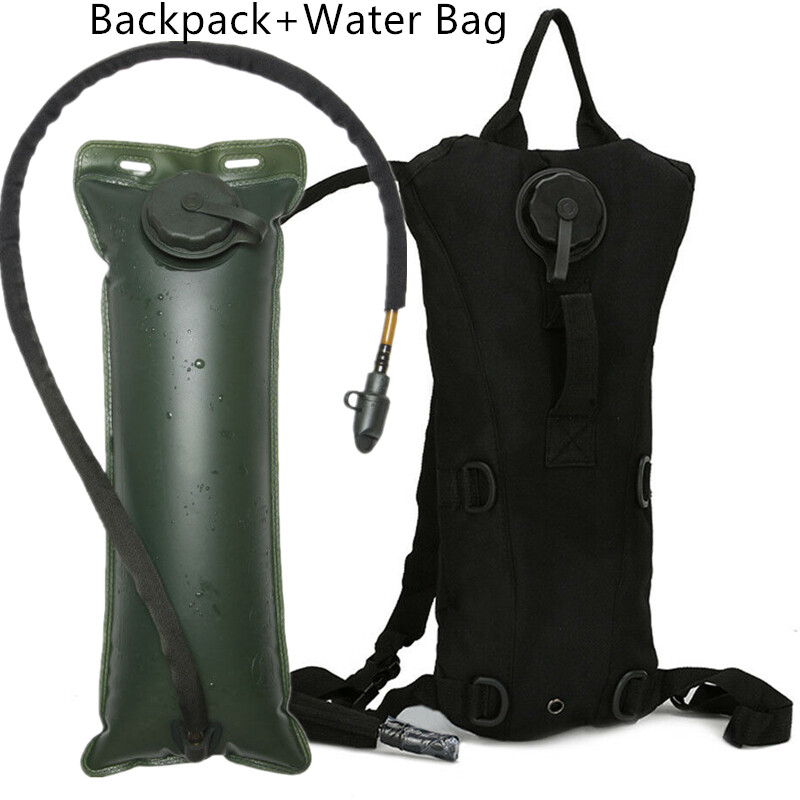

Photos from current listings. Actual item, color, and included accessories may vary.
Backpack With Water Bladder Buying Guide
A backpack with water bladder is a hands-free hydration system combining a reservoir with a tube-fed bite valve and a harness or pack body sized for running, hiking, or cycling. The core trade-off is reservoir durability and pack stability versus weight and capacity: welded TPU or PE reservoirs with wide-mouth openings resist leakage and are easy to clean, while thin vinyl bladders and loose bungee harnesses compromise both. The decision rule is simple: buy only if the reservoir is BPA-free, pressure-tested, and the pack has a dedicated insulated bladder sleeve with a tube routing port and sternum strap; skip any model that lacks a shutoff bite valve or uses a non-welded seam construction.


At a glance
- Category
- Running Hydration & Visibility
- Data updated
- Nov 17, 2026
Current offers
Highlights
- Reservoir capacity is typically 1.5L to 3L; 2L suits runs under 2 hours, 3L suits 3+ hour efforts or hot climates.
- Welded TPU or PE film bladders with wide slide-lock or screw caps resist seam failure; vinyl bladders with crimped edges leak at folds.
- Pack stability depends on a sternum strap, side compression straps, and a low-profile harness; bungee-only harnesses bounce during running.
- Tube routing should include an insulated sleeve and a bite valve with on/off shutoff; uninsulated tubes sweat and drip on long runs.
Best use cases
- Best fit for trail running and fast hiking: choose a 1.5-2L bladder in a 5-10L vest-style pack with sternum strap and front bottle pockets for electrolyte mix.
- Best fit for cycling and commuting: choose a 2-3L bladder in a 10-15L pack with a helmet-compatible profile, reflective accents, and a tube routed over the shoulder not across the chest.
- Wrong fit for ultra-running or multi-day hikes: skip small 1.5L bladders with thin vinyl seams; instead pick a 3L welded reservoir with a wide-mouth cap and a pack with load-lifter compression.
- Wrong fit for winter sports: skip uninsulated tubes; pick a pack with an insulated tube sleeve and a bite valve cover, or the tube will freeze within minutes.
Buying tips
- Match bladder volume to effort: 1.5L for runs under 90 minutes, 2L for 1.5-3 hours, 3L for 3+ hours or temperatures above 85°F.
- Check bladder material: BPA-free TPU or PE film with welded seams; avoid PVC or vinyl with crimped seams that fail at fold points.
- Verify tube diameter (typically 1/4 inch ID) and bite valve compatibility; replacement bladders and valves are not universal across brands.
- Choose a pack with a dedicated bladder sleeve against the back panel and a tube port at the top; bottom-exit ports kink the tube and reduce flow.
Specs
| Bladder Capacity | 1.5L / 2L / 3L |
|---|---|
| Bladder Material | Welded TPU/PE vs vinyl |
| Pack Volume | 5-15L vest/pack |
| Tube & Valve | 1/4 in ID, shutoff bite valve |
Related searches
What to check before buying
- Measure your torso length (C7 to iliac crest) and match to pack size: 15-17 inches for small, 17-19 inches for medium, 19-21 inches for large.
- Confirm the bladder sleeve dimensions match your reservoir: 2L bladders need at least 14 x 8 inches of sleeve opening.
- Check tube length: 36-40 inches suits most adults; shorter runners need 32-34 inches to avoid excess loop snagging.
- Verify the bite valve has a shutoff lever and the tube is removable for cleaning; bladders without removable tubes grow mold.
FAQ
Data sources: eBay / Amazon listings and product attribute feeds Data updated Nov 17, 2026.
Some links on this page are affiliate links. If you buy after clicking one, we may earn a commission at no extra cost to you. This does not change which products appear here or their order. Affiliate disclosure.