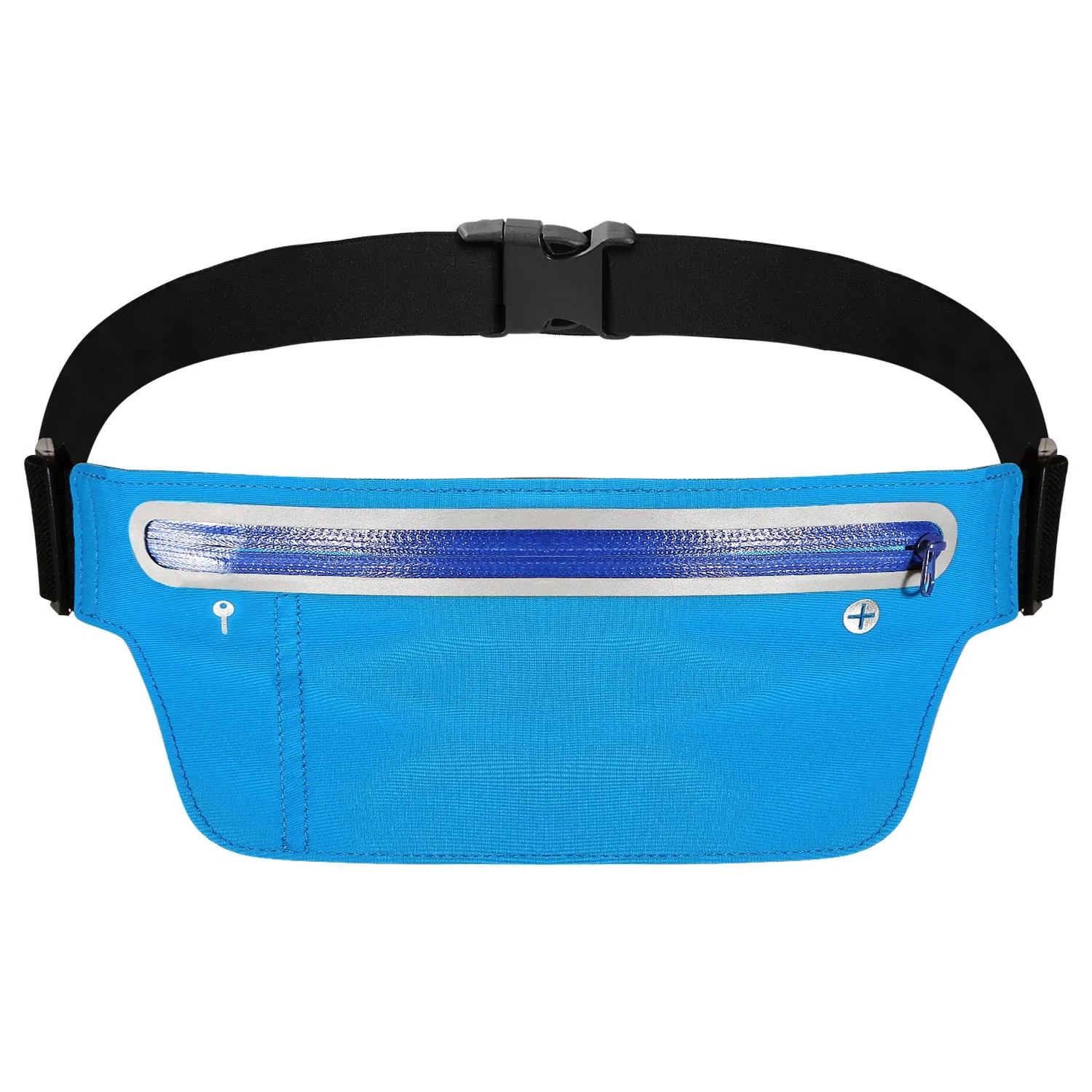

Photos from current listings. Actual item, color, and included accessories may vary.
Running Belt Buying Guide
A running belt is a waist-mounted carry system that keeps phone, keys, and nutrition secure without bounce or chafe during high-cadence movement. The core trade-off is between a slim, low-stretch fabric band that disappears under a shirt and a structured, multi-pocket pack that adds capacity but risks sway at speed. The decision rule: choose a belt with a wide, non-roll elastic band and a dedicated locked phone sleeve for running; skip thin tubular pouches or drawstring gym sacks that ride up and bounce.


At a glance
- Category
- Running Hydration & Visibility
- Data updated
- Nov 16, 2026
Current offers
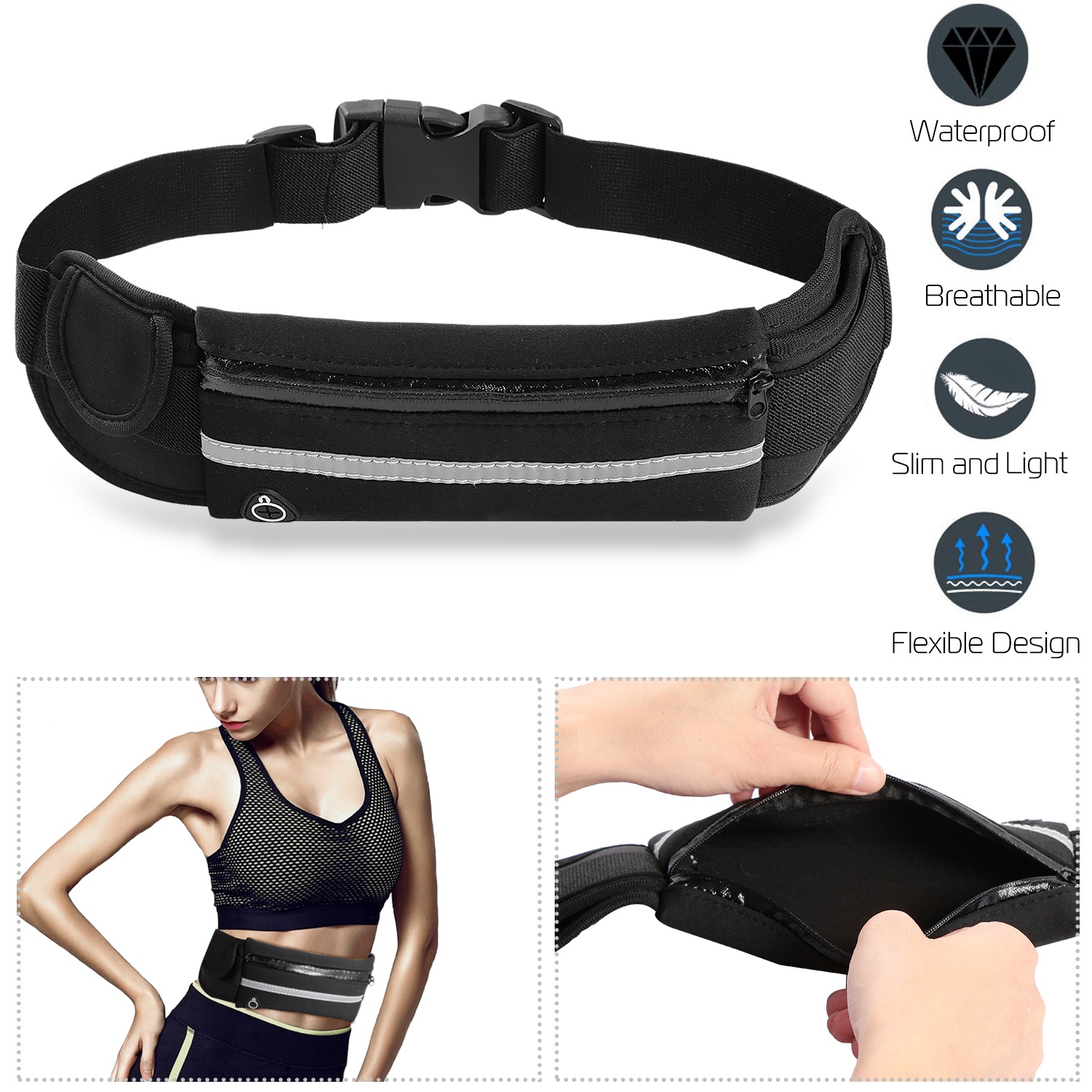
Highlights
- Elastic band width of 1.5–2 in (38–50 mm) distributes pressure and prevents roll-down; tubular belts under 1 in roll and chafe at marathon pace.
- A dedicated phone sleeve with a fold-over or zip closure and moisture-barrier liner prevents sweat ingress and screen scuffing; open-top pouches eject phones on downhills.
- Bounce-free construction requires a low-stretch woven face (ripstop nylon or polyester) bonded to a silicone-grip inner band; all-mesh belts stretch and sway under a 6.7 oz phone.
- Reflective trim and a rear light loop are the visibility baseline for dawn/dusk runs; 360-degree reflectivity is standard on dedicated running belts, not on generic fanny packs.
Best use cases
- Best fit: daily road and trail runs with a large phone (6.1–6.9 in) — pick a wide-band belt with a zippered, lined phone pocket and silicone grip; skip thin tubular pouches.
- Best fit: marathon and ultra nutrition carry — choose a belt with 2–4 angled gel loops or a small rear zip pocket plus a phone sleeve; skip single-pocket fashion fanny packs.
- Best fit: hot/humid climates and heavy sweaters — pick a sweat-proof laminated or waterproof-zipper phone compartment; skip open mesh pouches that wick moisture onto the device.
- Wrong fit: gym-only carry or walking errands — a minimal elastic band is sufficient; multi-pocket hiking waist packs are overbuilt and bounce at running cadence.
Buying tips
- Measure your waist at the iliac crest, not your pant size; order a belt whose elastic range spans that measurement plus 2 in so it sits on the hip bone, not the soft waist.
- Phone fit math: add 0.4 in to your phone's height and width for case clearance; a 6.7 in phone needs a sleeve at least 7.1 in tall to avoid corner pressure.
- Match closure to pace: flat-lock zippers and buckle-less overlap bands stay put at tempo; side-release buckles with long webbing tails flap and can be felt through shirts.
- For night runs, require a rear light loop plus front reflective logos; a belt without a light attachment point forces a handheld or headlamp instead.
Specs
| Band Width | 1.5–2 in elastic (bounce control) |
|---|---|
| Phone Pocket | Lined zip sleeve, 7.1 in min height |
| Closure Type | Flat overlap or low-profile zip |
| Visibility | Reflective trim + rear light loop |
Related searches
What to check before buying
- Waist circumference at hip bone measured with a tape; confirm the belt's elastic range covers it with 2 in of stretch reserve.
- Phone model and case dimensions noted; verify pocket height and width exceed phone-plus-case by at least 0.4 in.
- Layering plan: belt must fit over a base layer but under a shell; bulky buckle systems conflict with rain jackets and pack hip belts.
- Climate check: humid or rainy runs require a waterproof zipper or laminated phone sleeve; dry climates can use breathable mesh backing.
FAQ
Data sources: eBay / Amazon listings and product attribute feeds Data updated Nov 16, 2026.
Some links on this page are affiliate links. If you buy after clicking one, we may earn a commission at no extra cost to you. This does not change which products appear here or their order. Affiliate disclosure.