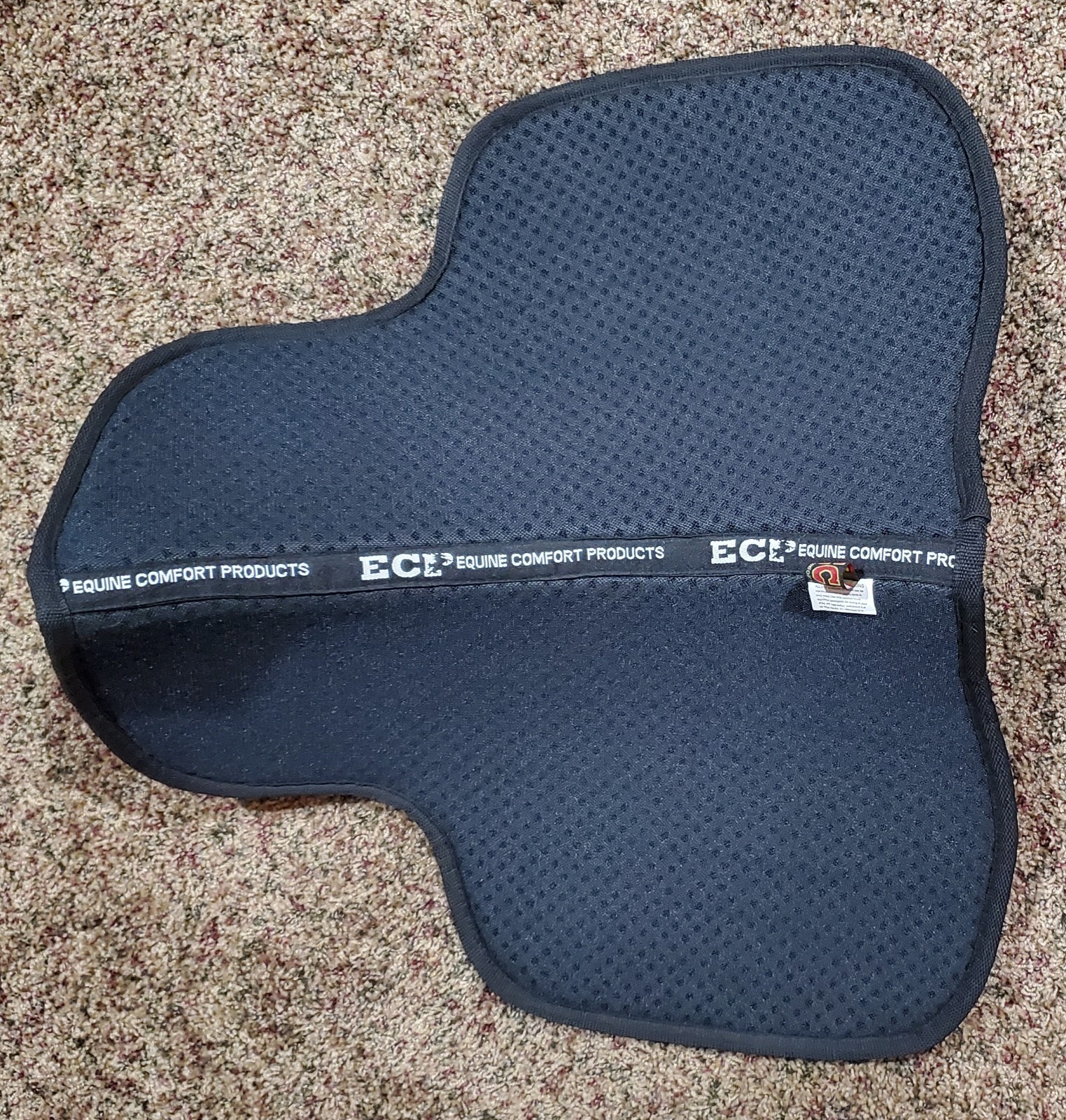

Photos from current listings. Actual item, color, and included accessories may vary.
Equine Saddle Pad Buying Guide
An equine saddle pad is the critical interface between horse, saddle, and rider—absorbing concussion, managing sweat, and preventing pressure points. The primary trade-off is between breathable, contoured shock absorption (technical foam, wicking liners) and cheap, flat, bulk cotton that bunches and retains heat. The decision rule: choose a pad with a contoured spine, a wicking bottom liner, and a defined thickness grade matched to your saddle fit—skip any pad that lacks a spine channel or uses loose-fill batting that migrates.


At a glance
- Category
- Equestrian Saddles & Pads
- Data updated
- Nov 19, 2026
Current offers
Highlights
- Contoured spine channels (raised wither clearance) prevent direct pressure on the dorsal spinous processes—flat pads concentrate load and cause dry spots.
- Thickness grades matter: 1/2-inch for close-contact saddles, 3/4-inch for trail/endurance, 1-inch for corrective or high-wither needs; over-padding alters saddle fit.
- Bottom liners: brushed cotton absorbs sweat but stays damp; wicking mesh or merino blends move moisture away and dry faster under working tack.
- Air Ride-style segmented foam panels (independent cells) conform to the back and reduce shear friction compared to solid felt or batting pads.
Best use cases
- Best fit: daily schooling or trail riding with a well-fitting saddle—pick a 3/4-inch contoured pad with wicking mesh bottom and reinforced wither. Skip thick fleece pads that add bulk without moisture management.
- Best fit: high-wither or downhill-built horses—choose an Air Ride or cutback pad with a deep wither channel and 1-inch front rise. Skip flat, square pads that bridge and press on the wither.
- Best fit: show or dressage rings where neatness matters—use a shaped, quilted pad with a contoured spine and cotton-blend top. Skip oversized square pads that bunch under the cantle.
Buying tips
- Measure your saddle's panel length and flap drop: pad should extend 1–2 inches beyond the panels front and rear—not more, or it bunches under the leg.
- Match thickness to saddle fit: if your saddle already fits well, use 1/2-inch pad; add 1/4-inch only if you need to fill a minor gullet gap—never use padding to fix a wide tree.
- Check the spine: a raised wither channel of at least 2 inches wide at the front prevents pressure; flat pads with no channel are a hard skip.
- For heavy sweat or humid climates, prioritize a wicking mesh or merino-blend bottom over brushed cotton; cotton holds moisture and chafes on long rides.
Specs
| Spine Channel | Contoured raised vs flat |
|---|---|
| Thickness Grade | 1/2 in / 3/4 in / 1 in |
| Bottom Liner | Wicking mesh / merino / cotton |
| Shock Panel | Segmented foam vs solid felt |
Related searches
What to check before buying
- Measure your horse's wither height and back length: pad must clear the wither by 1–2 inches and not extend past the loin.
- Confirm your saddle panel dimensions: pad should mirror panel shape (dressage vs. close-contact vs. western) and extend 1–2 inches beyond.
- Check your saddle's gullet width: pad spine channel must be wider than the gullet to avoid pinching.
- Match pad thickness to your saddle's current fit: 1/2-inch for well-fitting saddles, 3/4-inch for trail/endurance, 1-inch only for corrective fit.
FAQ
Data sources: eBay / Amazon listings and product attribute feeds Data updated Nov 19, 2026.
Some links on this page are affiliate links. If you buy after clicking one, we may earn a commission at no extra cost to you. This does not change which products appear here or their order. Affiliate disclosure.