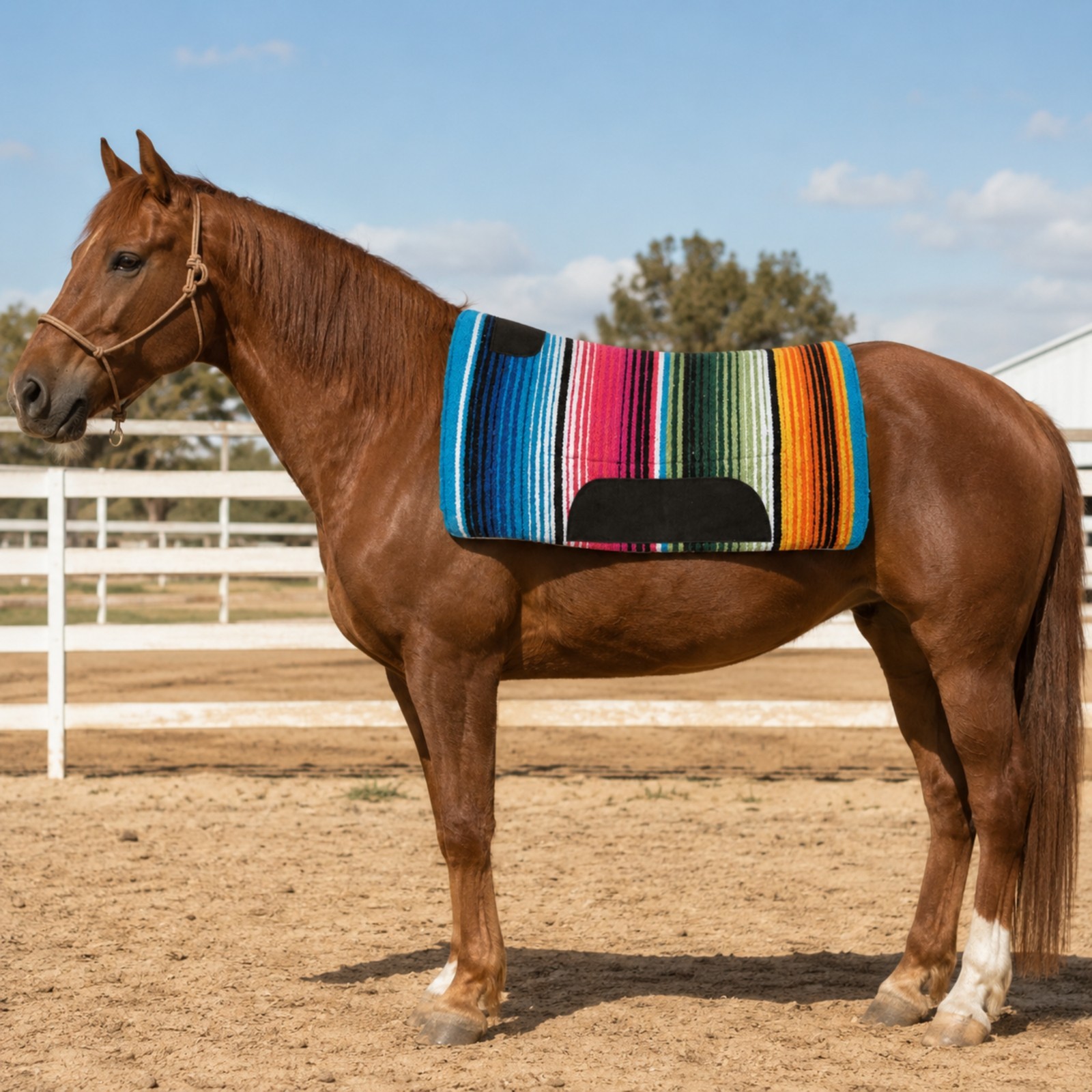

Photos from current listings. Actual item, color, and included accessories may vary.
Western Saddle Pad Buying Guide
Western saddle pads are the critical interface between a rigid western saddle and the horse's back, where thickness, material, and shape determine pressure distribution and heat dissipation. The primary trade-off is between dense, breathable natural fibers (wool/felt) that conform and wick moisture versus cheaper synthetic fleece or foam that compresses and traps heat. The clear decision rule: buy a pad with a true wool or dense felt core at least 1 inch thick and a spine contour that matches your saddle's bars—skip flat, thin synthetic pads for any regular riding.


At a glance
- Category
- Equestrian Saddles & Pads
- Data updated
- Nov 16, 2026
Current offers
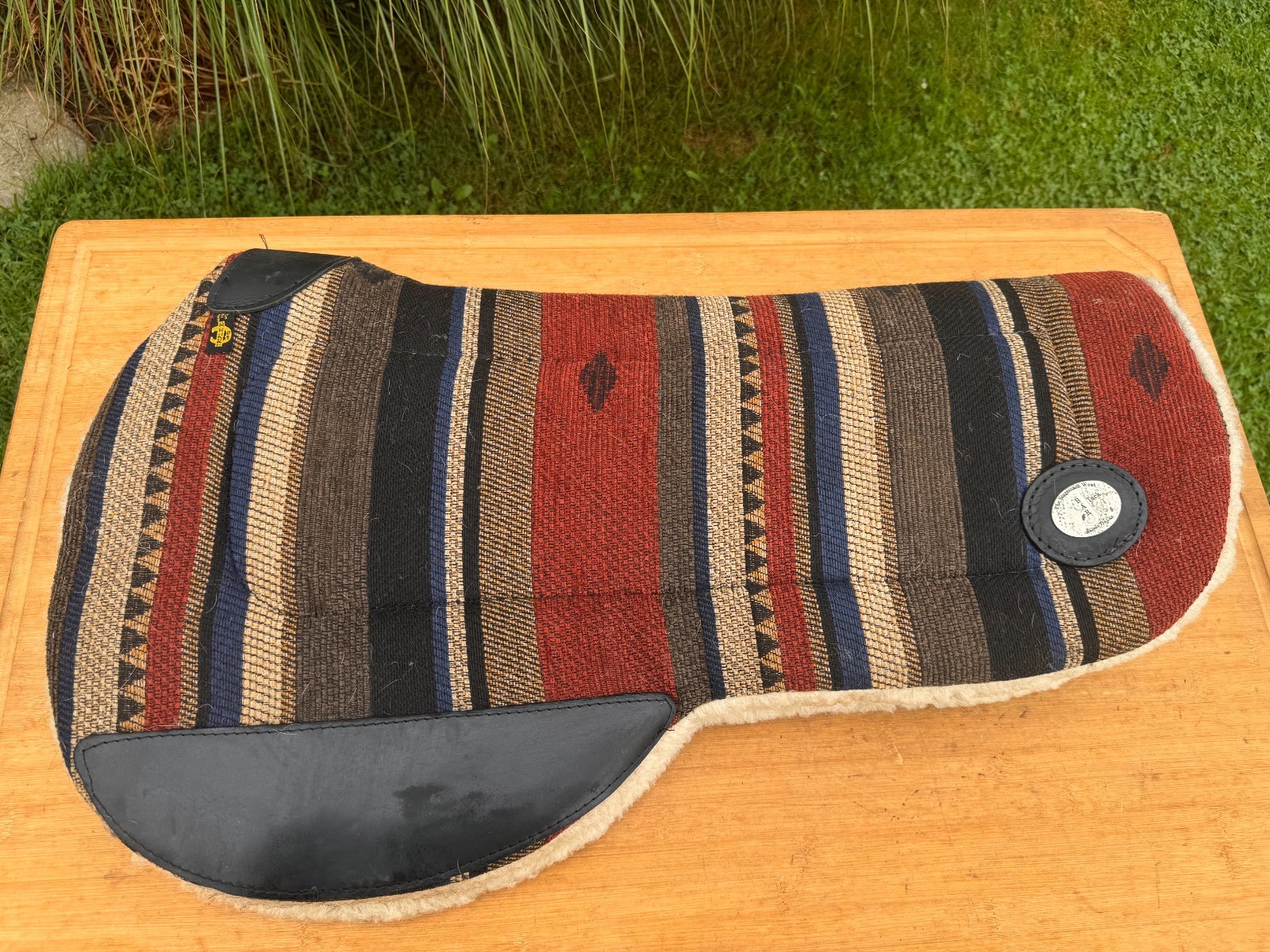
Highlights
- 100% wool fleece pads (e.g., BAR J) wick sweat and conform to the back without packing down, unlike polyester fleece which mats and loses loft after repeated use.
- A 1-inch thickness is the minimum for pressure distribution under a western saddle; pads under 3/4 inch bottom out on high-wither horses or long trail days.
- Pad dimensions of 30x30 to 29x32 inches fit most full-size western saddles; a pad should extend 1-2 inches beyond the saddle skirt on all sides.
- Wool felt cores resist compression better than open-cell foam, which degrades and creates pressure points after roughly a season of regular riding.
Best use cases
- Best fit: trail and recreational riding with a wool fleece or felt pad 1 inch thick—choose 30x30 for round-skirt saddles and 29x32 for rectangular skirts.
- Best fit: high-wither or downhill horses need a contoured pad with cutback wither relief and a felt core, not a flat fleece square.
- Wrong fit: showing or arena work in a thick 1-inch pad under a close-contact saddle—use a thinner 3/4-inch felt pad to preserve leg feel and saddle fit.
- Wrong fit: buying a cheap synthetic fleece pad for daily riding—the fleece mats within weeks and offers no real pressure relief; reserve it for light occasional use only.
Buying tips
- Match pad length to saddle skirt: measure skirt length and add 2 inches; a 30-inch pad suits most 28-29 inch skirts, while 32-inch pads fit longer ranch skirts.
- Choose 100% wool or wool-blend felt over polyester fleece; wool naturally regulates temperature and rebounds, while synthetics compress permanently.
- For high-wither horses, select a pad with a cutback or contoured spine; a flat square pad bridges and concentrates pressure on the withers.
- Thickness rule: 1 inch for trail/roping/regular work, 3/4 inch for showing or close-contact feel, and 1.5 inch only for horses with back sensitivity under heavy saddles.
Specs
| Core Material | 100% wool felt vs synthetic fleece |
|---|---|
| Thickness | 3/4 in to 1.5 in (1 in standard) |
| Pad Dimensions | 29x32 in to 30x30 in typical |
| Spine Shape | Flat square vs contoured/cutback |
Related searches
What to check before buying
- Measure your saddle skirt length and width; pad should overhang 1-2 inches on all sides—30x30 for round skirts, 29x32 for square skirts.
- Confirm your horse's wither height and back profile; high withers require a cutback pad, and a downhill back needs a contoured or shim-ready pad.
- Check saddle bar angle: semi-quarter horse bars need a standard pad, while full-quarter or draft bars require a wider pad to avoid bridging.
- Verify care requirements: wool pads need air-drying and occasional brushing, not machine washing; synthetic pads tolerate machine wash but degrade faster.
FAQ
Data sources: eBay / Amazon listings and product attribute feeds Data updated Nov 16, 2026.
Some links on this page are affiliate links. If you buy after clicking one, we may earn a commission at no extra cost to you. This does not change which products appear here or their order. Affiliate disclosure.