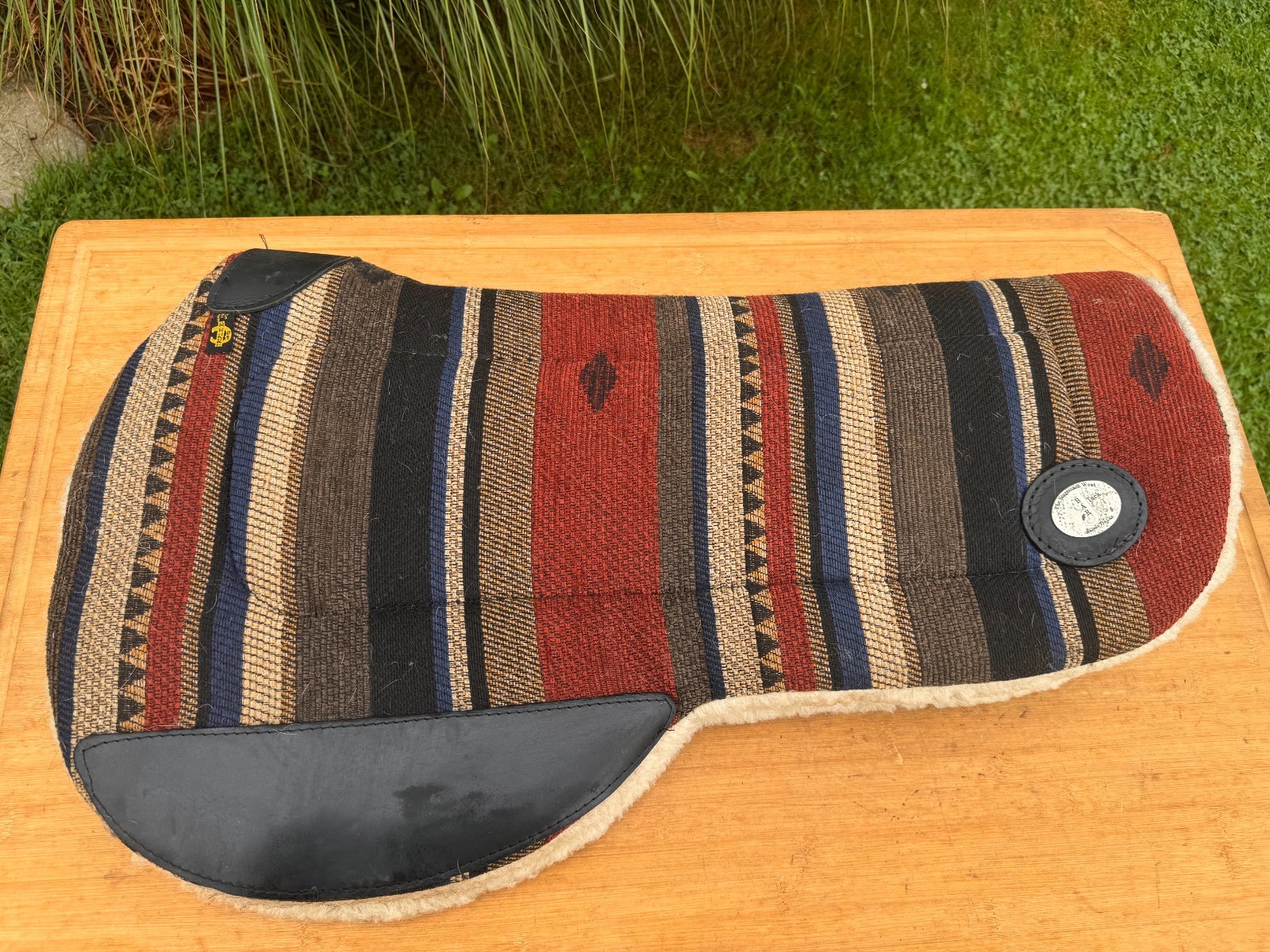

Photos from current listings. Actual item, color, and included accessories may vary.
Wool Saddle Pad Buying Guide
Wool saddle pads are natural-fiber saddle pads that use felted or fleece wool for breathable shock absorption and moisture wicking under a saddle. The main trade-off is between dense felted wool (durable, high-pressure distribution, heavier) and softer fleece wool (cushioning, skin-friendly, prone to matting); synthetic blends cut cost but lose breathability and rebound. The decision rule: choose a pad with a high wool-content core and a defined pile or felt density, and skip loose low-density fleece blends that compress flat within a season.


At a glance
- Category
- Equestrian Saddles & Pads
- Data updated
- Nov 20, 2026
Current offers
Highlights
- Felted wool pads use interlocked fibers at high density (typically 1/2 to 1 inch thick) for firm pressure distribution; fleece pads rely on loose pile for softness and conformability.
- 100% wool content wicks sweat and regulates heat, while wool-synthetic blends (often 30-50% synthetic) resist matting but trap more heat under the saddle.
- Western pad sizing is length x width x thickness: a common trail size around 29 x 32 x 1 inch fits most full-size Western trail saddles without bunching.
- Wool felt resists compression better than fleece over time; fleece requires regular brushing and air-drying to prevent felting and crusting.
Best use cases
- Best fit: trail and endurance riders wanting breathable, sweat-wicking cushioning — pick a dense felted wool pad about 1 inch thick in a 29 x 32 inch Western cut.
- Best fit: horses with sensitive skin or clipped coats — choose a soft wool fleece top layer over a felt core, avoiding coarse synthetic fleece.
- Wrong fit: high-intensity arena or reining work needing maximum shock absorption — skip thin fleece-only pads and use a thicker felt or felt-core pad.
- Wrong fit: humid climates with heavy daily sweating — avoid dense 100% wool pads that stay damp; choose a wool-synthetic blend with a quick-dry backing.
Buying tips
- Match pad length to saddle skirt: a 29 x 32 inch pad suits most full Western trail saddles; measure skirt length and add 2-3 inches of overhang per side.
- Choose 1 inch thickness for trail comfort; go 3/4 inch for closer leg feel in arena work and 1-1/4 inch only for horses needing extra back protection.
- Prefer 100% wool or high-wool felt over blended fleece; wool felt above roughly 1/2 inch dense fiber resists compression far longer than loose fleece.
- Confirm the pad has a contoured spine or wither cutout; a flat rectangular pad can bridge and create pressure points on high-withered horses.
Specs
| Wool Content | 100% wool vs wool-synthetic blend |
|---|---|
| Pad Construction | Felted wool vs fleece pile |
| Western Pad Size | ~29 x 32 in (trail/full fit) |
| Thickness | 3/4-1-1/4 in by workload |
Related searches
What to check before buying
- Measure saddle skirt length and width, then add 2-3 inches per side for pad overhang; a 29 x 32 inch pad fits most full-size Western trail saddles.
- Check wither clearance: the pad needs a contoured spine or cutout if your horse has prominent withers or a narrow build.
- Match thickness to workload: 1 inch for trail and long rides, 3/4 inch for arena work where leg feel matters.
- Verify care requirements: 100% wool needs hand washing or cold gentle cycle and flat air-drying; blends tolerate machine washing better.
FAQ
Data sources: eBay / Amazon listings and product attribute feeds Data updated Nov 20, 2026.
Some links on this page are affiliate links. If you buy after clicking one, we may earn a commission at no extra cost to you. This does not change which products appear here or their order. Affiliate disclosure.