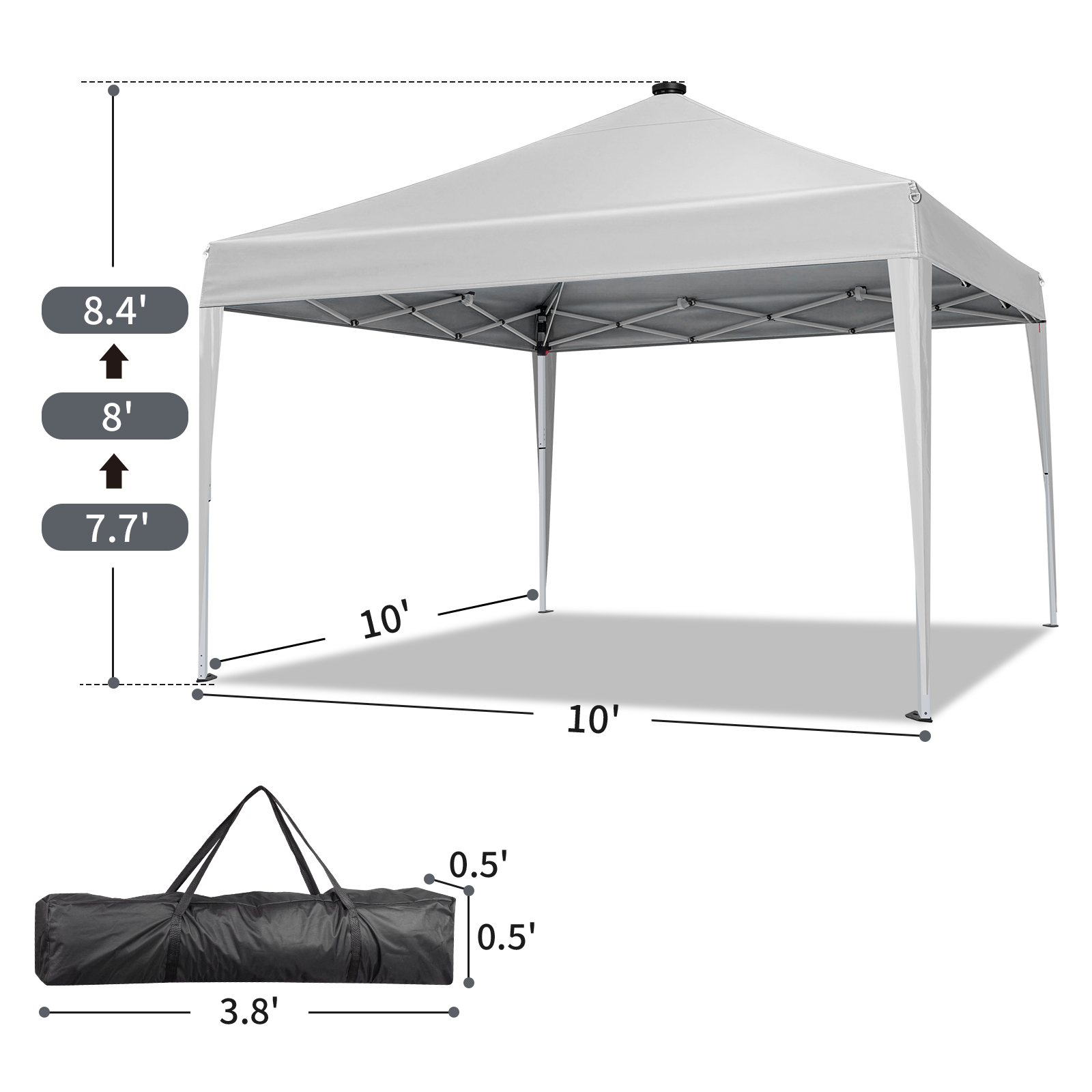

Photos from current listings. Actual item, color, and included accessories may vary.
10x10 Canopy Tent With Sidewall Buying Guide
A 10x10 canopy tent with sidewall is a freestanding pop-up shelter pairing a 100 sq ft footprint with removable fabric walls, used for camping, markets, and backyard events. The core trade-off is frame steel gauge and top fabric denier versus packed weight and setup speed: budget slant-leg frames use thinner tubing and 190T polyester, while commercial straight-leg frames use thicker steel and 210D+ Oxford with PU coating. The decision rule is simple: buy straight-leg with 210D+ Oxford and at least 0.8mm wall steel for wind and repeated use; accept slant-leg 190T only for calm-weather, occasional shade.


At a glance
- Category
- Tents & Shelters
- Data updated
- Nov 18, 2026
Current offers
Highlights
- Leg geometry: straight legs give full 10x10 ft coverage and vertical walls; slant legs taper to a smaller footprint and sidewalls hang at an angle, reducing usable interior.
- Top fabric: 210D Oxford with PU coating resists UV and light rain; 190T polyester is lighter but tears and fades faster under sustained sun.
- Frame steel: wall thickness of 0.8–1.0mm on 25–30mm square tubes supports moderate wind; thinner 0.5mm tubes bend at joints under gusts.
- Sidewall attachment: full-length hook-and-loop or zipper walls seal better; four separate panels (2 doors, 2 windows) allow cross-ventilation but leave gap seams.
Best use cases
- Best fit: weekend campground shade and rain cover — pick straight-leg 10x10 with 210D Oxford top, 4 zippered sidewalls, and a wheeled bag for easy transport.
- Best fit: farmers market or craft fair — choose commercial straight-leg with 1.0mm steel, sandbag weight plates, and a canopy rated for light wind; skip slant-leg entirely.
- Wrong fit: exposed beach or ridge-top use — a pop-up canopy is not a 4-season tent; sustained wind over 20 mph requires a weighted steel frame shelter, not this category.
- Wrong fit: full privacy sleeping shelter — sidewalls block wind and rain but do not replace a tent's floor, insect mesh, or condensation management; use a real tent.
Buying tips
- Measure your pad: 10x10 ft canopy needs a 10x10 ft clear footprint plus guy-line space; slant-leg models occupy the same top area but narrower ground stance.
- Fabric grade: choose 210D Oxford or heavier for repeated use; 190T polyester is acceptable only for occasional shade in mild conditions.
- Frame spec: look for 25mm+ square steel or aluminum legs with 0.8mm+ wall and reinforced joint collars; push-button height adjustment beats pin-and-ring.
- Sidewall config: 2 doors + 2 windows with full-length zippers gives ventilation and privacy; solid 4-wall sets suit vendor stalls but trap heat.
Specs
| Leg Style | Straight-leg vs slant-leg |
|---|---|
| Top Fabric | 210D Oxford vs 190T polyester |
| Frame Steel | 0.8–1.0mm wall / 25–30mm tube |
| Sidewall Config | 2 doors + 2 windows / 4 panels |
Related searches
What to check before buying
- Confirm your site is at least 12x12 ft to allow stakes and guy lines around a 10x10 ft canopy footprint.
- Check ground surface: stakes work in soil; concrete or deck requires sandbags or weight plates at each leg.
- Verify wall height clearance: most 10x10 canopies have 6.5–7 ft leg height; ensure door openings clear your tallest user and gear.
- Confirm the carry bag has wheels and a handle if you will move it solo; unladen canopy weights typically range 25–45 lb depending on frame gauge.
FAQ
Data sources: eBay / Amazon listings and product attribute feeds Data updated Nov 18, 2026.
Some links on this page are affiliate links. If you buy after clicking one, we may earn a commission at no extra cost to you. This does not change which products appear here or their order. Affiliate disclosure.