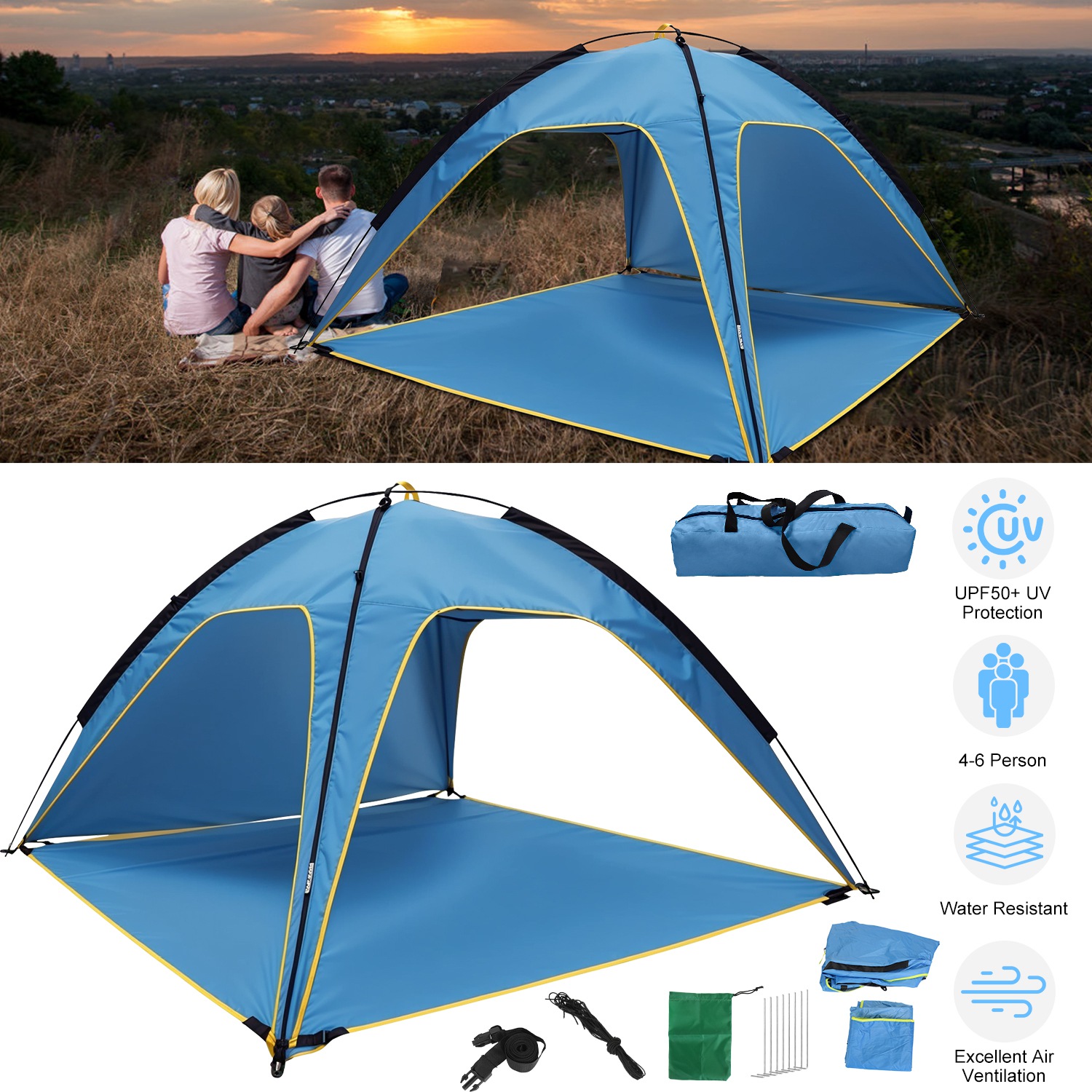

Photos from current listings. Actual item, color, and included accessories may vary.
Beach Shade Canopy Buying Guide
A beach shade canopy is a portable, wind-stable sun shelter that must balance UV-blocking fabric, frame rigidity, and packed weight against setup effort and sand anchoring. The core trade-off is between a full pop-up tent (enclosed, bug-proof, heavier) and an open canopy or umbrella (ventilated, lighter, less coverage). Buy a model with at least UPF 50+ fabric, aluminum or fiberglass poles, and a sand-anchor system rated for coastal wind; skip any canopy that relies solely on plastic stakes or thin polyester without UV coating.


At a glance
- Category
- Tents & Shelters
- Data updated
- Nov 18, 2026
Current offers
Highlights
- UPF 50+ fabric blocks 98% of UV radiation; uncoated polyester or nylon offers only UPF 5-15 and degrades quickly under salt and sun.
- Aluminum poles (7075 or 6061 alloy) resist bending in coastal gusts; fiberglass poles are lighter but snap under repeated 20+ mph wind loads.
- Pop-up beach tents use pre-bent fiberglass or steel wire frames that deploy in seconds but pack into a heavy disc; pole-and-sleeve canopies pack smaller but take 5-10 minutes to assemble.
- Sand anchoring requires either screw-in sand stakes (8-12 inch helix), sandbags (fill with 5-10 lbs of sand per corner), or integrated sand pockets; plastic tent pegs pull out of loose sand.
Best use cases
- Best fit for families with gear: choose a pop-up beach tent with UPF 50+ and sand pockets, sized 6.9x6.9 ft for 4-6 adults seated; skip open canopies that leave bags and coolers exposed to sun.
- Best fit for windy exposed beaches: pick a low-profile canopy with aluminum poles and 4 sandbags or screw stakes; skip umbrella-style canopies that catch wind like a sail.
- Best fit for solo or couple day trips: choose a lightweight (under 5 lbs) open canopy or shade umbrella with a carry bag; skip 4-6 person tents that add 8-12 lbs of packed weight.
- Wrong fit for overnight or rain: beach shade canopies are not waterproof shelters; choose a proper camping tent with a bathtub floor and rainfly instead.
Buying tips
- Match footprint to group size: allow 2.5-3 sq ft per seated adult; a 6.9x6.9 ft (47.6 sq ft) canopy fits 4-6 adults only if seated closely with no gear inside.
- Check pole material: 7000-series aluminum or 8.5-9.5 mm fiberglass poles handle coastal wind; steel wire pop-up frames are durable but add 2-4 lbs and rust if scratched.
- Verify UPF rating: look for UPF 50+ (98% UV block) printed on the fabric or hangtag; UPF 30-49 is acceptable for incidental shade but not full-day exposure.
- Confirm anchor kit: a complete beach canopy includes 4 sandbags or 4 screw-in sand stakes plus guylines; canopies shipped with only plastic pegs are not beach-ready.
Specs
| UV Rating | UPF 50+ (98% UV block) vs UPF 30-49 |
|---|---|
| Frame Material | Aluminum alloy vs fiberglass vs steel wire |
| Footprint | 6.9x6.9 ft to 10x10 ft (47-100 sq ft) |
| Anchor Type | Sandbags / screw stakes vs plastic pegs |
Related searches
What to check before buying
- Measure your vehicle trunk or cargo area: pop-up tents pack into discs 30-40 inches wide; pole canopies pack into bags 24-30 inches long.
- Check local beach rules: some beaches prohibit tents or canopies larger than 10x10 ft or require them to be set back from the waterline.
- Test sand anchor compatibility: loose dry sand needs screw stakes or sandbags; packed wet sand holds standard stakes but not in high wind.
- Confirm UV and fabric weight: 190T-210T polyester with UPF coating is minimum; 300D oxford or ripstop nylon lasts multiple seasons.
FAQ
Data sources: eBay / Amazon listings and product attribute feeds Data updated Nov 18, 2026.
Some links on this page are affiliate links. If you buy after clicking one, we may earn a commission at no extra cost to you. This does not change which products appear here or their order. Affiliate disclosure.