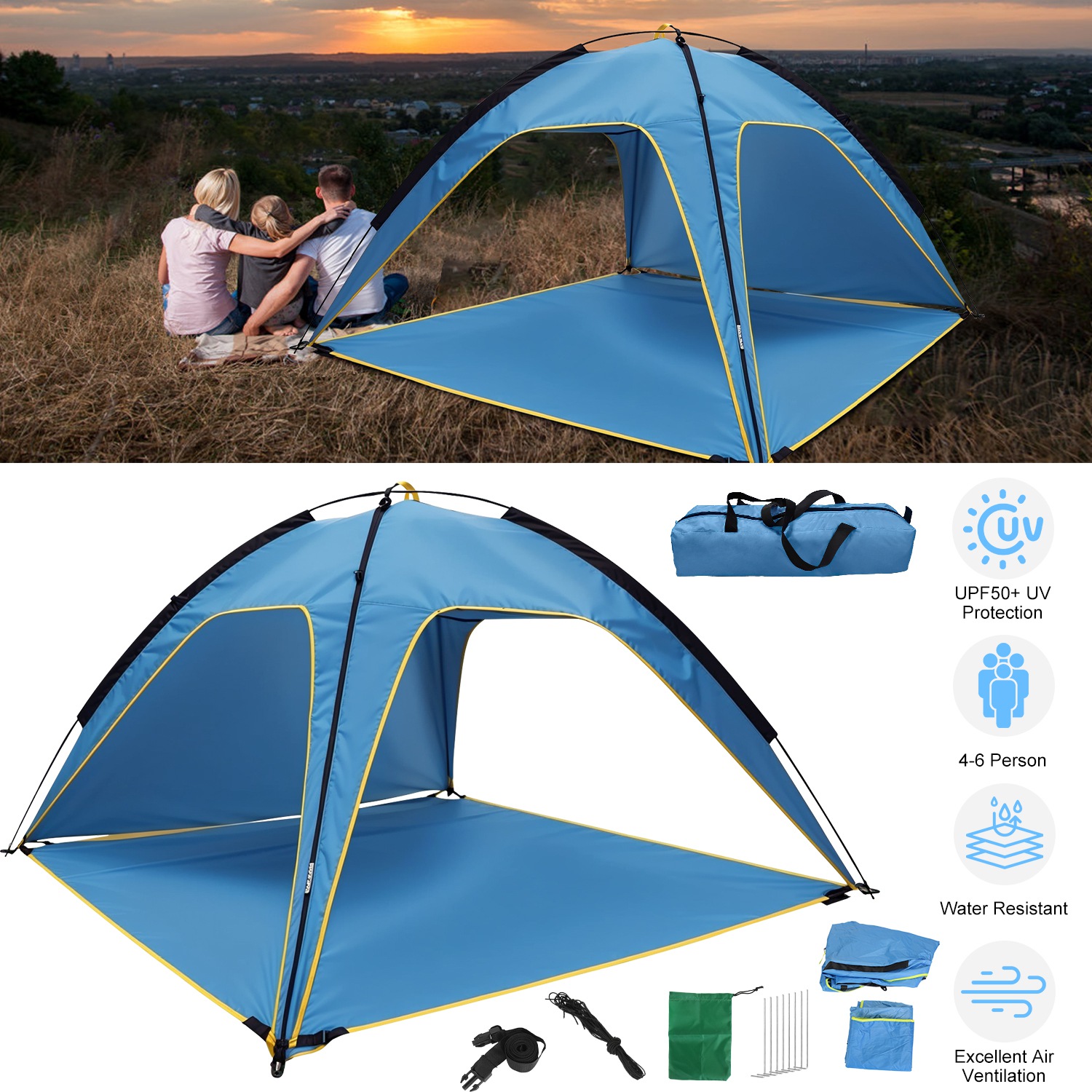

Photos from current listings. Actual item, color, and included accessories may vary.
Beach Shade Tent Buying Guide
A beach shade tent is a portable, UV-blocking shelter designed for sand, wind, and sun exposure—not for rain or overnight camping. The core trade-off is between UPF-rated fabric coverage and structural wind stability: pop-up canopies favor speed and airflow, while pole-and-guyline shelters favor durability and sand anchoring. Choose a beach tent with at least UPF 50+, a sand-anchoring system (sandbags or stakes), and a floor footprint matched to your group size; skip any shelter lacking wind anchors or with unrated fabric.


At a glance
- Category
- Tents & Shelters
- Data updated
- Nov 18, 2026
Current offers
Highlights
- UPF 50+ fabric blocks 98% of UV radiation; unrated fabrics offer no verified protection and degrade faster under salt and chlorine.
- Pop-up tents use pre-bent fiberglass or steel wire frames—fast setup but weaker in gusts; pole tents use aluminum or fiberglass poles with guy lines for superior wind resistance.
- Sand anchoring requires either integrated sandbags (fill on site) or long stakes; plastic pegs pull out of loose sand, so look for sand-specific anchors or weight bags.
- Floor footprints follow group sizing: 2-person tents run roughly 5x5 ft, 4-person around 7x7 ft, and 6-person 9x9 ft or larger; canopy-only shades omit floors and walls.
Best use cases
- Best for families with gear: pick a 6.9x6.9 ft (or larger) pop-up with sandbags and a floor—covers 4-6 adults plus bags; skip ultralight pole shelters that lack floors for sandy toy-heavy setups.
- Best for windy open beaches: choose a low-profile pole tent with aluminum poles, guy lines, and sand stakes; skip tall pop-up canopies that catch wind like sails and collapse.
- Best for quick solo or couple trips: a 2-person pop-up with UPF 50+ and built-in sandbags sets up in seconds; skip large 6-person canopies that require two people to fold and anchor.
Buying tips
- Match floor area to group: allow 8-10 sq ft per adult; a 6.9x6.9 ft shelter (47.6 sq ft) fits 4-5 seated adults comfortably, not 6 with gear.
- Demand UPF 50+ labeling (not just 'UV protection')—UPF 50 blocks 98% of UVA/UVB; UPF 30 blocks 96.7% and is acceptable only for incidental shade.
- For wind above 15 mph, pick a shelter with at least 4 guy-line attachment points and aluminum poles; fiberglass pop-up frames fatigue and splinter under repeated flexing.
- Check packed weight and carry bag length: pop-up shelters typically weigh 4-8 lbs and pack into a flat disc; pole tents run 6-12 lbs and pack longer—match to your walk from car to sand.
Specs
| UV Rating | UPF 50+ (98% UV block) vs unrated |
|---|---|
| Frame Type | Pop-up fiberglass vs aluminum pole |
| Footprint (group) | 5x5 ft (2p) to 9x9 ft (6p) |
| Anchoring | Sandbags or 8-in+ sand stakes |
Related searches
What to check before buying
- Measure your group's seated footprint: 6.9x6.9 ft fits 4 adults with cooler; 9x9 ft or larger needed for 6 adults plus chairs and bags.
- Confirm sand anchoring: shelter must include sandbags (fill with sand on site) or 8-inch+ sand stakes; standard 6-inch plastic pegs fail in loose dry sand.
- Check floor and wall configuration: full floor keeps sand out but traps heat; open-floor canopy shades allow breeze—pick based on whether you need bug and sand protection.
- Verify UV rating on the fabric tag: UPF 50+ is the beach minimum; unrated polyester or nylon offers roughly UPF 5-15 and is not a sun shelter.
FAQ
Data sources: eBay / Amazon listings and product attribute feeds Data updated Nov 18, 2026.
Some links on this page are affiliate links. If you buy after clicking one, we may earn a commission at no extra cost to you. This does not change which products appear here or their order. Affiliate disclosure.