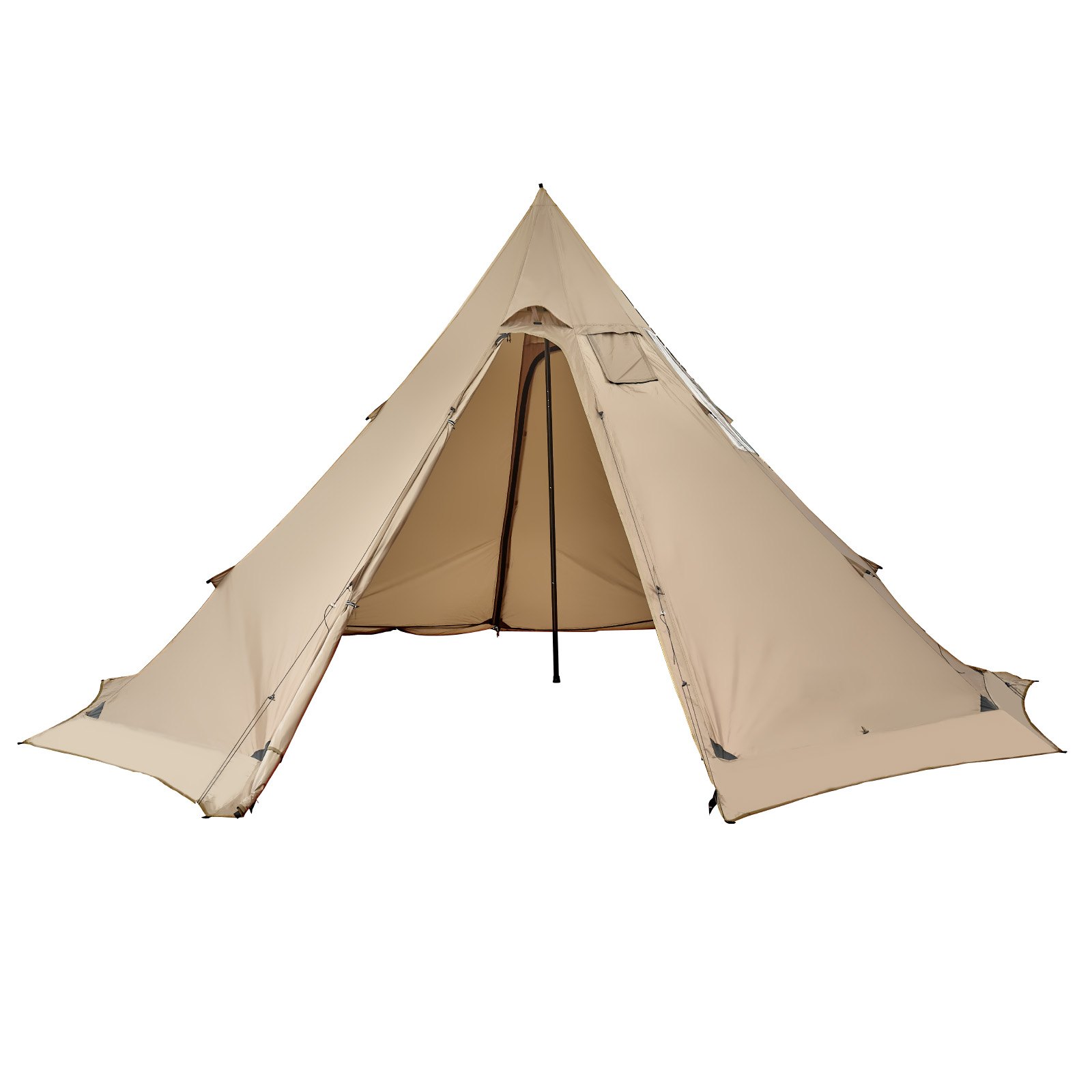

Photos from current listings. Actual item, color, and included accessories may vary.
Lightweight Backpacking Tent Buying Guide
A lightweight backpacking tent is a human-powered shelter engineered to balance trail weight, packed volume, and weather protection for multi-day routes. The core trade-off is fabric denier and pole architecture: thinner 15-20D silnylon/silpoly saves grams but cuts abrasion life, while 30-40D fabrics and aluminum poles add trail weight for durability. The decision rule: choose a sub-3 lb two-wall or trekking-pole shelter in 20D fabric for 3-season use, and step up to 4-season double-wall or stove-jack canvas tipis only when snow load or sub-freezing trips justify the extra pounds.


At a glance
- Category
- Tents & Shelters
- Data updated
- Nov 18, 2026
Current offers
Highlights
- Fabric denier drives durability: 15-20D silpoly/silnylon is ultralight but puncture-prone; 30-40D polyester resists UV and abrasion far longer.
- Pole material and diameter set wind strength: DAC Featherlite NSL 8.5-9.6mm aluminum poles outperform generic 7001 or fiberglass; trekking-pole shelters save 1-2 lb but need adjustable poles.
- Hydrostatic head thresholds: 1,200-1,500mm floors and 1,500-2,000mm flys handle 3-season rain; 4-season and canvas tipis spec 3,000mm+ floors or 8-10oz canvas.
- Capacity math: a 2-person tent needs 30-35 sq ft floor plus two 8-10 sq ft vestibules; 1P shelters run 18-25 sq ft, and 4-6P tipis exceed 100 sq ft but weigh 10-20 lb.
Best use cases
- Best fit 3-season solo or duo backpacking: pick a 2-3 lb double-wall or single-wall trekking-pole tent in 20D silpoly with two doors and vestibules to keep base weight low.
- Wrong fit for winter or stove use: skip ultralight 3-season tents in snow-load or sub-freezing trips; choose a 4-season double-wall or a canvas tipi with a stove jack rated for a hot tent stove.
- Best fit group basecamp: a 4-6 person tipi or cabin tent with a stove jack suits cold-weather fishing/hunting camps where weight is carried short distances; skip it for long thru-hikes.
- Wrong fit for exposed alpine: single-wall ultralight shelters without a solid inner can condense heavily; pick a double-wall 4-season tent with 30D+ fabrics and a full-coverage fly for wind-driven snow.
Buying tips
- Set a trail-weight budget: 3-season solo tents run 2-3 lb, 2-person 3-4 lb, and 4-season or canvas tipis 8-20 lb; subtract stakes and poles to compare packed weights fairly.
- Match floor area to sleepers: allow 20-25 sq ft per person plus gear; a 2P tent under 30 sq ft floor is a tight squeeze for two wide pads.
- Choose pole architecture by route: freestanding aluminum-pole tents pitch on rock and platforms; trekking-pole or pyramid shelters need stakeable ground and save weight.
- Verify fabric and coating grades: silpoly resists sag when wet better than silnylon, and 30D+ floors with 3,000mm hydrostatic head outlast 15D floors on abrasive ground.
Specs
| Trail Weight | 1.5-4 lb (3-season) / 8-20 lb (4-season) |
|---|---|
| Fabric Denier | 15-20D ultralight / 30-40D durable |
| Pole Type | Aluminum DAC vs trekking-pole |
| Hydrostatic Head | 1,500-3,000mm fly / 3,000mm+ floor |
Related searches
What to check before buying
- Measure your sleeping pad footprint and add 6-8 inches per side; confirm the tent floor width clears two pads plus a gear gap.
- Check stakeout space: trekking-pole pyramids and tipis need 8-12 stake points and a clear circle larger than the tent's base diameter.
- Confirm stove compatibility for hot tents: the stove jack diameter must match your stove pipe, and canvas or 4-season fabrics need appropriate clearance.
- Match climate and season: 3-season mesh tents vent condensation but fail snow load; 4-season solid inners and 30D+ flys handle wind and snow.
FAQ
Data sources: eBay / Amazon listings and product attribute feeds Data updated Nov 18, 2026.
Some links on this page are affiliate links. If you buy after clicking one, we may earn a commission at no extra cost to you. This does not change which products appear here or their order. Affiliate disclosure.