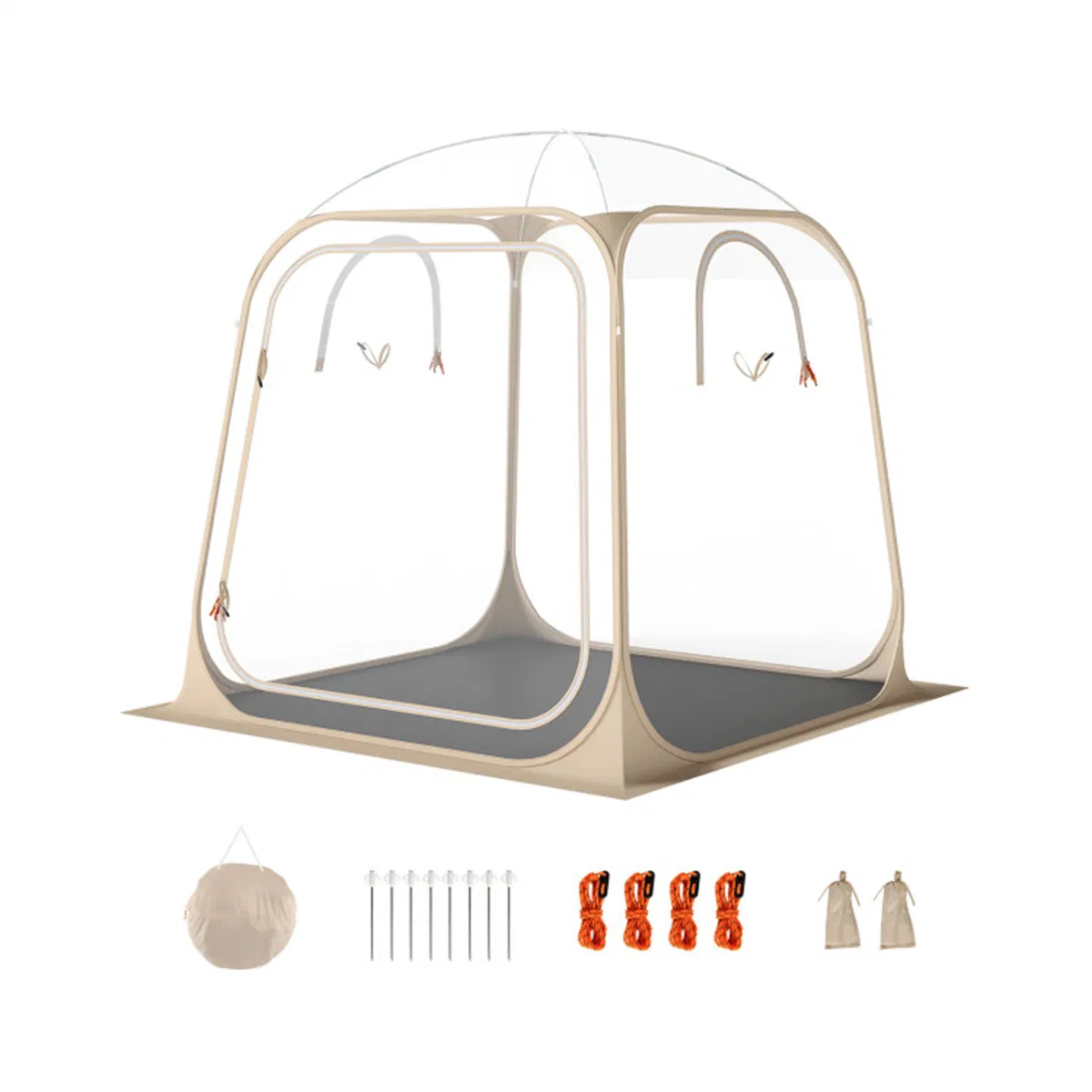

Photos from current listings. Actual item, color, and included accessories may vary.
Outdoor Sport Tent Buying Guide
An outdoor sport tent is a lightweight, fast-pitch shelter for spectating, day camping, or emergency rain cover — not a substitute for a full backpacking or expedition tent. The core trade-off is between PVC/polyethylene film shells that seal out weather cheaply but trap condensation and block breathability, versus coated-polyester or nylon canopies with taped seams and mesh vents that manage moisture and UV at a higher cost. The decision rule: buy a film-pod only for short, dry-cold spectating use; buy a coated-fabric canopy with taped seams for any trip involving sleep, condensation, or sustained wind.


At a glance
- Category
- Tents & Shelters
- Data updated
- Nov 18, 2026
Current offers
Highlights
- Film-shell pop-ups (PVC/PET clear walls) deliver full weather sealing and 360° visibility but zero breathability — condensation forms within hours of occupancy.
- Coated-polyester canopies rate 1,500–3,000 mm hydrostatic head; PVC film pods effectively exceed that but rely on sealed seams and zipper flaps, not fabric DWR.
- Pop-up hubs use fiberglass or steel wire skeletons — fiberglass flexes and resists kinks, steel is stronger but dents; hub count and pole diameter (8–11 mm) drive wind survival.
- Clear PVC blocks UV poorly and yellows with sun exposure; polyester canopies with silver or PU coating hold color and UV resistance far longer.
Best use cases
- Best fit: sideline spectating in cold rain — pick a clear PVC pop-up pod with sealed seams and sandbag anchor points; skip it for warm-weather sleeping.
- Best fit: car-camping base shade with occasional showers — pick a coated-polyester canopy with taped seams, mesh roof vent, and taped zipper flaps.
- Wrong fit: multi-night backpacking or high-wind alpine use — a film pod or lightweight sport canopy lacks guy-out strength and breathability; step up to a real double-wall tent.
- Wrong fit: hot-climate day use — clear PVC greenhouse-heats; choose an open-mesh or silver-coated canopy with cross ventilation instead.
Buying tips
- Match footprint to occupants: a 7×7 ft pod seats 2–3 adults in chairs but sleeps only 2; allow ~10 sq ft per seated person and ~15 sq ft per sleeping pad.
- Demand taped or welded seams and storm-flapped zippers on any fabric canopy; untaped seams leak at 1,500 mm rated fabric within a season.
- Check pole/hub spec: fiberglass poles 8–11 mm with metal hubs survive sport-tent wind loads; thin wire or plastic hubs kink and fail at the first gust.
- For film pods, confirm PVC thickness around 0.3–0.5 mm and full-perimeter sandbag/peg anchor points — thin film tears at grommets under wind flap.
Specs
| Shell Material | Clear PVC film vs coated polyester |
|---|---|
| Waterproof Rating | 1,500–3,000 mm coated fabric |
| Pole & Hub Type | Fiberglass 8–11 mm / metal hubs |
| Capacity & Footprint | 2–3 seated per 7×7 ft pod |
Related searches
What to check before buying
- Measure your pitch area and door clearance: a 7×7 ft pod needs a flat 8×8 ft footprint plus guylines; tent height must clear your seated or standing users.
- Check ground conditions: film pods need pegs or sandbags on soil, grass, or weighted hardstanding; they cannot be free-standing on smooth pavement.
- Confirm climate fit: clear PVC suits cold/wet spectating; hot or humid trips need a breathable coated-fabric canopy with mesh vents.
- Plan companion gear: a groundsheet or footprint protects the floor, and a separate tarp or awning adds dry entry space that sport pods lack.
FAQ
Data sources: eBay / Amazon listings and product attribute feeds Data updated Nov 18, 2026.
Some links on this page are affiliate links. If you buy after clicking one, we may earn a commission at no extra cost to you. This does not change which products appear here or their order. Affiliate disclosure.