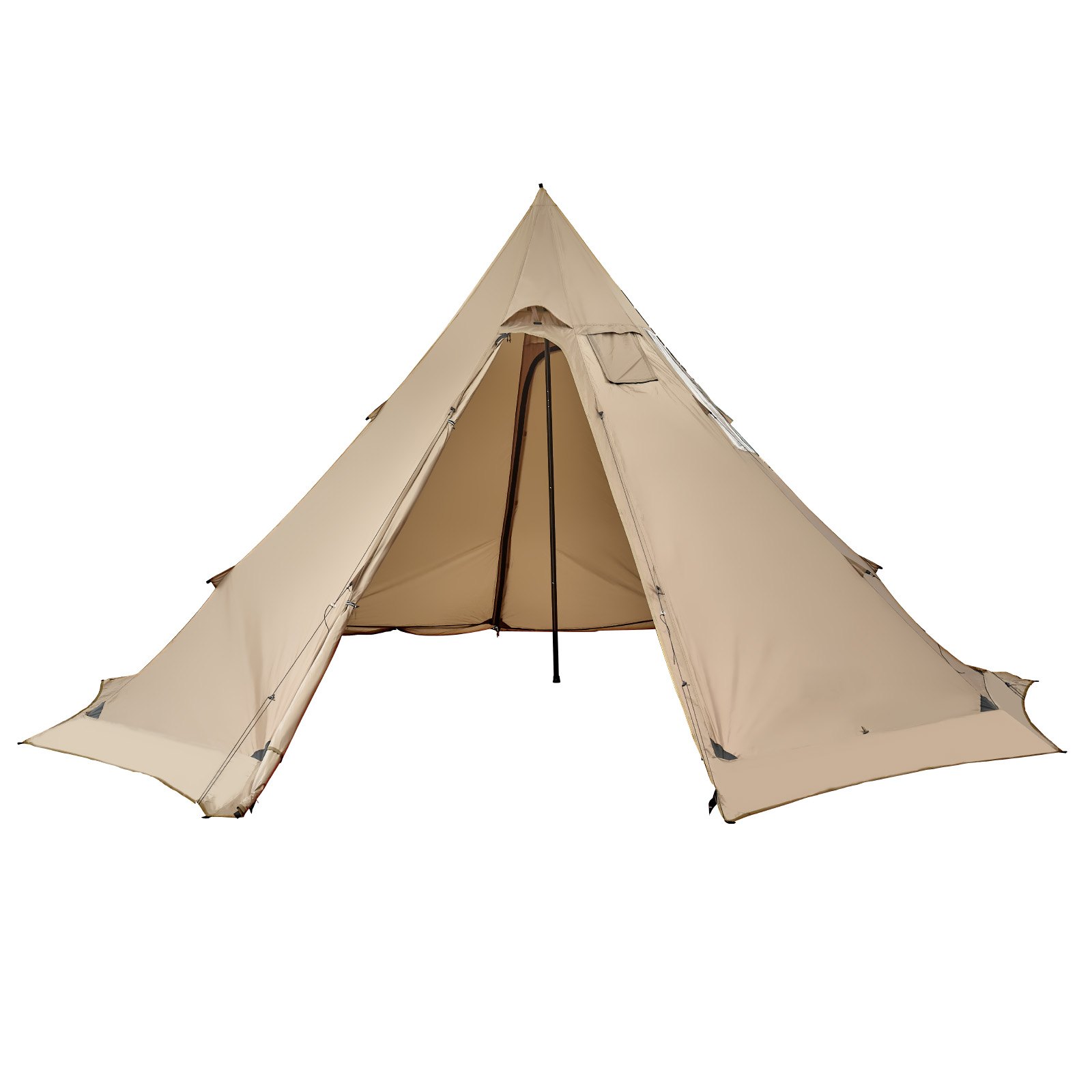

Photos from current listings. Actual item, color, and included accessories may vary.
Winter Camping Tent Buying Guide
A winter camping tent is a shelter engineered for sub-freezing temperatures, snow load, and wind, where the key trade-off is four-season strength versus weight and ventilation. Durable options use heavy canvas or reinforced polyester with a stove jack, full-coverage fly, and aluminum poles; compromises skimp on pole diameter, fabric weight, and true snow-shedding geometry. Choose a hot tent with a stove jack for basecamp comfort, or a mountaineering double-wall for weight and wind resistance—skip three-season tents for winter use.


At a glance
- Category
- Tents & Shelters
- Data updated
- Nov 18, 2026
Current offers
Highlights
- Four-season tents use 7000-series aluminum poles (8.5–10 mm diameter) versus 3-season 6–7 mm, doubling snow-load and wind resistance.
- Hot tents require a stove jack (heat-resistant silicone or fiberglass patch) and fabric rated to 300–500°F near the stove; canvas 8–10 oz/yd² or 210D+ polyester is standard.
- Tipi and pyramid shapes shed snow better than dome tents because steep walls (45–60°) prevent accumulation and reduce wind sail.
- Double-wall mountaineering tents with solid inner and full-coverage fly manage condensation; single-wall hot tents rely on venting and stove draft.
Best use cases
- Best fit: Winter basecamp with a wood stove for 2–6 people—pick a tipi or wall tent with a stove jack, 8+ oz canvas, and snow skirts; skip ultralight 3-season tents.
- Best fit: Alpine mountaineering or ski touring where weight matters—choose a 4-season double-wall dome with 10 mm aluminum poles and a low-profile fly; skip canvas hot tents for mobility.
- Wrong fit: Car camping in mild cold (above 20°F) without a stove—a 3-season tent with a solid inner and extra stakes is sufficient; a hot tent adds unnecessary weight and cost.
- Wrong fit: Solo backpacking in deep snow without stove need—use a single-wall 4-season bivy or 2-person mountaineering tent; 4–6 person tipis are too heavy and large to heat.
Buying tips
- Match floor area to sleepers: allow 20–25 sq ft per person for winter gear; a 4–6 person tent needs at least 80 sq ft floor and 60+ inch peak height.
- Check fabric weight: 8–10 oz/yd² canvas or 210D–300D polyester for durability and stove proximity; lighter 75D–150D fabrics suit mountaineering but not hot-tent use.
- Verify stove jack compatibility: silicone or fiberglass jack rated to 500°F, with a 3–5 inch opening; ensure pipe clearance of 2–3 inches from fabric.
- Pick pole diameter by snow load: 9–10 mm aluminum for heavy snow, 8.5 mm for moderate; avoid fiberglass poles for winter as they crack in extreme cold.
Specs
| Season Rating | 4-season / winter-rated |
|---|---|
| Pole Material & Diameter | Aluminum 8.5–10 mm |
| Fabric Weight | 8–10 oz canvas or 210D+ poly |
| Stove Jack | Silicone/fiberglass, 500°F rated |
Related searches
What to check before buying
- Measure your sleeping area: tent footprint must fit your group plus gear, and stove clearance (2–3 ft) from walls and ceiling.
- Confirm ground conditions: snow stakes or deadman anchors required; sand/snow stakes wider than standard 6-inch stakes.
- Check ventilation: high and low vents plus stove draft for condensation control; solid inner tents need at least two vents.
- Verify local fire rules: wood stoves may be banned in some areas; ensure stove pipe height meets campground regulations.
FAQ
Data sources: eBay / Amazon listings and product attribute feeds Data updated Nov 18, 2026.
Some links on this page are affiliate links. If you buy after clicking one, we may earn a commission at no extra cost to you. This does not change which products appear here or their order. Affiliate disclosure.