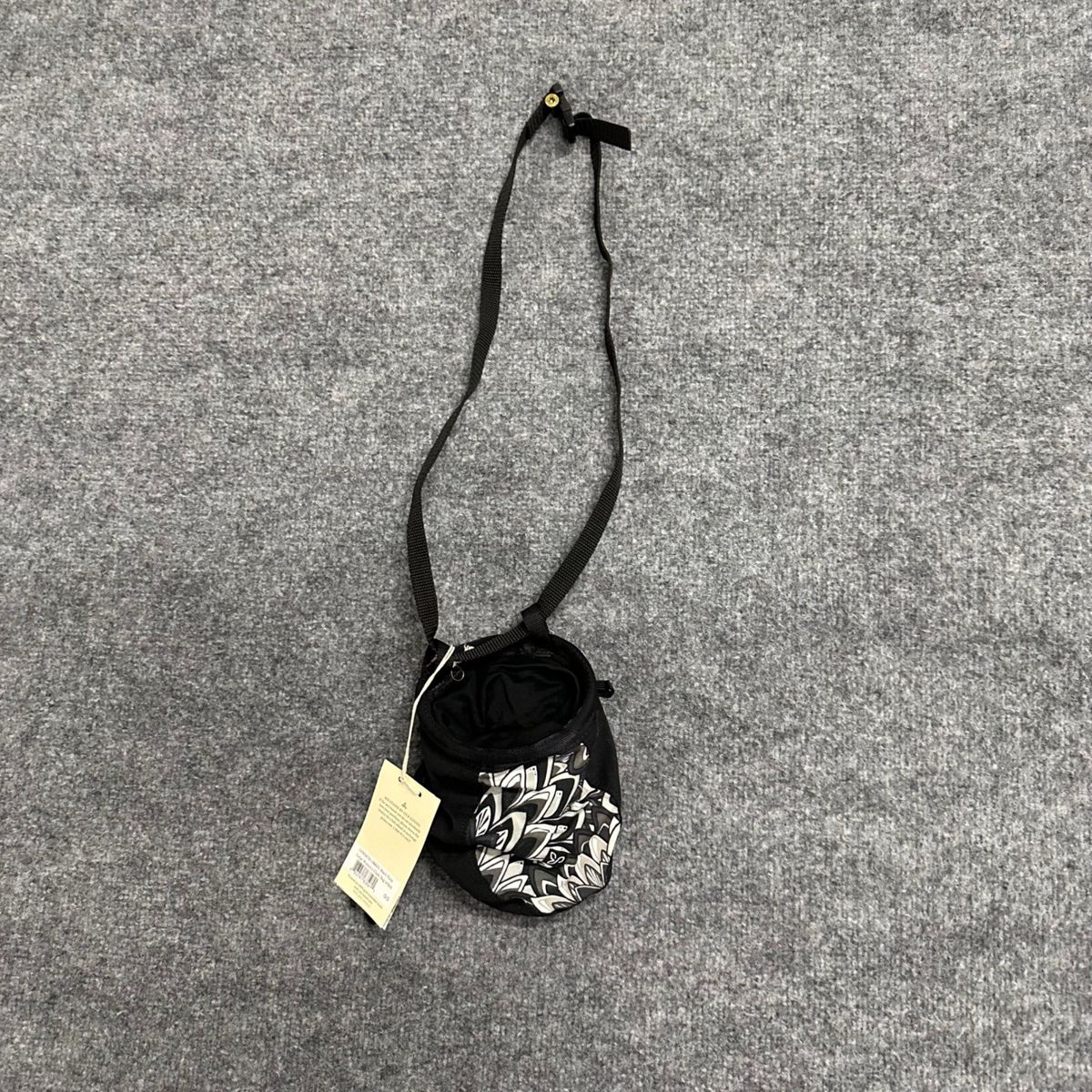

Photos from current listings. Actual item, color, and included accessories may vary.
Chalk Bag Buying Guide
A chalk bag is a purpose-built pouch that carries climbing chalk and keeps it accessible at the wall, and the primary trade-off is between a compact low-bulk profile and a large-mouth, fleece-lined design that reduces spills and keeps chalk flowing. Durable options use a stiffened rim, a thick fleece or terry lining, and a secure drawstring closure, while compromises use thin single-layer nylon, floppy rims that collapse during chalking, and weak belt loops.


At a glance
- Category
- Climbing Chalk & Training
- Data updated
- Nov 16, 2026
Current offers
Highlights
- Rim structure determines one-handed chalking: stiffened circular rims hold the bag open, while unstiffened fabric mouths collapse and force two-handed fumbling.
- Lining material controls chalk retention: fleece or terry linings hold loose chalk and reduce dust escape, while bare nylon linings shed chalk and wear faster at the seams.
- Closure system separates gym and outdoor use: drawstring-and-cord-lock tops seal chalk for transport, while simple fold-over or open-top designs spill in a pack.
- Attachment hardware dictates fit: a wide webbing belt with a quick-release buckle and a reinforced loop fits over harness waist belts, while thin cord loops twist and sag.
Best use cases
- Indoor gym bouldering or sport climbing: pick a mid-size bag with a stiff rim and fleece lining plus a belt loop that fits over a harness; skip oversized competition-style buckets that swing and spill on falls.
- Outdoor multi-pitch or trad climbing: choose a compact bag with a secure drawstring closure and a reinforced belt loop that hangs flat against the harness; skip open-top gym bags that leak chalk inside a pack.
- Large-capacity wall sessions or coaching: select a wide-mouth large bag that stands open on the floor and holds a full block plus loose chalk; skip small ultralight bags that need constant refilling.
- Bouldering with a chalk bucket alternative: a large chalk bag with a stiffened rim works for sit-starts and floor rest, but skip it for long approaches where low bulk and a sealed top matter more.
Buying tips
- Match bag mouth diameter to hand size: a 5-6 inch opening suits most adult hands for one-handed entry, while sub-4-inch mouths force scooping and chalk waste.
- Choose lining by chalk type: loose chalk needs a fleece or terry lining to hold dust, while chalk balls work in any lining but wear faster against bare nylon seams.
- Check belt-loop width against your harness: a loop that accepts a 1.5-2 inch webbing belt sits flat, while narrow cord loops twist and let the bag swing.
- Prioritize a stiffened rim over extra pockets: rim stiffness is the single biggest factor in one-handed chalking speed and chalk containment.
Specs
| Bag Capacity | Small <3 L / Mid 3-5 L / Large 5+ L |
|---|---|
| Lining Material | Fleece/terry vs bare nylon |
| Rim Structure | Stiffened circular vs floppy fabric |
| Closure Type | Drawstring cord-lock vs open-top |
Related searches
What to check before buying
- Measure your harness waist belt width and confirm the bag loop or belt fits over it without bunching.
- Confirm the bag mouth diameter clears your open hand comfortably for one-handed dipping.
- Check that the closure seals fully if the bag will ride inside a pack or gym bag between attempts.
- Verify the lining material matches your chalk form: fleece or terry for loose chalk, smooth nylon is acceptable only for chalk balls.
FAQ
Data sources: eBay / Amazon listings and product attribute feeds Data updated Nov 16, 2026.
Some links on this page are affiliate links. If you buy after clicking one, we may earn a commission at no extra cost to you. This does not change which products appear here or their order. Affiliate disclosure.