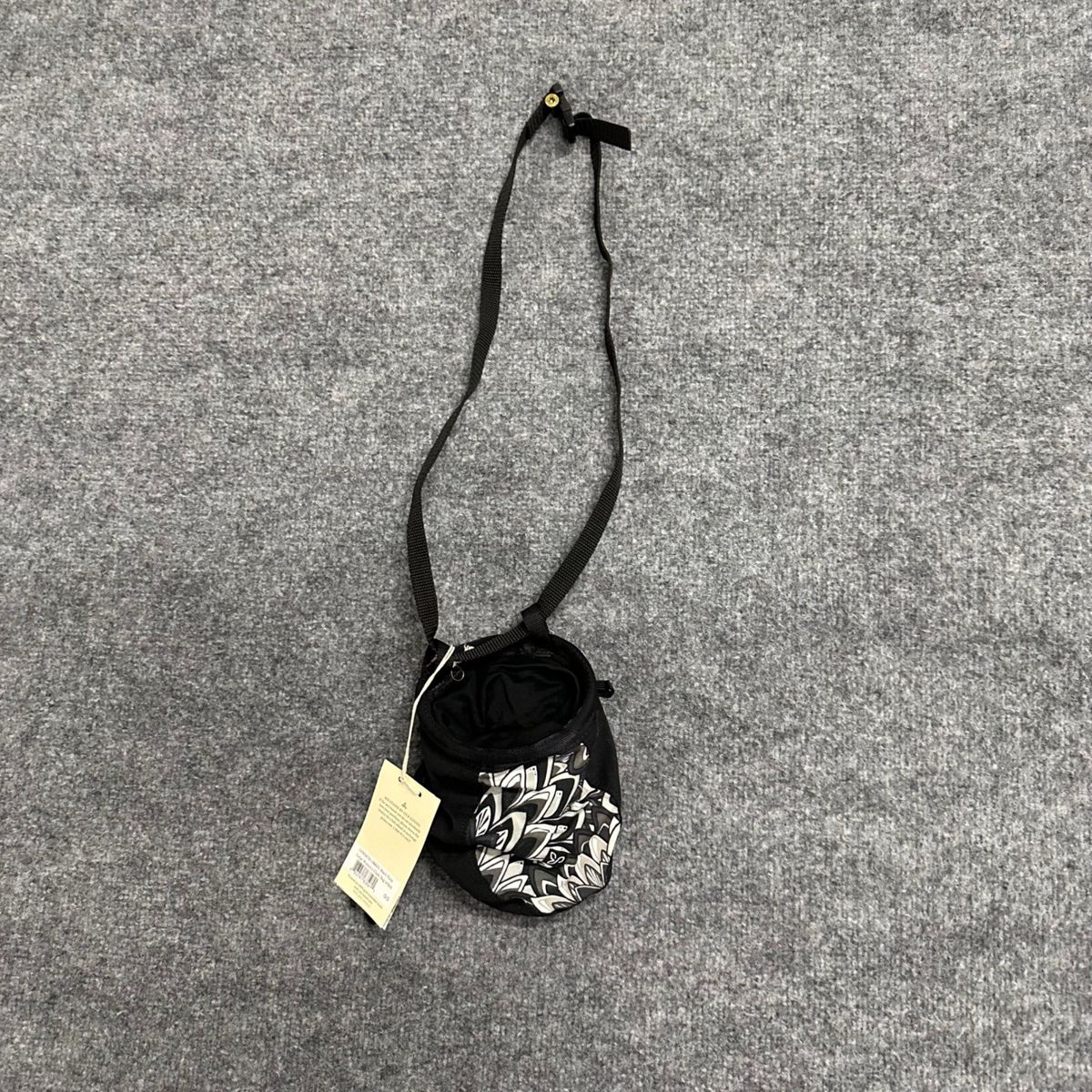

Photos from current listings. Actual item, color, and included accessories may vary.
Climbing Bag Chalk Buying Guide
A climbing chalk bag is a fabric pouch with a fleece or terry lining that keeps loose chalk accessible while you climb; the core trade-off is between a simple drawstring sack and a structured bag with a stiff rim and secure closure. Choose a bag with a rigid rim, dense fleece lining, and a reliable drawcord if you want one bag to last across gym and rock seasons; skip thin nylon sacks with flimsy cord locks unless it is strictly a backup.


At a glance
- Category
- Climbing Chalk & Training
- Data updated
- Nov 16, 2026
Current offers
Highlights
- Rim construction separates tiers: stiff wire or plastic hoops hold the mouth open for one-handed chalking, while uncored fabric mouths collapse and spill.
- Lining density matters more than outer fabric: plush fleece or terry holds chalk dust and re-coats fingers, whereas thin synthetic lining lets chalk fall to the bottom.
- Closure systems range from single drawcord to dual-cord with barrel locks; a full-coverage drawstring cinches against the rim to prevent leaks in a pack.
- Attachment hardware defines versatility: webbing loops and belt slots fit harness belts up to standard 1.5-2 inch widths, while carabiner loops need a dedicated clip point.
Best use cases
- Gym bouldering: pick a medium bag with a stiff rim and fleece lining that sits flat on the mat—skip ultralight stuff sacks that tip over.
- Sport and trad climbing: choose a bag with a belt loop and secure drawcord that hangs snug against the harness and stays closed while walking off.
- Multi-pitch and alpine: a compact bag with a reliable closure and minimal lining weight is right; oversized competition-style buckets are wrong-fit bulk.
- Competition or training boards: a wide-mouth bucket with dense fleece is best for rapid re-chalking; a small low-profile bag is wrong-fit for constant dips.
Buying tips
- Match mouth diameter to hand size: a 5-6 inch opening suits most adults for one-handed entry, while 4-inch openings feel cramped with gloves or large hands.
- Prioritize a stiff rim over outer fabric brand—a wire or plastic hoop maintains the opening far longer than unlined nylon that creases and sags.
- Check the lining material: fleece or terry cloth retains chalk better than smooth polyester, which lets powder slide to the seams.
- Confirm attachment: a webbing belt loop should fit your harness waist belt width, and a carabiner loop needs a gate wide enough for a standard locking biner.
Specs
| Rim Type | Stiff hoop vs uncored fabric |
|---|---|
| Lining Material | Fleece / terry vs smooth synthetic |
| Closure | Drawcord vs dual-cord barrel lock |
| Attachment | Belt loop / carabiner loop / both |
Related searches
What to check before buying
- Measure your harness waist belt width so the bag loop or slot fits without twisting or sliding.
- Check your chalk type—loose chalk needs a deeper fleece-lined bag, while chalk balls work in any lined bag but can abrade thin linings.
- Verify the bag's closure fully covers the opening when cinched, especially if it will ride inside a pack or haul bag.
- Confirm the attachment point matches your carry style: belt loop for harness wear, carabiner loop for hanging, or both for versatility.
FAQ
Data sources: eBay / Amazon listings and product attribute feeds Data updated Nov 16, 2026.
Some links on this page are affiliate links. If you buy after clicking one, we may earn a commission at no extra cost to you. This does not change which products appear here or their order. Affiliate disclosure.