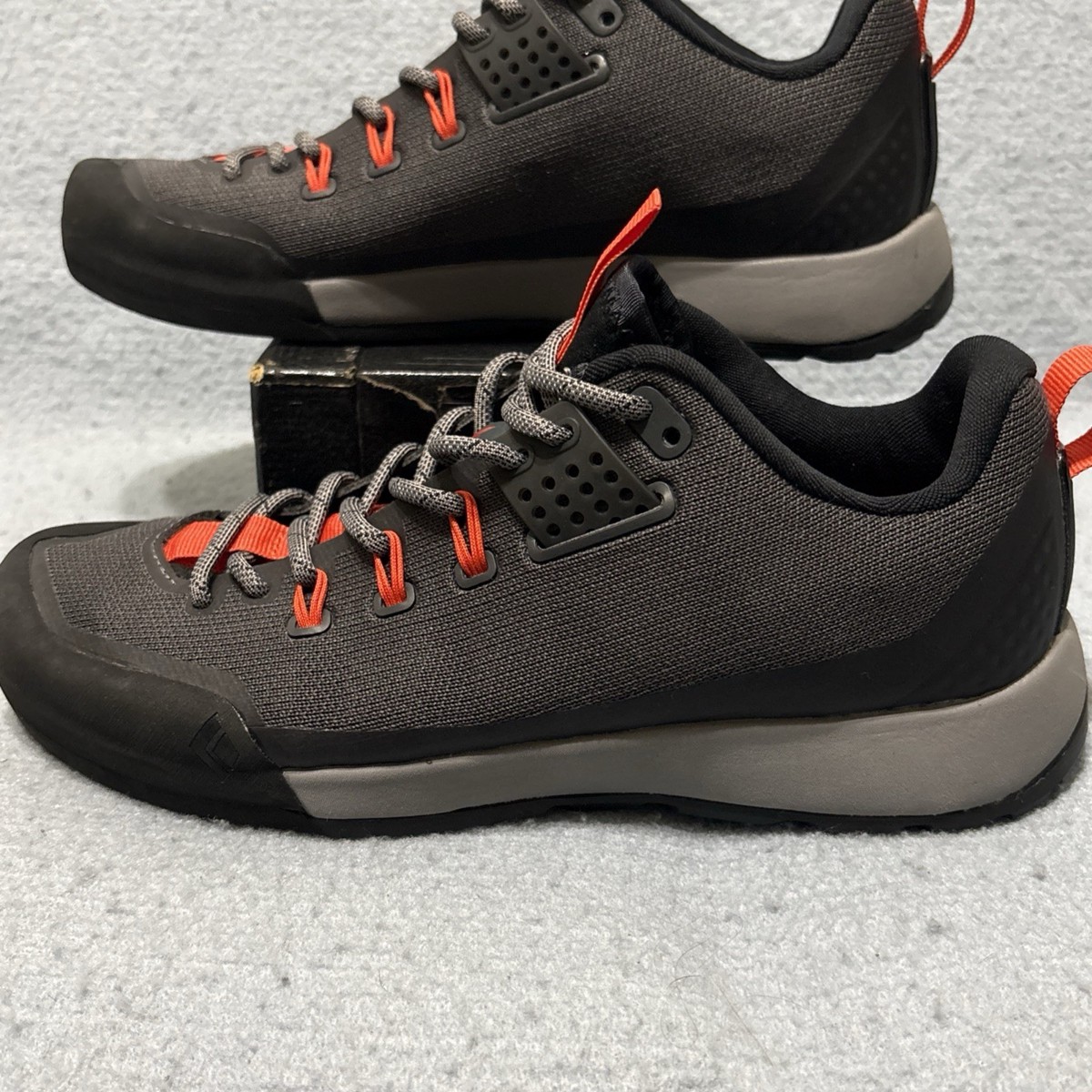

Photos from current listings. Actual item, color, and included accessories may vary.
Black Diamond Shoe Buying Guide
Black Diamond climbing shoes are primarily approach and performance models built for transitioning between trail and rock, with the Technician line representing their core approach shoe architecture. The key trade-off is between sticky rubber compounds and edging stiffness versus all-day walkability and weather resistance. Choose a dedicated climbing shoe for vertical performance; choose a Black Diamond approach shoe only if the approach or scramble is part of the objective.


At a glance
- Category
- Climbing & Bouldering Shoes
- Data updated
- Nov 20, 2026
Current offers
Highlights
- Black Diamond approach shoes use proprietary BlackLabel Mountain rubber (or sticky rubber on specific models) tuned for friction on rock versus durability on trail.
- The Technician series features a suede or synthetic upper with a rubber rand and a stiff midsole for edging support on low-class scrambles.
- Approach shoes from Black Diamond typically run narrower than trail runners, with a low-volume heel and a flat-to-moderate arch last.
- Climbing-specific Black Diamond shoes (e.g., Momentum) use a flat last and neutral downturn for comfort, distinct from aggressive downturned performance lasts.
Best use cases
- Best fit: hikers and scramblers needing one shoe for 3-5 miles of trail plus easy 4th-class rock — pick the Technician or equivalent approach model with a stiff midsole.
- Wrong fit: gym bouldering or sport climbing performance — skip approach shoes entirely and buy a dedicated climbing shoe with a downturned last and sticky toe rand.
- Best fit: wide-footed climbers wanting comfort on multi-pitch — choose a flat-last climbing shoe with a leather upper that breaks in, not a synthetic performance slipper.
- Wrong fit: wet, muddy approaches — the suede upper on many Black Diamond approach shoes absorbs water; choose a synthetic or GTX-lined model instead.
Buying tips
- Approach shoe sizing: add 0.5-1 cm of toe room beyond your climbing shoe size; feet swell on descents and a tight approach shoe causes toe bang.
- Climbing shoe sizing: fit snug with toes flat or slightly curled; Black Diamond climbing shoes run true to street size for flat lasts, downsize 0.5 for performance lasts.
- Check the rand coverage: a full rand adds durability and toe-hooking support but reduces breathability; a half rand is lighter and better for long approaches.
- Rubber hardness matters: softer compounds (high friction) wear fast on trail; harder compounds last longer but offer less smearing grip on rock.
Specs
| Shoe Type | Approach vs climbing vs hybrid |
|---|---|
| Rubber Compound | BlackLabel Mountain / sticky rubber |
| Last Shape | Flat comfort vs downturned performance |
| Upper Material | Suede / synthetic / GTX-lined |
Related searches
What to check before buying
- Measure your foot length in cm and compare to the brand's specific last — Black Diamond approach lasts run narrow, so wide feet may need a half size up.
- Confirm the shoe's intended terrain: approach shoes have a sticky but less aggressive tread than hiking boots; climbing shoes have no walkable tread.
- Check closure system: lace-up for adjustable fit on approaches, hook-and-loop for quick transitions in climbing shoes, slippers for sensitivity.
- Verify upper material for climate: suede stretches and breathes but soaks through; synthetic dries faster and holds shape in wet conditions.
FAQ
Data sources: eBay / Amazon listings and product attribute feeds Data updated Nov 20, 2026.
Some links on this page are affiliate links. If you buy after clicking one, we may earn a commission at no extra cost to you. This does not change which products appear here or their order. Affiliate disclosure.