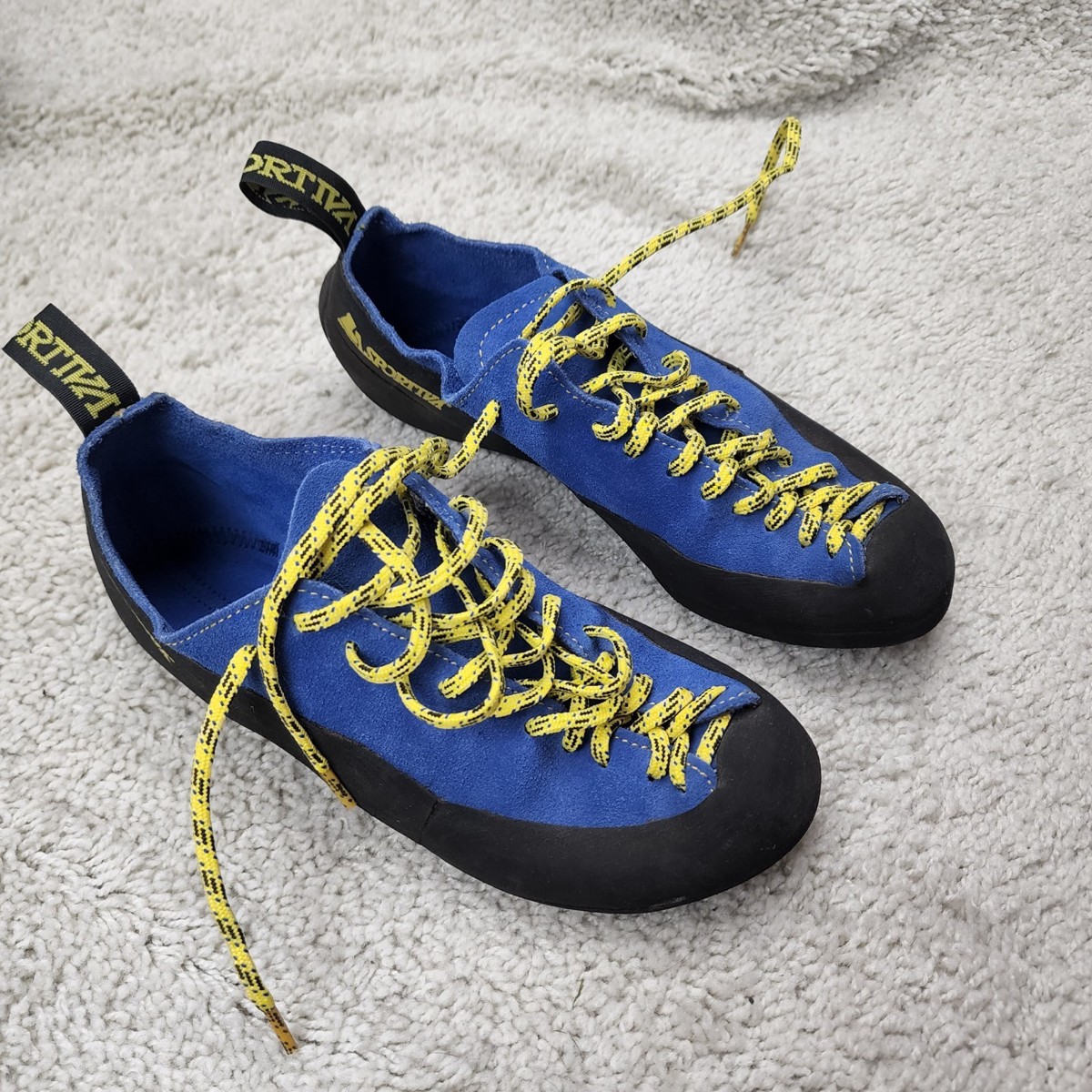

Photos from current listings. Actual item, color, and included accessories may vary.
Climbing Gear Buying Guide
Climbing shoes are specialized footwear with sticky rubber and a tight, asymmetric last that translates foot pressure into edging and smearing force. The core trade-off is between aggressive downturn and precision versus flat, comfortable shapes for all-day wear and crack climbing. Buyers should match shoe last and closure to terrain and foot shape, and treat rubber hardness and rand construction as the durability discriminators.


At a glance
- Category
- Climbing & Bouldering Shoes
- Data updated
- Nov 20, 2026
Current offers
Highlights
- Last shape governs performance: downturn and asymmetry excel on steep overhangs; flat lasts suit cracks, slabs, and multi-pitch comfort.
- Rubber hardness splits use: soft 3.5-4mm compounds smear well on plastic and volumes, while harder 4-5mm rubber resists wear on granite and sandstone.
- Closure systems change fit: lace-ups give adjustable tension for crack and trad, hook-and-loop straps speed on-off for bouldering, slippers prioritize sensitivity.
- Rand and lining determine stretch: unlined leather uppers stretch up to a half size; synthetic lined shoes hold their out-of-box fit through their lifespan.
Best use cases
- Bouldering and steep sport: choose a downturned, asymmetric shoe with a soft or medium rubber and hook-and-loop closure for sensitivity and quick removal.
- Trad, crack, and multi-pitch: choose a flat-lasted lace-up with harder rubber and a board-lasted or lined construction for support and crack protection.
- Gym volumes and smearing: choose a soft, sensitive slipper or low-tension strap shoe; skip stiff, heavily downturned models that feel dead on plastic.
- Beginner all-round: choose a flat, moderately asymmetric lace-up with 4mm rubber; skip aggressive downturned shoes until foot strength develops.
Buying tips
- Size down from street shoe by roughly 0.5 to 1.5 EU sizes depending on last: aggressive models demand more downsizing, flat models less.
- Match rubber thickness to rock type: 3.5-4mm soft rubber for plastic and friction slabs; 4-5mm harder rubber for abrasive granite and sandstone.
- Check rand coverage: full rand wraps add durability and tension for steep edging; partial or no rand increases sensitivity and smearing feel.
- Prefer lined synthetic uppers for consistent fit; choose unlined leather only if you want a shoe that molds and stretches over time.
Specs
| Last Shape | Downturned / Flat / Moderately asymmetric |
|---|---|
| Rubber Thickness | 3.5-5mm (soft to hard compounds) |
| Closure Type | Lace-up / Hook-and-loop / Slipper |
| Upper Lining | Lined synthetic / Unlined leather |
Related searches
What to check before buying
- Measure both feet at the end of the day and fit to the larger foot; climbing shoes should be snug with toes flat or slightly curled, never painfully cramped.
- Match closure to your climbing rhythm: straps for bouldering sessions, laces for crack and trad where adjustable tension matters.
- Confirm rubber hardness and thickness suit your local rock or gym surface before committing to a soft or hard compound.
- Check that the heel rand tension and heel cup shape lock your heel without dead space, especially for hooking-intensive terrain.
FAQ
Data sources: eBay / Amazon listings and product attribute feeds Data updated Nov 20, 2026.
Some links on this page are affiliate links. If you buy after clicking one, we may earn a commission at no extra cost to you. This does not change which products appear here or their order. Affiliate disclosure.