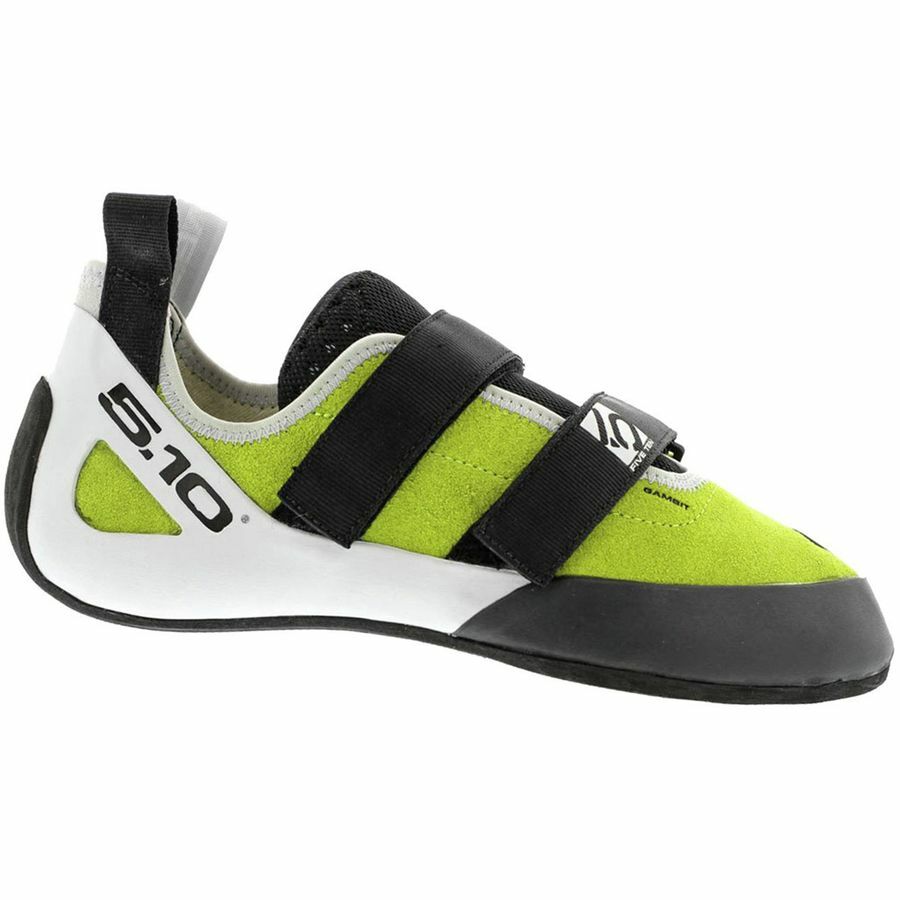

Photos from current listings. Actual item, color, and included accessories may vary.
Five Ten Climbing Shoe Buying Guide
Five Ten climbing shoes are defined by their Stealth rubber compounds and a fit that ranges from aggressive downturn to flat, neutral profiles. The primary trade-off is between sticky rubber performance and long-term durability, with softer, thinner soles excelling on plastic but wearing faster on sharp rock. Choose by matching the last shape and rubber hardness to your climbing style—aggressive for steep sport, neutral for all-day trad—and avoid oversized fits that defeat the shoe's purpose.


At a glance
- Category
- Climbing & Bouldering Shoes
- Data updated
- Nov 20, 2026
Current offers
Highlights
- Stealth C4 rubber (harder, durable) vs. Stealth HF (softer, high-friction) vs. Stealth Mi6 (maximum grip, least durable) determines the best terrain and lifespan.
- Last profile: downturned and asymmetric (e.g., Hiangle, Dragon) for steep overhangs; flat and symmetric (e.g., Gambit, Moccasym) for cracks and all-day comfort.
- Closure systems: Velcro straps for fast on/off and bouldering; lace-ups for precise fit and trad; slip-on for sensitivity and crack climbing.
- Upper materials: synthetic (less stretch, consistent fit) vs. leather (molds to foot, stretches up to a half size); lined vs. unlined affects moisture management.
Best use cases
- Best for steep bouldering and sport climbing: pick an aggressive, downturned model with Stealth HF or Mi6 rubber and a snug, performance fit.
- Best for all-day trad and multi-pitch: choose a flat, neutral last with Stealth C4 rubber and lace-up closure for comfort and durability.
- Wrong fit: gym-only beginners should skip ultra-soft, high-end slippers; a moderate, flat shoe with C4 rubber gives better support and longevity.
- Skip oversized shoes for performance climbing—they cause foot slippage and poor edging; instead, size down for precision or choose a comfort-oriented model in your street size.
Buying tips
- Size for a performance fit: toes should be flat to slightly curled at the front, with no dead space in the heel; expect synthetic uppers to stretch minimally (about 1/4 size) and leather up to 1/2 size.
- Match rubber to rock type: Stealth C4 for sharp granite and long routes; Stealth HF for plastic and smeary sandstone; Stealth Mi6 for maximum friction on competition-style volumes.
- Check the last shape: a downturned shoe with high asymmetry suits overhangs; a flat, symmetric shoe suits vertical and crack climbing; avoid aggressive lasts for all-day wear.
- Consider closure and upper: Velcro for bouldering sessions; lace-ups for adjustable precision; slip-ons for crack climbing; synthetic uppers for consistent fit in wet conditions.
Specs
| Rubber Compound | Stealth C4 / HF / Mi6 |
|---|---|
| Last Profile | Downturned aggressive to flat neutral |
| Closure Type | Velcro / Lace / Slip-on |
| Upper Material | Synthetic / Leather (lined or unlined) |
Related searches
What to check before buying
- Measure your foot length and width, then compare to Five Ten's size chart; Five Ten typically runs small, so many buyers size up a half to full size from street shoes.
- Verify the shoe's intended use (bouldering, sport, trad, gym) and rubber type match your local rock—granite, sandstone, limestone, or plastic.
- Check compatibility with your climbing style: downturned shoes for steep terrain may be uncomfortable on slabs; flat shoes for cracks may lack edging power.
- Confirm closure preference and upper material for fit consistency and drying time; leather linings require break-in, synthetics are ready to climb.
FAQ
Data sources: eBay / Amazon listings and product attribute feeds Data updated Nov 20, 2026.
Some links on this page are affiliate links. If you buy after clicking one, we may earn a commission at no extra cost to you. This does not change which products appear here or their order. Affiliate disclosure.