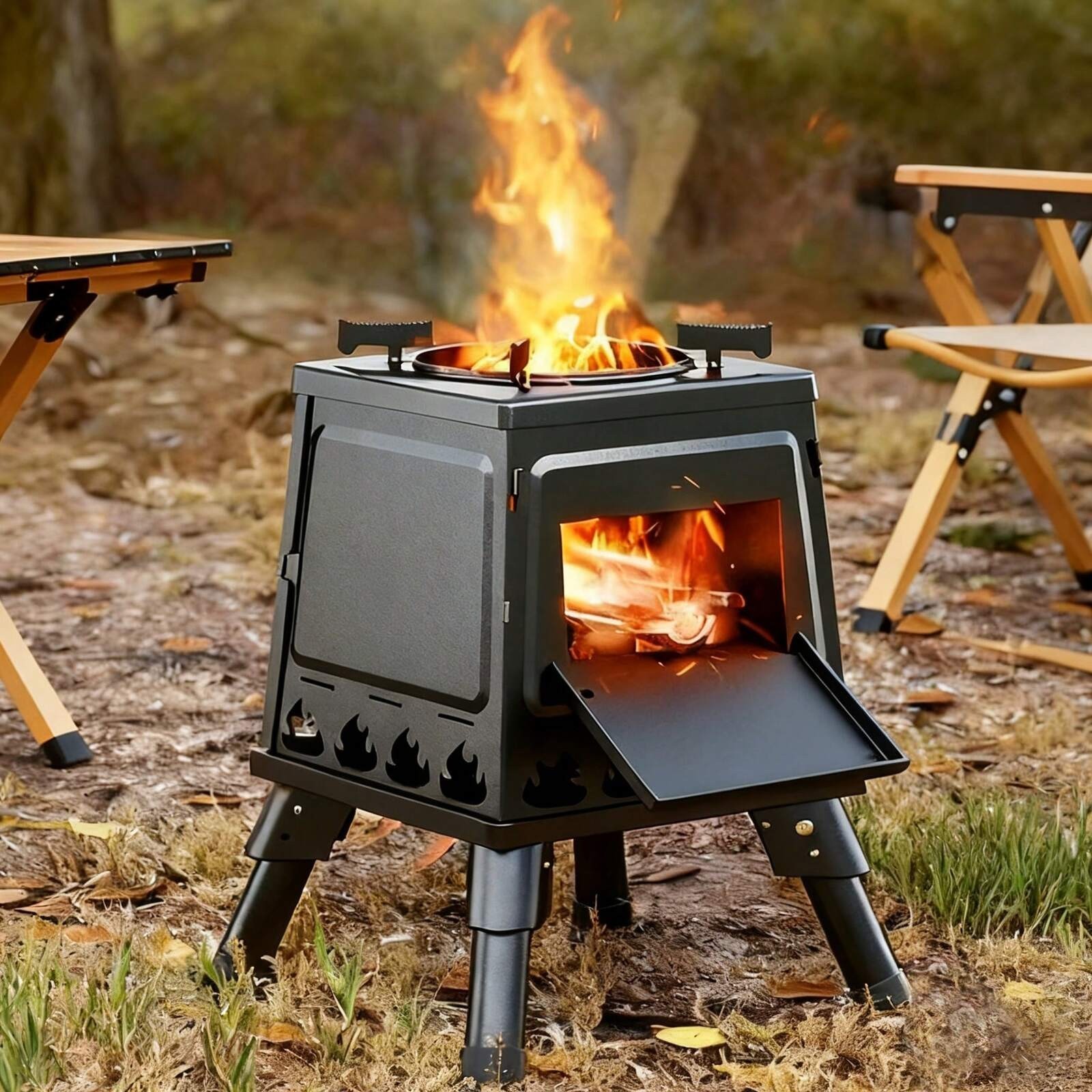

Photos from current listings. Actual item, color, and included accessories may vary.
Camp Wood Stove Buying Guide
A camp wood stove is a portable biomass cooker that burns twigs, pellets, or split wood for off-grid cooking without fuel canisters. The core trade-off is between ultralight titanium flatpack designs for backpacking and heavier stainless-steel or double-wall units with secondary combustion for basecamps and tent-safe use. Buy titanium or quality stainless only if you need multi-season durability; skip thin stamped steel and single-wall budget stoves unless weight and cost outweigh lifespan.


At a glance
- Category
- Camp Kitchen & Stoves
- Data updated
- Nov 18, 2026
Current offers
Highlights
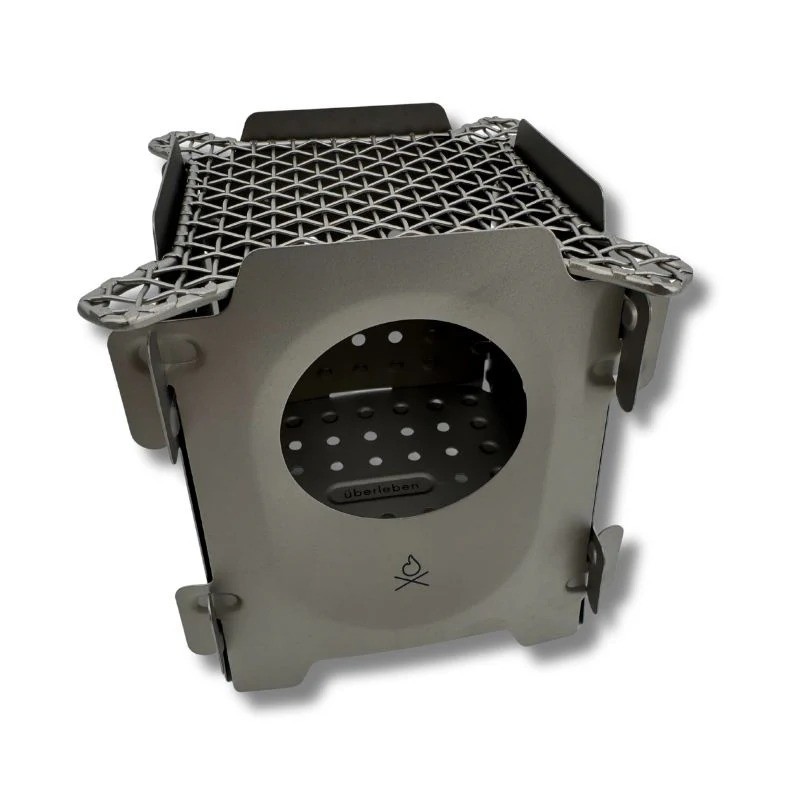
- Titanium flatpack stoves (e.g., Uberleben Stoker) weigh roughly 100-200 g and resist corrosion, while stainless steel units typically weigh 400-900 g but tolerate higher heat cycles.
- Double-wall or gassifier designs feed preheated secondary air to burn wood gas, cutting smoke by roughly half and improving fuel efficiency versus single-wall boxes.
- Tent-safe operation demands a flue and spark arrestor; open-top twig stoves emit carbon monoxide and must never be used inside sealed shelters.
- Folding flatpack panels rely on interlocking tabs and hinge pins; riveted or welded stainless bodies resist warping better under sustained high-heat loads.
Best use cases
- Backpacking and fast-and-light trips: choose a titanium flatpack twig stove under 200 g that nests with a 750 ml pot; skip heavy stainless double-wall units.
- Car camping and basecamp cooking: pick a stainless steel or double-wall gassifier stove with a stable pot support and secondary combustion for longer, smokeless burns.
- Hot tenting with a flue port: use only a dedicated tent stove with a spark-arrested chimney and adequate clearance; never use a flameless twig stove inside a closed shelter.
Buying tips
- Match stove weight to carry style: sub-200 g titanium for backpacking, 400-900 g stainless for car camping, and 2 kg+ for tent stoves with flue.
- Check pot support diameter: a stove with a 12-15 cm trivet fits most 750 ml-1.5 L pots; wider supports suit 2 L group pots but add pack bulk.
- Pick double-wall or gassifier designs for smoky wood or damp conditions; single-wall stoves need dry twigs and constant feeding.
- Confirm fuel compatibility: twig stoves burn small diameter wood only; pellet-compatible models need a dedicated hopper or grate.
Specs
| Body Material | Titanium vs Stainless Steel |
|---|---|
| Stove Weight | 100-200 g Ti / 400-900 g SS |
| Combustion Type | Single-wall vs Double-wall Gassifier |
| Tent Safe | No (twig) / Yes with Flue (tent) |
Related searches
What to check before buying
- Measure your pot base and pack space: flatpack stoves fold to roughly 12-18 cm long and must nest inside your cookset.
- Check shelter rules: only flue-equipped tent stoves with spark arrestors belong inside hot tents; open twig stoves require open-air or well-ventilated vestibules.
- Verify ground clearance and fire safety: place stoves on bare mineral soil or a heat shield, never on duff, roots, or flammable mats.
- Confirm local fire regulations and burn bans: many parks restrict open-flame wood stoves during dry seasons regardless of design.
FAQ
Data sources: eBay / Amazon listings and product attribute feeds Data updated Nov 18, 2026.
Some links on this page are affiliate links. If you buy after clicking one, we may earn a commission at no extra cost to you. This does not change which products appear here or their order. Affiliate disclosure.