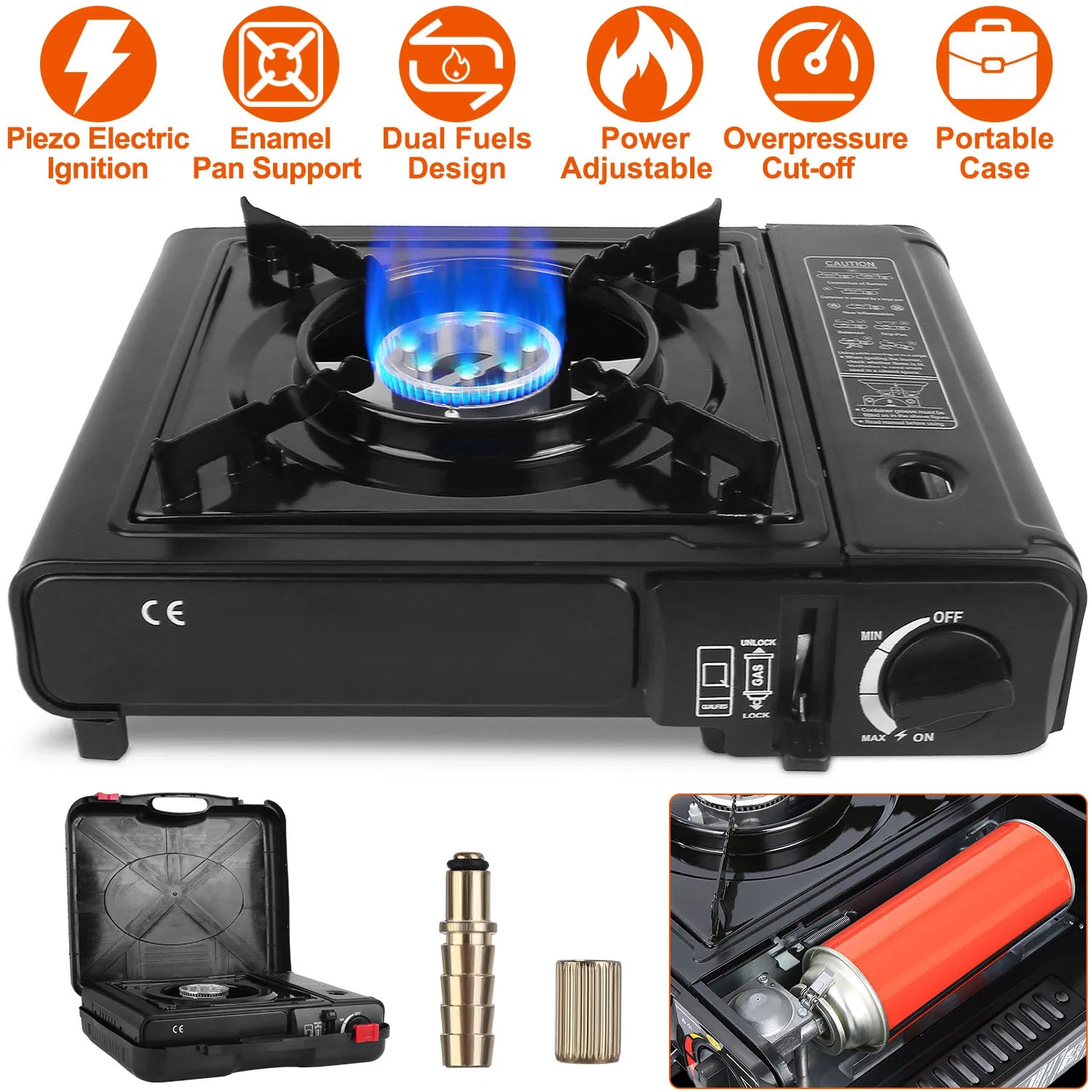

Photos from current listings. Actual item, color, and included accessories may vary.
Electric Camping Stove Buying Guide
Electric camping stoves replace flammable canisters with induction or resistive-heating elements powered by portable power stations, campsite hookups, or vehicle inverters. The core trade-off is wattage draw versus runtime and battery capacity: high-wattage induction delivers gas-like searing but drains portable power fast, while low-wattage resistive plates sip power slowly. Choose a stove whose wattage your power source can sustain continuously; any stove exceeding your station's continuous inverter rating is a compromise.


At a glance
- Category
- Camp Kitchen & Stoves
- Data updated
- Nov 16, 2026
Current offers
Highlights
- Induction models (1200–1800W) heat ferrous cookware in 60–90 seconds and run at roughly 85–90% efficiency; resistive coil or glass-top plates (800–1500W) are cheaper but 30–40% slower and less efficient.
- Continuous vs peak inverter rating decides compatibility: a 2000W-peak/1000W-continuous station cannot run an 1800W induction stove at full power without overloading.
- Single-burner units weigh 3–7 lb and draw 1000–1800W; dual-burner or 3300W dual-fuel hybrids demand 2000W+ continuous output and typically need LiFePO4 stations rated 2000Wh or more.
- Built-in safety features that matter: overheat cutoff, auto-pan detection, low-voltage shutoff, and a locking lid or carry case for transport.
Best use cases
- Best fit: car camping or van life with a 1000Wh+ LiFePO4 power station and 1000–1500W continuous inverter — pick a single induction burner under 1500W for boiling and sautéing.
- Best fit: basecamp or group cooking where 2000W+ continuous power is available — pick a dual-zone induction or 3300W dual-fuel hybrid and bring a 2000Wh+ station or generator.
- Skip: ultralight backpacking or multi-day trips without a power source — an electric stove is the wrong tool; choose a canister or alcohol stove instead.
- Wrong fit: relying on a vehicle's 12V socket or a 150W inverter — electric camp stoves need 800W+ continuous output and will trip small inverters.
Buying tips
- Match stove wattage to your power station's continuous output: a 1000W-continuous station runs a 1000W induction stove on high; an 1800W stove will throttle or shut off.
- For induction models, use ferromagnetic cookware (cast iron, magnetic stainless); aluminum and copper pots won't heat — test with a magnet before you pack.
- Estimate runtime: a 1000Wh station running a 1200W stove delivers roughly 50 minutes at full power; budget 500–800Wh per day for two people cooking twice daily.
- Check the plug and voltage standard: North American units are 120V/60Hz; 220–240V export models won't work on US power stations without a transformer.
Specs
| Heating Type | Induction / Resistive coil / Dual-fuel |
|---|---|
| Wattage Draw | 800–1800W single / 2000W+ dual |
| Power Source | Power station / AC hookup / 12V inverter |
| Burner Count | 1–2 burners / 1–3 zones |
Related searches
What to check before buying
- Confirm your power station's continuous (not peak) wattage exceeds the stove's rated draw by at least 10%.
- Measure your cooking surface and pack space: single-burner units run 11–14 inches wide; dual-burner units need 20+ inches.
- Verify cookware compatibility for induction: bring a magnet; if it doesn't stick to the pan base, it won't work on an induction stove.
- Check the stove's plug type (NEMA 5-15 for US 120V) and whether your power station outputs pure sine wave — modified sine wave can cause erratic heating.
FAQ
Data sources: eBay / Amazon listings and product attribute feeds Data updated Nov 16, 2026.
Some links on this page are affiliate links. If you buy after clicking one, we may earn a commission at no extra cost to you. This does not change which products appear here or their order. Affiliate disclosure.