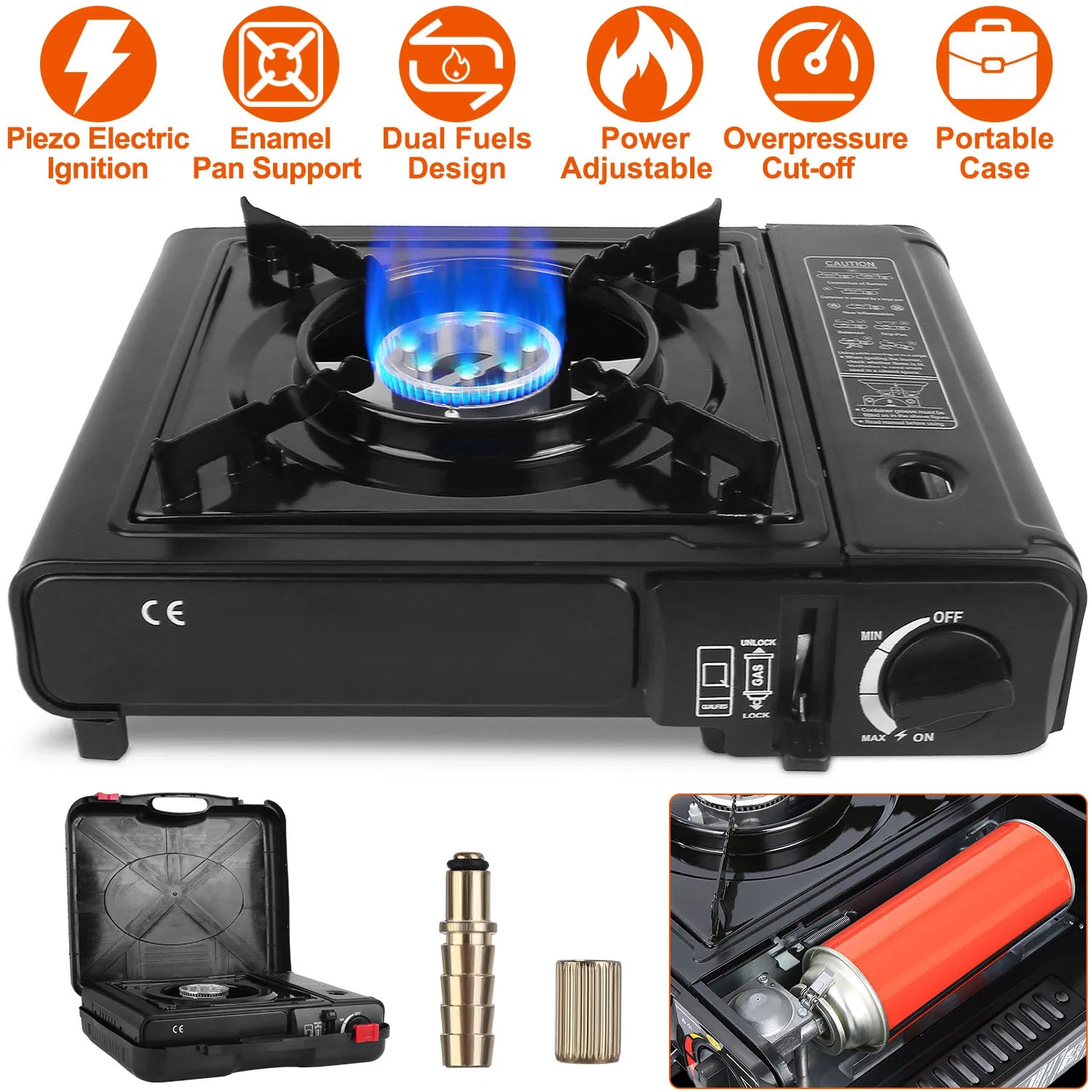

Photos from current listings. Actual item, color, and included accessories may vary.
Electric Stove Buying Guide
Electric stoves in the camp-kitchen segment split into two architectures: induction and resistance-coil hot plates, both powered by AC mains or high-capacity DC battery banks via inverter. The core trade-off is wattage versus portability: 1800W+ induction delivers gas-like heat but demands a 15A circuit or 2000W+ pure-sine inverter, while 1000-1200W coil units run on standard 10A outlets with slower recovery. Buy induction for efficiency and precise control; buy coil for budget resilience on weak or shared power.


At a glance
- Category
- Camp Kitchen & Stoves
- Data updated
- Nov 16, 2026
Current offers
Highlights
- Induction stoves transfer 85-90% of energy to the pan versus 55-65% for coil and 40-50% for open gas, cutting runtime and ventilation needs.
- A 1800W induction unit draws 15A at 120V and needs a dedicated 20A breaker; 1000W coil units run on standard 15A household circuits with headroom.
- Magnetic cookware is mandatory for induction—ferrous base with magnet adhesion; aluminum and copper pots will not heat on an induction hob.
- Piezo ignition on butane/propane camp stoves is spark-based, not electric-grid; true electric stoves require AC or a pure-sine inverter with 2000W+ continuous rating.
Best use cases
- Car camping and tailgating with shore power: pick a 1800W single-burner induction for fast boils and precise simmer; skip coil if you have a 20A outlet.
- Van life and off-grid with a 2000W pure-sine inverter and 200Ah+ lithium bank: choose a 1000-1200W induction or coil to stay within inverter continuous rating; skip 1800W models.
- Emergency backup in apartments with standard 15A circuits: pick a 1000-1200W coil hot plate for reliability; skip induction if your cookware is aluminum or your breaker is shared.
- Group basecamp cooking for 4+ people: choose a dual-burner 1800W+ induction or a 2-burner propane stove; skip single 800W units that can't sustain a rolling boil.
Buying tips
- Match wattage to circuit: 1800W needs a 20A/120V dedicated circuit; 1000-1200W runs safely on 15A shared circuits without tripping breakers.
- For inverter use, size continuous output at 1.25x stove wattage: a 1200W stove needs a 1500W+ pure-sine inverter; modified sine wave can damage induction controls.
- Check pan base diameter against hob markings: induction only heats the ferrous area; a 6-inch base on an 8-inch hob wastes 40% of the coil.
- Prefer cast-iron or stainless-clad cookware with a flat magnetic base; warped pans cause uneven heating and induction error codes on safety cutoff.
Specs
| Heating Type | Induction / Coil / Gas hybrid |
|---|---|
| Wattage Tier | 800-1200W / 1800W+ (20A circuit) |
| Circuit Requirement | 15A standard / 20A dedicated |
| Cookware Requirement | Magnetic base / Any flat-bottom |
Related searches
What to check before buying
- Measure your counter or table footprint and confirm clearance above the hob—induction needs 4+ inches of side and rear ventilation.
- Verify outlet amperage: a 20A NEMA 5-20 receptacle for 1800W units, standard 15A 5-15 for 1000-1200W; check breaker isn't shared with a microwave.
- Confirm cookware is magnetic: a fridge magnet must stick firmly to the base; skip aluminum, copper, and most ceramic nonstick unless labeled induction-ready.
- For propane/butane hybrid stoves, check canister valve standard (EN 417 or CGA 600) and whether the unit has overpressure cutoff and automatic tank ejection.
FAQ
Data sources: eBay / Amazon listings and product attribute feeds Data updated Nov 16, 2026.
Some links on this page are affiliate links. If you buy after clicking one, we may earn a commission at no extra cost to you. This does not change which products appear here or their order. Affiliate disclosure.