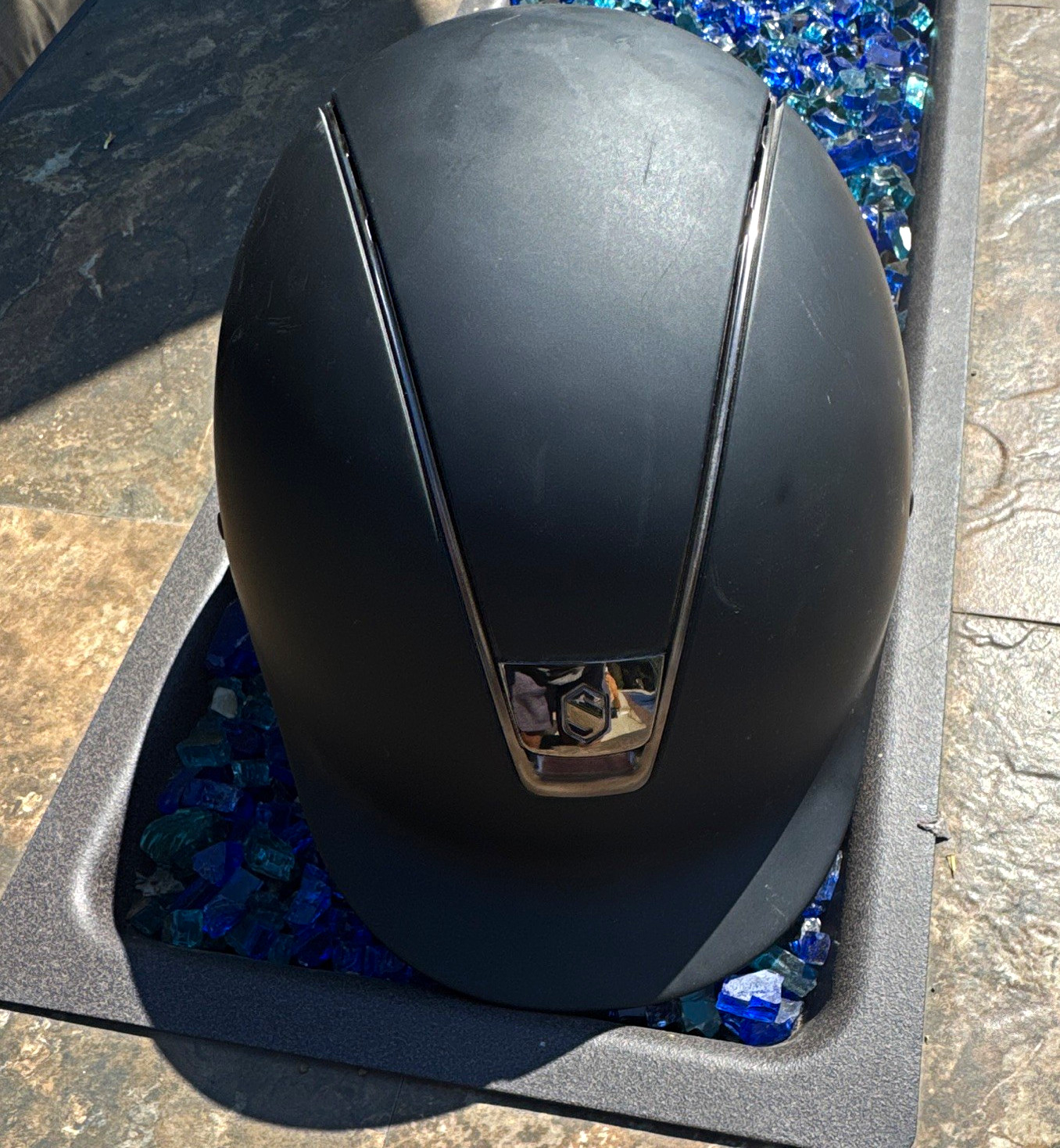

Photos from current listings. Actual item, color, and included accessories may vary.
English Riding Helmet Buying Guide
An English riding helmet is a certified equestrian safety headpiece for dressage, jumping, and hunter-seat disciplines, defined by a fixed or adjustable harness and a defined brim shape. The core trade-off is between ASTM/SEI or VG1-certified impact protection and ventilation/weight, where cheaper shells often skimp on liner density or fail current rotation-management standards. The decision rule: buy only a helmet with a current ASTM F1163 (or VG1/EN 1384) label plus SEI mark and a fit that passes the roll-off test, and skip any unlabeled fashion shell.


At a glance
- Category
- Riding Helmets, Boots & Apparel
- Data updated
- Nov 16, 2026
Current offers
Highlights
- Certification is the hard gate: ASTM F1163-15 with SEI mark or VG1/EN 1384; unlabeled shells offer no verified impact protection.
- Shell construction separates tiers: molded ABS or fiberglass shells with EPS liners protect; leather-covered fashion shells often lack certified liners.
- Liner density varies: dual-density EPS with MIPS-style or rotational slip-plane systems reduce oblique-impact risk versus single-density foam.
- Ventilation channels and removable/washable liners define comfort tiers; fixed liners shorten usable life once sweat-saturated foam degrades.
Best use cases
- Best fit: schooling and lessons — pick a certified fixed-harness helmet with removable washable liner, VG1/ASTM label, and dial or padding fit kit; skip fashion unlabeled shells.
- Best fit: competition dressage/jumping — choose a certified helmet with a shaped fixed peak and secure 4-point or Y harness; skip open-face non-certified designs.
- Best fit: growing junior riders — select a helmet with interchangeable padding or dial fit so the same shell covers size changes; skip one-size hard-shell lids.
- Wrong fit: buying a used or hand-me-down helmet with unknown crash history — EPS liners are single-impact and must be replaced after any fall.
Buying tips
- Match helmet size to head circumference in cm measured at the widest point above the brow; shell sizes run roughly 52–62 cm, and each shell covers 2–3 cm via padding.
- Insist on a current certification label: ASTM F1163 with SEI mark or VG1/EN 1384, plus a 4-point or Y-shaped harness with a quick-release or buckle chin strap.
- Replace any helmet after a fall or a hard impact, and retire EPS-lined helmets roughly every 5 years as foam degrades from sweat and heat.
- Choose a removable, washable liner and vented shell for hot climates; choose a shaped fixed peak for sun and branch deflection in trail or hunt-seat work.
Specs
| Certification | ASTM F1163/SEI or VG1/EN 1384 |
|---|---|
| Shell & Liner | ABS/fiberglass + EPS (dual-density) |
| Harness | 4-point or Y harness, buckle/QR |
| Fit Range | 52–62 cm, padding-adjustable |
Related searches
What to check before buying
- Measure head circumference in cm at the widest point and confirm the shell size plus padding kit covers your measurement.
- Confirm a current ASTM F1163/SEI or VG1/EN 1384 label is present on the liner or shell, not just a marketing claim.
- Check harness type (4-point or Y) and chin-strap closure; test the roll-off test by tipping the helmet forward and back.
- Verify removable/washable liner availability and replacement pad kits for your shell size before committing.
FAQ
Data sources: eBay / Amazon listings and product attribute feeds Data updated Nov 16, 2026.
Some links on this page are affiliate links. If you buy after clicking one, we may earn a commission at no extra cost to you. This does not change which products appear here or their order. Affiliate disclosure.