Photos from current listings. Actual item, color, and included accessories may vary.
Spotting Scope Buying Guide
A spotting scope is a high-magnification, tripod-mounted monocular used to resolve distant targets—bullet holes, game, birds, or terrain—where binoculars run out of resolution. The core trade-off is optical glass and prism quality versus price: inexpensive scopes pair large zoom ranges with plastic bodies and BK7 prisms, while durable units use BAK4 prisms, fully multi-coated lenses, and nitrogen-purged waterproof housings. The decision rule is simple: buy for the prism glass and coating grade first, magnification second—a sharp 20-60x60 BAK4 scope outperforms a muddy 25-75x70 with BK7 prisms in every real-world condition.


At a glance
- Category
- Hunting, Prospecting & Metal Detecting
- Data updated
- Nov 16, 2026
Current offers
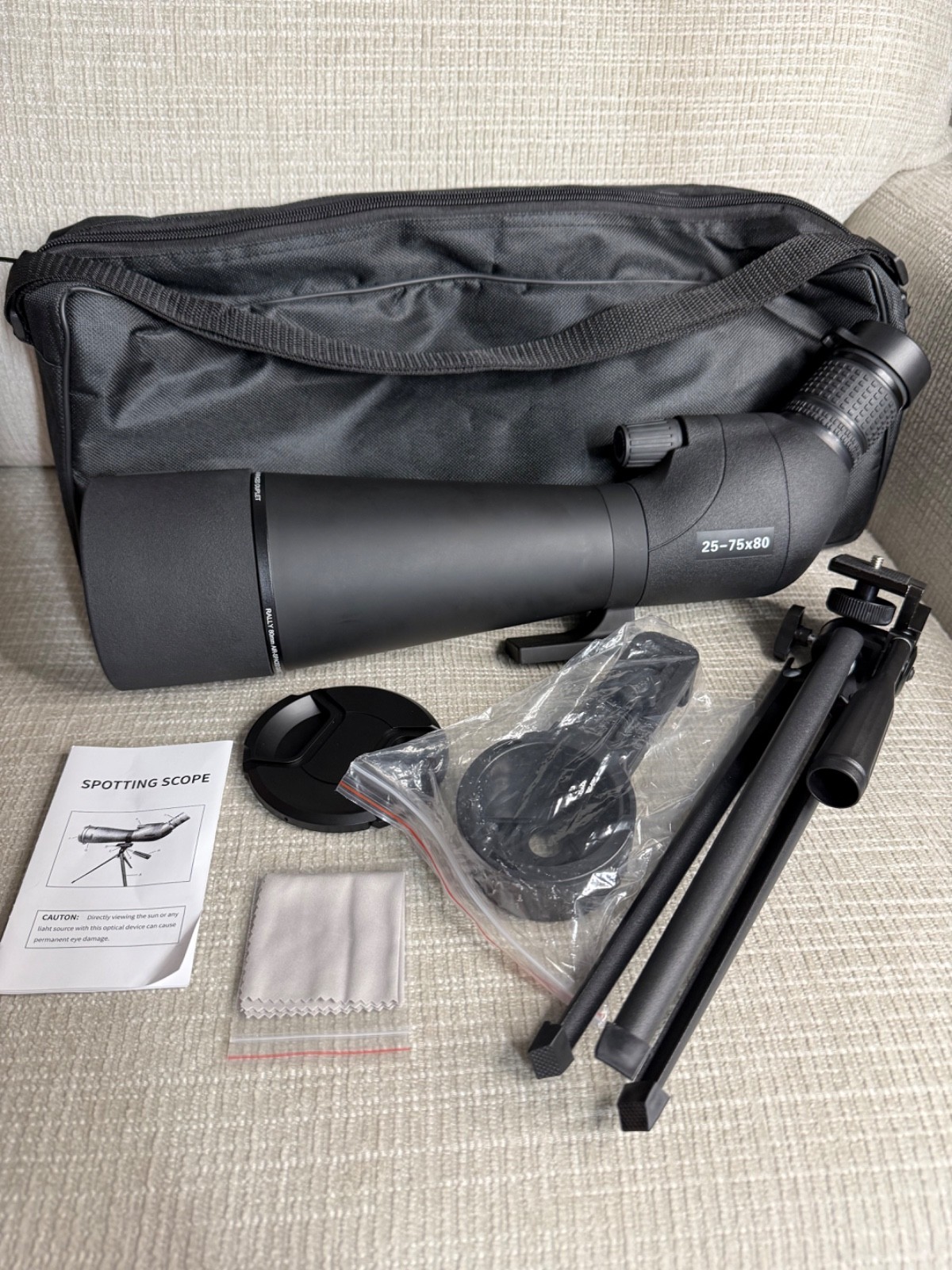 Spotting Scope 25-75 80 w/Tripod Phone Adapter Carrying Bag .$55.00
 View on eBay
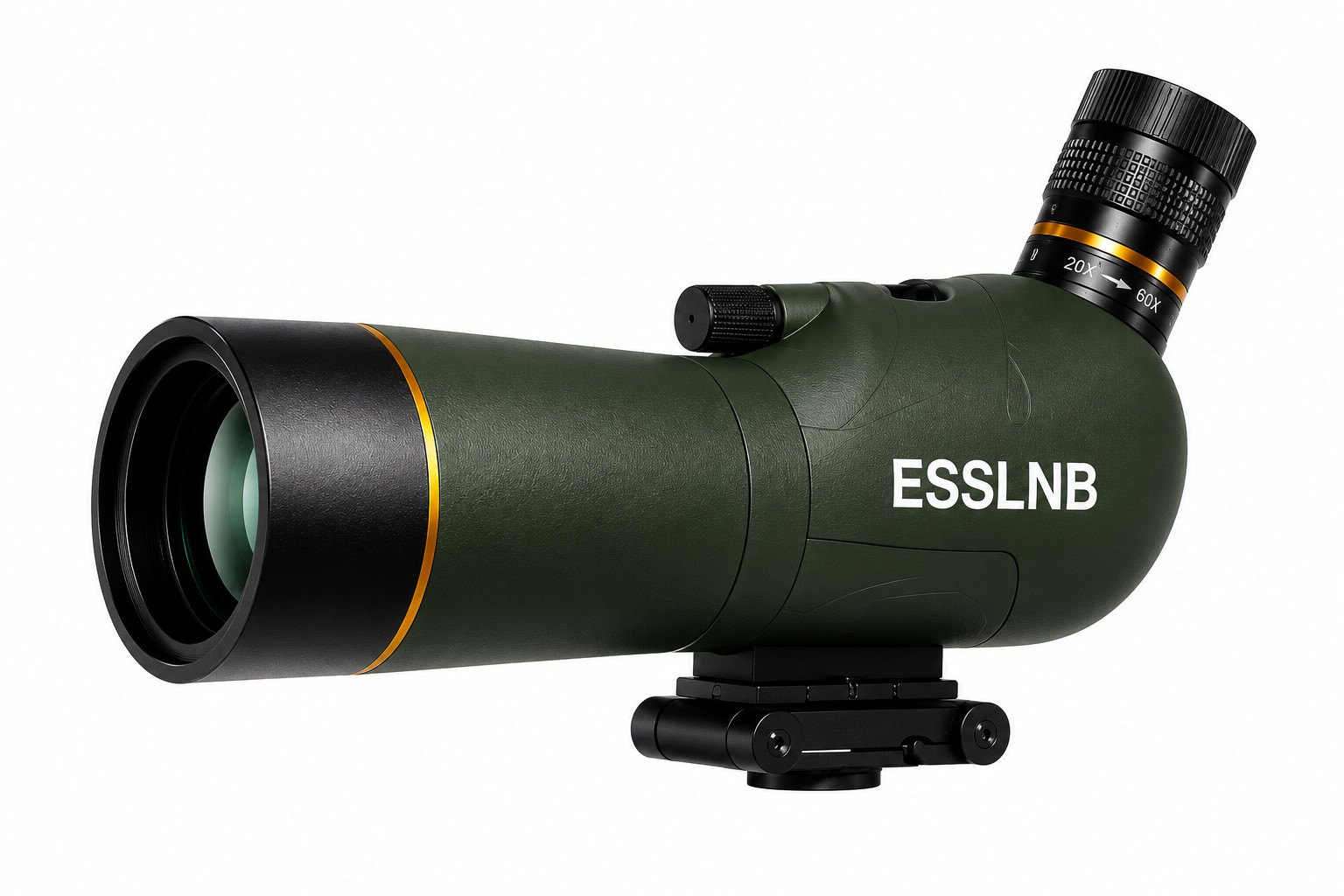 20-60X70 HD Spotting Scope BAK4 Prism FMC Waterproof Bird Watching Hunting$58.99View on eBay
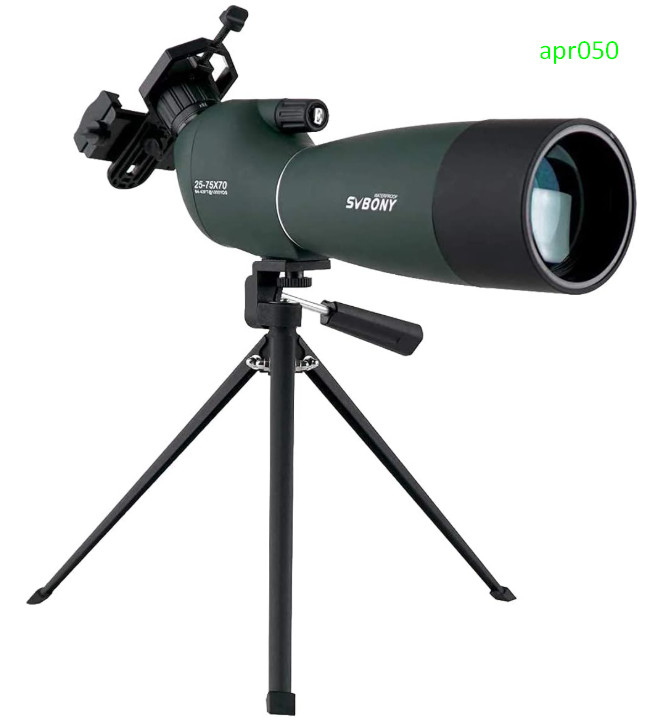 SV28 25-75x70mm Spotting Scope w/ Tripod & Phone Adapter, Waterproof$59.99View on eBay
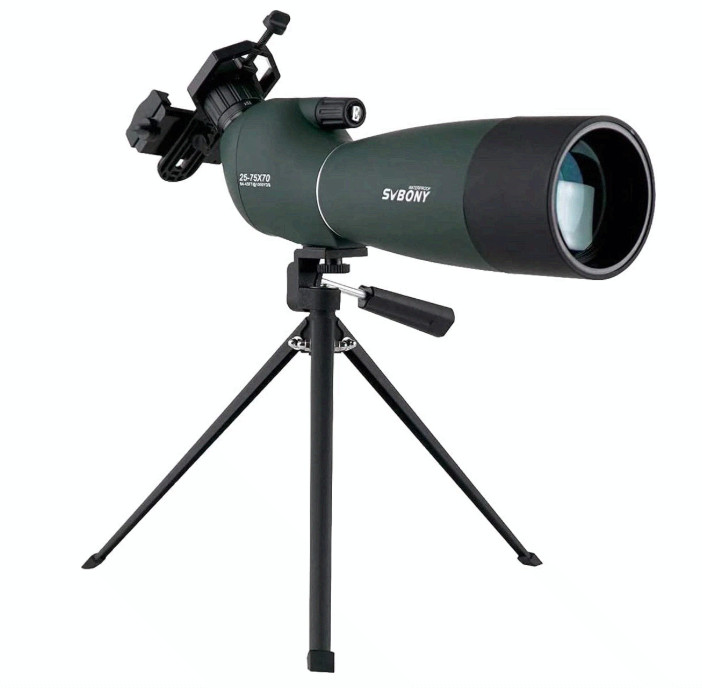 SV28 25-75x70mm spotting scope w/ tripod, phone adapter, waterproof & fogproof$59.99View on eBay
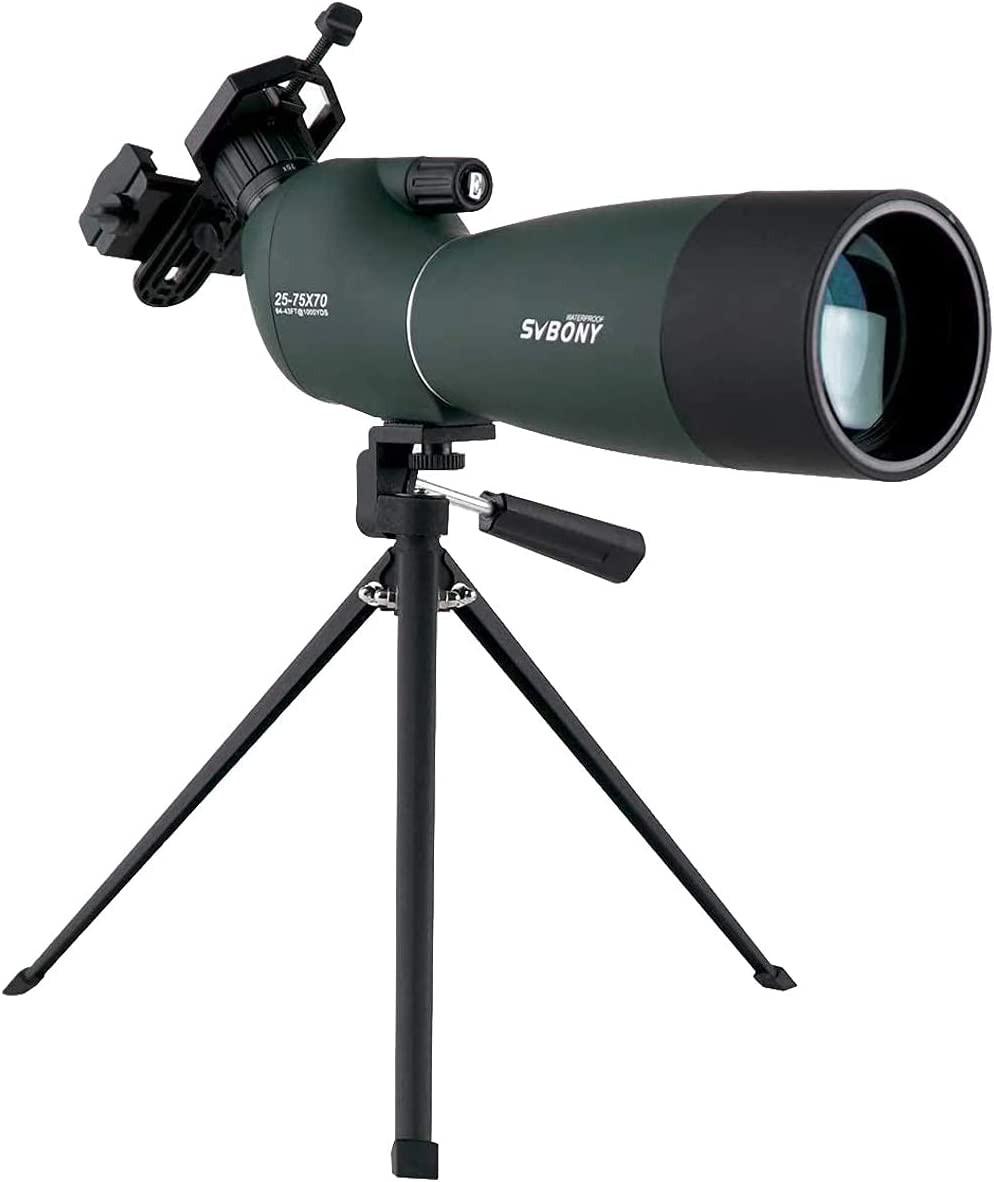 SV28 Spotting Scopes with Tripod, Angled 25-75X70Mm Spotter Scope with Phone Ada$59.99View on eBay
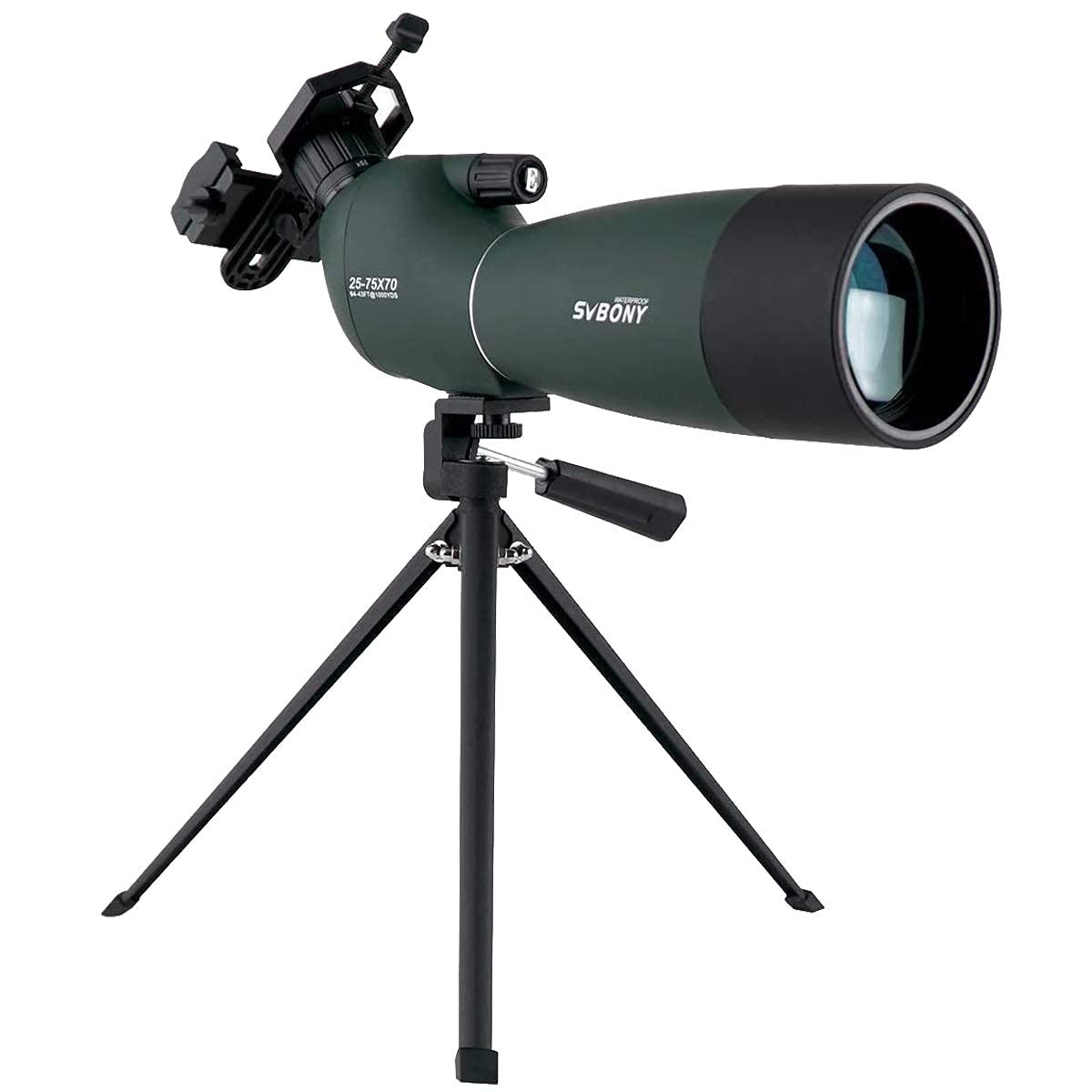 Spotting Scope Angled 25–75x70 with Tripod & Phone Adapter Bird Watching Target$60.42View on eBay
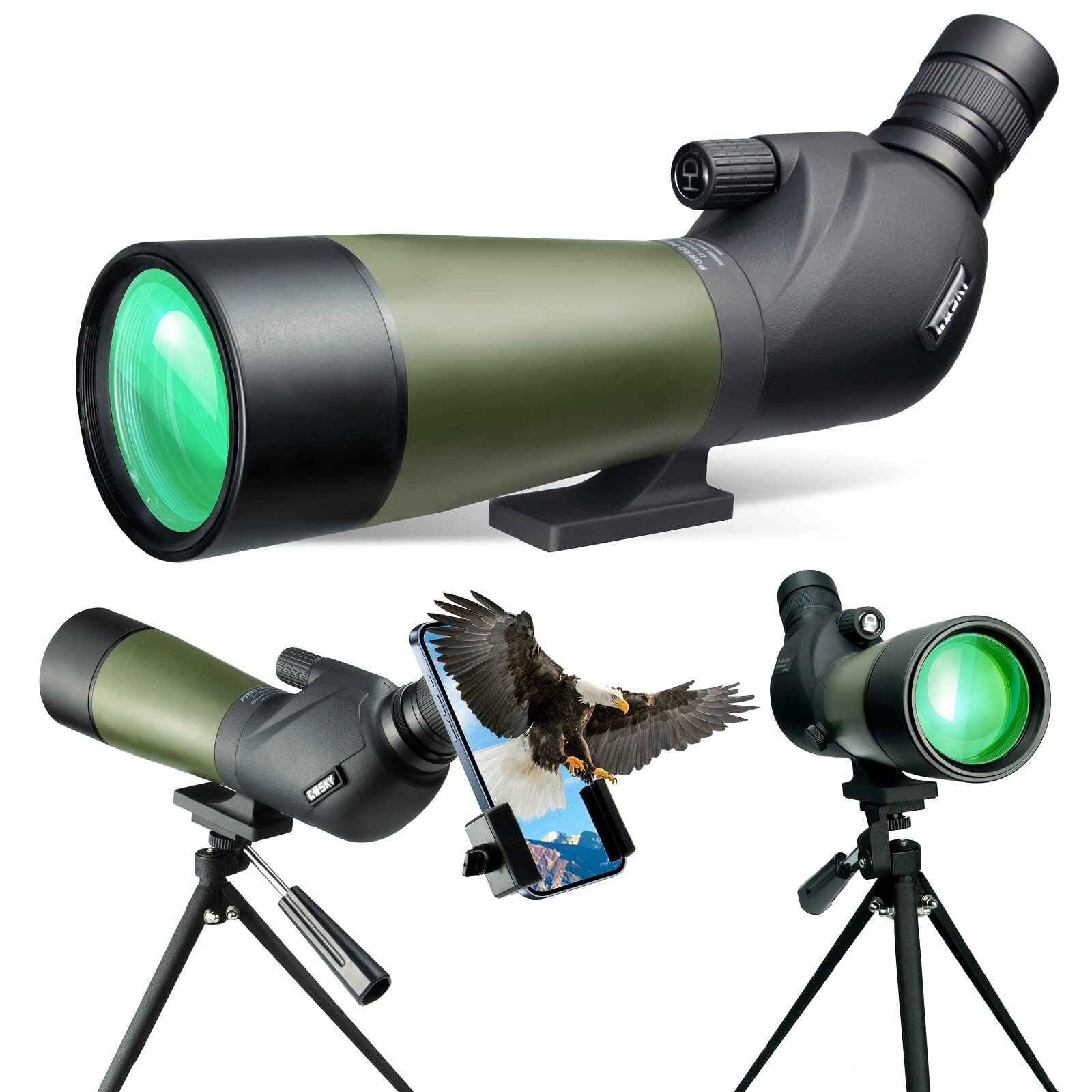 20-60x60 Ultra High Definition Spotting Scopes with Tripod and Carrying Bag$65.99View on eBay
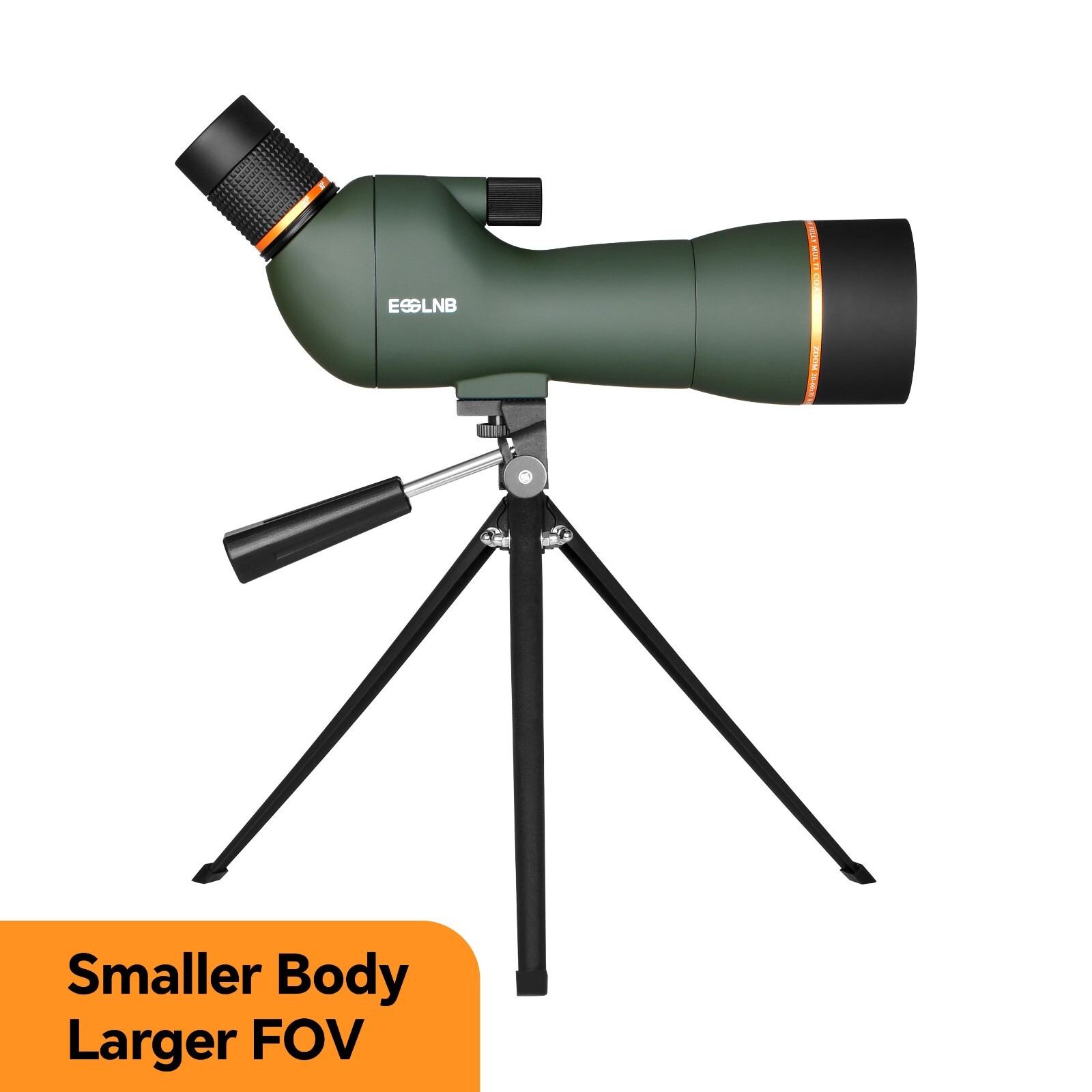 20-60X HD Spotting Scope 70mm FMC Lens BAK4 Prism Wide FOV Bird Watching Scope$69.90View on eBay
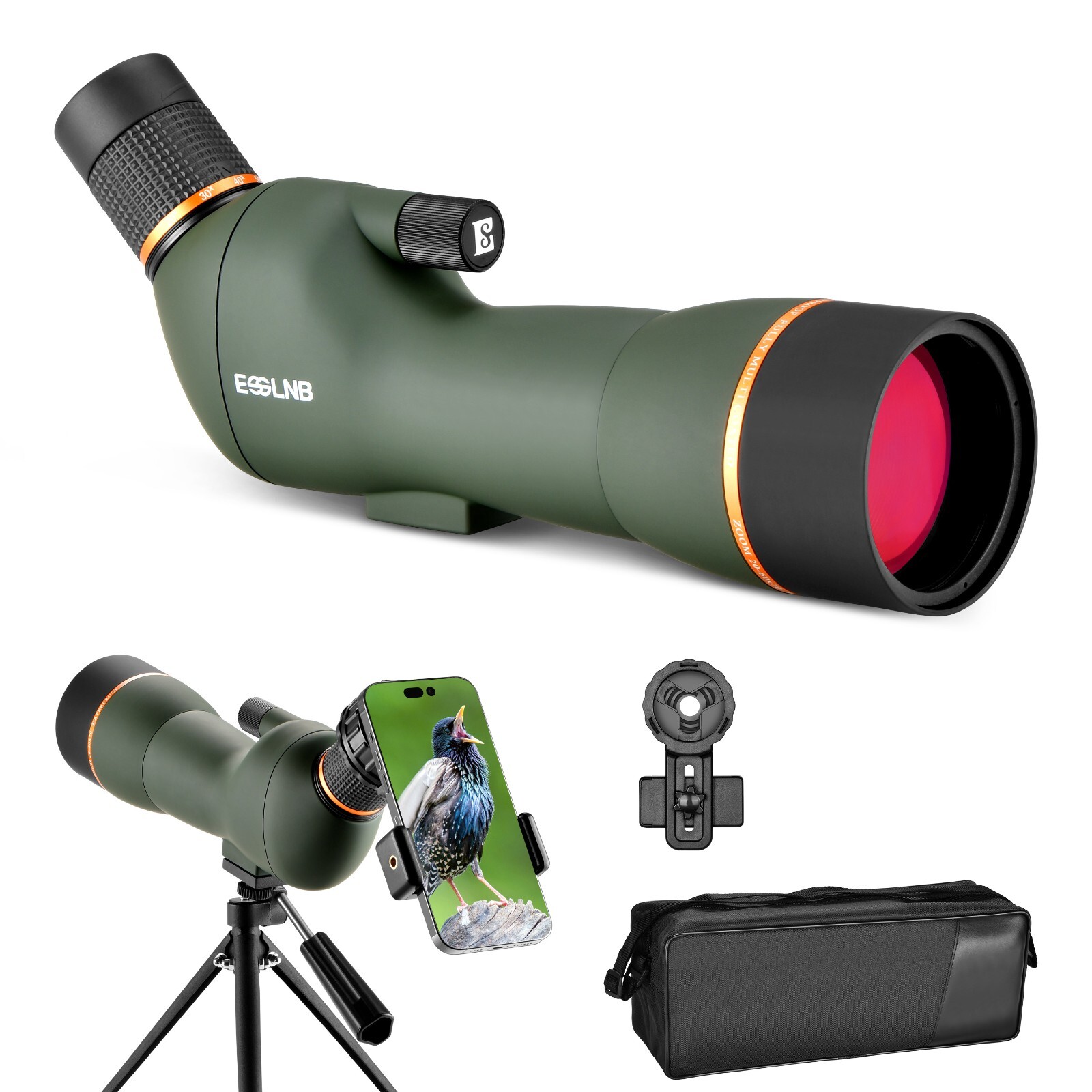 20-60X70 Zoom HD Spotting Scope Portable Design with Mobile Holder Table Tripod$69.90View on eBay
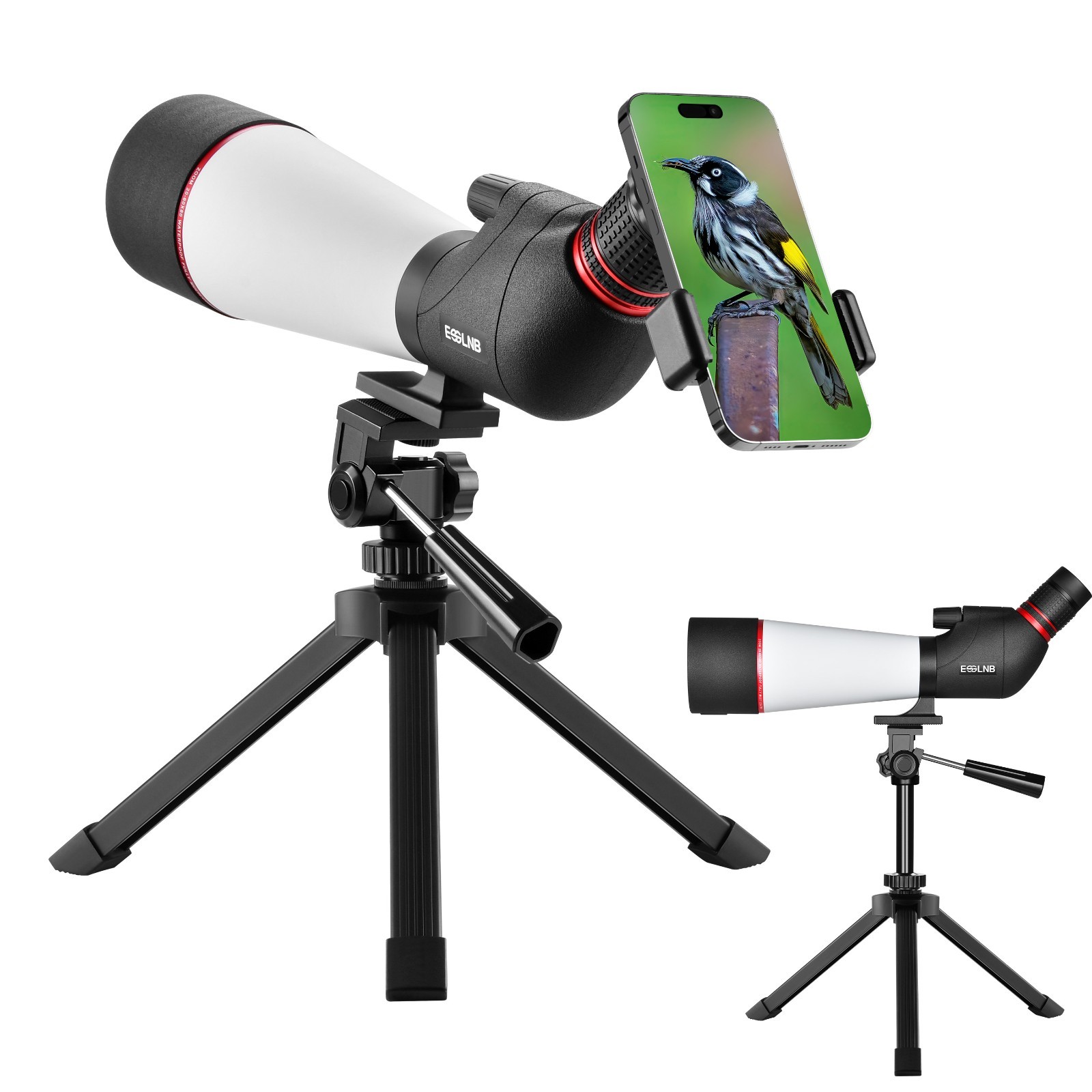 20-60X80 Spotting Scope FMC Lens with Adjustable Tripod Mobile Holder HD Vision$79.90View on eBay
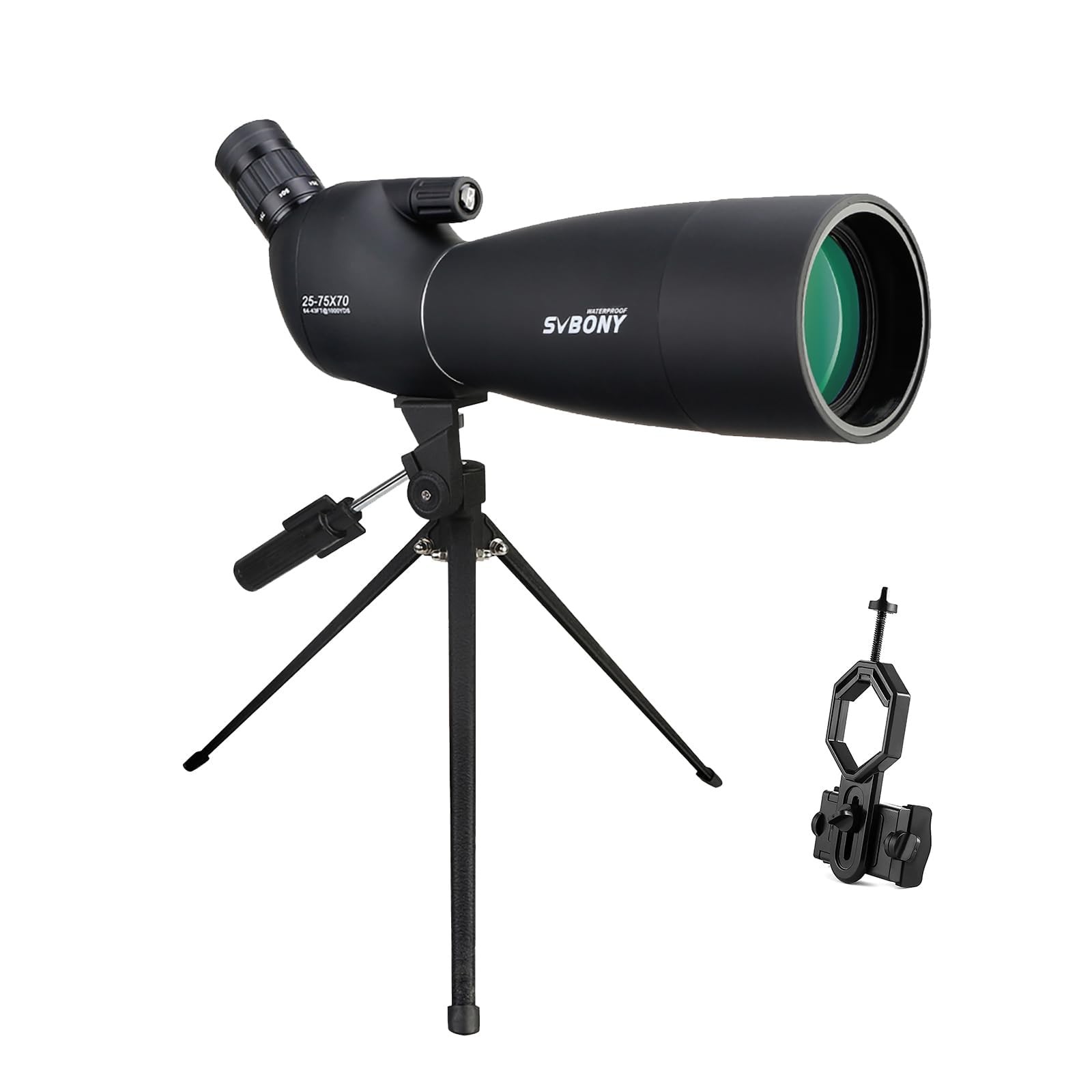 SV28 25-75x70 Spotting Scopes, HD Spotting Scope with Tripod, Long Range Spot...$82.05View on eBay
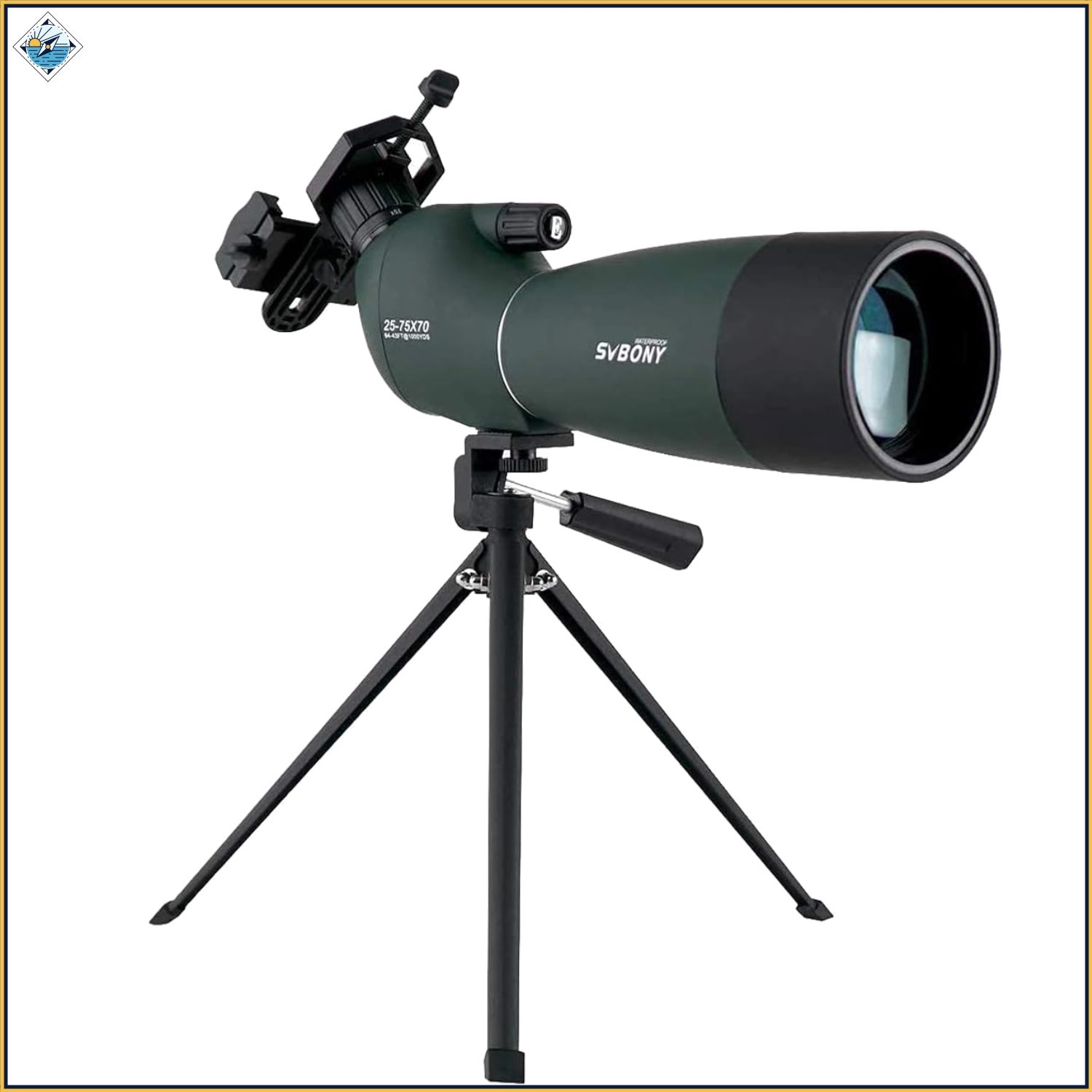 25-75x70 Angled Spotting Scope with Tripod for Bird Watching and Target Shooting$91.57View on eBay
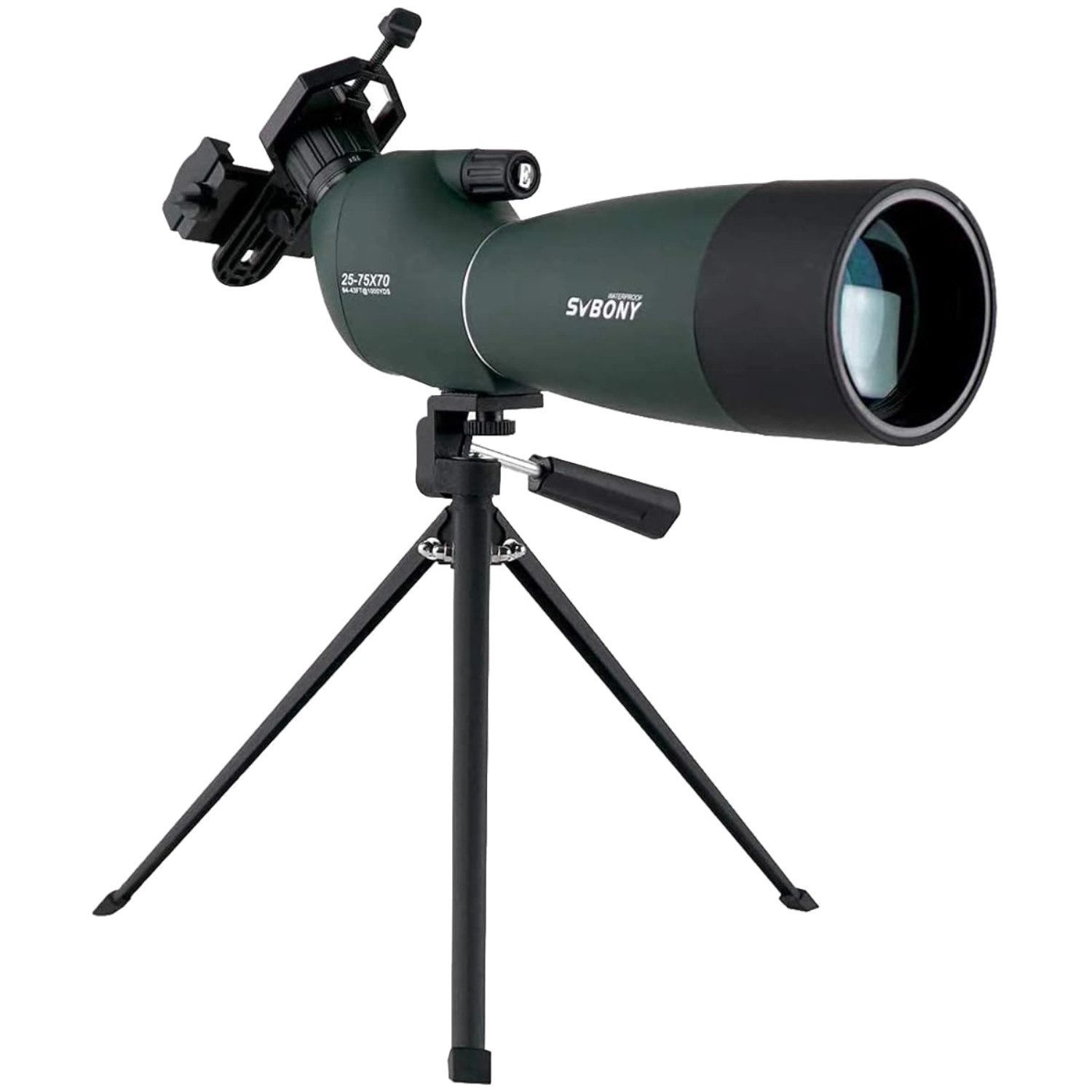 Lightweight SV28 Spotting Scope for Bird Watching, Wildlife$94.49View on eBay
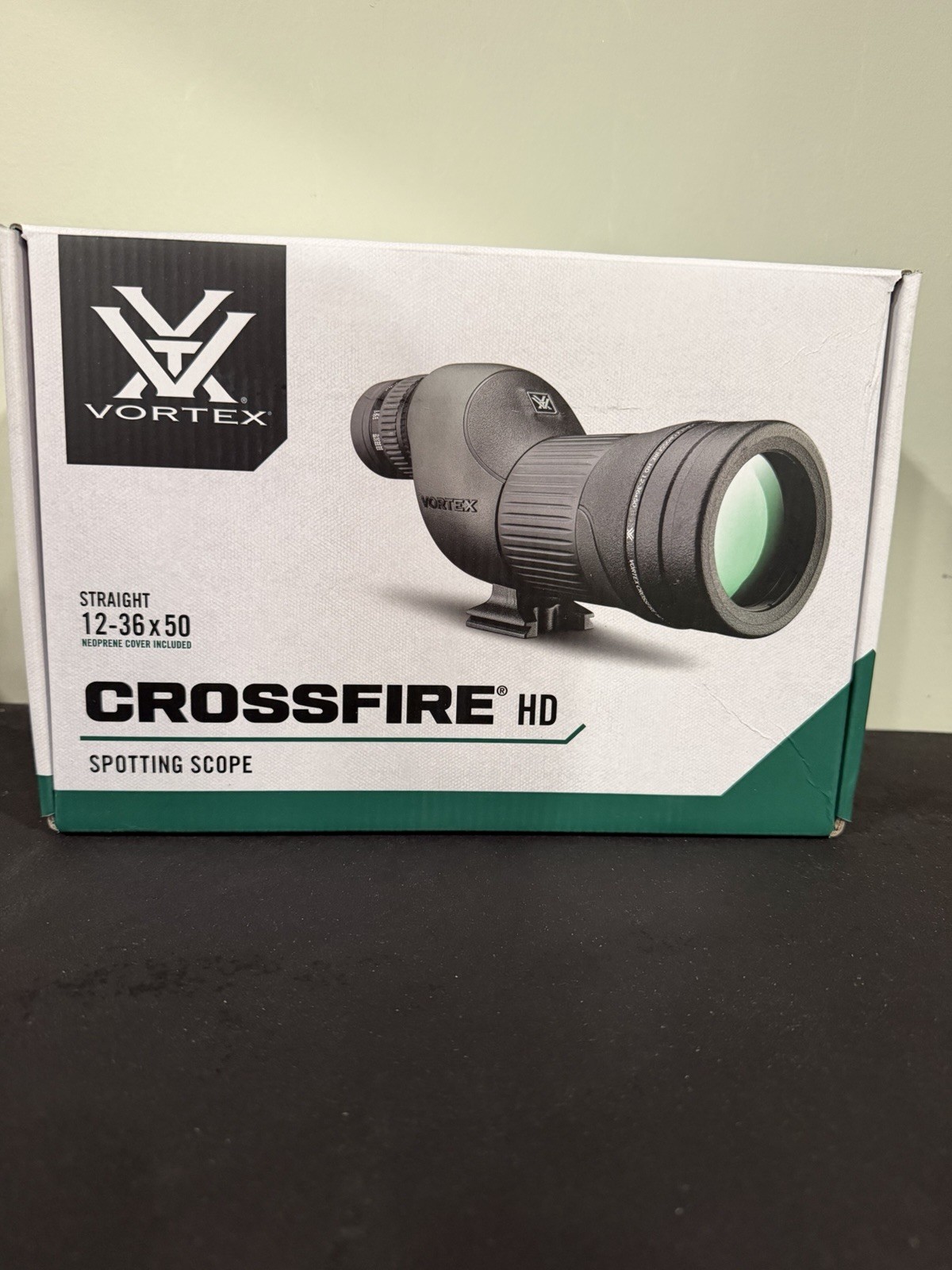 Vortex Crossfire HD 12-36x50 Straight Spotting Scope CF-50S$152.98View on eBay
Highlights
- Prism glass is the primary sharpness determinant: BAK4 (barium crown) prisms transmit a fully round exit pupil and brighter edge-to-edge image, while BK7 prisms vignette and soften corners at high zoom.
- Fully multi-coated (FMC) lens surfaces lift light transmission several percent per air-to-glass surface versus single-coated or uncoated optics—critical at 60x where exit pupil shrinks below 1.2mm.
- Magnification-to-objective math governs brightness: a 70mm objective at 60x yields a ~1.2mm exit pupil; the same 70mm at 25x yields 2.8mm, so low-zoom clarity is markedly better in dim light.
- Waterproof and fogproof ratings require nitrogen or argon purging plus O-ring seals—plastic-bodied scopes without purging fog internally when moved from cold to warm environments.
Best use cases
- Range and target shooting: choose an angled 20-60x60 to 20-60x70 with BAK4 prisms and FMC coating; skip 25-75x zoom models, whose top-end magnification exceeds the aperture's resolving power and adds haze.
- Birding and wildlife: pick a straight-body 20-60x60 BAK4 scope with a close-focus under 6m and a smooth dual-focus wheel; skip fixed-tripod bundles with plastic heads, which vibrate in wind.
- Hunting glassing from a pack: choose a compact 60mm angled scope under 1.5 lb with a rotating collar and a machined-aluminum tripod foot; skip 70-80mm objectives, which add weight and bulk without dawn/dusk benefit at low zoom.
- Backyard astronomy or long-range spotting: use an 80mm objective at 20-45x for lunar detail; skip zooming past 60x on any sub-80mm scope—atmospheric turbulence and exit-pupil limits cap usable magnification.
Buying tips
- Match objective to use: 60mm for packable day use, 70-80mm for stationary low-light glassing; exit pupil (objective ÷ magnification) should stay at or above 2mm for dawn/dusk brightness.
- Insist on BAK4 prisms and FMC coatings in the listing text; BK7 and 'multi-coated' labels indicate entry-tier optics that soften at maximum zoom.
- Verify the tripod interface: a standard 1/4-20 threaded foot fits most heads, but check that the included head is metal, not plastic, and rated for the scope's weight plus phone adapter.
- For digiscoping, confirm the phone adapter clamps to the eyepiece diameter (typically 38-45mm) and that the scope has a rotating collar so the eyepiece stays accessible on angled bodies.
Specs
| Prism Glass | BAK4 (sharp) vs BK7 (budget) |
|---|---|
| Magnification Range | 20-60x standard / 25-75x high-zoom |
| Objective Size | 60mm compact / 70-80mm low-light |
| Body & Sealing | Nitrogen-purged waterproof vs unsealed |
Related searches
What to check before buying
- Measure your mounting platform: standard photo tripods use 1/4-20 threads, while some spotting scopes ship with 3/8-16 feet—confirm the included head matches or add a bushing.
- Check eye relief before buying if you wear glasses: 15mm or more lets you keep spectacles on; short eye relief forces removal and loses field of view.
- Confirm climate sealing: nitrogen-purged, O-ring-sealed housings are mandatory for humid, rainy, or cold-weather use; unsealed plastic bodies fog internally.
- Plan for the phone adapter: measure your eyepiece outer diameter and phone width; adapters that clamp the eyepiece are more stable than tripod-mounted phone cradles.
FAQ
Data sources: eBay / Amazon listings and product attribute feeds Data updated Nov 16, 2026.
Some links on this page are affiliate links. If you buy after clicking one, we may earn a commission at no extra cost to you. This does not change which products appear here or their order. Affiliate disclosure.