Photos from current listings. Actual item, color, and included accessories may vary.
Trail Camera Buying Guide
A trail camera is a motion-triggered outdoor imaging system built to survive weather and capture wildlife or security events unattended. The core trade-off is between cellular convenience (subscription-dependent remote image delivery) and local non-cellular reliability (no monthly fees, but manual SD-card retrieval). Buy a cellular model only if you need real-time remote scouting and will pay for a data plan; otherwise choose a non-cellular model with a proven PIR sensor, robust weather sealing (IP66 or better), and a standard SD-card workflow.

At a glance
- Category
- Hunting, Prospecting & Metal Detecting
- Data updated
- Nov 17, 2026
Current offers
 E6P Max Wifi Trail Camera (Non-Cellular), 64MP Photos, 1296P HD Video, 8000Mah B$146.98
 View on eBay
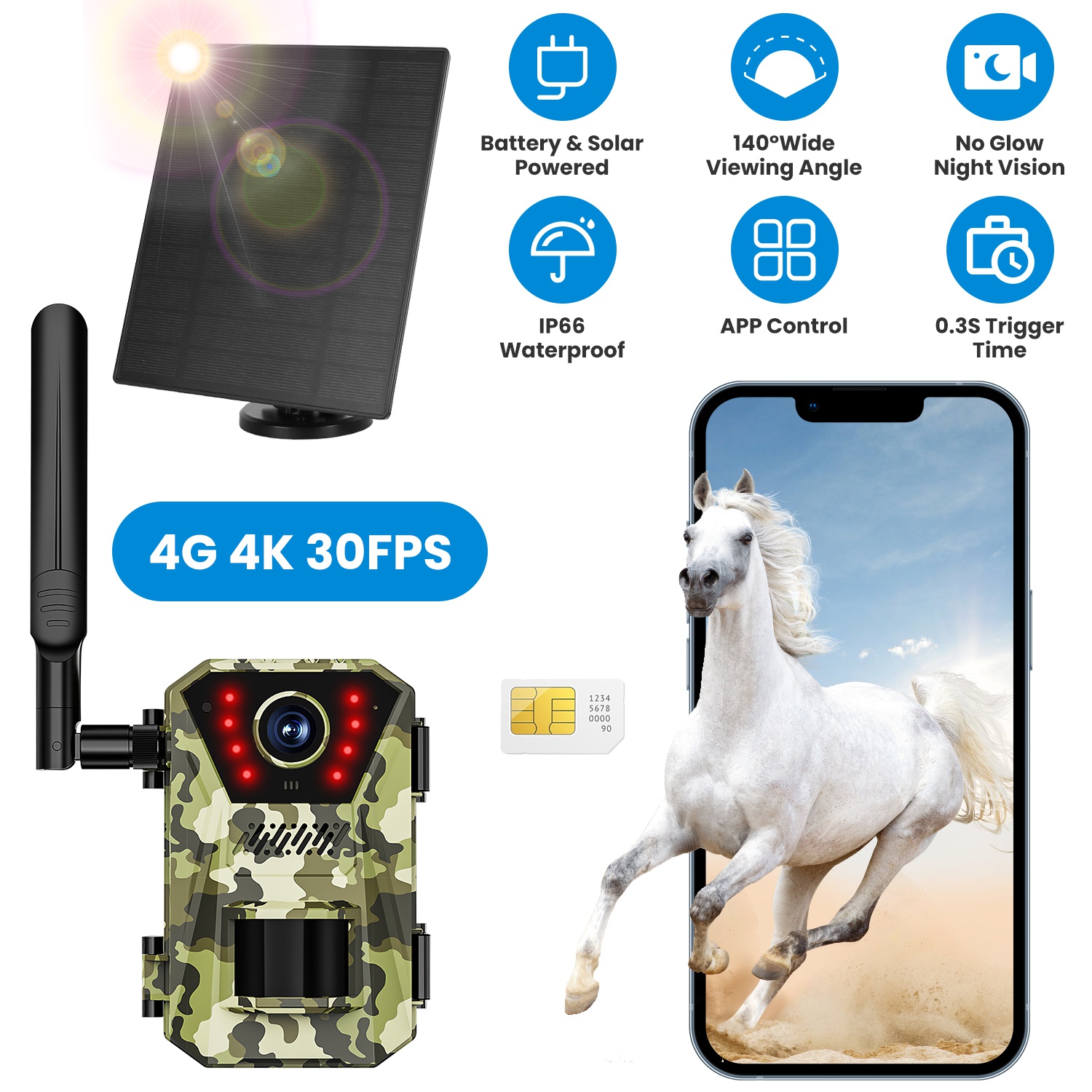 1Pc 4G 4K 30FPS Solar Trail Camera Outdoor Wildlife Motion Activated IP66 Waterproof With 140 Degree Viewing Angle No Glow Night Vision SIM Card APP Control No WiFi Needed$149.99
 View on Mallflare
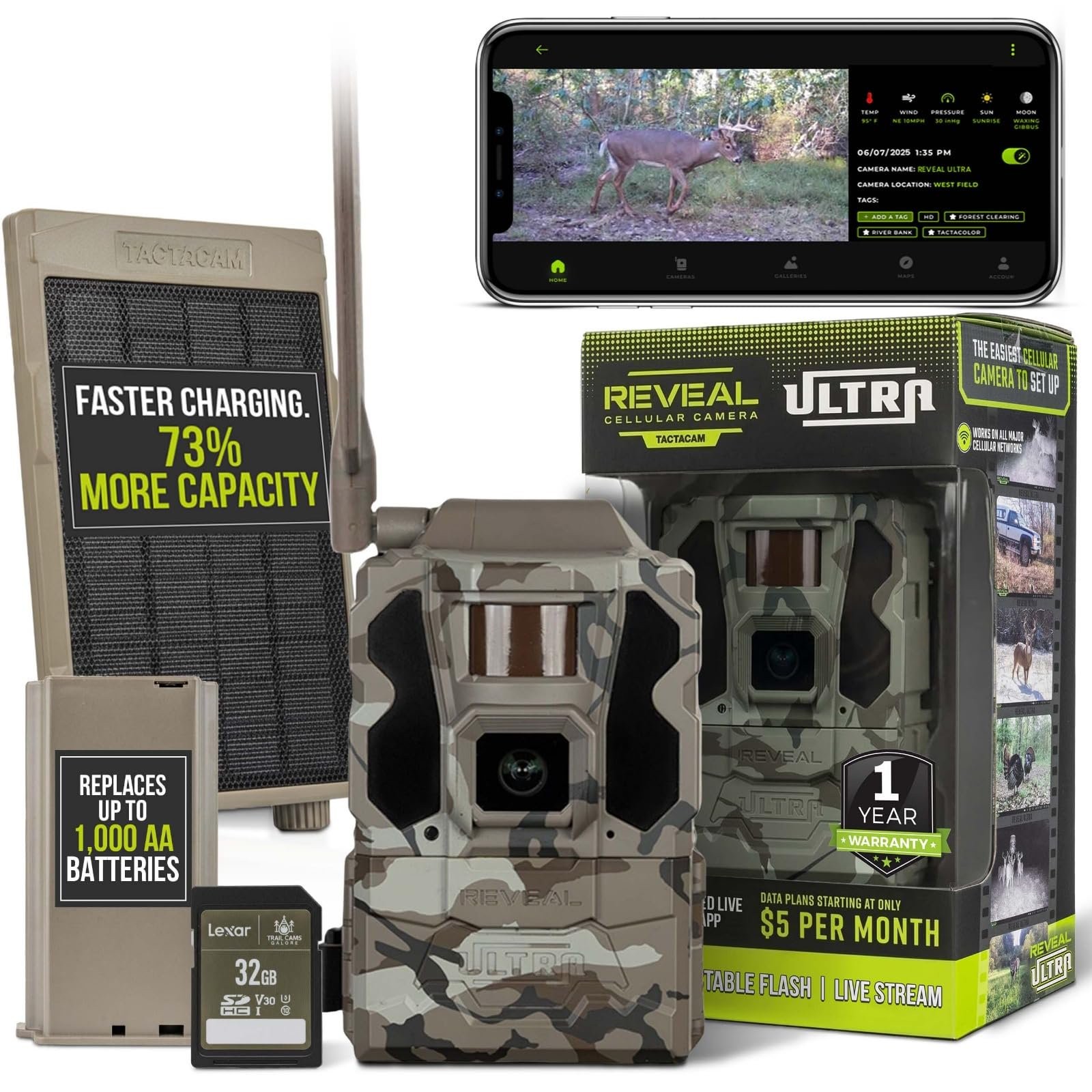 TACTACAM Reveal Ultra Cellular Trail Camera – 4K Photo, 1080P Video, Live...$279.99Last checked Nov 14, 2026View on eBay
Highlights
- Cellular trail cameras (4G/LTE) upload images remotely but require an active SIM data plan; non-cellular models store to SD card and must be physically checked.
- Trigger speed and recovery time determine capture rate: sub-0.3s trigger speed with 0.5s recovery is the threshold for fast-moving game; slower units miss subjects.
- Night vision type matters: no-glow IR (invisible to game and humans) vs low-glow IR (longer range but visible red flash); no-glow is preferred for security and wary wildlife.
- Weather sealing: IP66 rating resists dust and high-pressure water jets; plastic housings are common but must have sealed gaskets and locking latches to prevent moisture ingress.
Best use cases
- Remote scouting on large properties where you cannot visit weekly: choose a cellular model with 4G/LTE, solar charging, and app control; skip non-cellular models that require manual SD-card pulls.
- Backyard wildlife observation or short-term security: choose a non-cellular 4K/1080P model with no-glow IR and a 64GB+ SD card; skip cellular models to avoid monthly fees.
- Budget-conscious hunting on small acreage: choose a 1080P non-cellular model with 0.3s trigger and 940nm no-glow IR; skip 4K and cellular tiers unless you need remote access.
Buying tips
- Match resolution to purpose: 4K photo/1080P video is useful for license-plate or antler detail; 1080P photo/720P video is sufficient for general game presence at 30–50 ft.
- Verify PIR detection range and angle: 90–120° detection angle with 60–80 ft range covers most food plots; wider angles reduce per-pixel detail.
- Check power architecture: 8×AA lithium or 12V DC input with solar panel compatibility; alkaline batteries sag in cold and reduce night IR performance.
- Confirm storage and connectivity: Class 10 U3 microSD up to 128GB for 4K; cellular models need a nano-SIM and carrier band compatibility (Verizon/AT&T/T-Mobile).
Specs
| Connectivity | Cellular 4G/LTE vs Non-cellular SD |
|---|---|
| Photo Resolution | 1080P to 4K (interpolated 64MP) |
| Night Vision | No-glow 940nm vs Low-glow 850nm IR |
| Weather Rating | IP66 dust/water resistant |
Related searches
What to check before buying
- Measure mounting height and distance to target: mount 3–5 ft high, angled slightly down, 10–30 ft from the subject area to stay within PIR range.
- Confirm climate tolerance: operating range –4°F to 140°F (–20°C to 60°C); lithium batteries are required below freezing.
- Check power source: AC outlet availability for 12V adapter, or plan for solar panel and rechargeable battery pack in remote locations.
- Verify local regulations: some states prohibit cellular trail cameras on public land or require registration; check before purchase.
FAQ
Data sources: eBay / Amazon listings and product attribute feeds Data updated Nov 17, 2026.
Some links on this page are affiliate links. If you buy after clicking one, we may earn a commission at no extra cost to you. This does not change which products appear here or their order. Affiliate disclosure.