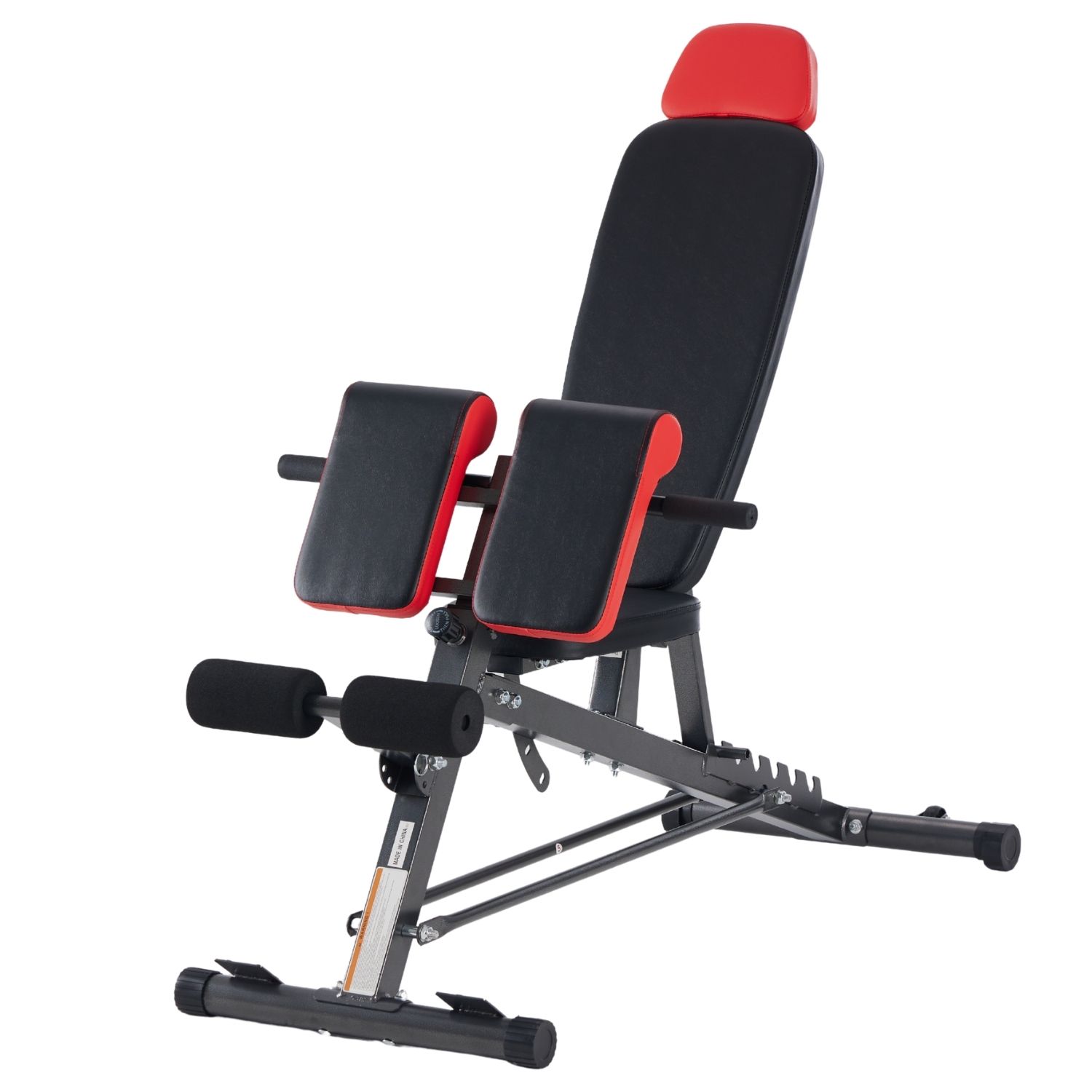

Photos from current listings. Actual item, color, and included accessories may vary.
Decline Bench Buying Guide
A decline bench is an adjustable or fixed-weight-training bench that positions the torso below horizontal to target the lower chest, anterior core, and hip flexors. The primary trade-off is adjustability and pad rigidity versus frame stability: entry benches wobble under load, while serious decline benches use wide-gauge steel, multi-position back pads, and secure leg rollers. The decision rule: buy a bench rated for at least your bodyweight plus working load with a locking decline hinge and non-slip leg support; skip any bench with a single welded pivot or thin foam pads.


At a glance
- Category
- Power Racks, Benches & Platforms
- Data updated
- Nov 17, 2026
Current offers
Highlights
- Decline angle range is the core spec: -15° to -30° hits lower pectorals, while -45° to -60° shifts load to the anterior core and hip flexors; fixed benches cover one angle only.
- Frame steel gauge and welding determine safety: 11- to 12-gauge rectangular tubing with full-perimeter welds and a wide base footprint resists tipping during heavy decline presses.
- Pad density and covering matter: high-density foam (2- to 3-inch) with vinyl or PU upholstery prevents bottoming out; cheap 1-inch foam compresses and destabilizes shoulder positioning.
- Leg-roller configuration separates usable decline benches: foam rollers with locking pins or adjustable brackets secure the thighs and ankles, while fixed or thin rollers allow sliding under load.
Best use cases
- Best fit: a lifter training lower chest and core at home needs an adjustable FID bench with a locking decline hinge (-15° to -30°) and secure leg rollers; skip flat-only or ab-only benches.
- Best fit: a commercial or garage gym with heavy pressing uses a dedicated decline bench with 11-gauge steel and a wide base; skip budget multi-function benches with thin frames for loads above bodyweight.
- Wrong fit: a user seeking incline or flat pressing as the primary movement should buy a dedicated adjustable FID bench rather than a decline-only unit; decline-only benches waste space and limit upper-chest work.
- Best fit: core and hip-flexor training uses a Roman-chair or ab-bench configuration with ankle support at -45° or steeper; skip standard decline benches with only shallow -15° pads for sit-up work.
Buying tips
- Match decline angle to goal: choose a bench with at least -15°, -30°, and -45° locking positions if you train both chest and core; single-angle benches limit progression.
- Verify load rating against bodyweight plus working weight: a bench rated for 600 lb total supports a 200 lb lifter pressing 300 lb; never use a bench rated below your combined load.
- Check leg-roller adjustability: rollers must move along the frame or lock into multiple height slots to secure thighs and ankles; fixed rollers fit only one leg length.
- Prefer benches with a wide base stance and rubber feet: a base at least as wide as the pad and non-marring feet prevent rocking and floor damage during decline presses.
Specs
| Decline Angle Range | -15° to -60° adjustable / fixed |
|---|---|
| Frame Steel Gauge | 11-14 gauge / 2x3 in tubing |
| Load Rating | 500-1,000 lb total capacity |
| Leg Roller Type | Adjustable locking / fixed foam |
Related searches
What to check before buying
- Measure your room and bench footprint: decline benches run 4-6 feet long and need clear space behind the head for safety; confirm the bench fits your floor area with room to load plates.
- Confirm your barbell or dumbbell setup: decline pressing requires a rack or spotter access at the low end; ensure your rack height and safety arms work with the bench's decline position.
- Check floor type and level: rubber feet protect hard floors, but an uneven floor causes rocking; place the bench on a level, non-slip surface.
- Verify pad height and leg-roller fit for your body: sit on the bench and check that your knees bend comfortably over the pad edge and rollers secure your ankles without cutting circulation.
FAQ
Data sources: eBay / Amazon listings and product attribute feeds Data updated Nov 17, 2026.
Some links on this page are affiliate links. If you buy after clicking one, we may earn a commission at no extra cost to you. This does not change which products appear here or their order. Affiliate disclosure.