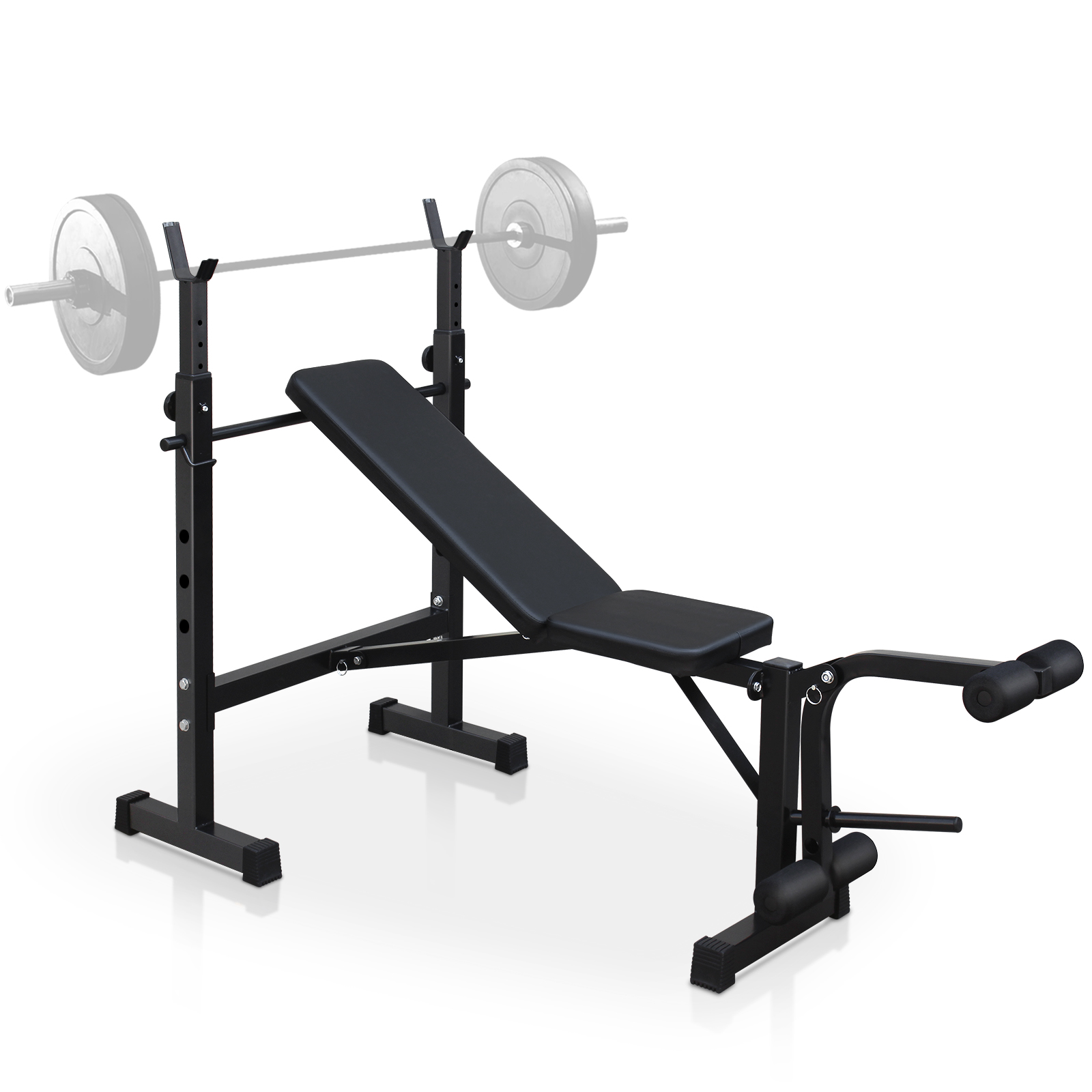

Photos from current listings. Actual item, color, and included accessories may vary.
Weight Set And Bench Buying Guide
A weight set and bench bundle pairs a barbell platform with adjustable uprights and a starter plate load, but the decisive variable is frame steel gauge and upright depth, not the included plate count. Durable bundles use 11-12 gauge tubular steel, welded A-frames, and at least 2-inch Olympic sleeve spacing, while compromises use 14-gauge bolt-together posts and 1-inch standard bars that cap out at low loads.


At a glance
- Category
- Power Racks, Benches & Platforms
- Data updated
- Nov 17, 2026
Current offers
Highlights
- Olympic bundles use 2-inch (50mm) sleeves rated 300-700 lb; standard 1-inch bars are limited to light loads and lighter plates.
- Upright steel gauge separates tiers: 11-gauge welded frames resist flex and racking; 14-gauge bolt-together frames wobble under heavy pressing.
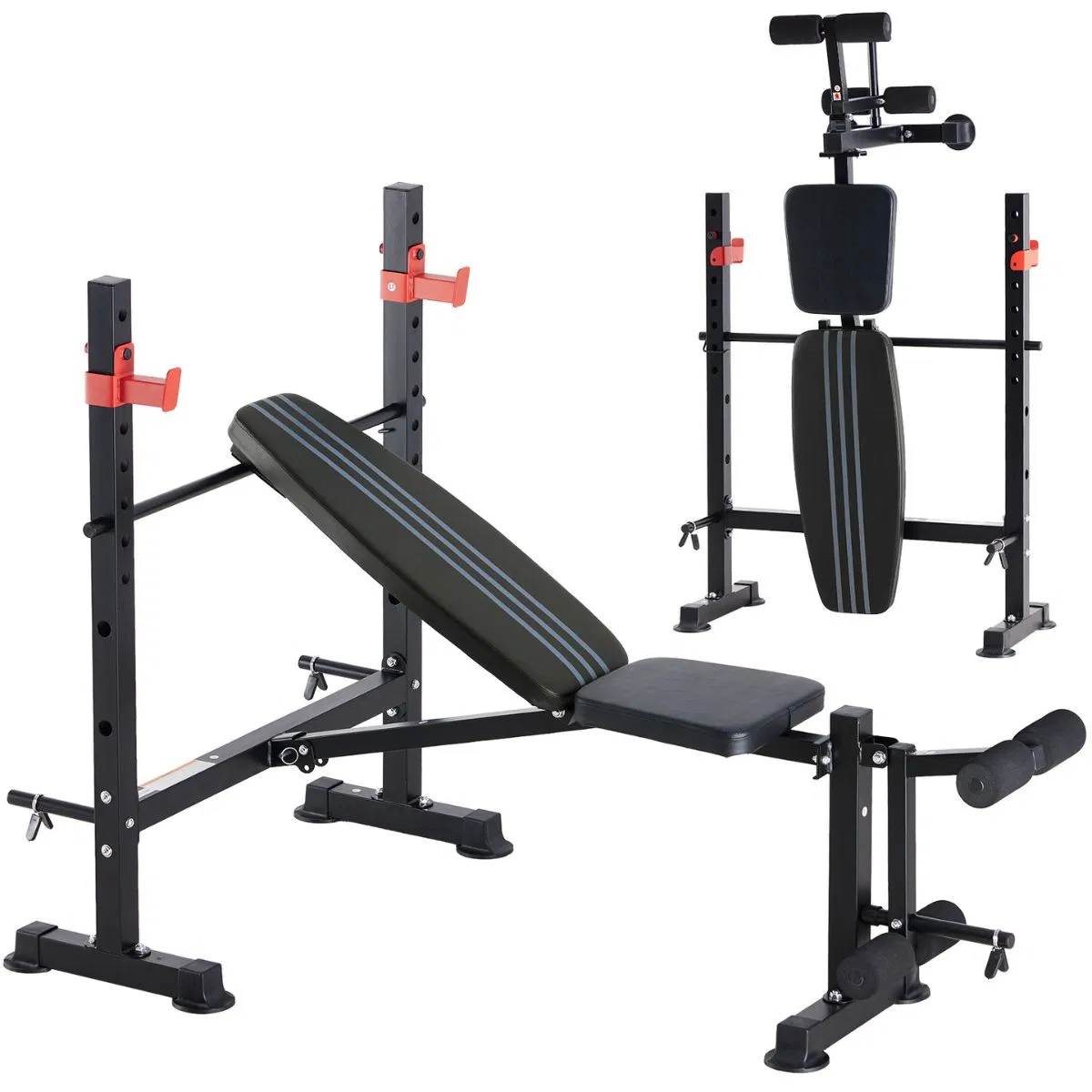
- Adjustable bench pad angle typically spans flat to 85-degree incline with 6-7 back positions and 3-4 seat positions for full-body coverage.
- Integrated leg developer and preacher attachments add isolation work but reduce usable flat-bench footprint and often lower the bench's rated load.
Best use cases
- Pick an Olympic sleeve bundle with a welded 11-gauge frame and independent uprights if you press over 135 lb or plan to squat; skip 1-inch standard sets entirely.
- Choose a foldable bench-and-rack combo only if the room doubles as living space and ceiling height clears your standing overhead press by 12 inches.
- Skip bundles with non-adjustable upright width if your rack must fit a 7-foot Olympic bar inside a 4-foot footprint; confirm 47-52 inch upright spacing.
- For a single lifter under 6 feet and under 250 lb bodyweight, a 650 lb rated adjustable bench with leg developer covers flat, incline, and leg work; skip separate machines.
Buying tips
- Match bar sleeve to plates: 2-inch Olympic sleeves need 2-inch holed plates; 1-inch standard bars accept only 1-inch plates and cannot share Olympic load.
- Size the bench pad: 45-48 inch pad length and 10-12 inch width supports most lifters; pads under 44 inches leave the head unsupported on incline presses.
- Check upright height against your reach: a 46-52 inch upright rack with J-hooks set at chest height is needed for safe bench press unracking without a spotter.
- Weight rating is cumulative: a 650 lb bench rating must cover bodyweight plus bar and plates, so a 200 lb lifter plus 400 lb load sits at the limit.
Specs
| Bar Sleeve | 2 in Olympic vs 1 in standard |
|---|---|
| Frame Steel | 11-12 ga welded vs 14 ga bolt-together |
| Bench Load Rating | 650-1000 lb total system |
| Pad Positions | Flat to 85 deg, 6-7 back angles |
Related searches
What to check before buying
- Measure floor space against the bundle footprint: rack combos need roughly 48 x 48 inches plus bar clearance of 7 feet for a standard Olympic bar.
- Verify ceiling height: standing overhead press needs about 7.5 feet; incline bench work needs about 4.5 feet of clearance over the pad.
- Confirm floor type: rubber horse-stall mats or 0.5-inch gym tiles protect subfloor; bare concrete is fine but racks slide without rubber feet.
- Check plate hole diameter and bar sleeve diameter before ordering; mixed standard and Olympic components do not interchange.
FAQ
Data sources: eBay / Amazon listings and product attribute feeds Data updated Nov 17, 2026.
Some links on this page are affiliate links. If you buy after clicking one, we may earn a commission at no extra cost to you. This does not change which products appear here or their order. Affiliate disclosure.