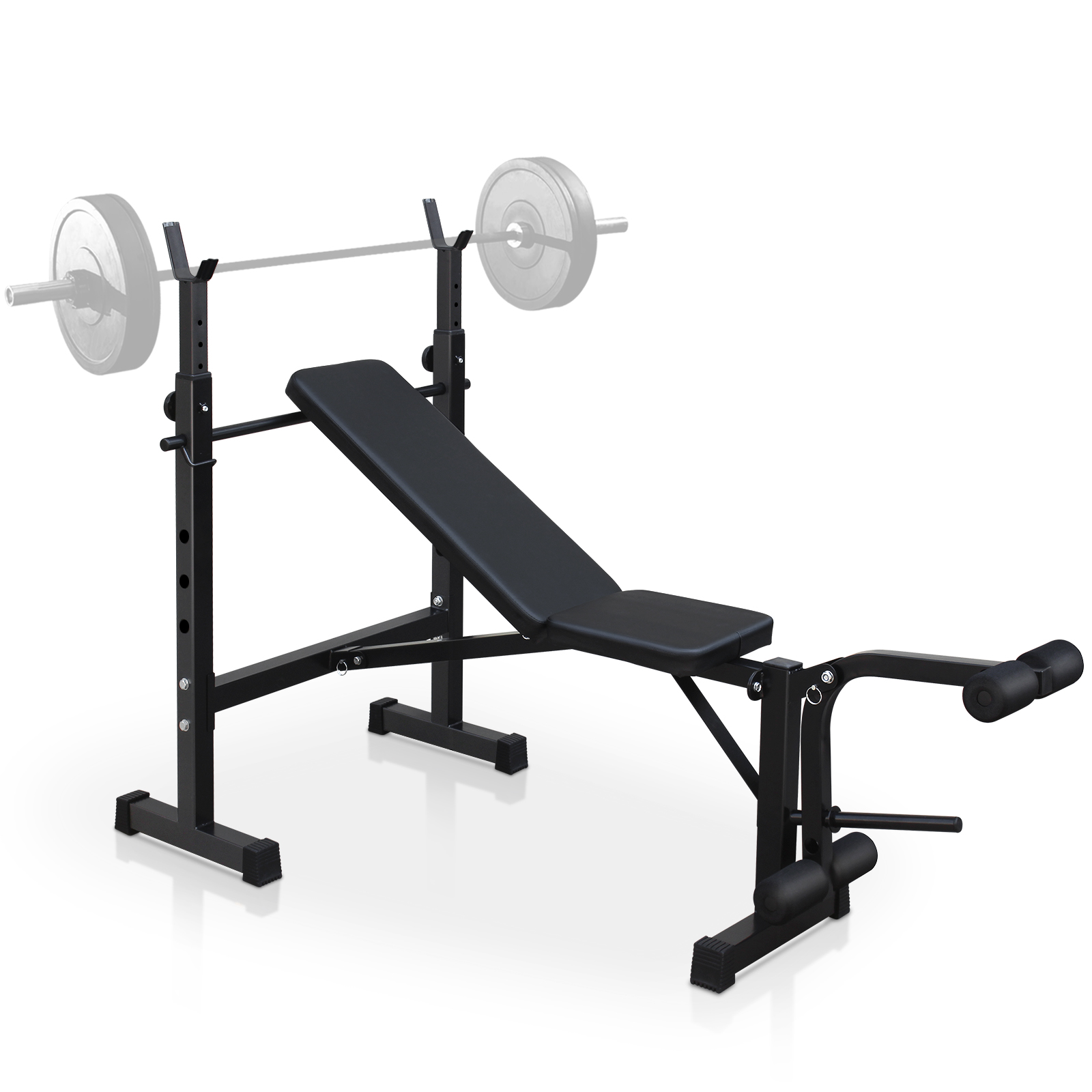

Photos from current listings. Actual item, color, and included accessories may vary.
Weight Set With Bench Buying Guide
A weight set with bench bundles a barbell, plates, and a bench/rack station into one purchase, with the primary trade-off being Olympic (50mm) vs Standard (25mm) bar/plate compatibility and the bench's rated load capacity. Durable bundles use 2x3-inch or 3x3-inch 14-gauge steel frames with Olympic sleeves and a bench rated for at least 600 lb; compromises use 1-inch standard bars, thin 16-gauge tubing, and benches that flex under load.


At a glance
- Category
- Power Racks, Benches & Platforms
- Data updated
- Nov 17, 2026
Current offers
Highlights
- Olympic bars use 50mm (2-inch) sleeves and 25mm shaft diameter; Standard bars use 1-inch (25mm) plates — plates and bars are not cross-compatible without adapter sleeves.
- Bench steel: 14-gauge (approx. 2mm) 2x3-inch or 3x3-inch tubing with welded gussets supports 600-1,000 lb; 16-gauge 2x2-inch frames flex and are rated lower.
- Squat rack uprights: 2x2-inch vs 2x3-inch vs 3x3-inch; J-cup and safety-arm spacing (1-inch vs 2-inch holes) determines accessory compatibility and rack rigidity.
- Barbell tensile strength: 190,000-210,000 PSI for entry Olympic bars; 150,000 PSI and below bends permanently under heavy squats and deadlifts.
Best use cases
- Best fit: home lifters doing bench press, squats, and deadlifts up to 600 lb — choose an Olympic set with a 2x3-inch steel bench and a rack with 1-inch hole spacing at bench height.
- Best fit: space-limited users needing a foldable bench-and-rack combo — pick a folding bench with a rated capacity of at least 500 lb and confirm folded depth fits the room.
- Wrong fit: buyers wanting a 1-inch standard set for heavy compound lifts — the thinner bar and plates bend or loosen at loads above roughly 300 lb; step up to Olympic.
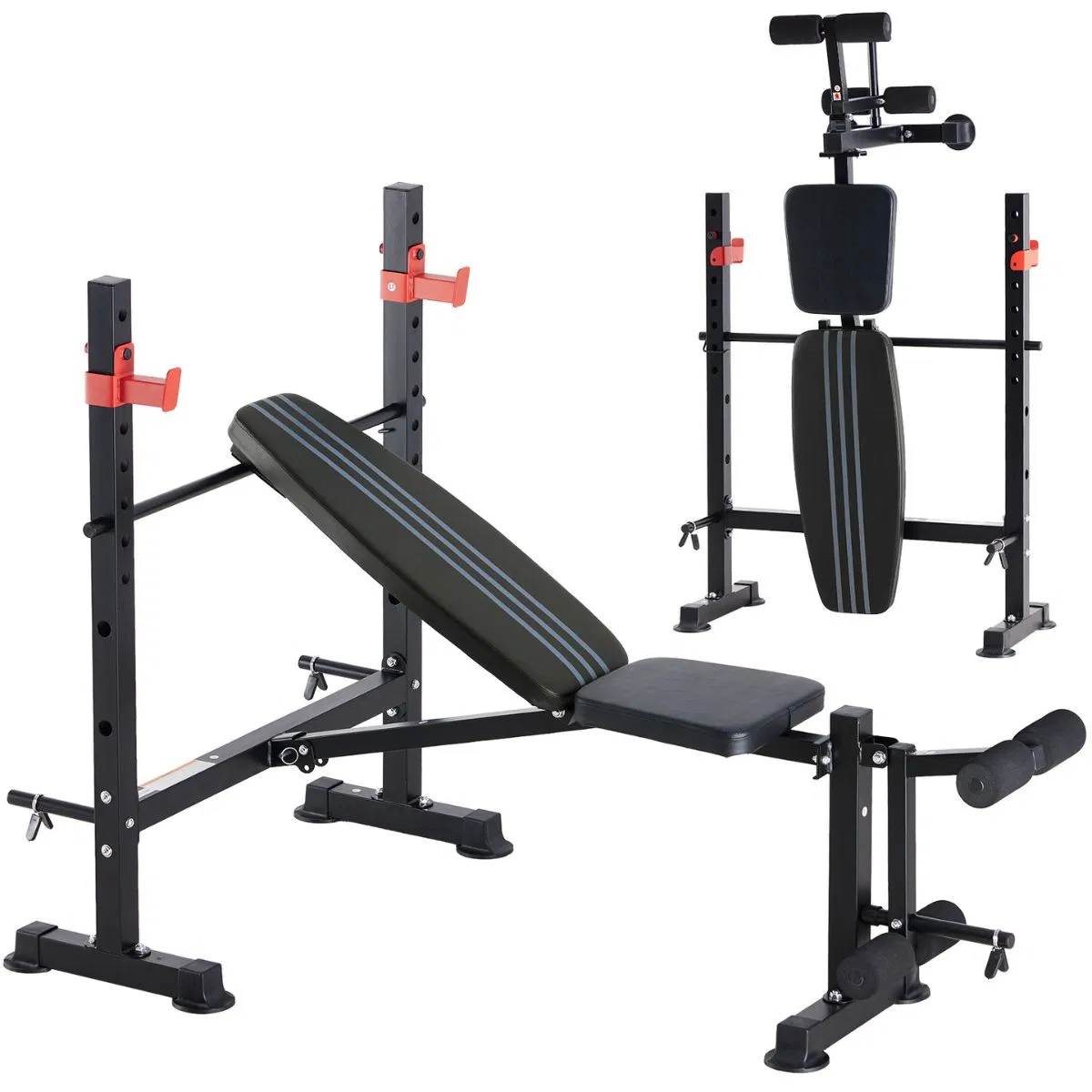
- Wrong fit: assuming a bundled bench includes a leg developer or preacher pad — these are separate attachments; confirm the station's attachment compatibility before buying.
Buying tips
- Match bar and plate diameter first: Olympic 50mm sleeves require 2-inch hole plates; Standard 25mm bars require 1-inch hole plates — mixing without adapters causes plate wobble.
- Size the bench to your height: flat bench length should be 45-48 inches so your head and hips are supported during press; too-short benches leave the head unsupported.
- Check rack upright height and hole spacing: 1-inch hole spacing around bench-press height allows precise J-cup placement; 2-inch spacing forces compromise on rack height.
- Set a load ceiling: add your body weight plus the heaviest planned lift and choose a bench/rack rated at least 20-30% above that total for safety margin.
Specs
| Bar Sleeve Diameter | Olympic 50mm vs Standard 25mm |
|---|---|
| Bench Steel Gauge | 14-gauge (2mm) vs 16-gauge (1.5mm) |
| Bench Load Rating | 600-1,000 lb (heavy) vs 300-500 lb |
| Rack Upright Size | 3x3 in vs 2x3 in vs 2x2 in |
Related searches
What to check before buying
- Measure ceiling height: standing overhead press needs roughly 7-8 feet of clearance; squat rack height plus your reach must fit under the ceiling.
- Measure floor footprint: a rack plus barbell needs at least 8 feet of width for a 7-foot Olympic bar (2.2m) plus plate loading space on each side.
- Confirm floor type: concrete or rubber gym flooring handles dropped loads; wood or carpet needs a platform or crash pads under the rack.
- Verify plate and bar compatibility: count sleeve diameter and plate hole diameter before purchase; Olympic vs Standard mismatch is the most common return reason.
FAQ
Data sources: eBay / Amazon listings and product attribute feeds Data updated Nov 17, 2026.
Some links on this page are affiliate links. If you buy after clicking one, we may earn a commission at no extra cost to you. This does not change which products appear here or their order. Affiliate disclosure.