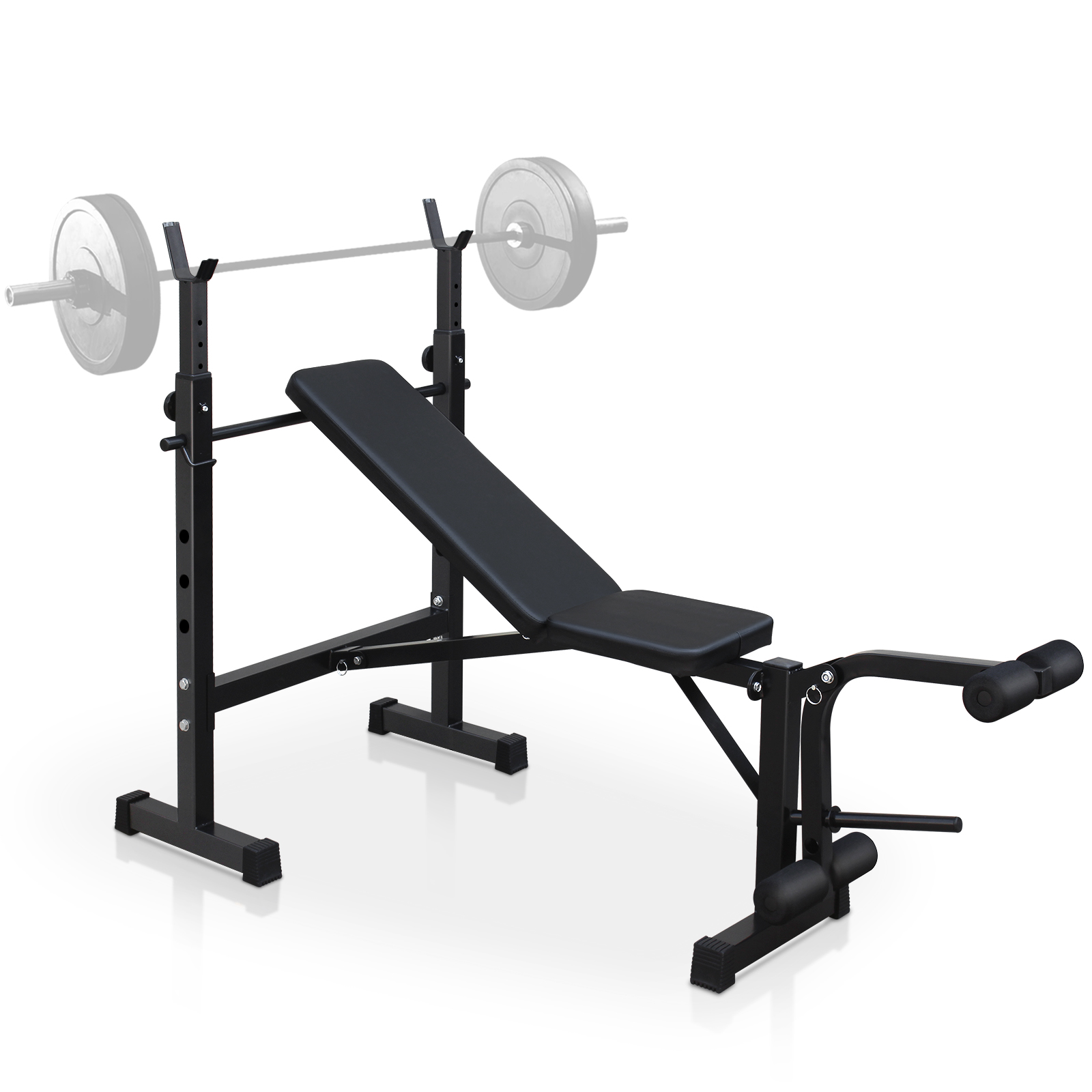

Photos from current listings. Actual item, color, and included accessories may vary.
Weight Bench And Weight Set Buying Guide
A weight bench and weight set is a bundled strength-training station—typically an adjustable or fixed bench paired with a rack, barbell, and plates—where the bench's frame rating, pad density, and upright steel gauge determine safety far more than the plate count. The core trade-off is between thin 1.5mm tubular steel with foam pads (flexes and compresses under load) and 2mm+ 11-gauge steel with high-density vinyl pads (stable and durable). Buy a set whose stated bench capacity exceeds your working weight by at least 30%, and skip any bundle that lists a combined bench-plus-rack capacity without separate bench and upright ratings.


At a glance
- Category
- Power Racks, Benches & Platforms
- Data updated
- Nov 17, 2026
Current offers
Highlights
- Bench frame steel gauge separates tiers: 11-gauge (3mm) welded steel holds 600-1000 lb ratings, while 14-16 gauge (1.5-2mm) bolt-together frames flex and cap near 300-400 lb.
- Pad density matters: high-density foam or plywood-backed vinyl pads (2-3 inch thick) resist compression; soft foam pads bottom out under heavy pressing and distort shoulder positioning.
- Olympic vs standard bar compatibility: Olympic sets use 2-inch sleeves and 50mm center knurl bars; standard sets use 1-inch sleeves—plates and bar must match, and rack J-cup width must fit the bar.
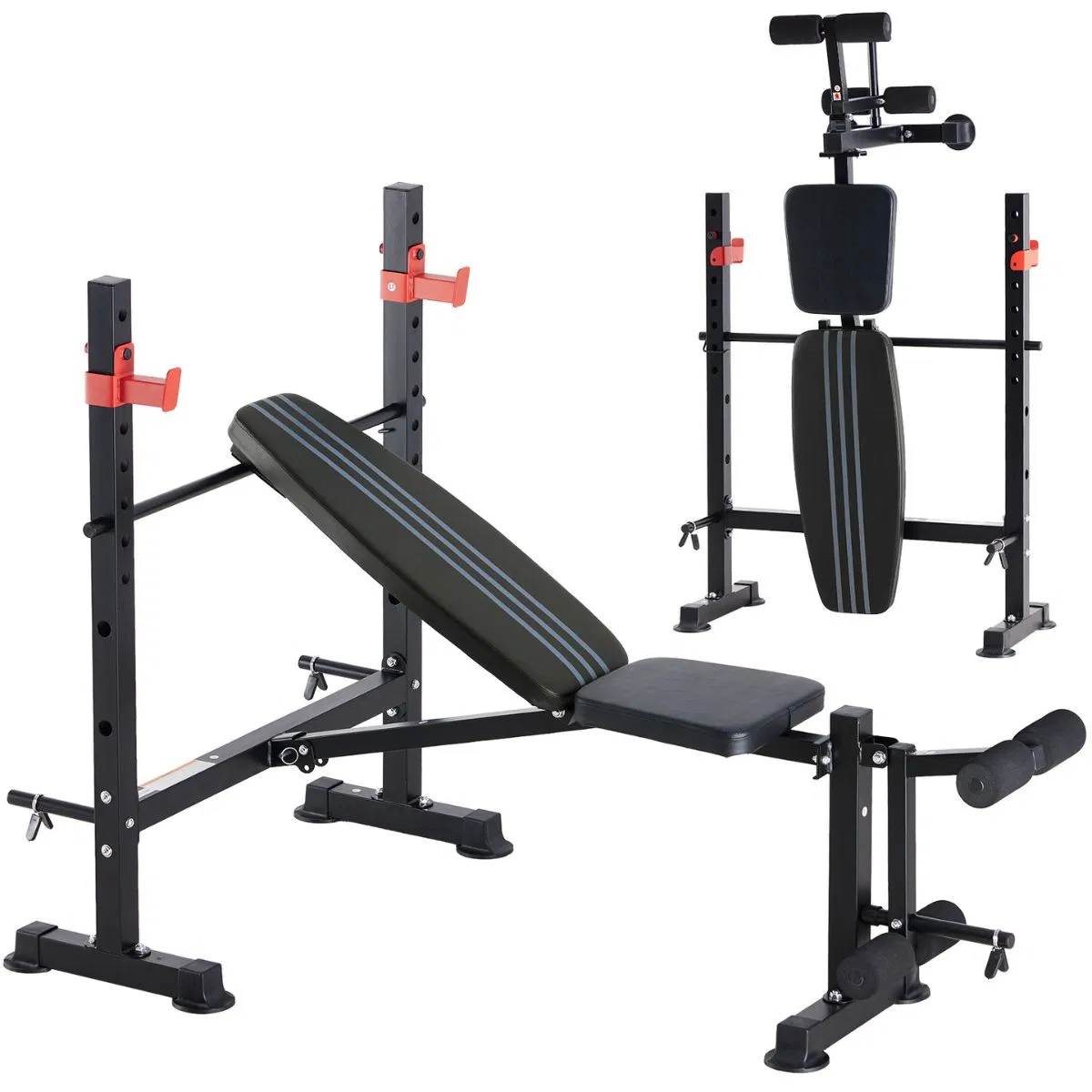
- Adjustable bench tiers differ by backrest range: full decline-to-90-degree incline with 6-7 positions and a 3-position seat supports all pressing angles; 3-position benches limit decline and steep incline work.
Best use cases
- Best fit: a foldable adjustable bench with integrated squat rack and leg developer for a garage gym with limited floor space—pick it if you mostly press, squat, and do leg extensions with up to ~300 lb total.
- Best fit: a fixed flat or adjustable bench plus a separate heavy-duty squat stand for lifters moving 400+ lb—separate components carry higher individual ratings than combo bundles.
- Wrong fit: skip a bundle with a combined '650 lb' rating if the bench and rack are not rated separately—combined numbers usually reflect the rack alone, not the bench pad and frame under a lifter.
- Wrong fit: skip a standard 1-inch bar set if you plan to add plates later—Olympic 2-inch plates and bars are the durable, expandable standard for serious strength work.
Buying tips
- Match bench capacity to bodyweight plus working load: a 200 lb lifter pressing 250 lb needs a bench rated 600 lb or more, since impact and racking add dynamic load beyond static weight.
- Choose Olympic (2-inch sleeve) bars and plates over standard 1-inch for durability and plate availability; verify the rack's J-cup and safety-catch spacing fits a 50mm bar.
- Check pad thickness and backing: 2.5-3 inch high-density pads with a plywood or steel backing plate prevent the foam from collapsing and protect the frame from barbell contact.
- For folding benches, confirm the hinge and locking pin are steel (not plastic) and that the folded footprint fits your storage wall—folded depth typically runs 12-18 inches.
Specs
| Frame Steel Gauge | 11-gauge (3mm) vs 14-16 gauge |
|---|---|
| Bar Compatibility | Olympic 2-inch vs Standard 1-inch |
| Bench Capacity | 600-1000 lb vs 300-400 lb |
| Pad Construction | High-density foam + vinyl, 2.5-3 in |
Related searches
What to check before buying
- Measure your room and ceiling: incline pressing needs ~7 ft of clearance above the bench, and a 7 ft Olympic bar needs at least 8 ft of width including plate loading space.
- Verify floor type: rubber or horse-stall mats (at least 0.5 inch) protect concrete and dampen dropped-plate impact; carpet destabilizes rack feet.
- Confirm bar and plate compatibility before buying: Olympic bars need 2-inch-hole plates; standard bars need 1-inch-hole plates—never mix.
- Check that the rack's upright height and J-cup width match your bar and pressing style; short uprights limit standing overhead press and squat depth.
FAQ
Data sources: eBay / Amazon listings and product attribute feeds Data updated Nov 17, 2026.
Some links on this page are affiliate links. If you buy after clicking one, we may earn a commission at no extra cost to you. This does not change which products appear here or their order. Affiliate disclosure.