Photos from current listings. Actual item, color, and included accessories may vary.
Power Rack With Cable Buying Guide
A power rack with cable is a squat cage or wall-mount rack integrated with a pulley system for lat pulldowns, rows, and crossover work, combining free-weight safety with cable versatility. The key trade-off is frame steel gauge and pulley architecture versus footprint and assembly complexity—thicker 11–12 gauge uprights with dual independent pulleys are durable, while 14–16 gauge single-pulley cages flex and bind under load. The decision rule: if you need smooth, balanced cable tension for heavy pulling, buy a dual-pulley rack with at least 12-gauge steel; for light accessory work, a single-pulley 14-gauge cage suffices but will limit long-term progression.

At a glance
- Category
- Power Racks, Benches & Platforms
- Data updated
- Nov 17, 2026
Current offers
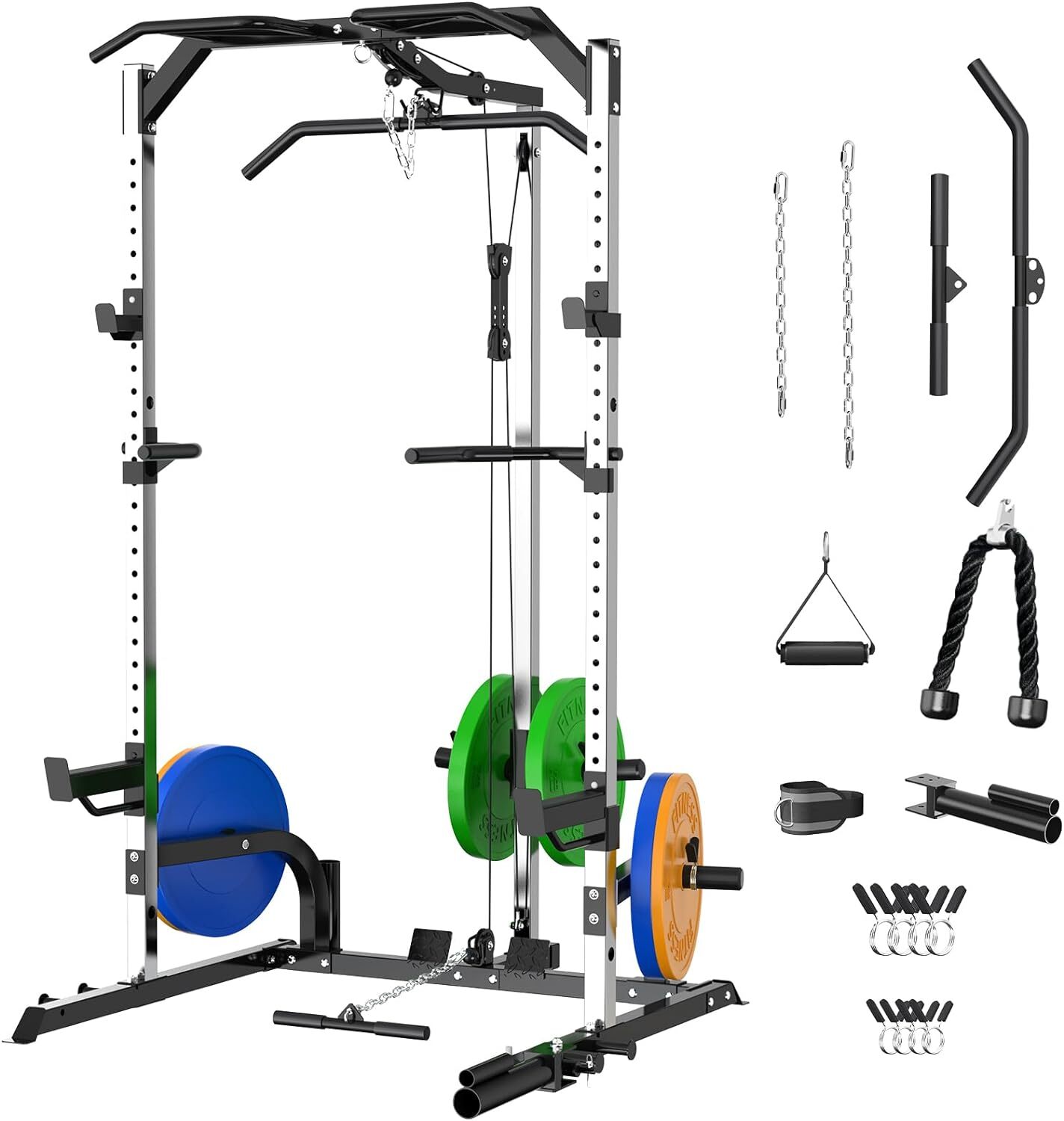 Power Cage Power Rack Squat Rack with LAT Pulldown for Home Gyms Without Weights$289.00New · Last checked Nov 17, 2026
 View on eBay
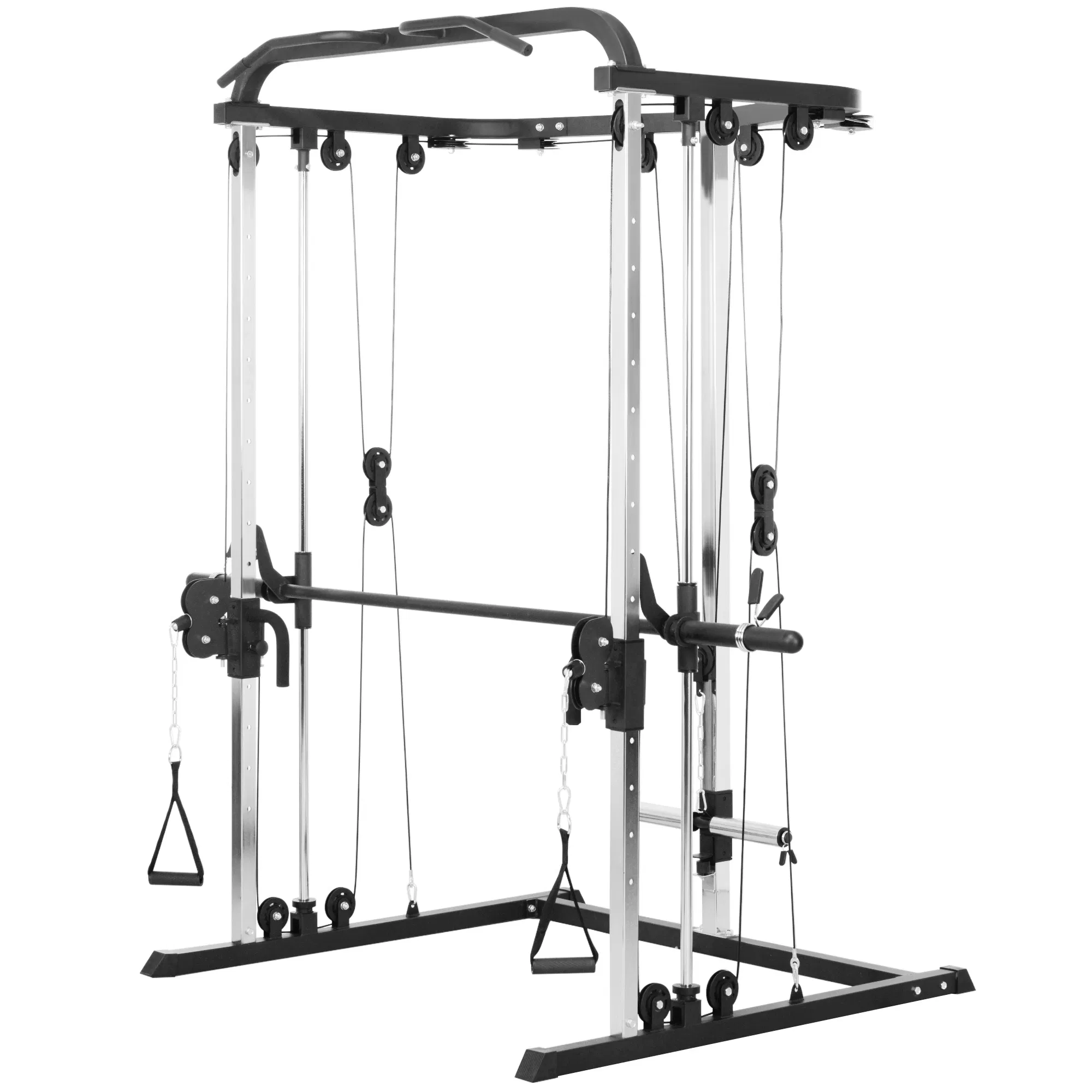 3 In 1 Smith Machine Power Rack with Cable Crossover System, Pull up Station, 16-Level Squat and Barbell Bar$726.99
 View on Mallflare
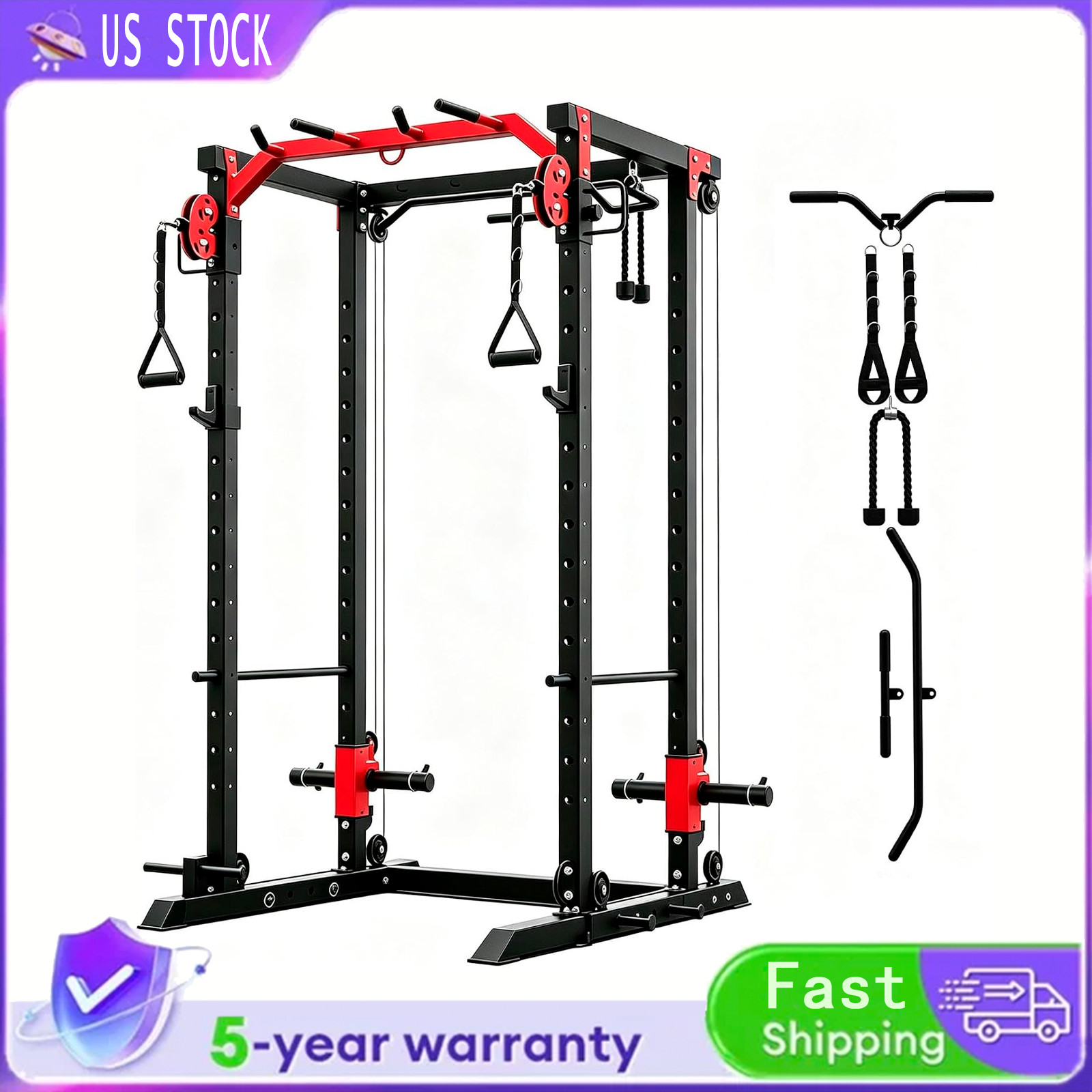 Power Cage with Cable Machine Squat Rack w/ Dual Pulley 2000LBS Heavy Duty Frame$299.99New · Last checked Nov 17, 2026View on eBay
 Multi-functional Power Cage, Home Adjustable Pullup Squat Rack Capacity Comprehensive Fitness Barbell$80.99View on Mallflare
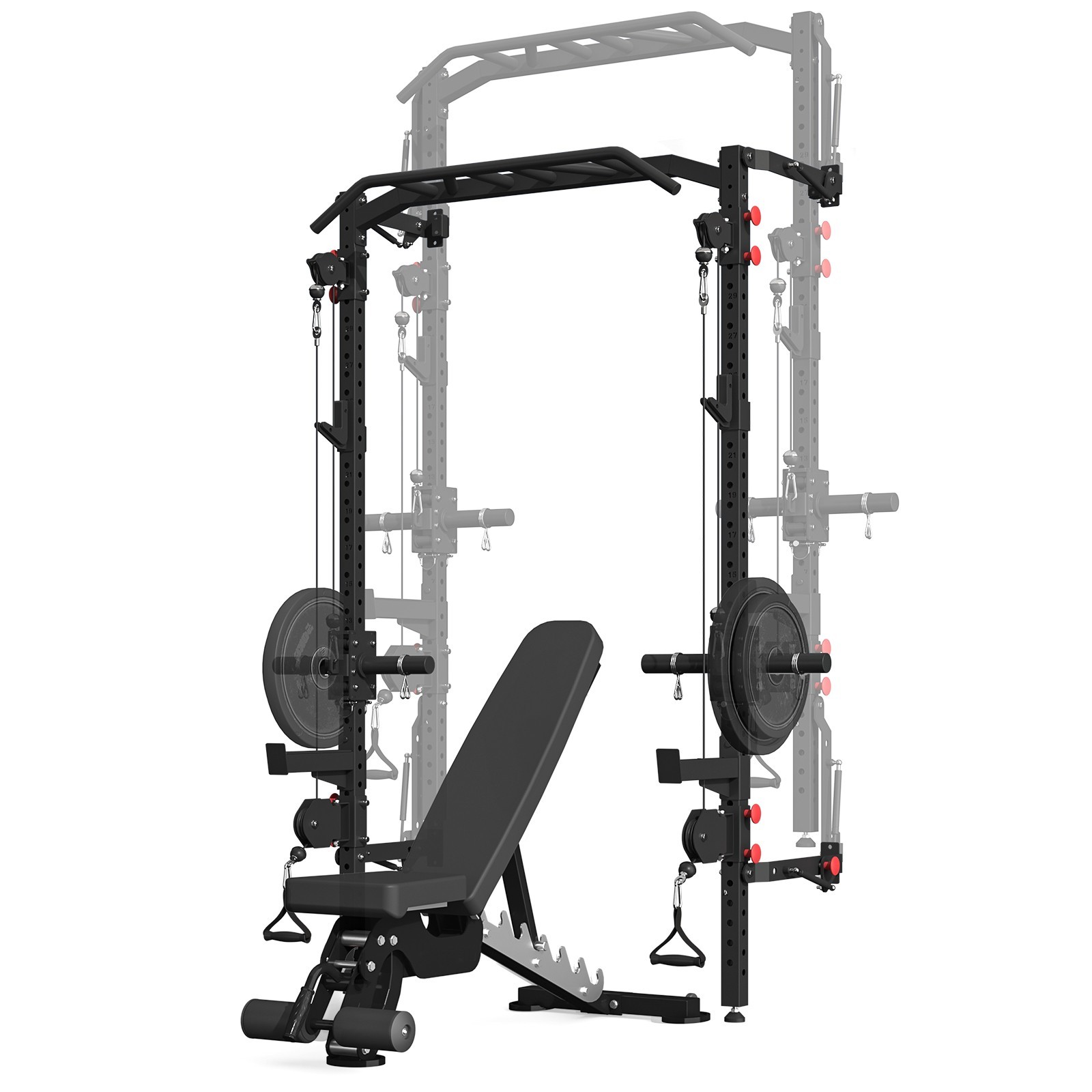 Wall Mounted Folding Squat Rack Power Cage w/Pull Up Bar J Hooks Home Gym$299.99New · Last checked Nov 17, 2026View on eBay
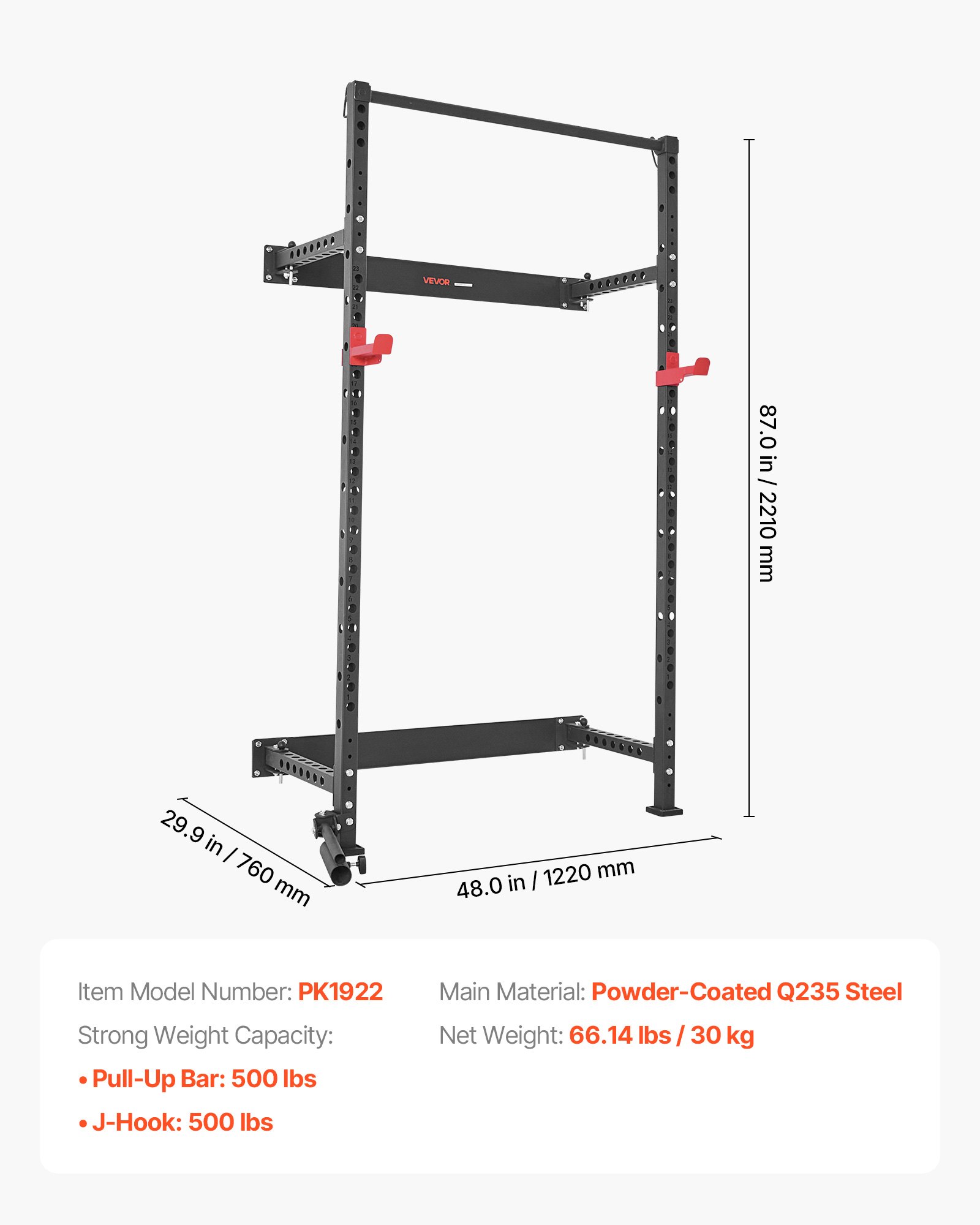 Folding Power Cage, Wall-Mounted Rack Squat Multifunctional Strength Training Workout Equipment With Landmine Holder, Adjustable J-Hooks & Pull-Up Bar For Home Gym, 1000LBS Capacity$188.99View on Mallflare
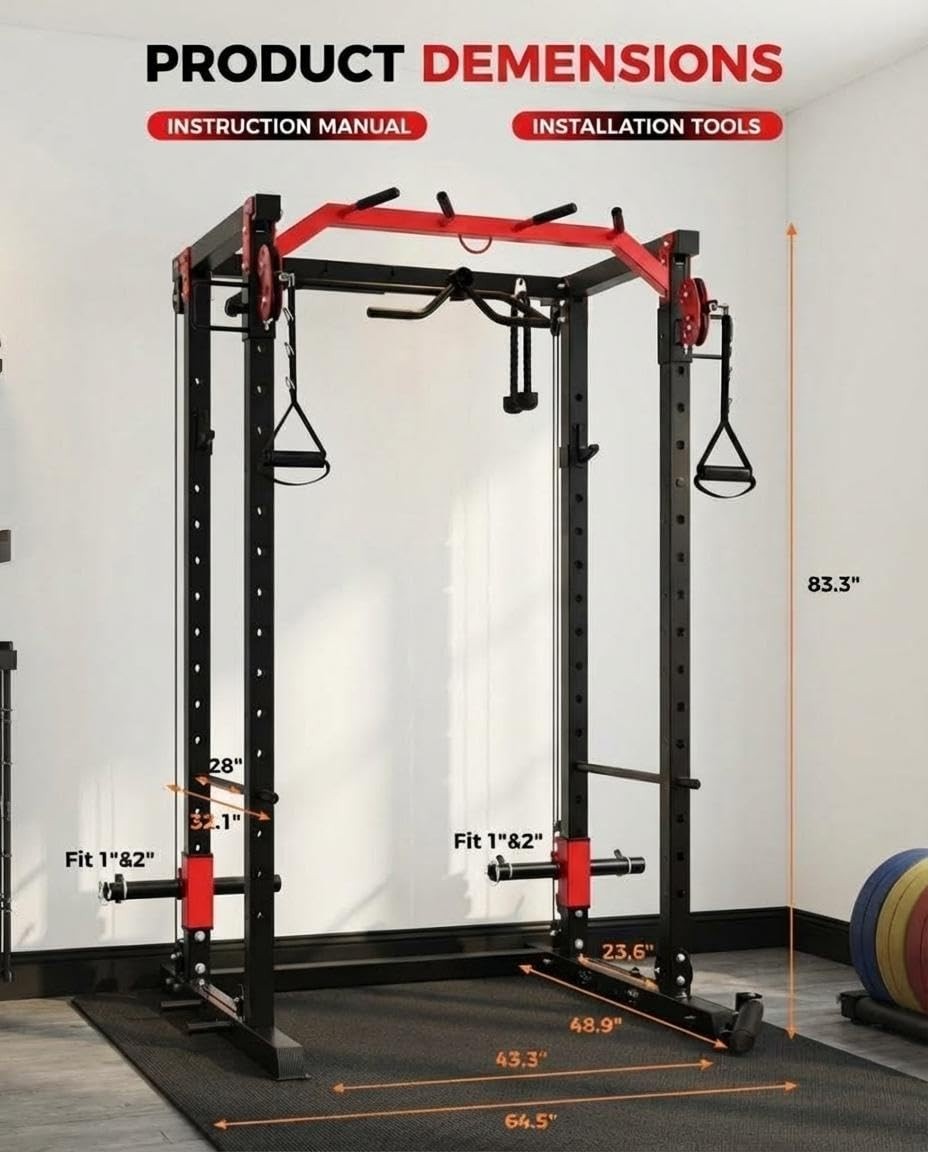 Power Rack Cage 2000 LBS Home Gym J Hooks Pulley System Squat Stand Bench Press$300.96New · Last checked Nov 17, 2026View on eBay
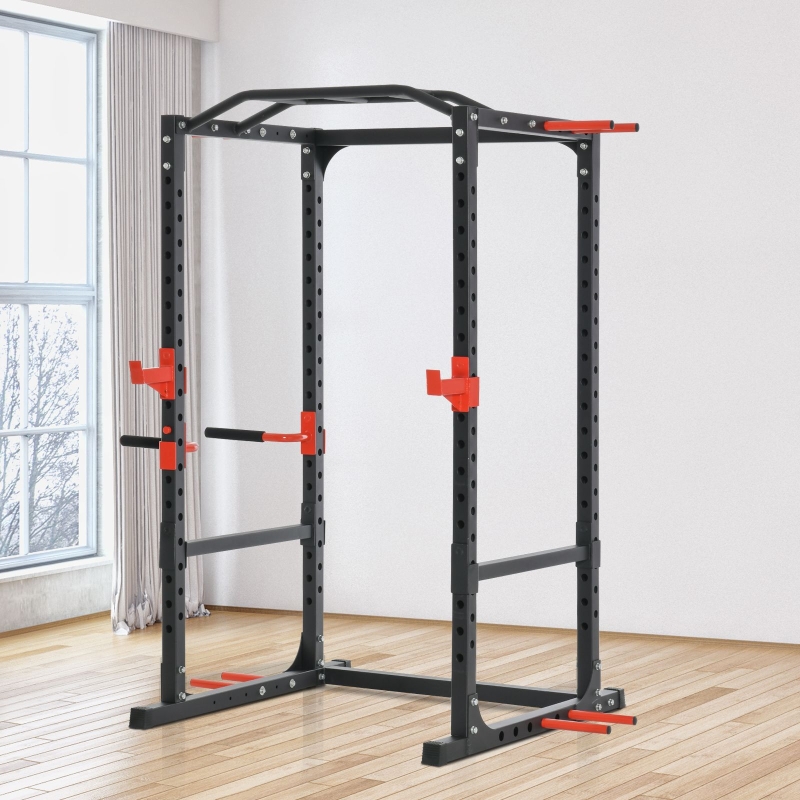 Adjustable Power Tower Dip Station Pull Up Bar Squat Rack Cage At Home Workout Equipment,Multiple Packages Shipped. Please Pay Attention To The Dimensions And Weight In The Details.$293.99View on Mallflare
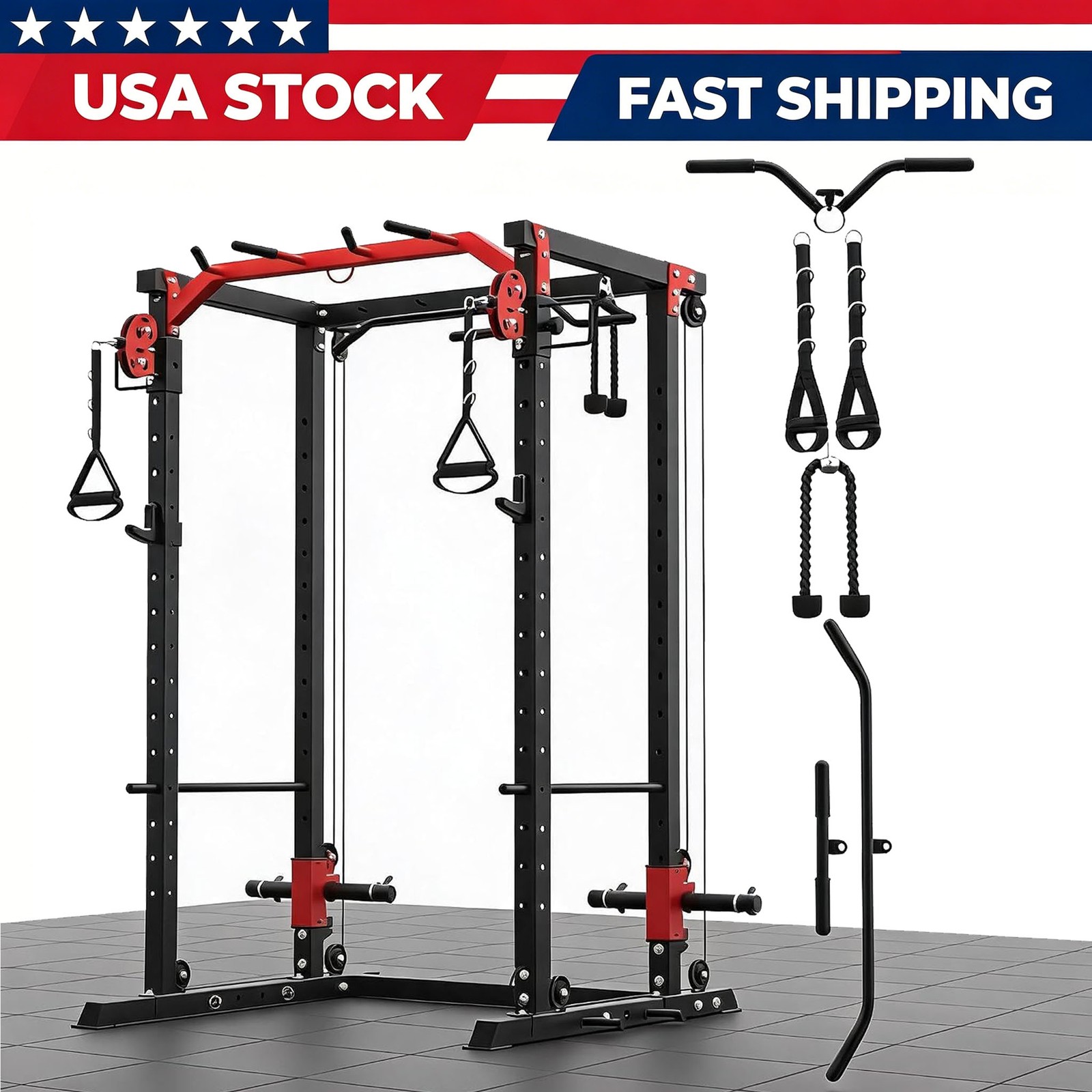 Power Cage with Cable Machine Squat Rack w/ Dual Pulley 2000LBS Heavy Duty Frame$318.39New · Last checked Nov 17, 2026View on eBay
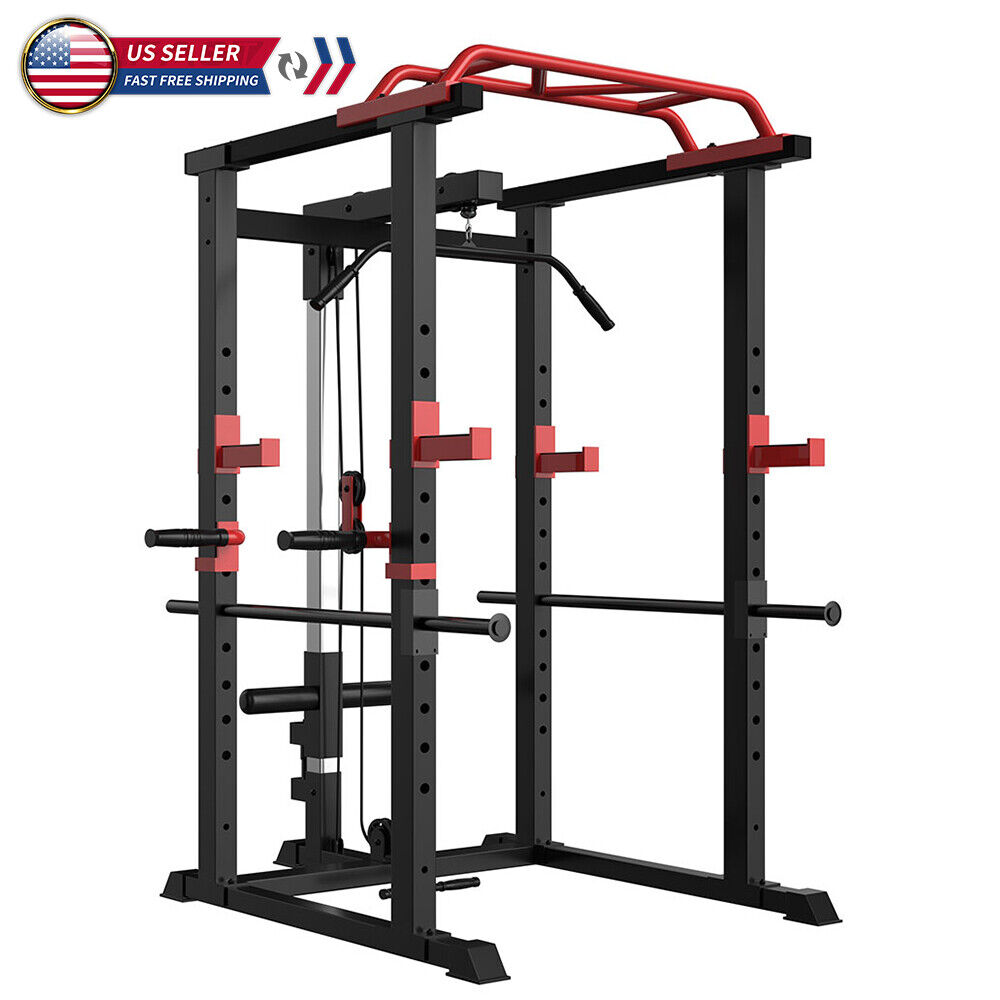 Power Cage Squat Rack Stands Gym Equipment 1000-Pound Capacity Exercise pull-up down$656.99View on Mallflare
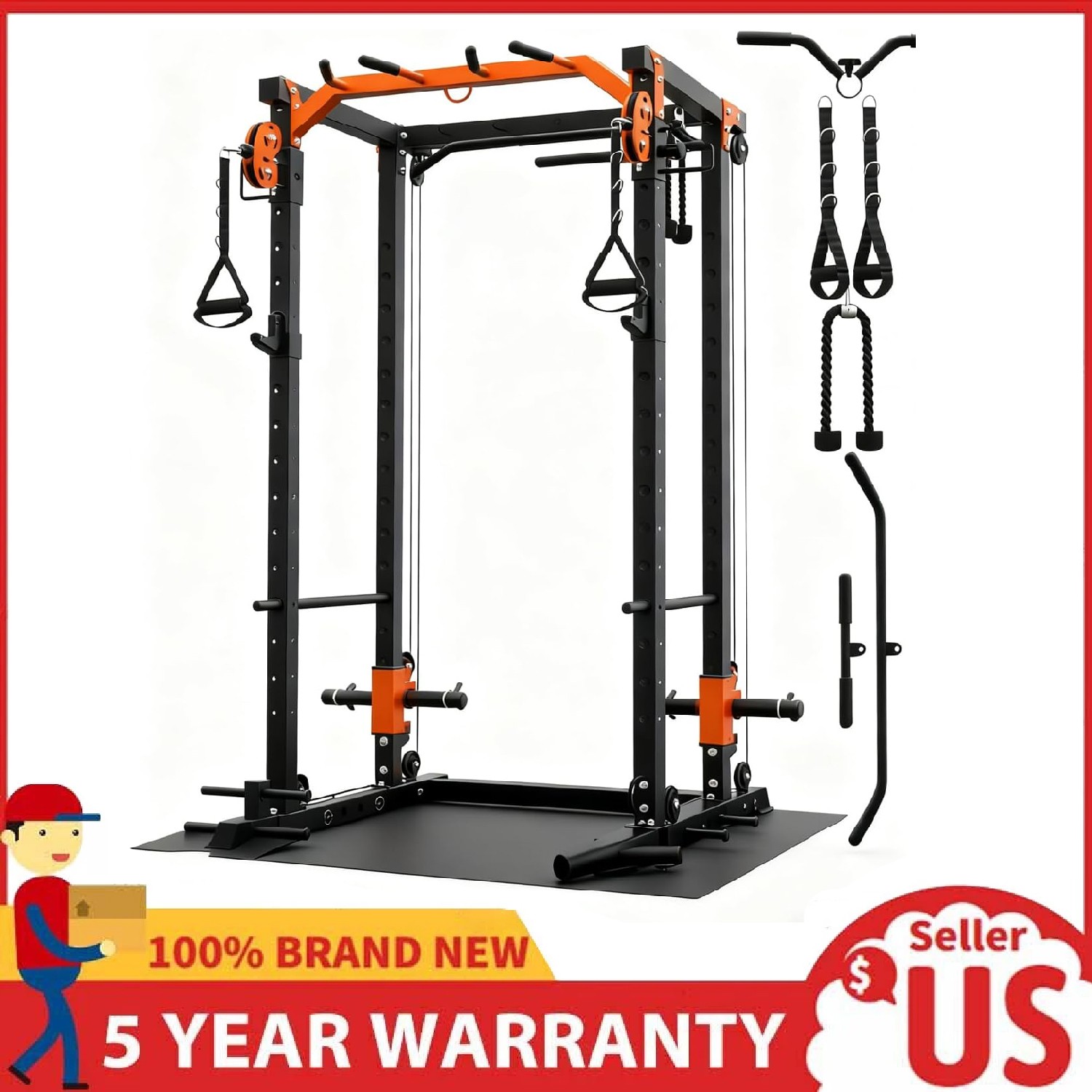 Power Cage 2000LBS Squat Rack for Home Gym Workout with Cable Crossover System$319.49New · Last checked Nov 17, 2026View on eBay
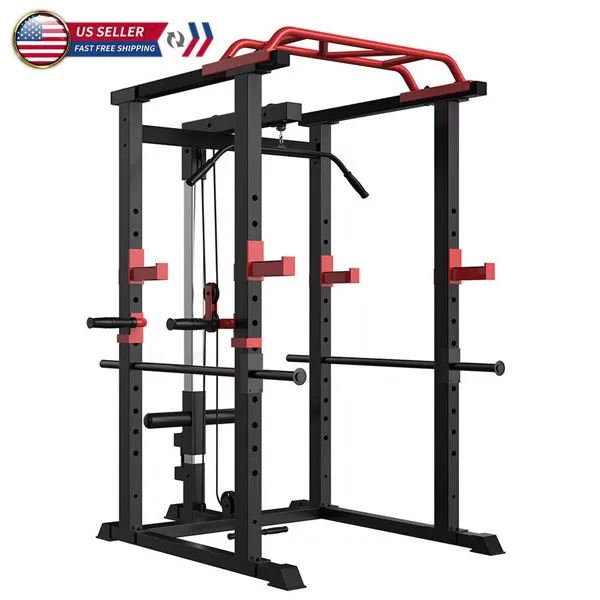 Power Cage Squat Rack Stands Gym Equipment 1000-Pound Capacity Exercise Olympic$691.99View on Mallflare
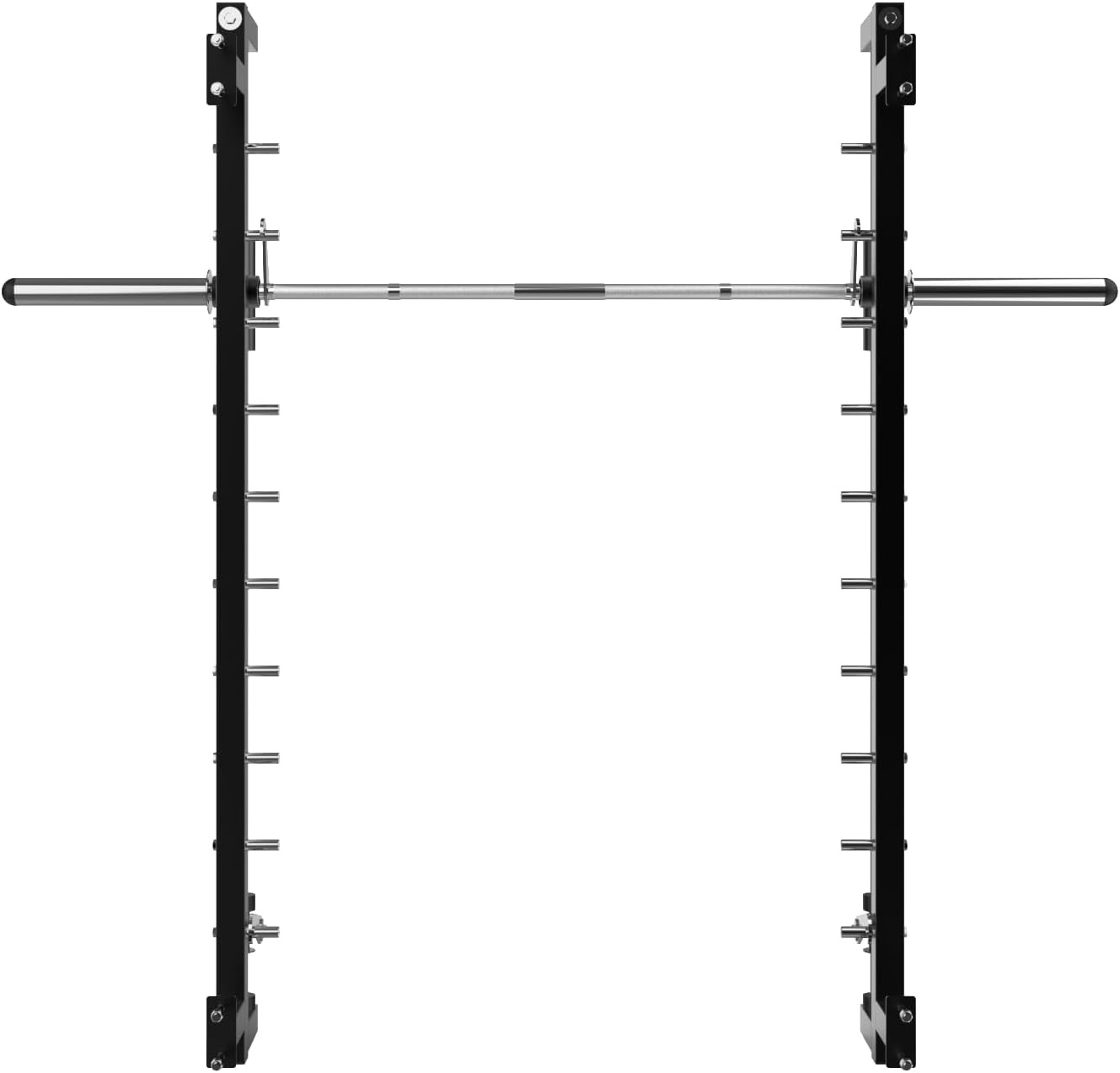 Power Cage with Smith Barbell for Home Gym, Black Power Squat Rack Machine Kit$329.39New · Last checked Nov 17, 2026View on eBay
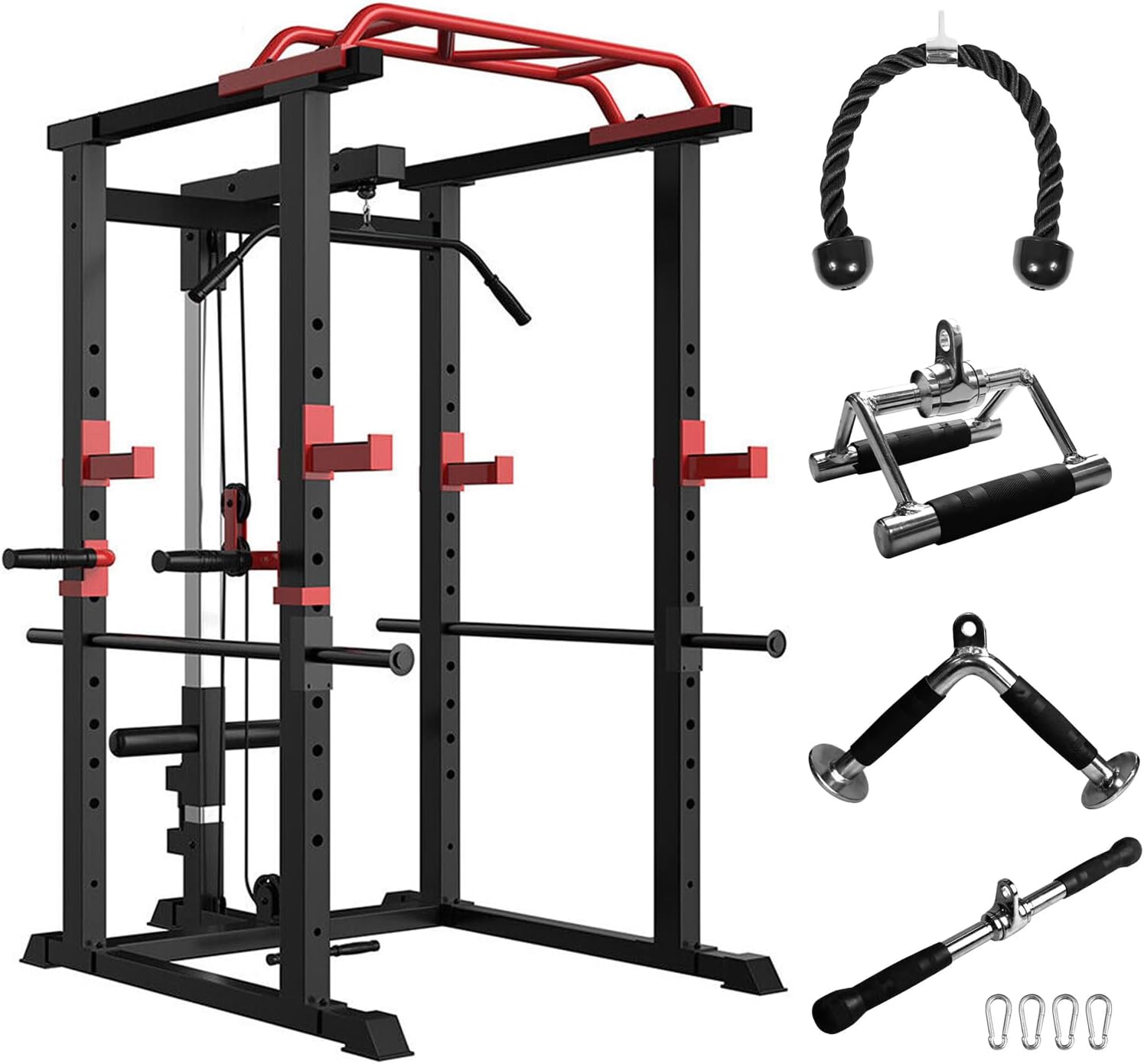 Home Gym sets Multi-functional Power Cage,Home Adjustable Pullup Squat Rack 1000Lbs Capacity Comprehensive Fitness Barbell$815.99View on Mallflare
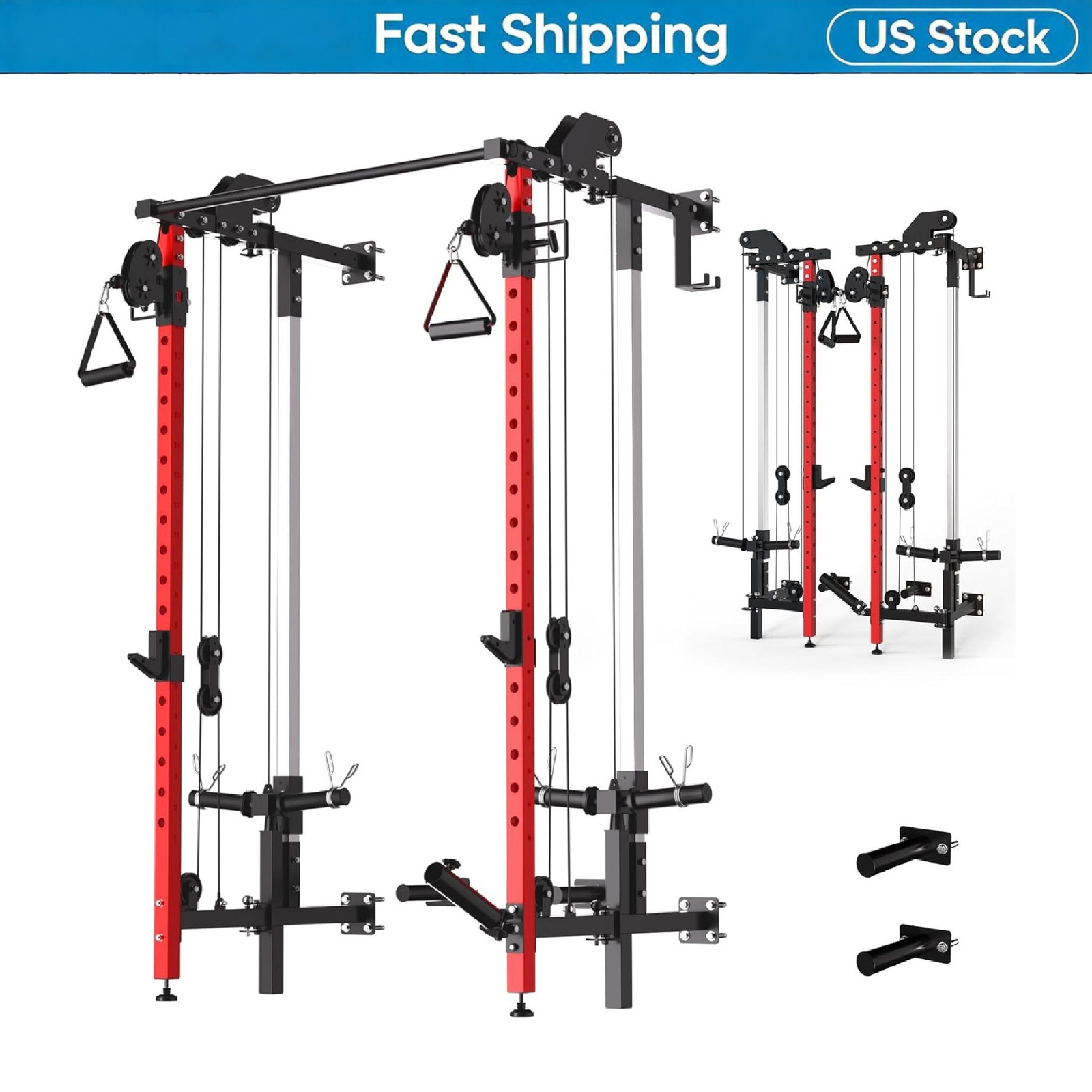 Wall Mounted Folding Squat Rack Power Rack with Pulley Pull Up Bar Home Unit$359.99New · Last checked Nov 17, 2026View on eBay
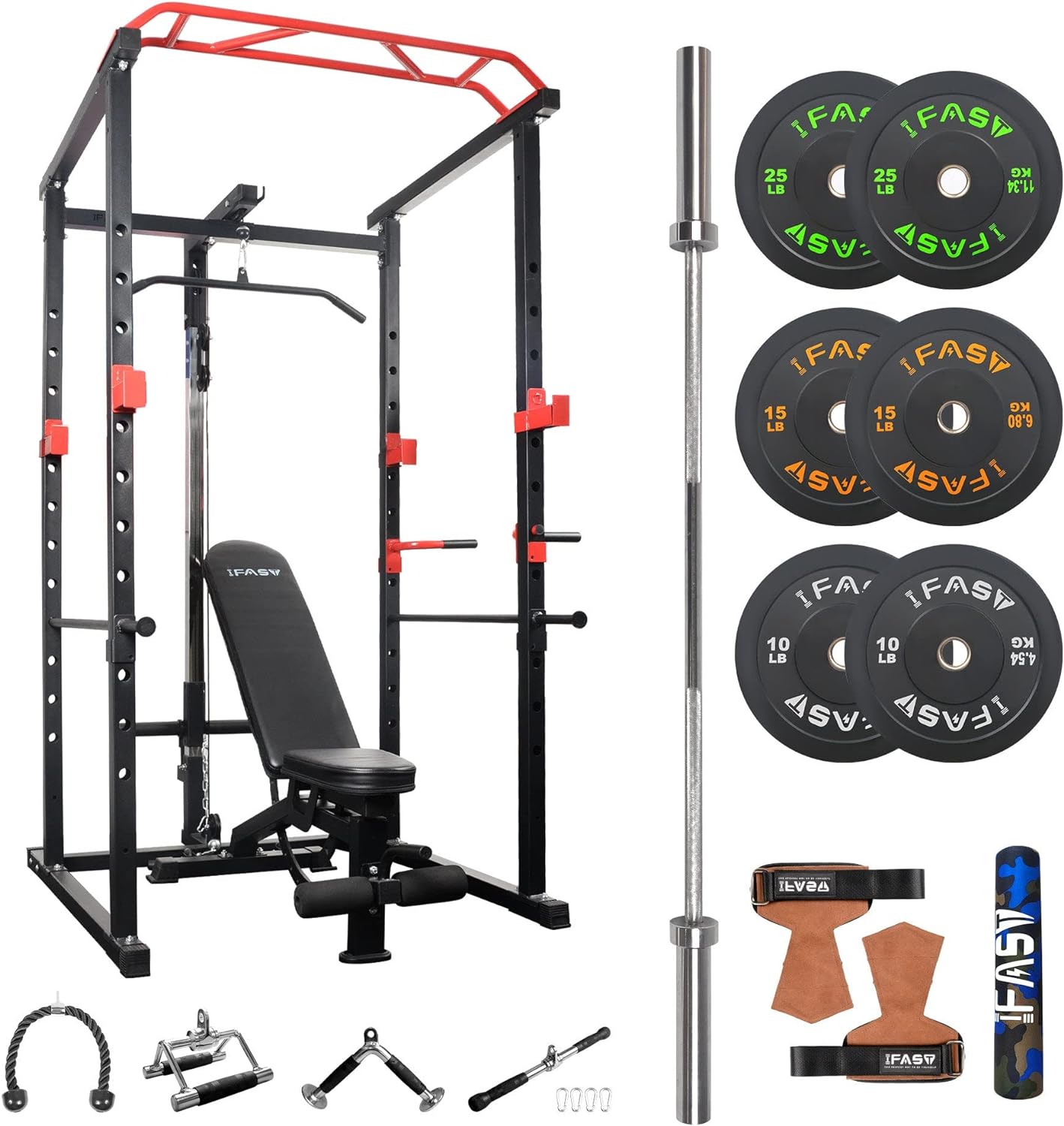 100lb Home Gym sets Multi-functional Power Cage,Home Adjustable Pullup Squat Rack 1000Lbs Capacity Comprehensive Fitness Barbell$1,433.99View on Mallflare
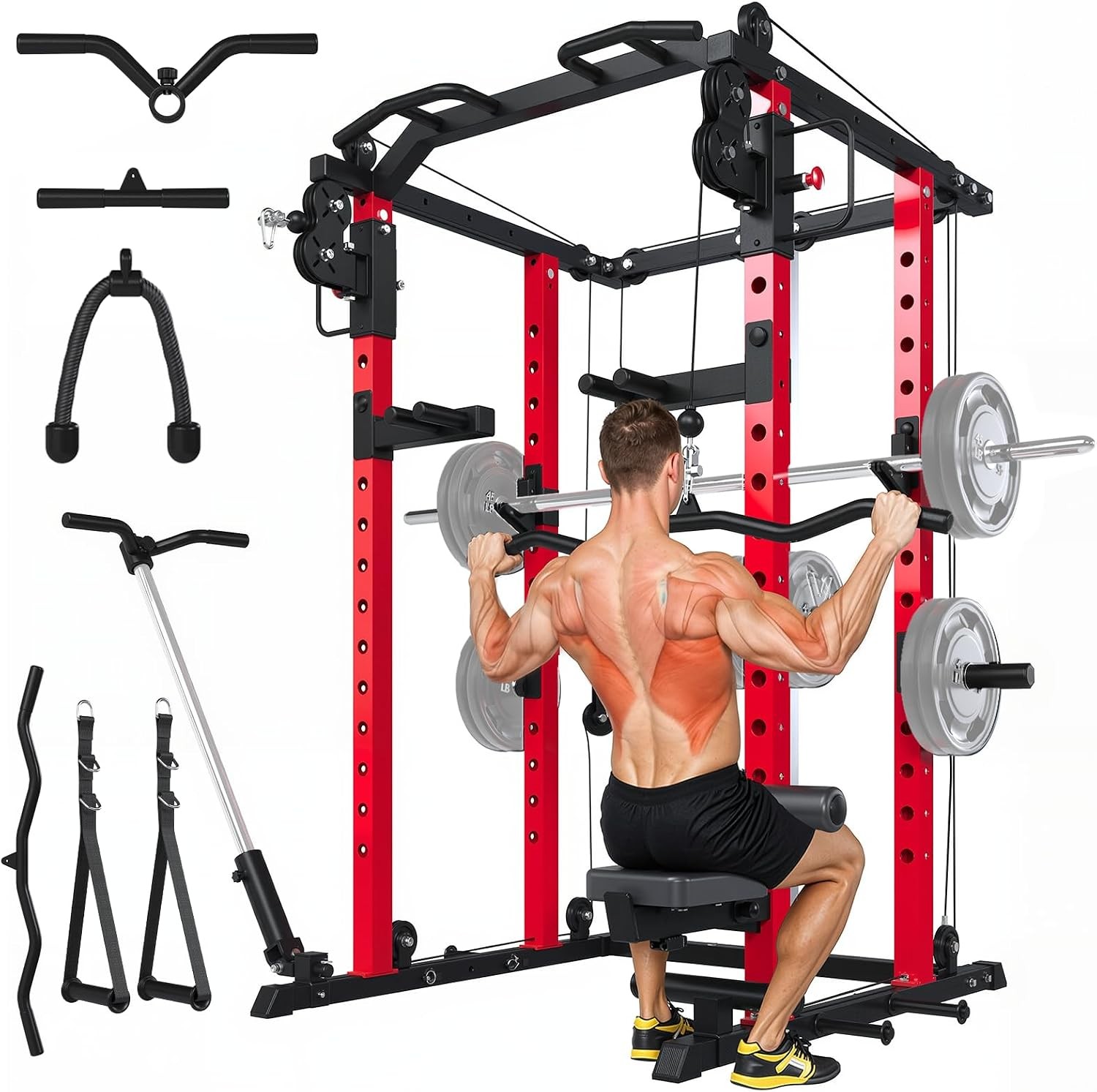 Power Rack and Smith Machine, Multi-Functional Power Cage with LAT Pulldown$379.99New · Last checked Nov 17, 2026View on eBay
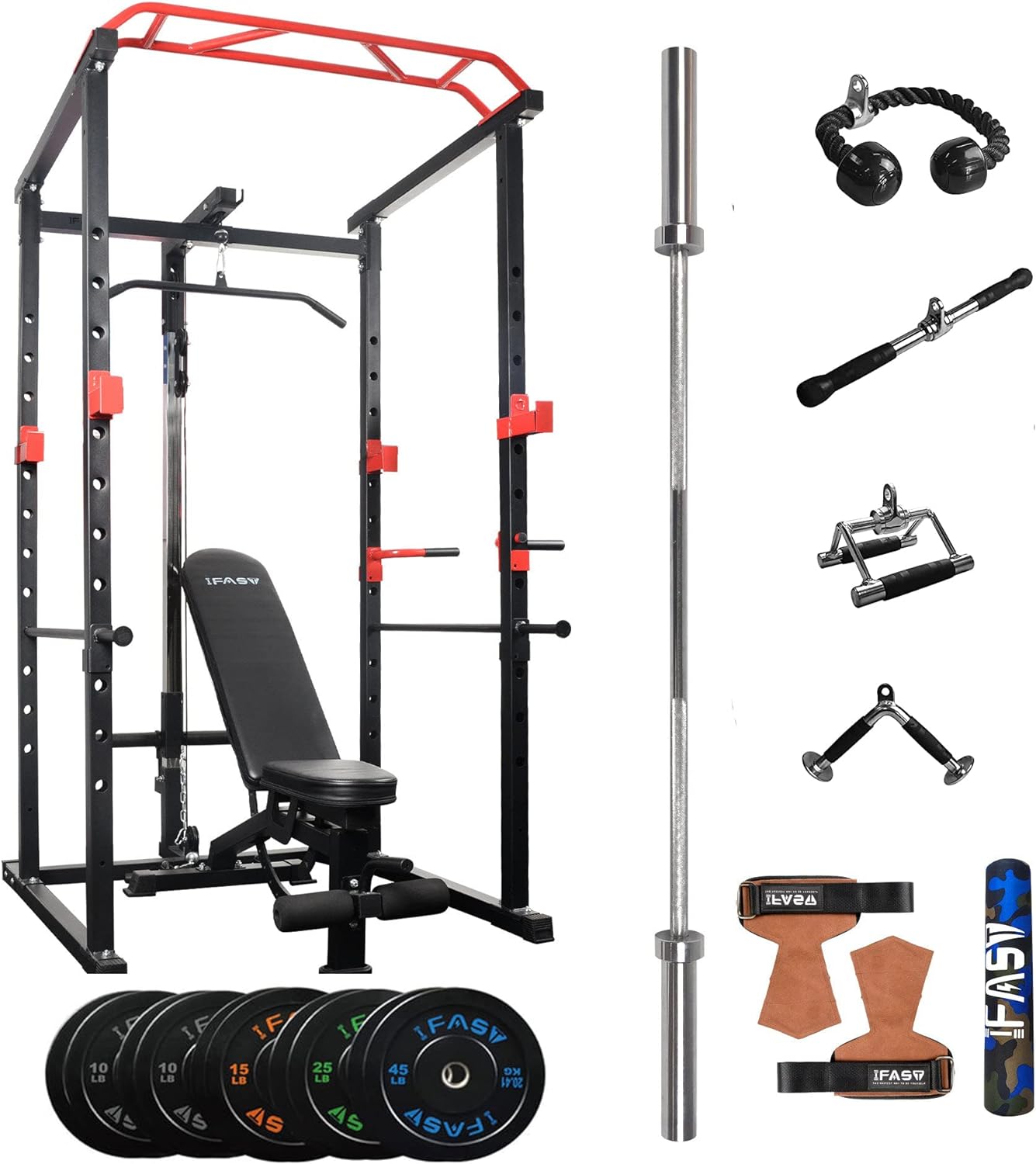 210lb Home Gym sets Multi-functional Power Cage,Home Adjustable Pullup Squat Rack 1000Lbs Capacity Comprehensive Fitness Barbell$1,762.99View on Mallflare
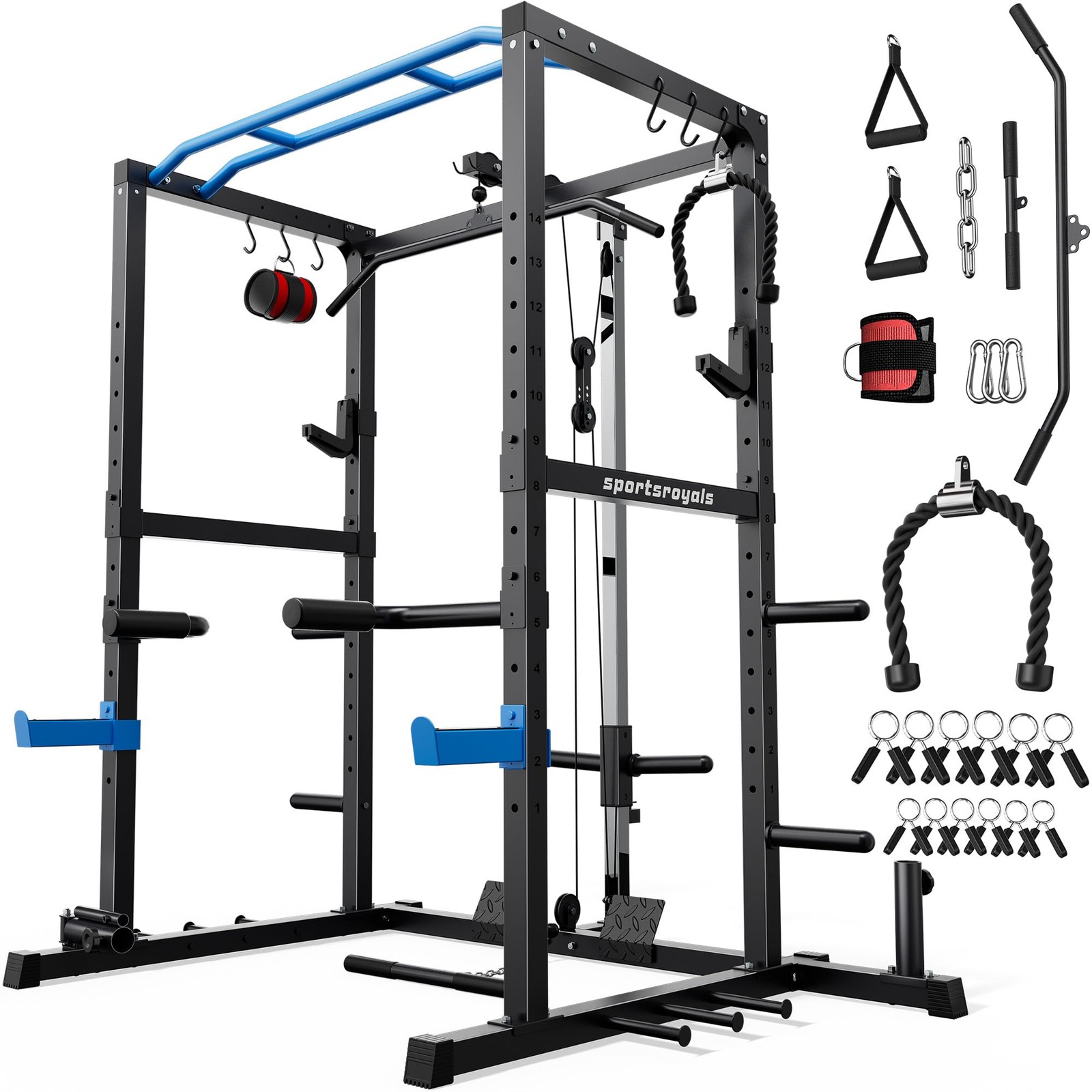 Power Cage Power Rack with J-Hooks Dip Handles Pulley System for Home Gym$379.99New · Last checked Nov 17, 2026View on eBay
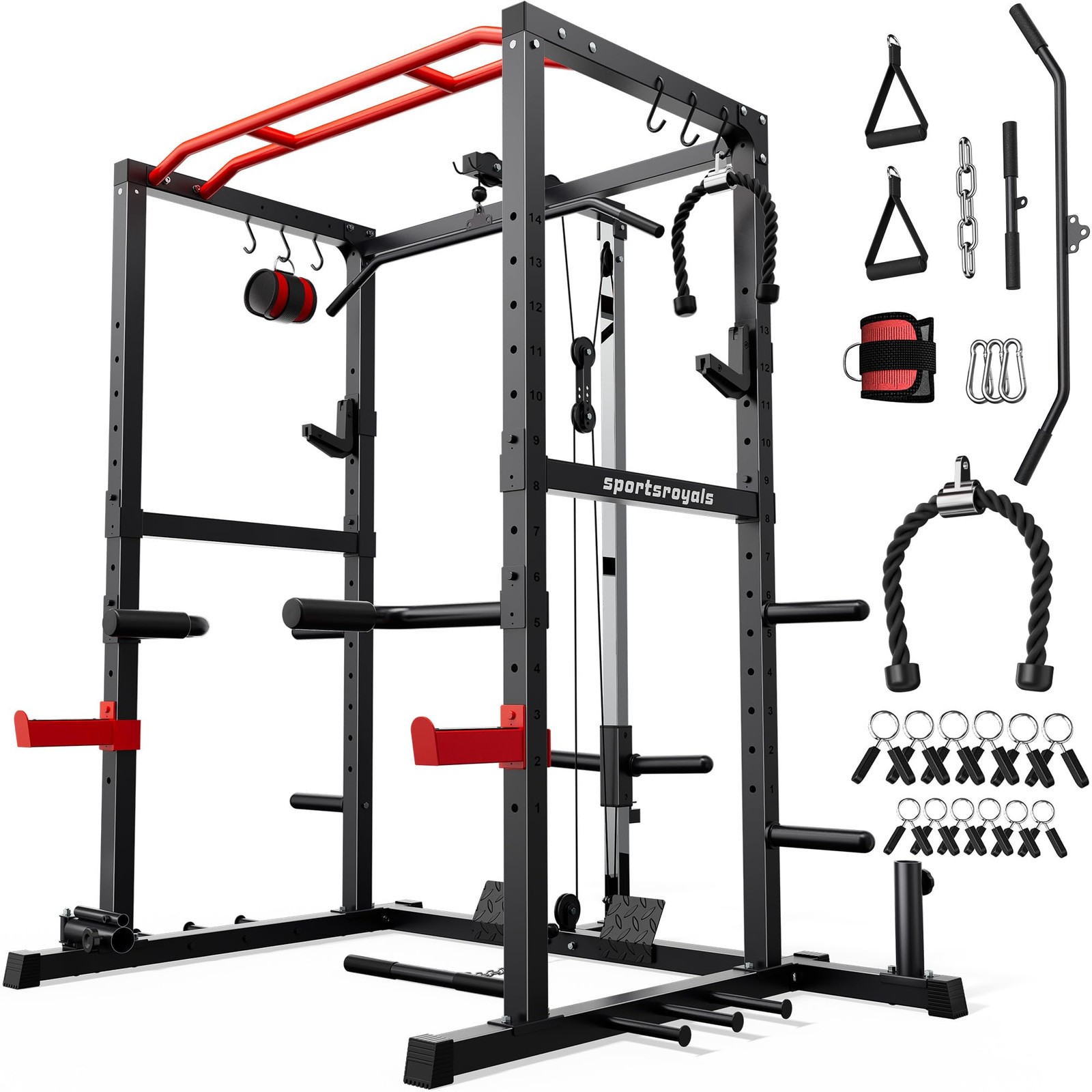 Power Rack with LAT Pulldown, Pulley System, Power Squat Cage Home Gym 3000lb$379.99New · Last checked Nov 17, 2026View on eBay
Highlights
- Upright steel gauge determines rigidity: 11–12 gauge (2.75–3 mm) resists flex under 1000+ lb loads, while 14–16 gauge (1.5–2 mm) racks wobble during heavy squats and cable pulls.
- Dual independent pulley systems with sealed bearings provide smooth, balanced tension and allow unilateral crossover work; single-pulley designs with nylon bushings bind and wear quickly.
- Weight capacity ratings above 1000 lb typically indicate welded or bolted 12-gauge frames with crossmembers; folding wall-mount racks trade capacity for space but often cap at 800–1000 lb.
- Cable ratio (2:1 vs 1:1) changes effective load: a 2:1 ratio halves weight selection and doubles cable travel, which affects maximum resistance for lat pulldowns and rows.
Best use cases
- Best fit: a dual-pulley 12-gauge power cage (e.g., 3-in-1 Smith machine style with cable crossover) for lifters who need squats, bench, and cable accessories in one footprint—skip folding racks if you train heavy.
- Best fit: a wall-mounted folding rack with integrated pulley for garage gyms with limited floor space and ceilings above 90 inches—avoid if you need a stable platform for heavy rack pulls.
- Wrong fit: a single-pulley 14-gauge budget cage for anyone planning progressive overload on lat pulldowns or cable rows—the pulley will bind and the frame will flex; choose a plate-loaded or selectorized cable machine instead.
- Best fit: a rack with landmine holder and J-hooks for barbell and cable hybrid training in a dedicated home gym corner with at least 8 ft ceiling and 4 ft clearance on each side.
Buying tips
- Match upright gauge to your lifting: 11–12 gauge for over 500 lb squats and heavy cable rows; 14 gauge for beginner-to-intermediate loads under 300 lb.
- Measure ceiling height before choosing: standard power cages need 80–90 inches; folding wall racks need 90+ inches for pull-up clearance; Smith machine combos often exceed 84 inches.
- Check pulley type: sealed ball-bearing pulleys with 2:1 cable ratio give smoother travel and higher effective resistance than nylon-bushing single pulleys.
- Verify hole spacing: 1-inch Westside spacing on bench-press zone and 2-inch elsewhere supports precise J-hook and safety-arm placement; 3-inch spacing limits setup.
Specs
| Steel Gauge | 11–16 gauge (2–3 mm) |
|---|---|
| Cable Ratio | 1:1 or 2:1 pulley |
| Weight Capacity | 600–2000 lb |
| Rack Type | Freestanding / Wall-mount / Folding |
Related searches
What to check before buying
- Floor space and ceiling: confirm at least 48 inches width and 90 inches height for cage plus cable arms; folding racks need 24 inches depth when folded.
- Floor protection: rubber horse-stall mats or a platform are required for dropped weights; cable systems add lateral pull, so anchor wall-mount racks into studs or concrete.
- Bar and plate compatibility: standard 2x2 or 3x3 inch uprights accept most J-hooks; check tube diameter for 1-inch or 2-inch weight horns if storing plates on the rack.
- Electrical and clearance: cable crossover models with plate-loaded carriages need side clearance for loading; wall-mount racks need stud spacing at 16 or 24 inches on center.
FAQ
Data sources: eBay / Amazon listings and product attribute feeds Data updated Nov 17, 2026.
Some links on this page are affiliate links. If you buy after clicking one, we may earn a commission at no extra cost to you. This does not change which products appear here or their order. Affiliate disclosure.