Photos from current listings. Actual item, color, and included accessories may vary.
Squat Rack With Cable Buying Guide
A squat rack with cable integrates a barbell rack with a pulley system for lat pulldowns, rows, and accessory work, replacing two separate machines. The critical trade-off is between steel gauge and pulley quality versus footprint and cost: thin 14–16 gauge tubing flexes under heavy squats, while nylon pulleys and single-point attachments wear quickly and bind. Choose a rack with at least 11-gauge steel uprights, dual independent pulleys with sealed bearings, and a rated capacity of 1000 lb or more; avoid budget cages that pair a 600 lb rack rating with plastic pulleys and plate-loaded only resistance.

At a glance
- Category
- Power Racks, Benches & Platforms
- Data updated
- Nov 18, 2026
Current offers
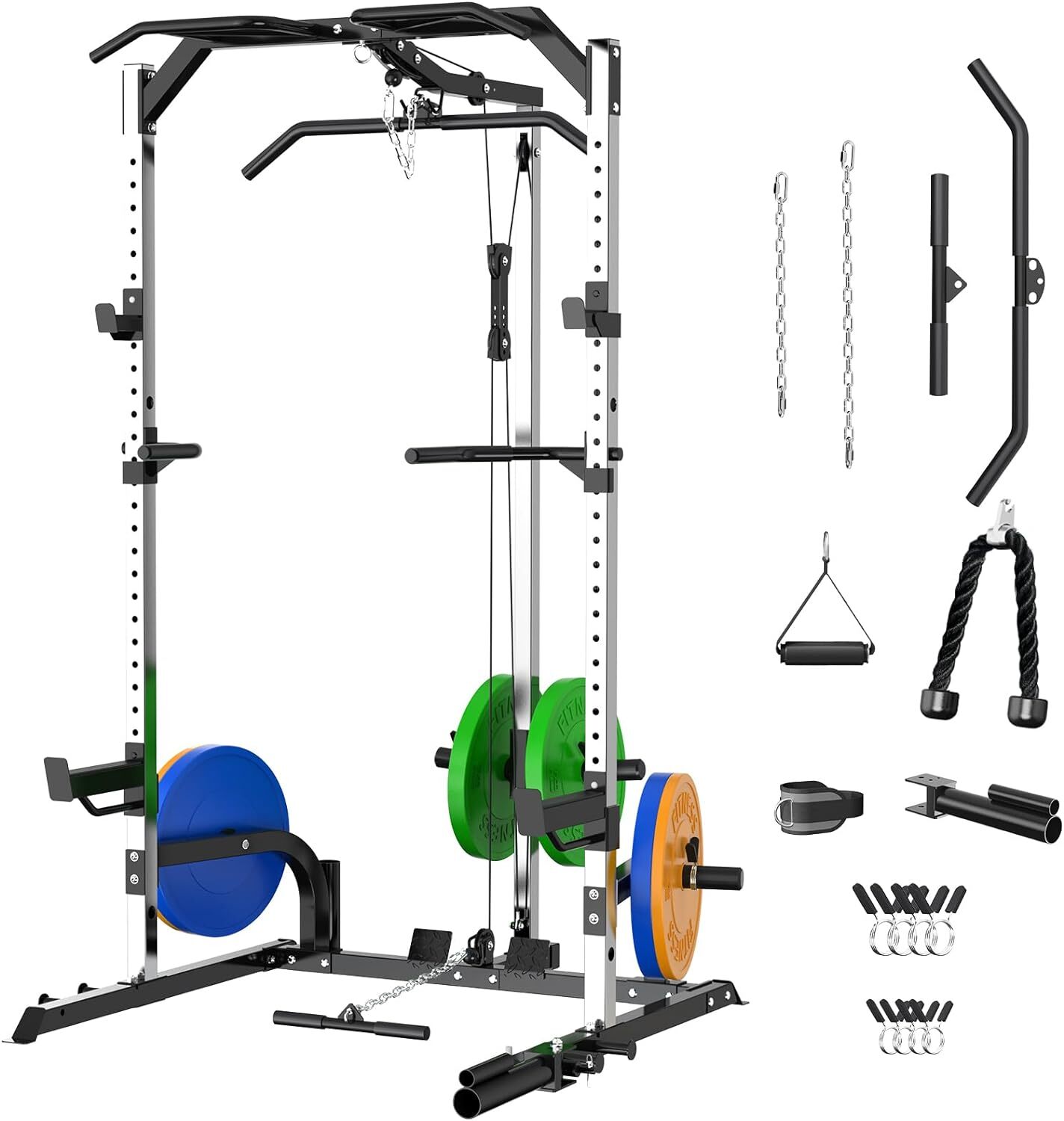 Power Cage Power Rack Squat Rack with LAT Pulldown for Home Gyms Without Weights$289.00New · Last checked Nov 17, 2026
 View on eBay
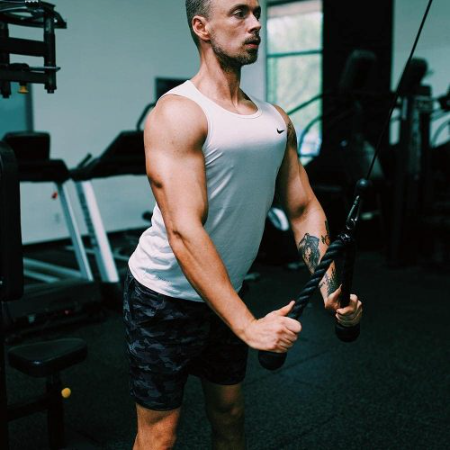 Multi-functional Power Cage, Home Adjustable Pullup Squat Rack Capacity Comprehensive Fitness Barbell$80.99
 View on Mallflare
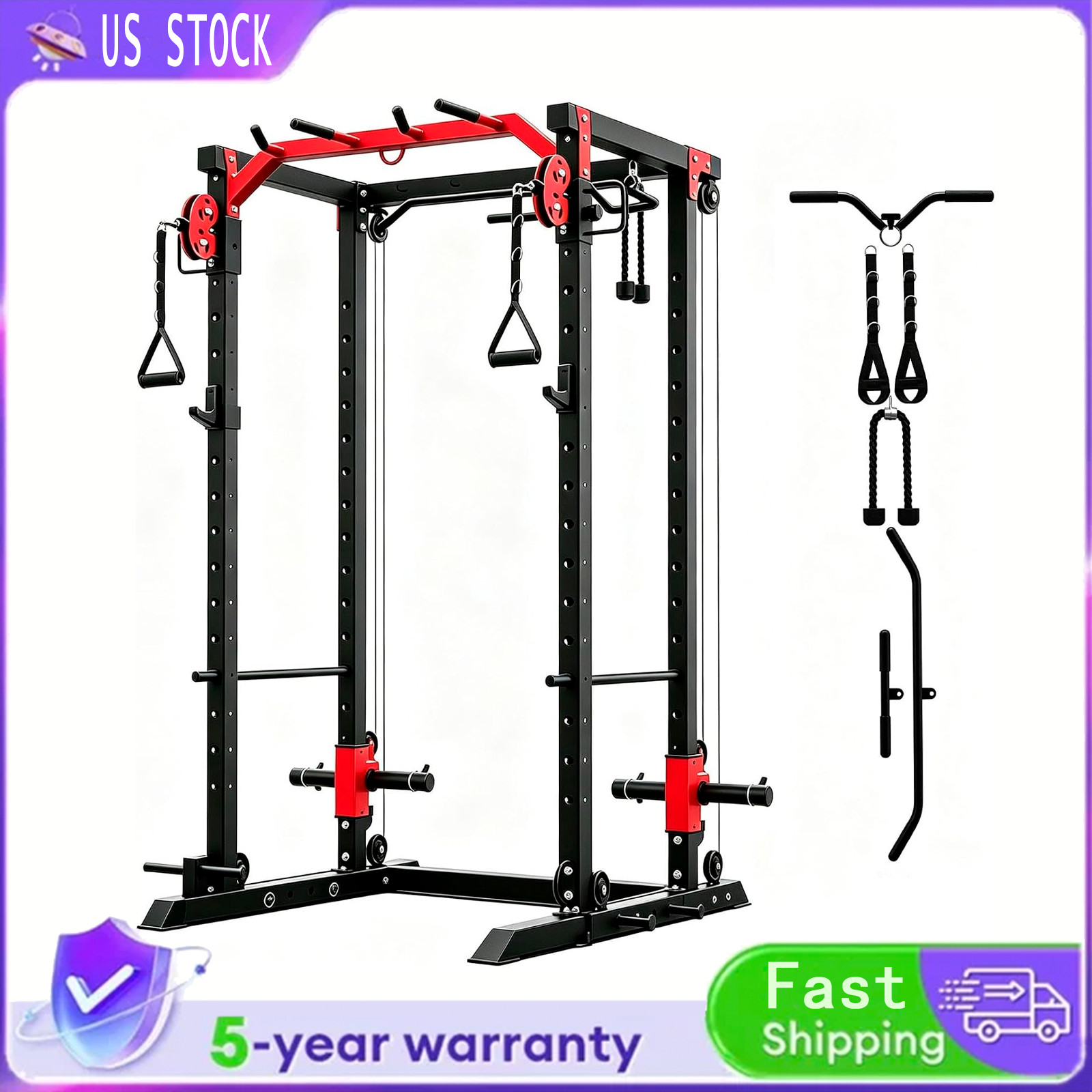 Power Cage with Cable Machine Squat Rack w/ Dual Pulley 2000LBS Heavy Duty Frame$299.99New · Last checked Nov 17, 2026View on eBay
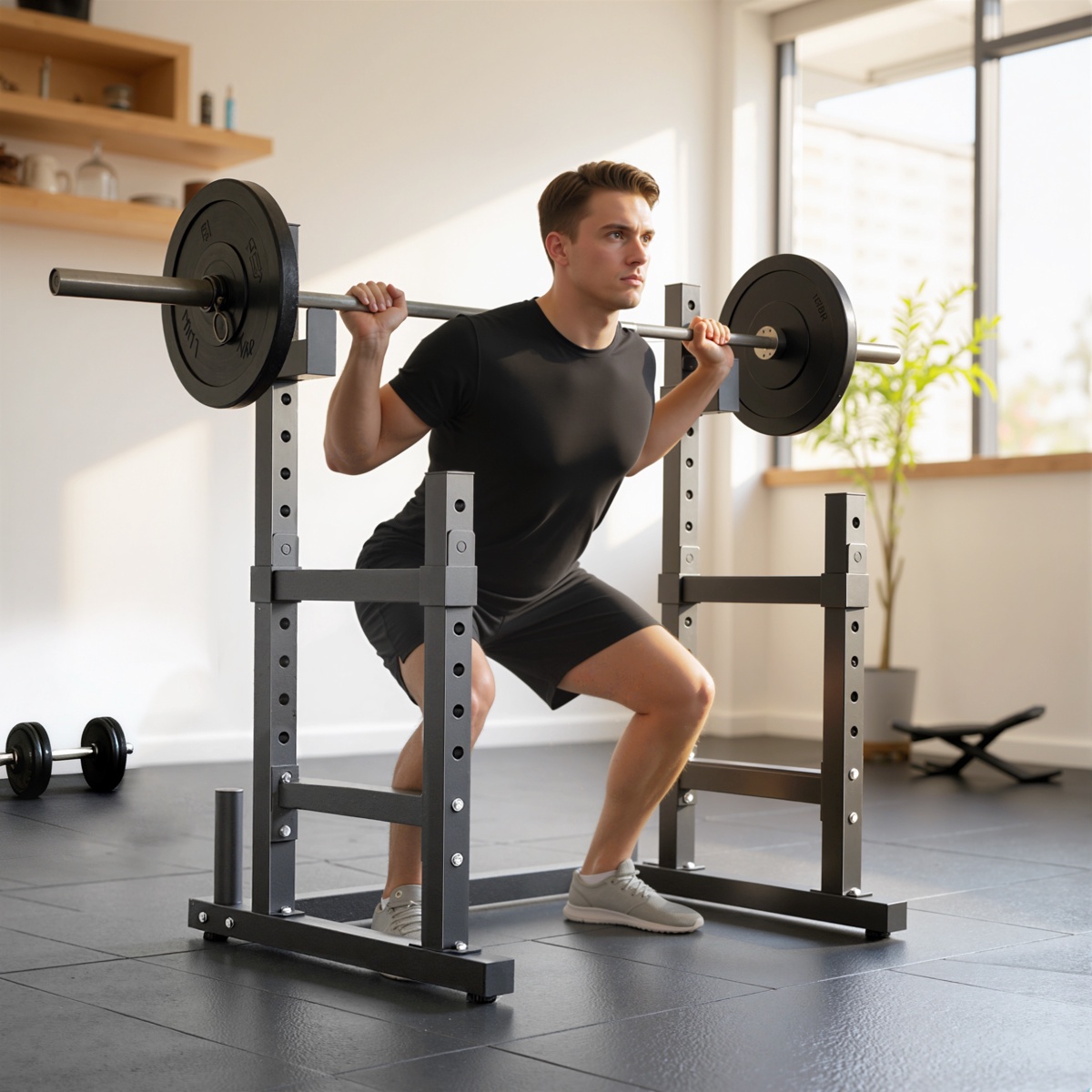 Adjustable Squat Rack, 660lbs Multi-Functional Bench Press for Weight Lifting Home Gym Strength Training, Black$126.99View on Mallflare
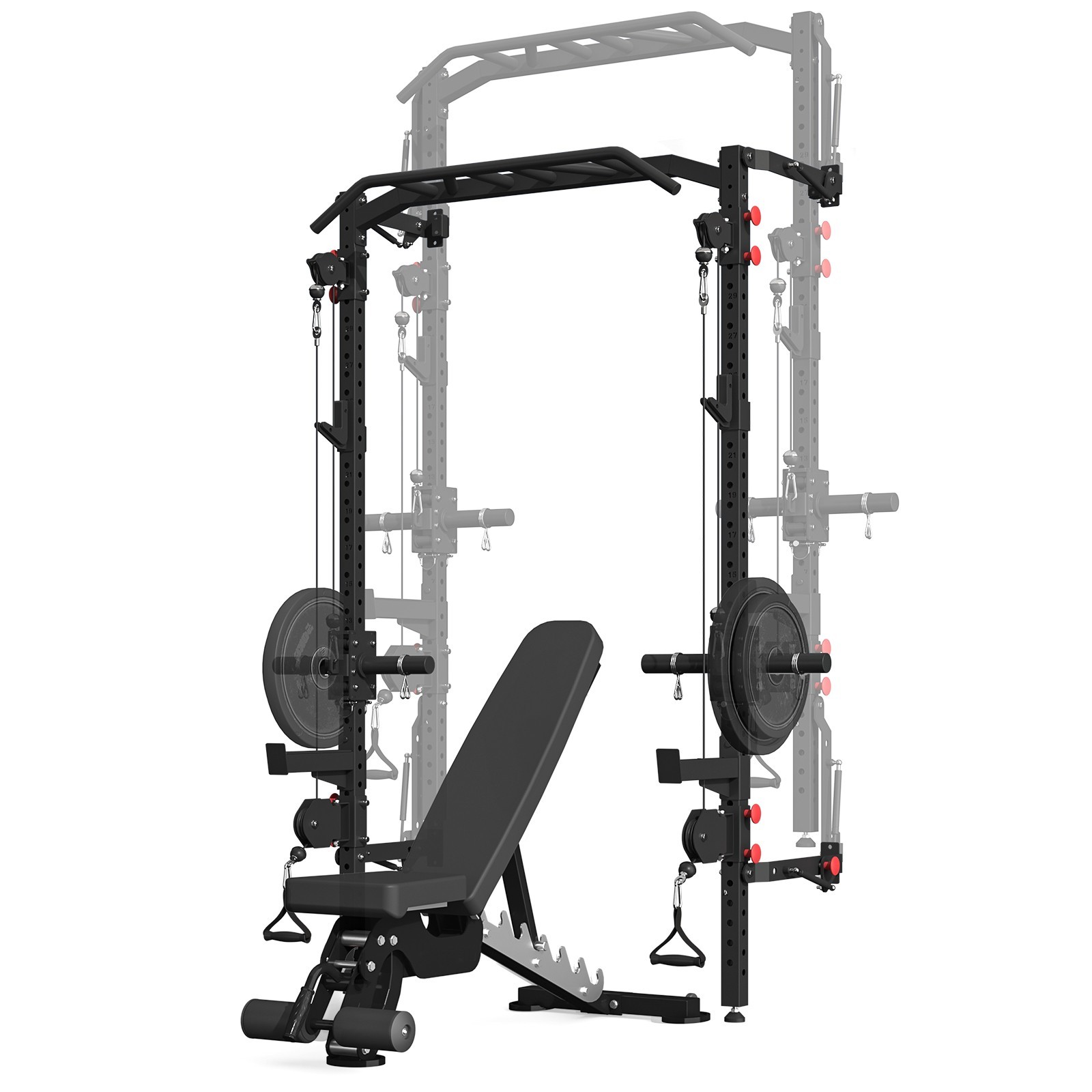 Wall Mounted Folding Squat Rack Power Cage w/Pull Up Bar J Hooks Home Gym$299.99New · Last checked Nov 17, 2026View on eBay
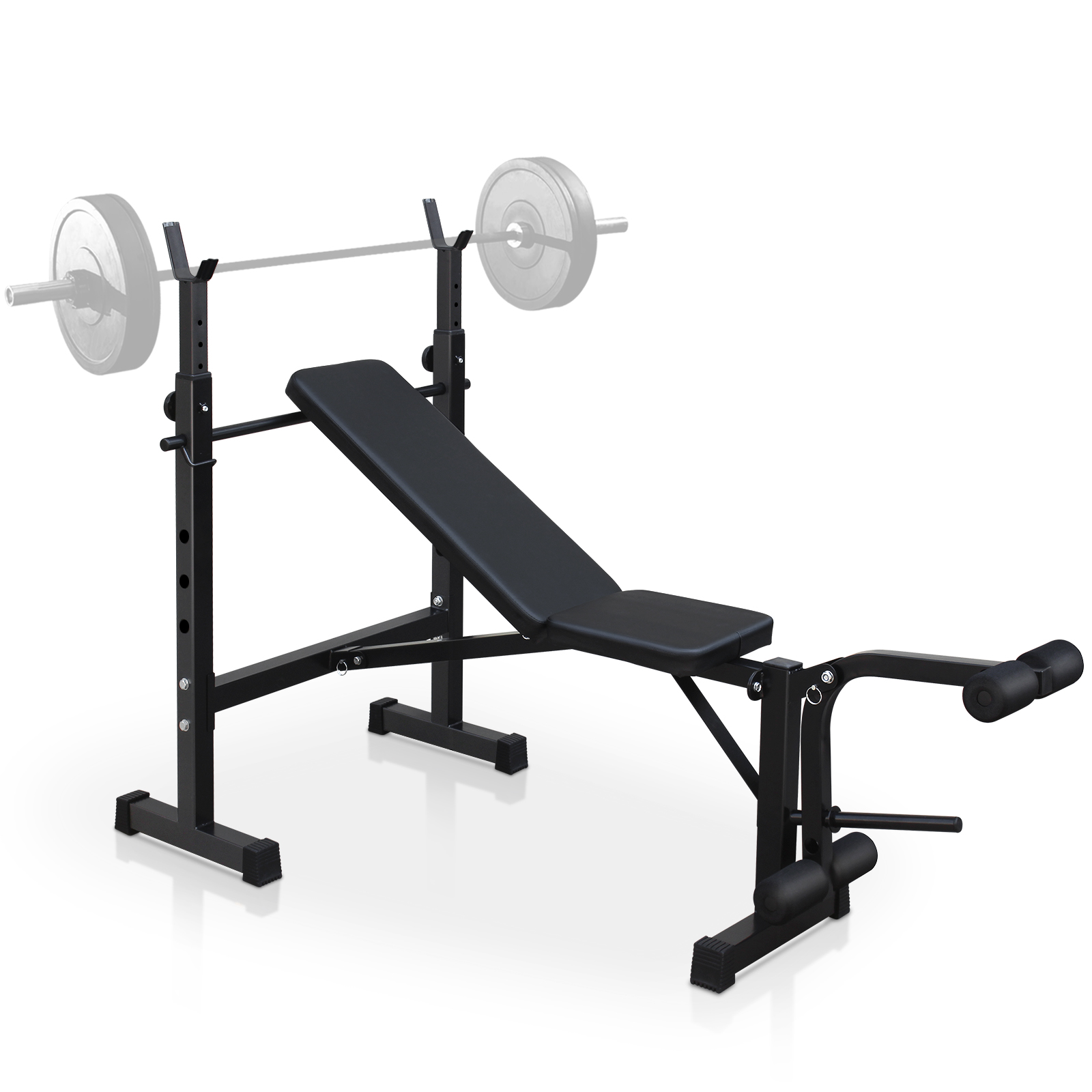 Olympic Weight Bench, Press Set With Squat Rack And For Home Gym Full-Body Workout$132.99View on Mallflare
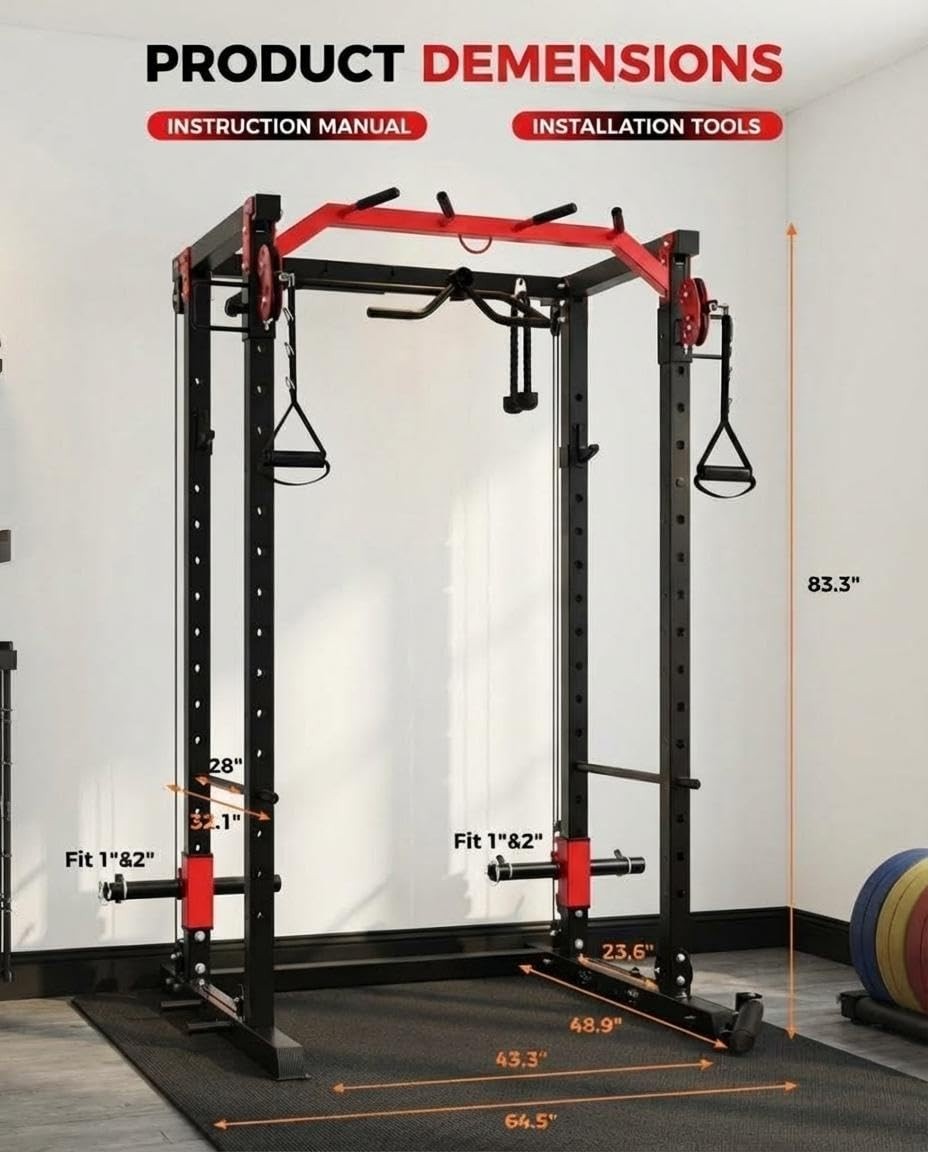 Power Rack Cage 2000 LBS Home Gym J Hooks Pulley System Squat Stand Bench Press$300.96New · Last checked Nov 17, 2026View on eBay
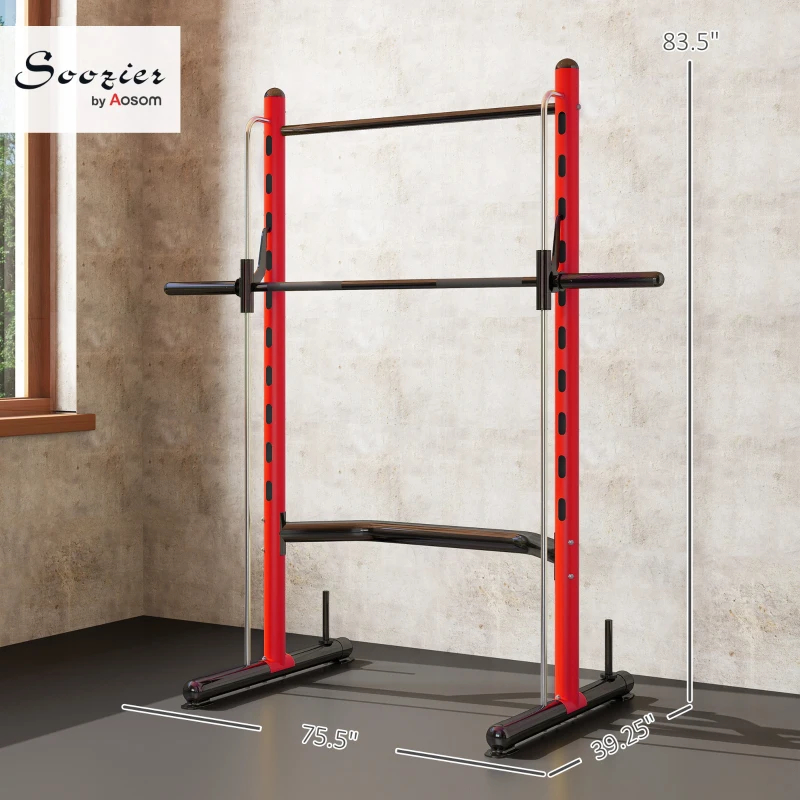 Soozier Squat Rack With Pull Up Bar And Barbell Bar Adjustable Bench Press Multi-Function Weight Lifting Half Red$180.99View on Mallflare
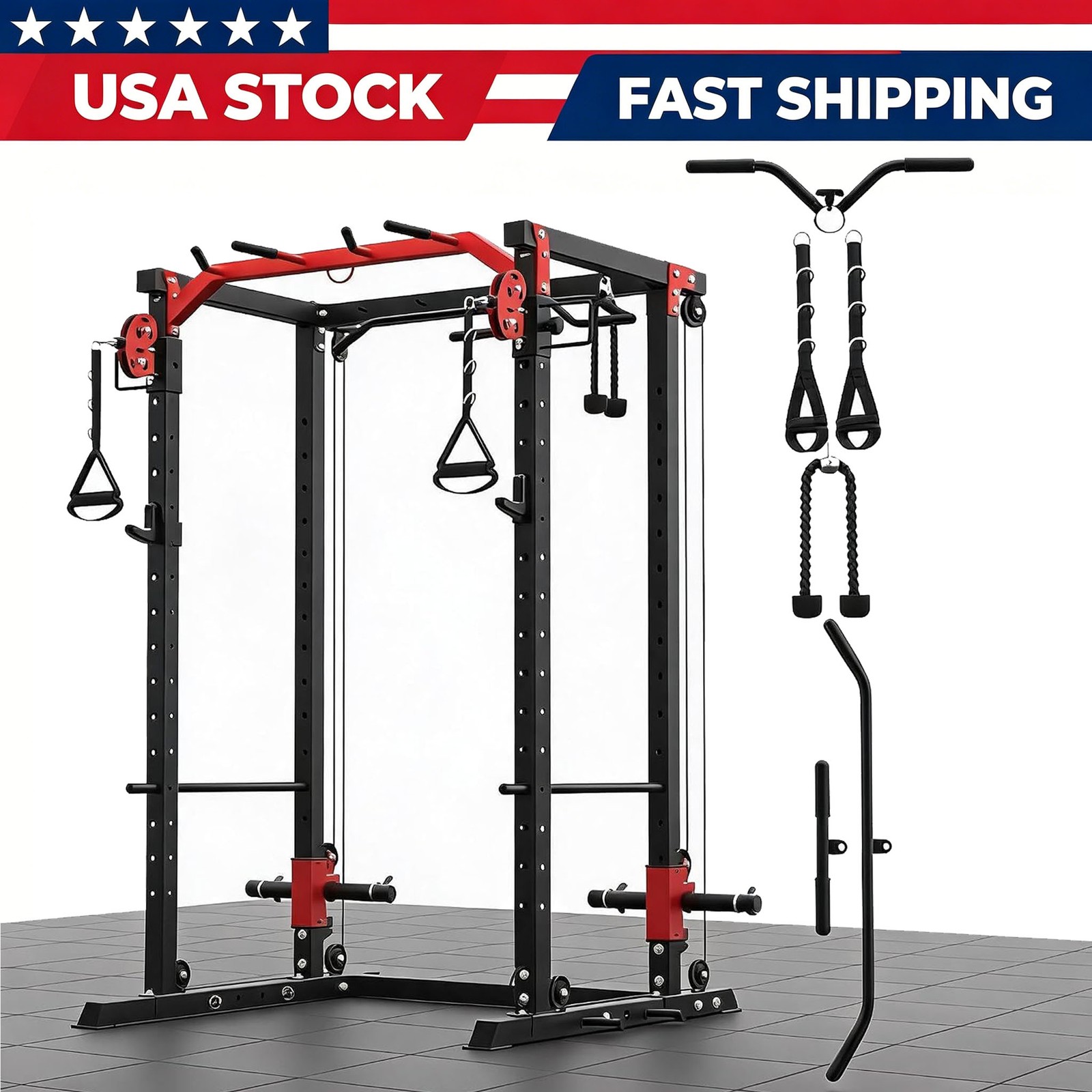 Power Cage with Cable Machine Squat Rack w/ Dual Pulley 2000LBS Heavy Duty Frame$318.39New · Last checked Nov 17, 2026View on eBay
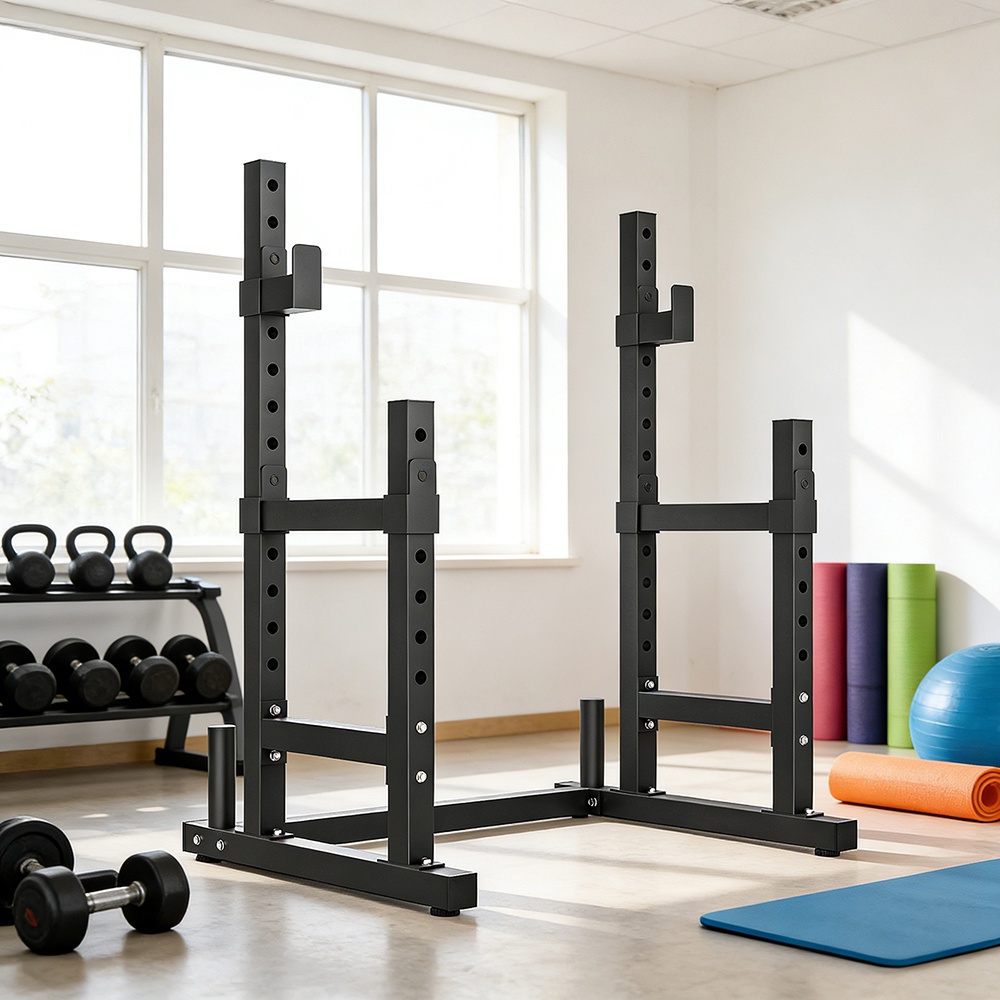 Adjustable Squat Rack, 660lbs Multi-Functional Bench Press Wide H-shaped Base For Weight Lifting Home Gym Strength Training$185.99View on Mallflare
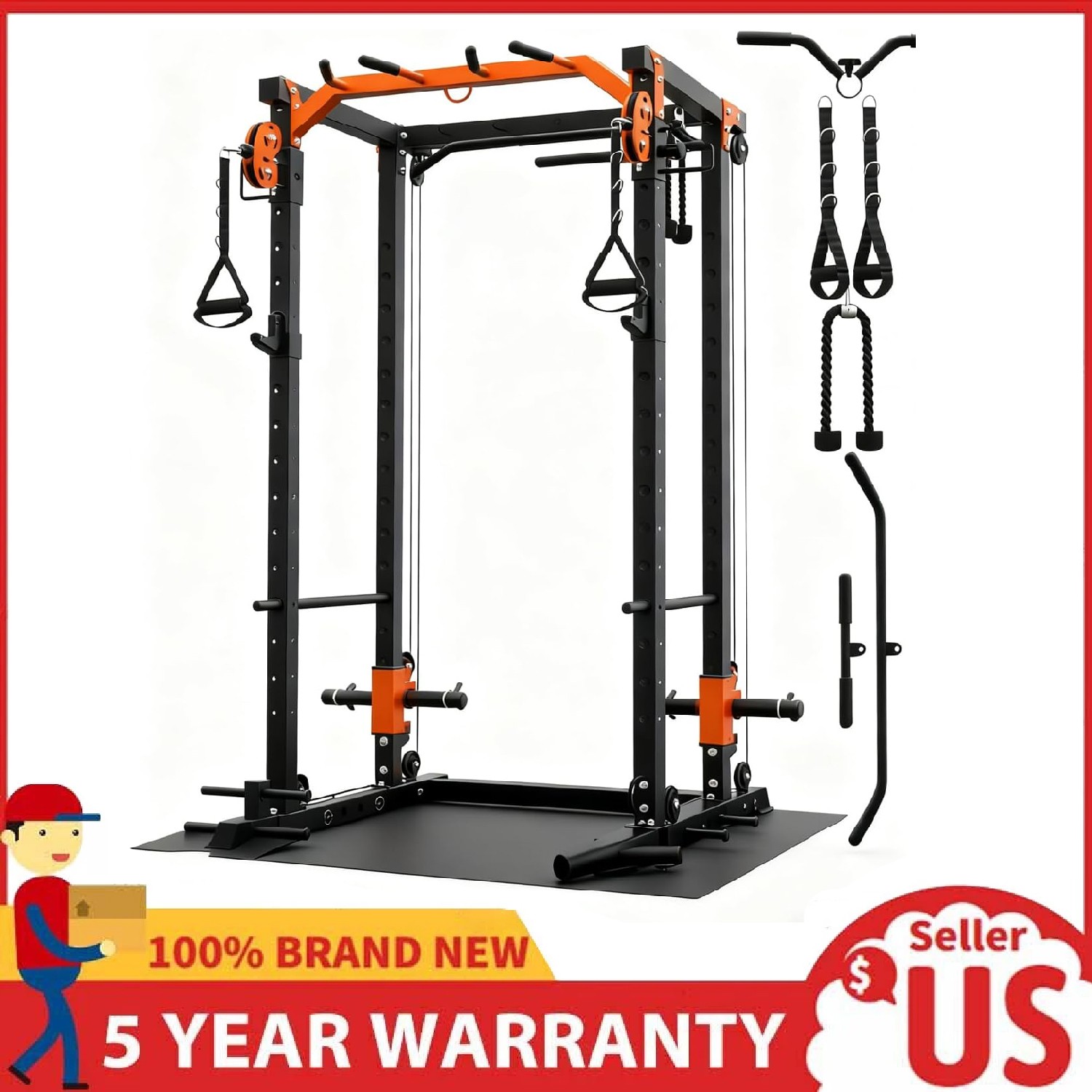 Power Cage 2000LBS Squat Rack for Home Gym Workout with Cable Crossover System$319.49New · Last checked Nov 17, 2026View on eBay
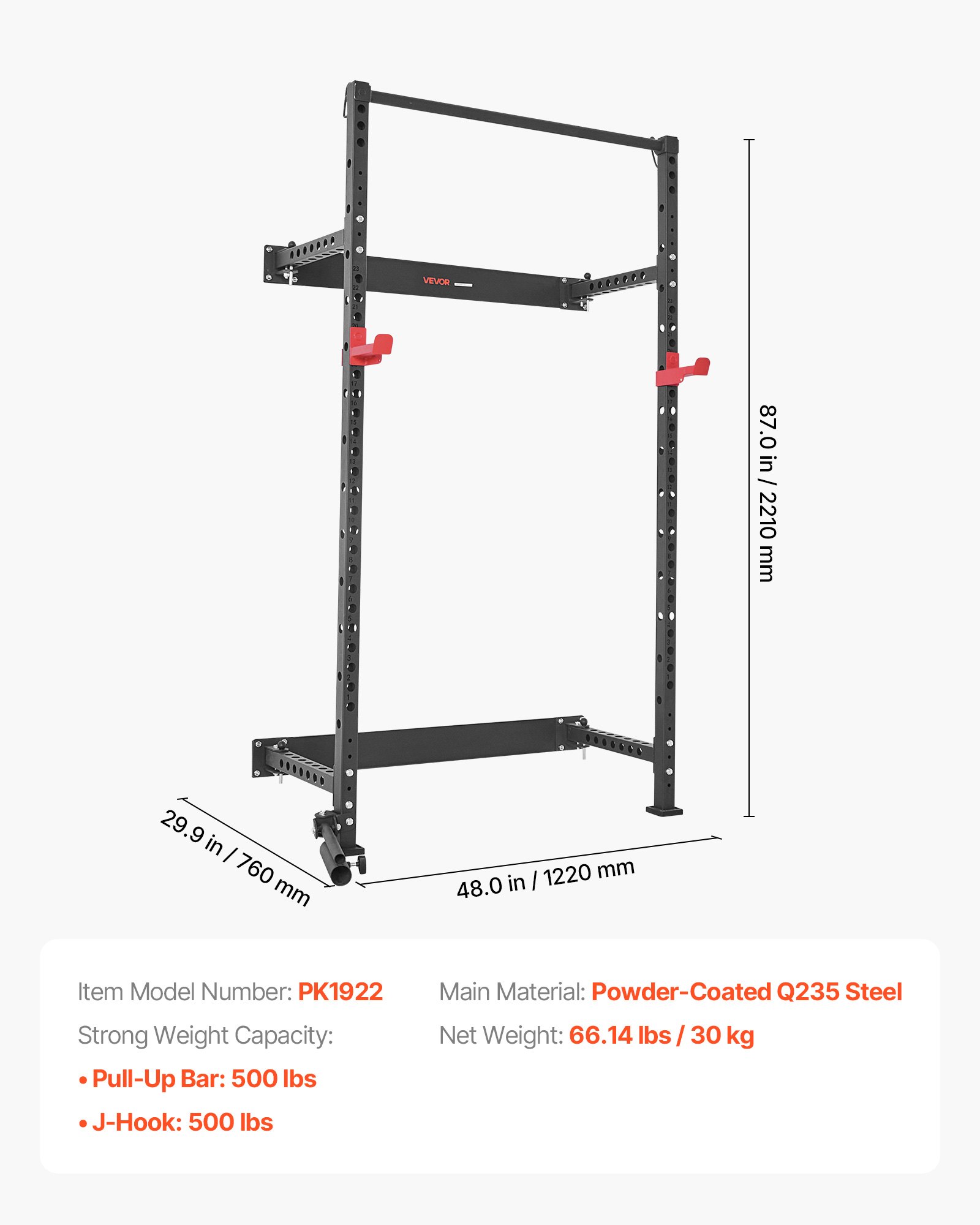 Folding Power Cage, Wall-Mounted Rack Squat Multifunctional Strength Training Workout Equipment With Landmine Holder, Adjustable J-Hooks & Pull-Up Bar For Home Gym, 1000LBS Capacity$188.99View on Mallflare
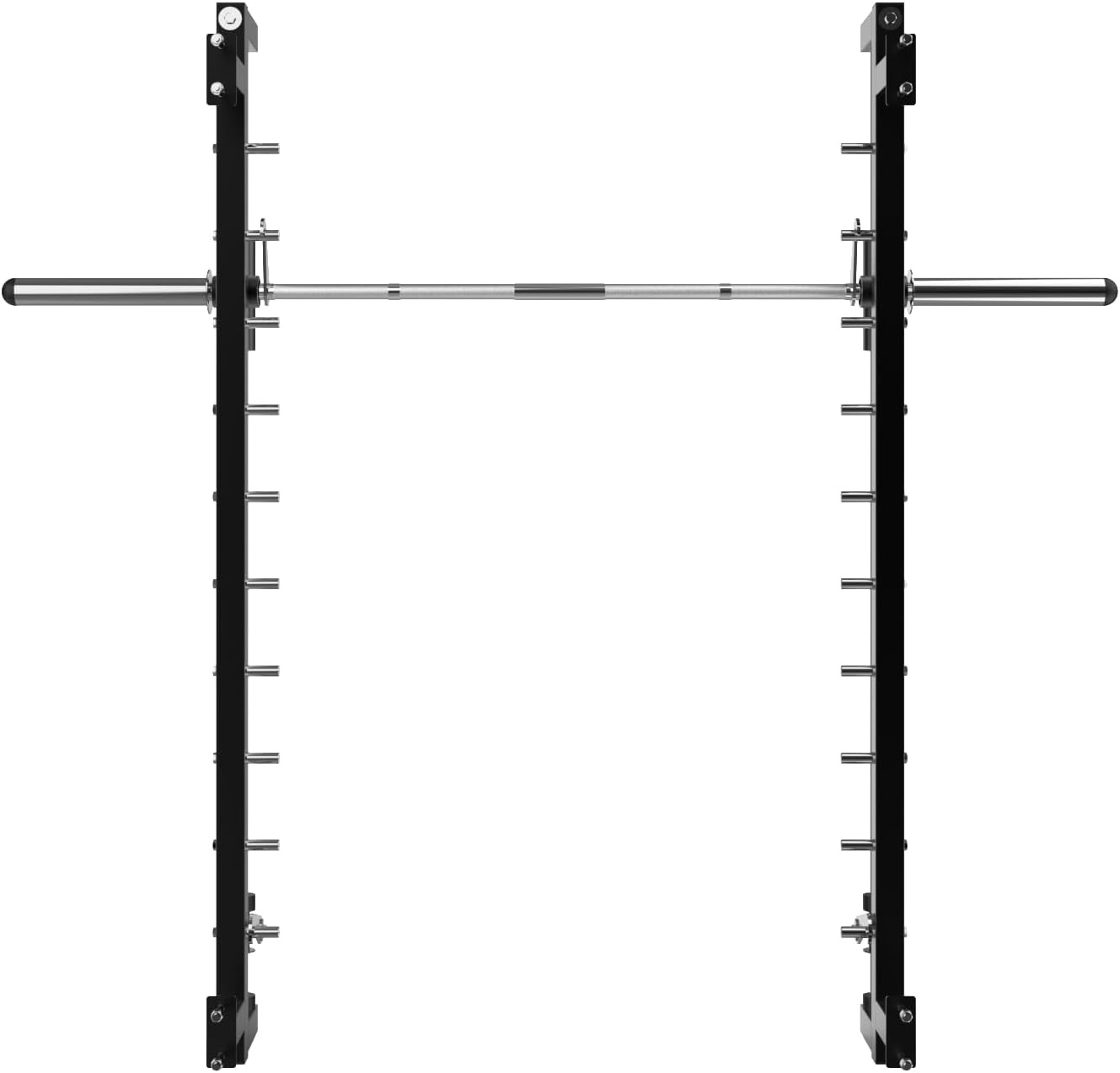 Power Cage with Smith Barbell for Home Gym, Black Power Squat Rack Machine Kit$329.39New · Last checked Nov 17, 2026View on eBay
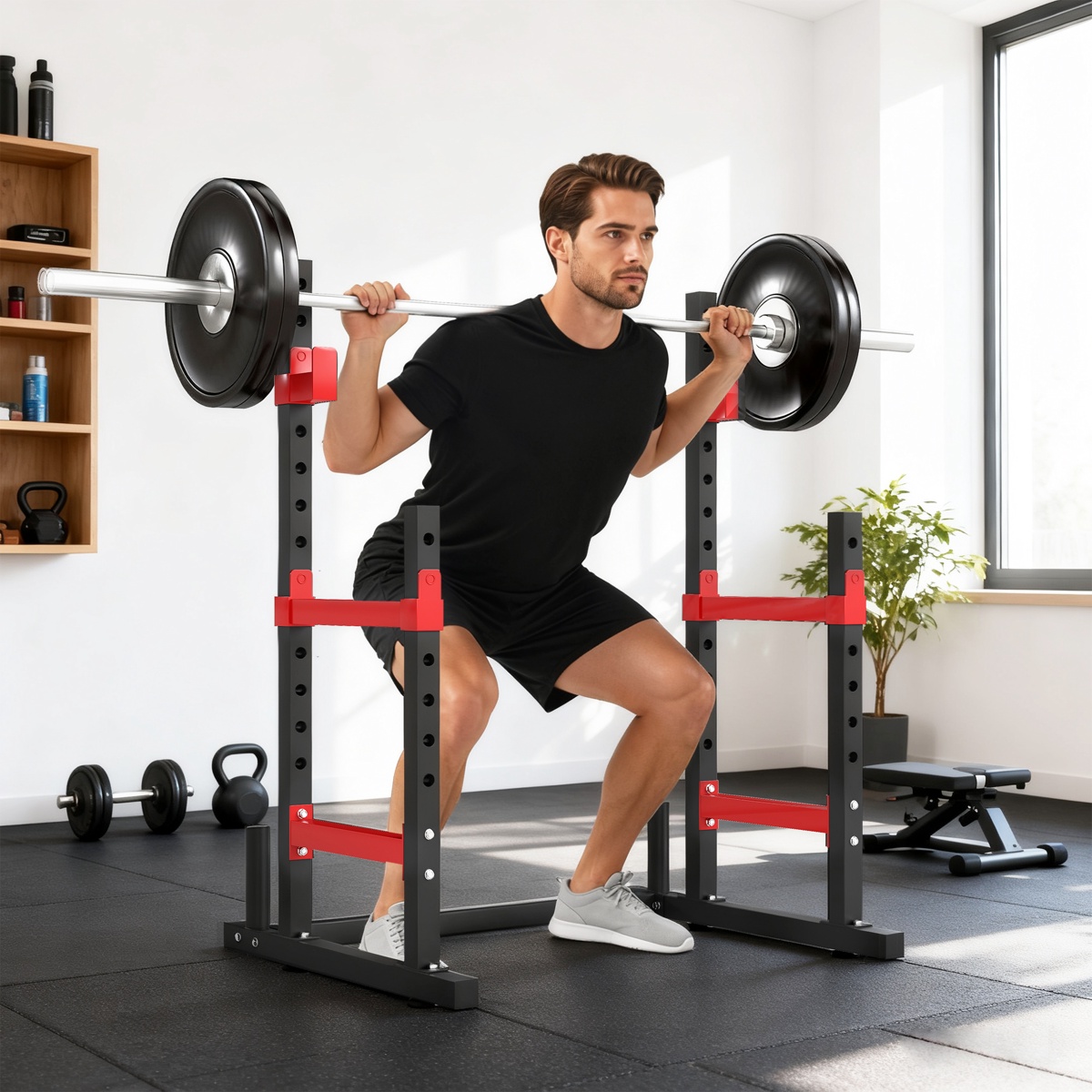 Adjustable Squat Rack, 660lbs Multi-Functional Bench Press For Weight Lifting Home Gym Strength Training, Red$235.99View on Mallflare
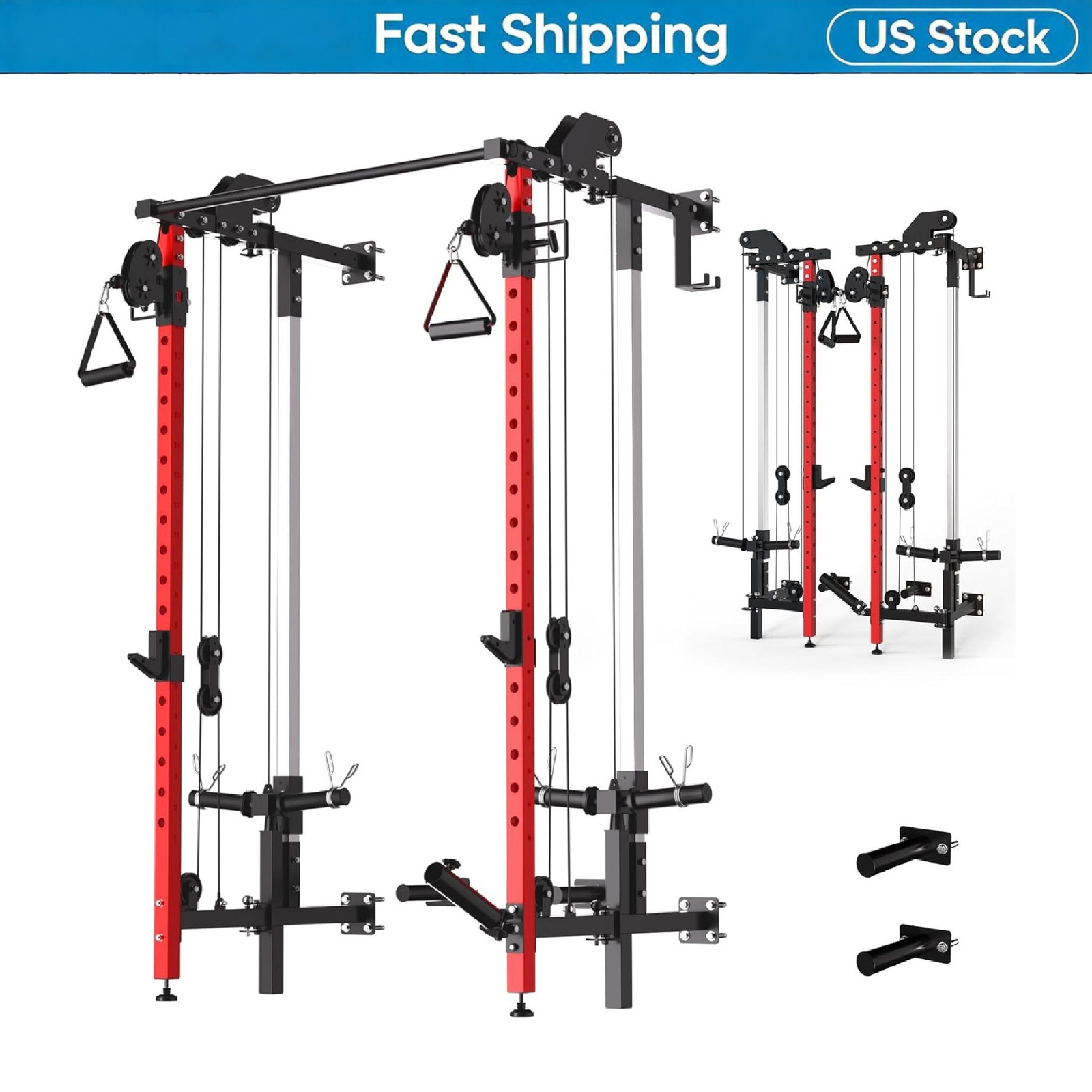 Wall Mounted Folding Squat Rack Power Rack with Pulley Pull Up Bar Home Unit$359.99New · Last checked Nov 17, 2026View on eBay
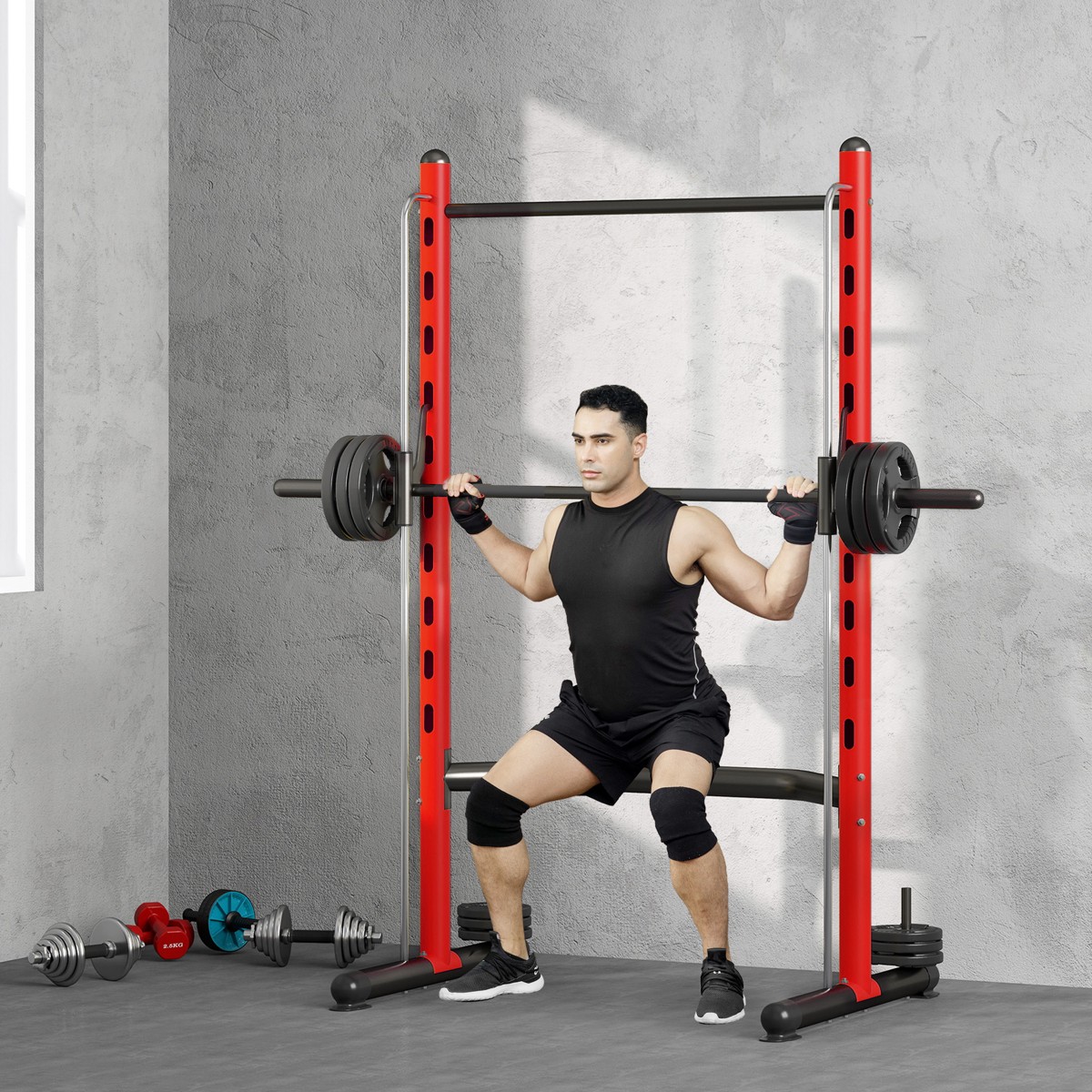 Squat Rack with Pull Up Bar and Barbell Bar Adjustable Bench Press Multi-Function Weight Lifting Half Red$282.99View on Mallflare
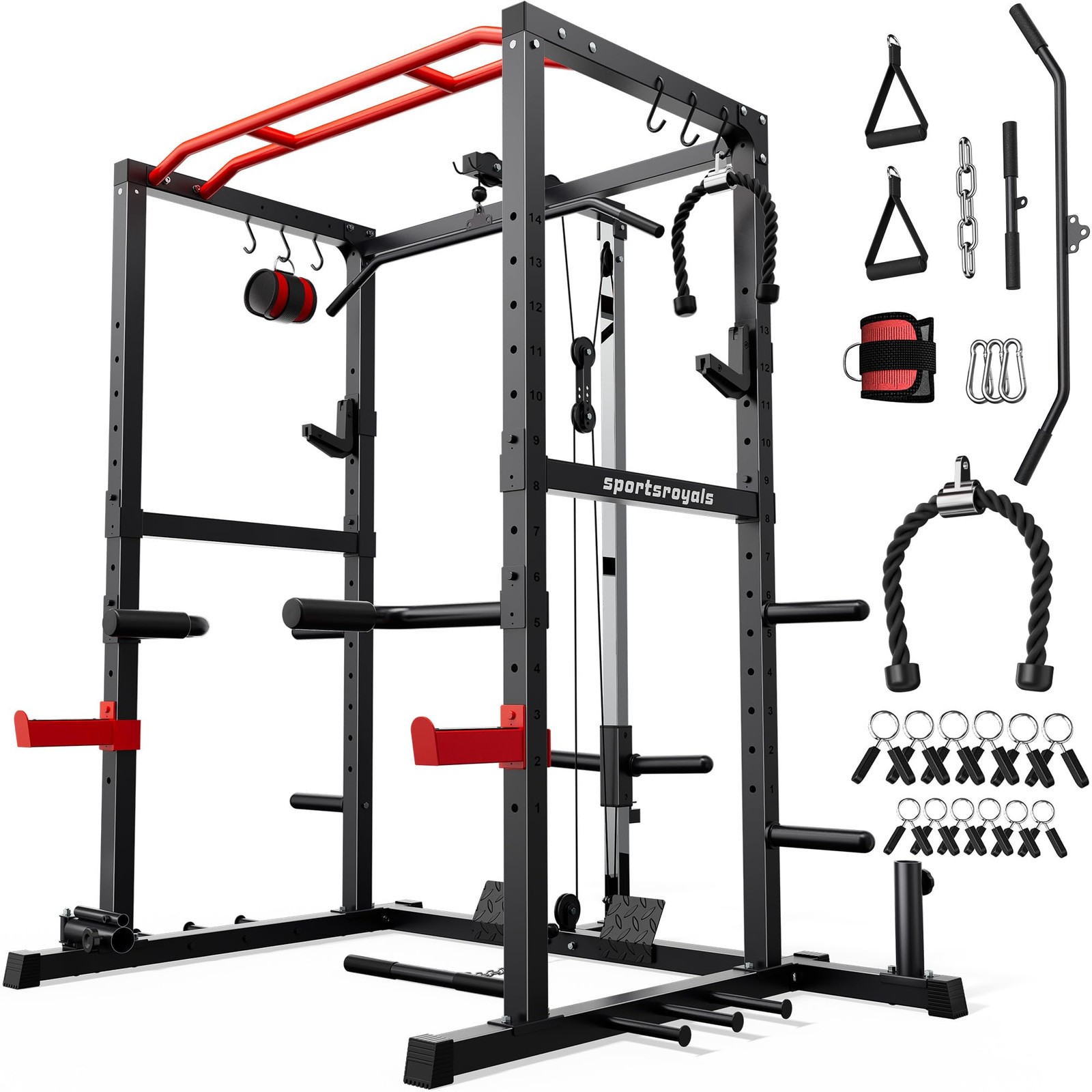 Power Rack with LAT Pulldown, Pulley System, Power Squat Cage Home Gym 3000lb$379.99New · Last checked Nov 17, 2026View on eBay
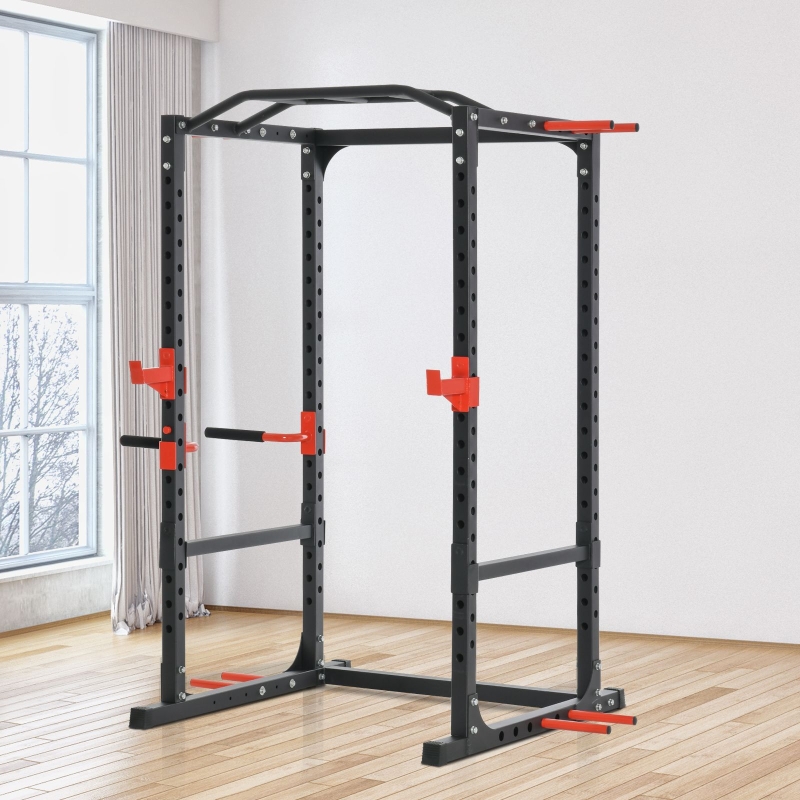 Adjustable Power Tower Dip Station Pull Up Bar Squat Rack Cage At Home Workout Equipment,Multiple Packages Shipped. Please Pay Attention To The Dimensions And Weight In The Details.$293.99View on Mallflare
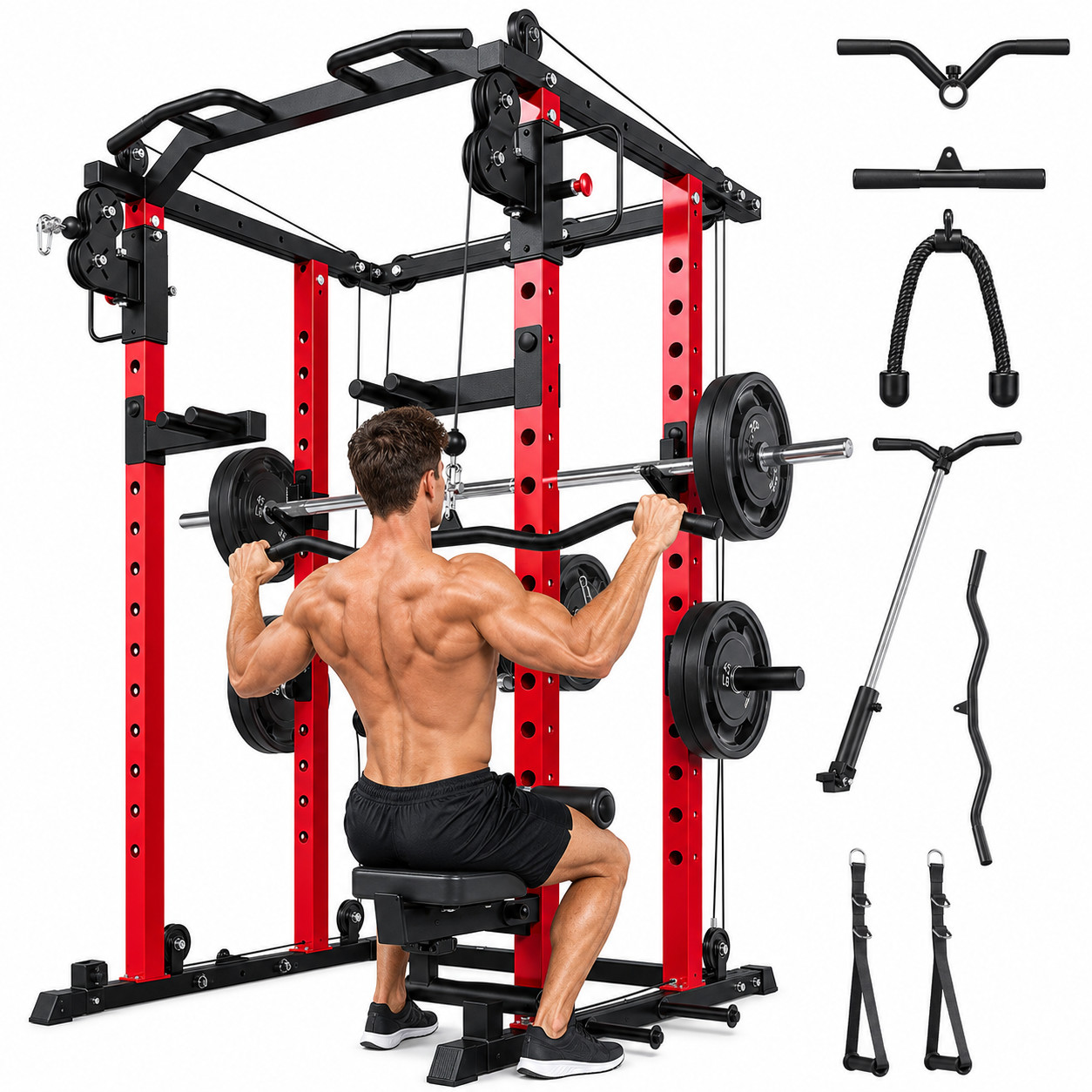 Power Rack with LAT Pulldown Dual Pulley Squat Cage Home Gym 2000lb$399.99New · Last checked Nov 17, 2026View on eBay
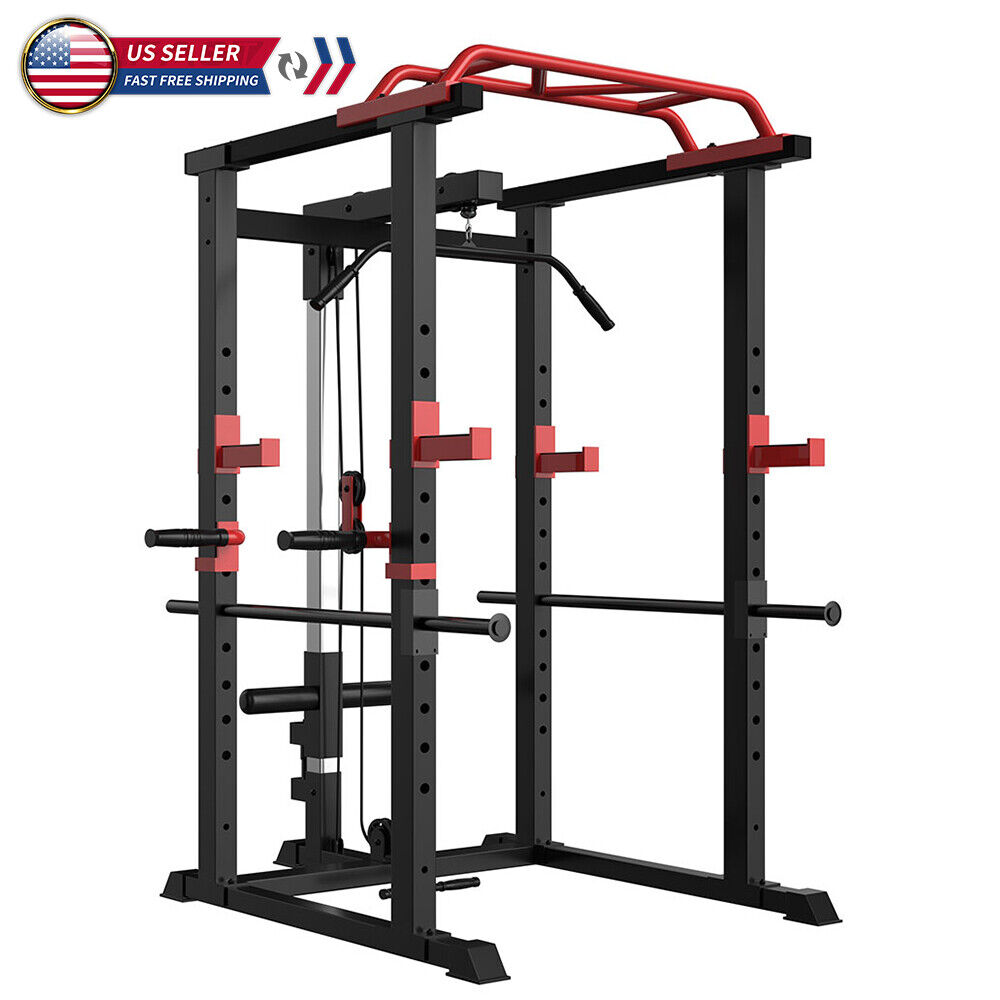 Power Cage Squat Rack Stands Gym Equipment 1000-Pound Capacity Exercise pull-up down$656.99View on Mallflare
Highlights
- Upright steel gauge determines squat safety: 11-gauge (approx. 3 mm) uprights resist flex at 500+ lb loads, while 14–16 gauge tubing (1.5–2 mm) is only suitable for sub-300 lb lifting.
- Dual independent pulley systems with sealed ball bearings allow simultaneous cable and barbell use and smooth 2:1 or 1:1 resistance ratios; single central pulleys limit range and create friction.
- Cable resistance type separates tiers: plate-loaded pulleys are durable and unlimited but require weight plates; selectorized stacks top out at 150–200 lb and add cost and footprint.
- Anchor and hole spacing: 2x3 or 3x3 inch uprights with 1-inch holes at 2-inch spacing accept standard J-hooks and safety arms; 1-inch hole racks need proprietary attachments.
Best use cases
- Best fit: a 3x3 inch, 11-gauge power cage with dual plate-loaded pulleys and a 1000+ lb rating for lifters squatting over 300 lb who want one frame for barbell and cable work.
- Best fit: a wall-mounted folding rack with integrated pulley for garage gyms under 10x10 ft, where the rack folds to under 12 inches depth and the cable runs off the same uprights.
- Wrong fit: a 600 lb-rated H-frame squat stand with a single plastic pulley for anyone deadlifting or squatting near bodyweight plus — the frame walks and the pulley binds under load.
- Skip standalone cable crossover machines if floor space is tight: a rack with dual pulleys covers lat pulldown, row, and face pull without a second footprint.
Buying tips
- Match rack height to ceiling: most power cages are 80–90 inches tall; measure floor-to-ceiling and subtract 6 inches for pull-up clearance before choosing a tall cage.
- Check upright dimensions: 3x3 inch uprights with 1-inch holes accept the widest attachment ecosystem; 2x2 inch uprights with 1-inch holes are budget-tier and limit add-ons.
- Verify cable ratio and travel: 2:1 ratio doubles cable travel but halves resistance; 1:1 gives full plate weight but needs a taller frame for full range.
- Confirm plate compatibility: plate-loaded pulleys use standard 2-inch Olympic plates or 1-inch standard plates; selectorized stacks need no plates but cap resistance.
Specs
| Upright Steel Gauge | 11-gauge (1000+ lb) vs 14–16 gauge |
|---|---|
| Pulley Configuration | Dual independent vs single central |
| Cable Resistance | Plate-loaded unlimited vs stack 150–200 lb |
| Upright & Hole Size | 3x3 in / 1 in holes vs 2x2 in |
Related searches
What to check before buying
- Measure floor space including the cable pulley extension (typically 24–36 inches in front of the rack) and ensure at least 8 ft ceiling height for pull-ups.
- Check floor loading: a loaded 200 lb rack plus 400 lb of plates and user exceeds 700 lb on four feet — verify floor rating or use rubber mats on concrete.
- Confirm anchor method: freestanding racks need floor anchoring or weight storage to prevent tipping; wall-mounted racks require stud or masonry anchoring at the specified height.
- Verify included attachments: J-hooks, safety arms, and landmine are often sold separately — a rack missing safety arms is not squat-safe at heavy loads.
FAQ
Data sources: eBay / Amazon listings and product attribute feeds Data updated Nov 18, 2026.
Some links on this page are affiliate links. If you buy after clicking one, we may earn a commission at no extra cost to you. This does not change which products appear here or their order. Affiliate disclosure.