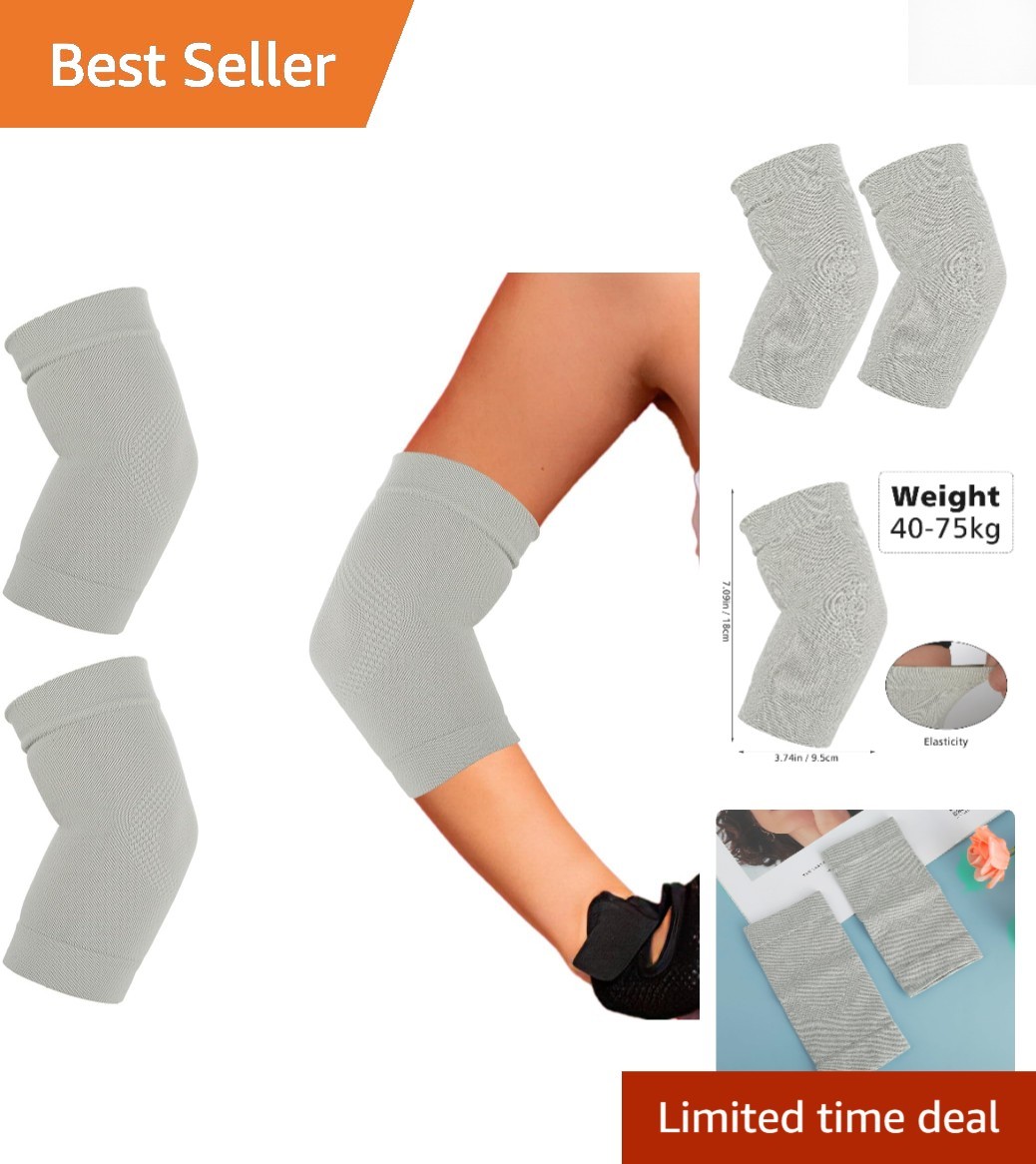

Photos from current listings. Actual item, color, and included accessories may vary.
Elbow Compression Sleeve Buying Guide
An elbow compression sleeve is a knit or neoprene tube that delivers graduated pressure and warmth to the joint, used for tendonitis, golfer's/tennis elbow, lifting support, and post-exercise recovery. The core trade-off is compression class versus breathability: medical-grade 20–30 mmHg knits support tendons but run hot, while light 15–20 mmHg sleeves breathe and suit all-day wear. Choose a measured-circumference knit with flat seams and a defined compression class for durability; skip one-size 'sport' tubes with raw cut edges and no pressure rating.


At a glance
- Category
- Recovery & Massage
- Data updated
- Nov 16, 2026
Current offers
Highlights
- Compression class separates products: medical-grade knits target 20–30 mmHg graduated pressure; sports sleeves typically deliver 15–20 mmHg and are not substitutes for prescribed bracing.
- Fabric architecture drives durability: 4-way stretch nylon/spandex knits with flat-lock seams resist roll-down and fraying; neoprene retains heat but traps sweat and degrades at seams.
- Fit is sized by elbow circumference, not S/M/L guessing — correct sizing spans roughly 9–16 in (23–41 cm) across size runs with 1–2 in overlap between sizes.
- Targeted variants (forearm strap with pad, tendon band, hinged sleeve) change function: straps focus point pressure on the extensor/flexor origin; full sleeves distribute pressure along the joint.
Best use cases
- Pick a 20–30 mmHg knit sleeve with flat seams for diagnosed medial or lateral epicondylitis during work and light training; skip loose 15 mmHg tubes that slide down.
- Pick a light 15–20 mmHg breathable sleeve for all-day keyboard work, running, or golf warm-ups; skip medical-grade compression if you need continuous 8-hour wear in heat.
- Pick a forearm strap with a pressure pad for pinpoint tendon pain during lifting or gripping; skip full sleeves if you only need isolated tendon offloading.
- Pick a neoprene sleeve for cold-weather lifting warmth; skip it for sweating sports or sensitive skin, where breathable knit sleeves are the better fit.
Buying tips
- Measure elbow circumference at the crease with a soft tape; match to the brand's size chart and size up if between sizes — too-tight sleeves restrict circulation and roll down.
- Choose flat-lock or seamless construction over overlocked raw edges; flat seams prevent chafing and extend wash life beyond a few dozen cycles.
- Look for a stated compression range (mmHg) and 4-way stretch content (nylon/spandex or polyester/spandex); unrated 'one-size' tubes stretch out within weeks.
- For tendonitis, prefer graduated compression with a tendon pad or strap option; for general support, 15–20 mmHg knit sleeves balance breathability and hold.
Specs
| Compression Class | 15–20 vs 20–30 mmHg |
|---|---|
| Fabric | Nylon/spandex knit vs neoprene |
| Sizing Basis | Elbow circumference 9–16 in |
| Construction | Flat-lock seams / silicone grip |
Related searches
What to check before buying
- Measure upper-forearm and elbow circumference and compare to the size chart; exact fit matters more than S/M/L labels.
- Confirm material against skin sensitivity: neoprene traps heat and sweat; nylon/spandex knits are cooler for all-day wear.
- Check seam type and edge finish (flat-lock, silicone grip band) to prevent roll-down during motion.
- Confirm care instructions — machine-washable knits last longer than hand-wash-only neoprene — and buy a two-pack for rotation and laundering.
FAQ
Data sources: eBay / Amazon listings and product attribute feeds Data updated Nov 16, 2026.
Some links on this page are affiliate links. If you buy after clicking one, we may earn a commission at no extra cost to you. This does not change which products appear here or their order. Affiliate disclosure.