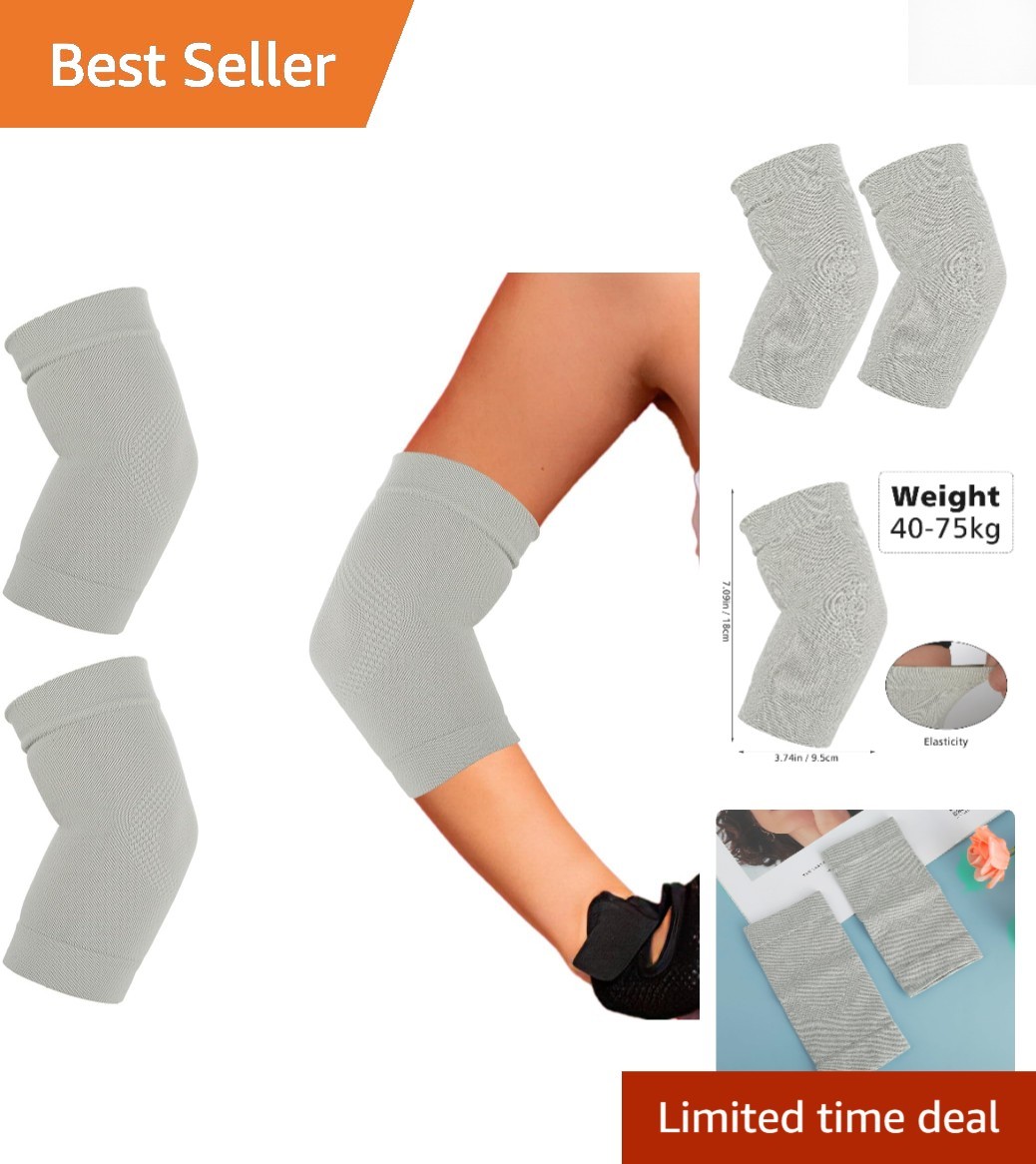

Photos from current listings. Actual item, color, and included accessories may vary.
Elbow Sleeve Buying Guide
An elbow sleeve is a compression garment that supports the joint, manages swelling, and improves proprioception during recovery from tendonitis or overuse. The key trade-off is between soft knit compression (comfortable, all-day, mild support) and structured neoprene or hybrid sleeves with straps or gel pads (stronger stabilization, heat retention, bulkier fit). Durable options use flat-lock seams, 4-way stretch fabric with graduated compression zones, and breathable panels; compromises use thin single-layer knits that roll, bunch, or lose elasticity after weeks of wear.


At a glance
- Category
- Recovery & Massage
- Data updated
- Nov 16, 2026
Current offers
Highlights
- Neoprene (2-3 mm) sleeves retain heat and provide firmer compression but trap sweat; knit nylon/spandex blends breathe better for all-day wear but offer lighter support.
- Flat-lock stitching and silicone gripper bands prevent rolling and bunching; overlocked seams and plain hems are the first failure points on cheap sleeves.
- Graduated compression (tighter at forearm, looser at biceps) supports circulation and reduces migration; uniform tubes roll down during flexion.
- Open-patella vs closed-cup designs: closed sleeves distribute pressure across the joint; open-front or strap versions allow micro-adjustment for tendonitis flare-ups.
Best use cases
- Best fit for tendonitis or golfer's elbow: choose a 4-way stretch knit sleeve with graduated compression and a silicone gripper band — skip thin fashion sleeves that lack compression zones.
- Best fit for lifting or heavy overuse: pick a 3-5 mm neoprene sleeve with reinforced flat-lock seams for warmth and joint feedback — skip breathable mesh sleeves that offer minimal stabilization.
- Best fit for all-day office or sleep wear: use a lightweight nylon/spandex sleeve with breathable panels and low-profile seams — skip thick neoprene that traps heat and restricts movement.
- Wrong fit for acute injury or post-surgical swelling: a compression sleeve alone is insufficient; use a hinged brace or consult a clinician rather than sizing up a sleeve for more support.
Buying tips
- Measure bicep circumference at mid-upper arm and forearm circumference 2 inches below the elbow; match to the sleeve's size chart — sleeves sized only by height or 'one size' will roll or bind.
- For tendonitis, select a sleeve with at least 20-30 mmHg graduated compression or an adjustable strap; lighter 15-20 mmHg knits suit mild fatigue but not focused tendon relief.
- Prioritize flat-lock seams, 4-way stretch (spandex content 15-25%), and a silicone or elastic gripper band; these three features separate durable sleeves from single-season knits.
- Neoprene sleeves need a breathable backing or perforations to avoid heat rash; knit sleeves should list nylon/spandex percentages — avoid unlisted 'polyester blend' claims.
Specs
| Material | Neoprene vs Nylon/Spandex knit |
|---|---|
| Compression | 15-20 / 20-30 mmHg graduated |
| Thickness | 1-2 mm knit / 3-5 mm neoprene |
| Seam & Grip | Flat-lock seams + silicone band |
Related searches
What to check before buying
- Measure bicep and forearm circumference with a flexible tape; compare against the sleeve's size chart, not clothing size.
- Check skin sensitivity: neoprene requires a fabric backing to prevent contact dermatitis; knit sleeves must be latex-free if you have allergies.
- Confirm the sleeve fits under or over your clothing and any existing brace or pad; bulky neoprene may not layer under a shirt cuff.
- Verify care instructions: neoprene must be air-dried and hand-washed; machine-dried knits lose elasticity and gripper bands degrade.
FAQ
Data sources: eBay / Amazon listings and product attribute feeds Data updated Nov 16, 2026.
Some links on this page are affiliate links. If you buy after clicking one, we may earn a commission at no extra cost to you. This does not change which products appear here or their order. Affiliate disclosure.